Sirtuin Activation Longevity Dogs

Build Diet and Routine Habits That Support Cellular Repair, Immunity, and Recovery

Essential Summary

Why is canine sirtuin activation important?

Sirtuins are stress-response enzymes tied to cellular fuel status, so daily diet and routine shape how relevant “activation” claims are. In dogs, longevity and cancer-prevention outcomes are not established, so the safest approach is measured weight, consistent movement, and vet-guided supplementation decisions.

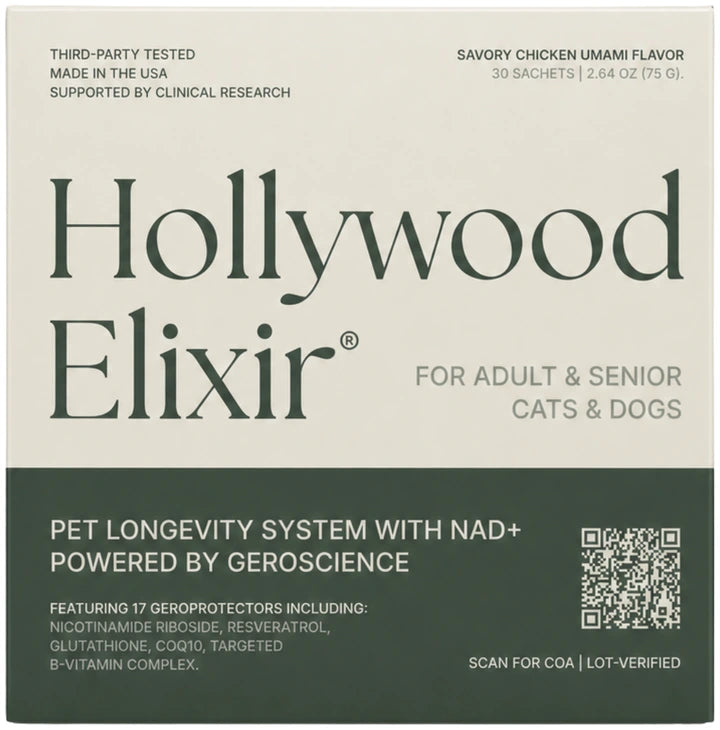
For owners building a conservative aging plan, Hollywood Elixir™ can be part of a daily routine that supports normal cellular stress responses, cognition, and mobility—alongside measured body condition, predictable exercise, and veterinary oversight.

Owners usually start reading about sirtuins when a dog feels older than expected, recovers slowly, or has a cancer history that makes every new symptom feel loaded. The honest answer is that sirtuin activation longevity dogs is not a proven recipe for extra years; it is a way of thinking about stress-response biology that can guide safer daily choices. Sirtuins are enzymes linked to cellular maintenance and inflammation signaling, and they depend on NAD+—a reminder that diet, sleep, and activity patterns matter as much as any single ingredient.

Because this topic often overlaps with “sirtuins and cancer prevention dogs,” the most important guardrail is avoiding overreach. Lab findings (including canine cancer cell studies) can inform mechanisms, but they do not establish prevention or treatment in living dogs. In a cancer-adjacent household, the best plan is usually conservative: keep body condition measured, protect appetite and GI comfort, and build routines that make changes easy to detect. This page focuses on diet and routine first, then explains where supplements may fit, what to track week over week, and what questions to bring to the veterinarian or oncologist before adding anything new.

By La Petite Labs Editorial, ~15 min read

Featured Product:

  • Sirtuin activation longevity dogs is best viewed as a research-informed routine strategy, not a proven way to extend lifespan.
  • Sirtuins are NAD+-dependent enzymes involved in stress responses, inflammation signaling, and DNA maintenance; daily habits shape these pathways.
  • In cancer-adjacent dogs, keep claims sober: “sirtuins and cancer prevention dogs” is not established clinically, and lab findings do not equal prevention.
  • Start with basics that create a more orderly baseline: measured body condition, consistent meals, and repeatable low-impact exercise.
  • If supplements are considered, introduce one change at a time and track appetite, stool, sleep, and walk tolerance week over week.
  • Avoid common pitfalls: stacking “longevity” products, copying human protocols, and ignoring interaction risks with cancer medications.
  • Ask the veterinarian or oncologist what outcomes are realistic to target—comfort, cognition, weight stability, and recuperation speed.

Why Daily Routines Matter More Than Longevity Headlines

Daily longevity talk can feel abstract until a dog is aging, recovering slowly, or living with cancer risk. Sirtuins are enzymes that help cells respond to stress and manage DNA repair, inflammation signaling, and energy use; they are often discussed in the context of canine sirtuin activation and “healthy aging” pathways (Han, 2025). In dogs, the science is still emerging, so “sirtuin activation longevity dogs” should be read as a research direction—not a promise of extra years. The practical value is learning which routines keep the body’s responses more orderly when challenges appear.

For most households, the first step is not a supplement—it is consistency. Regular mealtimes, stable body condition, and predictable sleep reduce day-to-day turbulence that can amplify inflammation. Owners can treat sirtuin biology as a lens: choose habits that support recuperation speed and clearance after exercise, illness, or treatment days. When the basics are steady, any add-on plan is easier to evaluate week over week.

Mitochondria detail showing cellular defense mechanisms supported by dog longevity sirtuins.

Sirtuins, NAD+, and What “Activation” Really Means

Sirtuins (often SIRT1 and SIRT3) are NAD+-dependent enzymes, meaning their activity is tied to cellular fuel status and stress signaling (Han, 2025). That link is why “dog longevity sirtuins” conversations often drift toward diet, fasting, and mitochondrial health. In a cancer-adjacent context, the key point is balance: pathways that support DNA maintenance and inflammation control can be relevant, but they are not a substitute for oncology care. Mechanisms can point to sensible routines without implying tumor control.

At home, owners can focus on predictable inputs that keep appetite, stool quality, and energy response patterns easier to interpret. A dog that eats erratically or swings between inactivity and overexertion is harder to assess. A simple routine—meals, walks, and rest at similar times—creates cleaner “signal” when something changes. That clarity matters when deciding whether a new food, treat, or supplement is helping or just adding noise.

Molecular science graphic tied to healthy aging support from canine sirtuin activation.

Diet Levers That Support Orderly Aging Biology

Diet is the daily lever most owners can control, and it shapes the background conditions in which sirtuins operate. Overfeeding and rapid weight gain can push inflammation and insulin signaling in an unhelpful direction, while a measured calorie plan supports metabolic leeway (Han, 2025). A controlled trial in overweight dogs found a celastrol-supplemented diet influenced weight-related outcomes, which is relevant because body condition is one of the strongest practical predictors of aging trajectory—even if it is not a lifespan study (Shin, 2026).

Owners can make one change at a time: tighten treat calories, switch to a measured cup or gram scale, and keep protein quality high. If a dog is in cancer monitoring or survivorship, avoid dramatic diet swings without veterinary input; appetite and GI tolerance can be fragile. The goal is a more orderly baseline: stable weight, stable stools, and predictable hunger cues. That baseline makes later discussions about canine sirtuin activation far more grounded.

Molecular structure graphic reflecting research-driven design behind canine sirtuin activation.

Polyphenols and Resveratrol: Mechanism Interest, Real Limits

Polyphenols such as resveratrol are often mentioned because they can interact with SIRT1-related signaling in laboratory models (Ciccone, 2022). Reviews note both interest and limitations: potency, selectivity, and translation from bench to real-world outcomes remain uncertain (Ciccone, 2022). In dogs, resveratrol has been studied in specific contexts, but that does not equal a proven longevity intervention. This is where “sirtuins and cancer prevention dogs” needs careful wording: pathways overlap with cancer biology, yet evidence for prevention in pet dogs is not established.

Food-first sources (berries in tiny portions, colorful vegetables that are dog-safe, and balanced commercial diets) are typically the safest way to think about polyphenols. Owners should avoid stacking multiple high-dose extracts “because they all activate sirtuins.” A dog’s GI tract and liver still have to process these compounds, and tolerance varies. If a supplement is considered, it should be discussed as part of a daily plan, not as a shortcut.

Pug portrait highlighting companionship and steady support from dog longevity sirtuins.

Exercise That Supports Clearance and Recuperation Speed

Exercise is a routine-level signal that can influence mitochondrial function, inflammation tone, and recovery patterns—areas often discussed alongside dog longevity sirtuins. The goal is not maximal intensity; it is repeatable movement that supports clearance and joint comfort. For dogs with cancer history or active treatment, exercise plans should be conservative and individualized. A measured plan helps owners separate “normal tired” from fatigue that needs a veterinary call.

A practical approach is to standardize two daily walks and keep one “benchmark loop” at the same pace. If the dog starts lagging, sitting, or panting earlier than usual, that is a meaningful change. Add low-impact enrichment—sniffing games, gentle hill work, or short swims if approved—to support recuperation speed without overloading. Consistent movement also supports appetite regularity, which makes dietary adjustments easier to judge.

Hollywood Elixir™ is amazing and makes my 13 y/o young again!

— Jessie

We go on runs. Lately he's been keeping up with no problem!

— Cami

“A stable routine makes small changes easier to interpret and safer to test.”

Sleep, Stress, and Recovery Patterns Owners Can Influence

Sleep and circadian rhythm are overlooked parts of aging biology. Fragmented sleep can worsen pain sensitivity and appetite signaling, which then complicates any attempt to interpret canine sirtuin activation strategies. While sirtuins are discussed in broader aging frameworks, the owner-facing takeaway is simpler: recovery happens during rest, and poor sleep makes the body’s responses less orderly. In cancer-adjacent households, sleep disruption can also reflect nausea, anxiety, or medication timing.

Owners can support sleep by controlling light and noise at night, offering a pressure-relieving bed, and keeping late-evening play calm. Track nighttime pacing, panting, and “can’t settle” episodes because they often precede daytime problems. If a dog wakes to drink or urinate more, that is not just an aging quirk—it is data for the vet. A stable sleep routine makes week-over-week changes easier to measure.

Dog portrait tied to trust and long-term care supported by sirtuins and cancer prevention dogs.

Immune Signaling: Why “Antioxidant” Is Too Simple

Immune function is sometimes pulled into sirtuin conversations because inflammation and cellular stress responses intersect. In healthy dogs, resveratrol administration has been reported to shift certain immune measures, such as phagocytosis and oxidative burst, showing that these compounds can have biologic effects rather than being “inert antioxidants” (Mathew, 2018). That matters for cancer-adjacent decision-making: immune shifts can be helpful, neutral, or unhelpful depending on the dog’s condition and medications. It is another reason to avoid casual megadosing.

Households can support immune steadiness through basics that reduce inflammatory load: dental care, parasite prevention, and prompt attention to skin or ear infections. These are not glamorous, but they reduce background immune “noise” that can cloud interpretation of fatigue, appetite, or lab changes. If a supplement is added, it should be the only new variable for several weeks. That pacing protects the dog and produces clearer response patterns.

Canine side view symbolizing quiet confidence supported through sirtuins and cancer prevention dogs.

Case Vignette: When a New Stack Mimics Serious Decline

CASE VIGNETTE: A 9-year-old golden retriever in hemangiosarcoma surveillance begins a “longevity stack” found online, including a high-dose resveratrol product. Two weeks later, stool becomes loose and the dog seems less interested in breakfast, and the owner worries the cancer is returning. In reality, GI intolerance and routine disruption can mimic serious decline, and resveratrol has shown anticancer activity only in canine hemangiosarcoma cells in vitro—not as a proven clinical strategy (Carlson, 2018).

The safer pattern is to stabilize first: return to the usual diet, re-check hydration, and document what changed and when. Then contact the oncology team with a clean timeline. This is the practical lesson behind “sirtuins and cancer prevention dogs”: biology headlines can push owners into fast changes, but cancer-adjacent care rewards deliberate pacing. A measured plan protects appetite, comfort, and the ability to interpret symptoms.

Product breakdown image highlighting 16 actives and benefits supported by sirtuins and cancer prevention dogs.

Owner Checklist for Tolerance, Recovery, and Red Flags

OWNER CHECKLIST: When exploring canine sirtuin activation, the most useful home checks are the ones that reveal tolerance and recovery. Watch for: (1) appetite consistency across 7 days, (2) stool form and frequency, (3) willingness to start walks and ability to finish the usual loop, (4) nighttime settling and pacing, and (5) gum color and capillary refill time if the dog is cancer-monitored. These observations help separate “normal aging” from a change that needs medical attention.

Keep the checklist in a note app and score each item as normal, mildly changed, or clearly changed. Owners often remember the worst day and forget the pattern; week-over-week trends are more actionable. If a new supplement is started, add the exact brand, dose form, and time given. That record makes the veterinary handoff faster and reduces the chance of missing a simple intolerance.

What to Track Week over Week for Real-world Clarity

“WHAT TO TRACK” RUBRIC: For dog longevity sirtuins discussions to stay practical, track markers that reflect whole-dog function rather than a single molecule. Useful week-over-week measures include: body weight or body condition score, resting respiratory rate during sleep, daily step count or walk duration, appetite score, stool score, and “next-day recovery” after a longer outing. In cancer-adjacent dogs, add a simple fatigue scale and any new bruising or nosebleeds.

Choose two primary markers and two secondary markers so tracking stays sustainable. If everything is tracked, nothing is noticed. Owners can also note medication days, chemo days, or stressful events (boarding, storms) because these can shift response patterns. The goal is a more orderly picture of the dog’s baseline, making it easier to decide whether a change is worth keeping.

“Mechanism headlines are not the same as outcomes in living dogs.”

Lab coat with La Petite Labs logo symbolizing science-backed standards for sirtuins and cancer prevention dogs.

A Common Misconception About Sirtuins and Cancer Risk

UNIQUE MISCONCEPTION: “If a compound activates sirtuins, it must prevent cancer.” That leap is common in online longevity spaces, but it is not supported for pet dogs. Even when resveratrol shows anticancer effects in canine cancer cell lines, those are controlled lab conditions and do not establish prevention or clinical outcomes (Carlson, 2018). Cancer risk is shaped by genetics, age, immune surveillance, and environment; a single pathway rarely dictates the result.

A better framing is risk management: keep weight measured, maintain dental and skin health, reduce chronic inflammation drivers, and follow screening guidance for the dog’s breed and history. If a veterinarian supports adding a supplement, it should be positioned as supportive care for normal cellular stress responses, not as a shield. This keeps “sirtuins and cancer prevention dogs” grounded in what is actually knowable.

Shop Now
Premium ingredient tableau framing Hollywood Elixir aligned with canine sirtuin activation.

Supplement Safety: Benefits, Limits, and Tolerance Signals

Supplementation is where safety and uncertainty matter most. Resveratrol-like compounds can interact with sirtuin-related pathways, but reviews also emphasize translation challenges and variable effects across tissues (Ciccone, 2022). Separately, literature reviews describe potential adverse effects of resveratrol, especially at higher doses or in sensitive individuals (Shaito, 2020). For cancer-adjacent dogs, the priority is avoiding side effects that reduce appetite, hydration, or medication adherence—because those practical outcomes can matter more than theoretical pathway benefits.

Owners should treat any new supplement like a diet trial: introduce one item, keep everything else stable, and watch stool and appetite closely for 2–3 weeks. Avoid giving new products on the same day as a major medication change. If vomiting, diarrhea, marked lethargy, or refusal of food occurs, stop the new item and call the clinic. This approach keeps the dog’s daily life less turbulent and protects the ability to interpret symptoms.

Shop Now
Pet owner displaying product as part of daily care supported by dog longevity sirtuins.

NAD+ Precursors: Where Interest Is Growing, and Why Caution Matters

NAD+ precursors are another area owners ask about because sirtuins depend on NAD+ availability. A controlled clinical trial in senior dogs reported improved owner-assessed cognitive function with a senolytic and NAD+ precursor combination, suggesting that targeted aging interventions can have measurable outcomes in dogs—though this is not a cancer-prevention result (Simon, 2024). Safety data for specific NAD+ precursors often comes from non-canine studies, and subacute toxicity work exists for nicotinamide mononucleotide in research settings (You, 2020).

For households, the practical message is to avoid mixing multiple “longevity” compounds at once. If NAD+ support is discussed with a veterinarian, it should be integrated with the dog’s diet quality, kidney and liver status, and medication list. Owners can also watch for sleep changes, thirst changes, and GI tolerance after any new addition. The goal is a plan that supports normal function without creating new problems.

Shop Now

Interaction Risks: Bleeding, Procedures, and Medication Overlap

Drug and supplement interactions are a real concern in cancer-adjacent dogs, especially when blood clotting or surgery is part of care. In a mouse model, trans-resveratrol enhanced the anticoagulant activity of warfarin, highlighting a plausible interaction risk for compounds that affect hemostasis pathways (Chiba, 2016). Dogs may not mirror mice perfectly, but the caution is practical: anything that could shift bleeding risk should be cleared with the veterinarian or oncologist. This is particularly relevant when owners pursue canine sirtuin activation using concentrated extracts.

Owners should bring a full list of supplements to every appointment, including “natural” chews and tinctures. If the dog has bruising, nosebleeds, dark stools, or prolonged bleeding from a nail trim, that is urgent information. Avoid starting new supplements within two weeks of a planned procedure unless the clinic approves. A cautious timeline supports safety and keeps the care plan more orderly.

Vet Visit Prep for Cancer-adjacent Longevity Questions

VET VISIT PREP: Owners considering “sirtuin activation longevity dogs” strategies can make appointments more productive by arriving with specific, cancer-adjacent questions. Useful prompts include: “Which supplements are unsafe with my dog’s current medications?”, “Are there lab values that should be checked before adding anything new?”, “What appetite or stool changes should trigger a stop-and-call?”, and “Given this cancer history, what goals are realistic—comfort, cognition, weight stability, or recovery?” These questions keep the discussion focused on outcomes that matter.

Bring a two-week log of weight, appetite score, stool score, and walk tolerance, plus photos of any new lumps or bruising. If the dog is in oncology care, ask the oncologist directly before adding resveratrol-like products or NAD+ precursors. The goal is not to “optimize pathways” but to protect comfort and reduce avoidable turbulence. A clear handoff helps the team tailor advice to the dog’s exact risk profile.

Visual breakdown contrasting competitors and quality standards in dog longevity sirtuins.

What Not to Do When Building a Sirtuin-informed Plan

WHAT NOT TO DO: Common mistakes in dog longevity sirtuins planning are surprisingly consistent. Do not: (1) start multiple supplements at once, (2) change diet and supplements during the same week, (3) assume “human longevity dosing” applies to dogs, or (4) continue a product through diarrhea or appetite loss “to push through.” These errors make it harder to interpret response patterns and can reduce recuperation speed after routine stressors.

Another frequent error is skipping the medication interaction check, especially for dogs on NSAIDs, steroids, chemotherapy, or anticoagulants. Owners should also avoid treating lab values as a scoreboard; a single biomarker rarely captures how a dog is doing at home. The safer approach is deliberate pacing: adjust one thing, observe, then decide on the next step. That rhythm supports clearer decisions and fewer setbacks.

Shop Now
Hollywood Elixir in protective wrap, emphasizing quality behind sirtuins and cancer prevention dogs.

Where Hollywood Elixir Fits in a Conservative Daily Plan

Where does Hollywood Elixir™ fit in a sirtuin-focused conversation? It can be positioned as part of a daily plan that supports normal aging physiology—alongside diet quality, measured body condition, and predictable routines—rather than as a direct lever for canine sirtuin activation. Owners drawn to “sirtuins and cancer prevention dogs” messaging should keep expectations sober: supportive products are best used to reinforce basics, not to substitute for screening, oncology guidance, or symptom monitoring.

If a veterinarian agrees a broad aging-support supplement is reasonable, introduce it when the dog is stable and eating well. Keep the rest of the routine unchanged for several weeks and track appetite, stool, sleep, and walk tolerance. If the dog is undergoing cancer treatment, ask the oncologist before starting any new supplement. The goal is a more orderly daily baseline that supports comfort and recovery.

Shop Now

Putting It Together Without Overpromising Outcomes

The most responsible takeaway is that sirtuin biology is a useful framework, not a shortcut. Research in dogs is expanding, and aging strategies are being explored, but the strongest owner actions remain routine-driven: measured weight, consistent movement, sleep protection, and early attention to small changes. In a cancer-adjacent household, those basics also protect treatment tolerance and quality of life. That is the practical meaning behind sirtuin activation longevity dogs.

When cancer risk or history is part of the story, decisions should be made with the veterinary team, and ideally the oncologist. Bring tracking notes, list every supplement, and ask what outcomes are realistic to target. If a plan is approved, keep it simple and measurable. A calm, deliberate routine often does more for a dog’s day-to-day resilience than any single “activator” claim.

“In cancer-adjacent care, appetite and comfort often outrank theory.”

Educational content only. This material is not a substitute for veterinary advice. Always consult your veterinarian about your dog’s specific needs. These statements have not been evaluated by the Food and Drug Administration. Products mentioned are not intended to diagnose, treat, cure, or prevent any disease.

Glossary

  • Sirtuins - A family of enzymes that help regulate stress responses and cellular maintenance.
  • SIRT1 - A sirtuin often discussed in relation to inflammation signaling and DNA repair coordination.
  • SIRT3 - A mitochondrial sirtuin linked to energy handling and oxidative stress responses.
  • NAD+ - A cellular cofactor required for many sirtuins to function.
  • NAD+ precursor - A compound intended to support NAD+ availability (examples include NMN or NR in research contexts).
  • Polyphenol - A plant compound category that includes resveratrol and related molecules.
  • Resveratrol - A polyphenol studied for interactions with SIRT1-related signaling and other pathways.
  • In vitro - Research performed in cells or tissues outside a living animal; useful for mechanism, not proof of clinical benefit.
  • Hemangiosarcoma - An aggressive cancer in dogs; often used in canine cancer research models.
  • Body condition score - A veterinary scale used to assess whether a dog is underweight, ideal, or overweight.

Related Reading

References

Ciccone. Resveratrol-like Compounds as SIRT1 Activators.. PubMed. 2022. https://pubmed.ncbi.nlm.nih.gov/36499460/

Shin. Efficacy of celastrol-supplemented diet in overweight and obese dogs: a 24-week randomized controlled trial. 2026. https://www.frontiersin.org/articles/10.3389/fvets.2025.1715988

Carlson. Anticancer effects of resveratrol in canine hemangiosarcoma cell lines.. PubMed. 2018. https://pubmed.ncbi.nlm.nih.gov/29235249/

Simon. A randomized, controlled clinical trial demonstrates improved owner-assessed cognitive function in senior dogs receiving a senolytic and NAD+ precursor combination.. PubMed. 2024. https://pubmed.ncbi.nlm.nih.gov/38811634/

Mathew. Resveratrol administration increases phagocytosis, decreases oxidative burst, and promotes pro-inflammatory cytokine production in healthy dogs. PubMed. 2018. https://pubmed.ncbi.nlm.nih.gov/30243369/

Han. Anti-aging strategies for dogs: current insights and future directions. PubMed Central. 2025. https://pmc.ncbi.nlm.nih.gov/articles/PMC12520853/

You. Subacute Toxicity Study of Nicotinamide Mononucleotide via Oral Administration.. PubMed Central. 2020. https://pmc.ncbi.nlm.nih.gov/articles/PMC7770224/

Chiba. Trans-Resveratrol Enhances the Anticoagulant Activity of Warfarin in a Mouse Model.. PubMed Central. 2016. https://pmc.ncbi.nlm.nih.gov/articles/PMC5090816/

Shaito. Potential Adverse Effects of Resveratrol: A Literature Review. 2020. https://www.mdpi.com/1422-0067/21/6/2084

FAQ

What are sirtuins in dogs, in plain language?

Sirtuins are enzymes that help cells respond to stress, manage inflammation signaling, and coordinate repair processes. They are often described as “housekeeping” proteins that help keep cellular behavior more orderly when conditions change.

In dogs, sirtuins are discussed in aging research, but they are not a stand-alone switch that guarantees longer life. For owners, the practical value is using the concept to prioritize routines that support recovery and stable body condition.

Does sirtuin activation extend lifespan in pet dogs?

There is no established proof that targeting sirtuins reliably extends lifespan in typical pet dogs. Dog aging research is active, but most owner-available approaches are supportive and indirect rather than lifespan-tested interventions.

A safer interpretation of sirtuin activation longevity dogs is: build daily habits that reduce chronic inflammation drivers and support recuperation speed. That includes measured weight, consistent movement, and prompt attention to pain or GI issues.

How does NAD+ relate to canine sirtuin activation?

Many sirtuins require NAD+ to function, so NAD+ availability can influence how active these enzymes are. That is why NAD+ precursors show up in dog longevity sirtuins discussions.

Because NAD+ products vary and safety data is not uniform across species, decisions should be vet-guided—especially for dogs with cancer history or on multiple medications. Track appetite, stool, sleep, and thirst after any new addition.

Is resveratrol a proven sirtuin activator for dogs?

Resveratrol is widely discussed because it can interact with SIRT1-related signaling in laboratory research, but reviews also highlight limitations in potency, selectivity, and translation to real-world outcomes.

For pet dogs, that means resveratrol should not be treated as a reliable longevity tool. If a veterinarian recommends it for a specific reason, introduce it cautiously and avoid stacking it with other concentrated extracts.

Do sirtuins prevent cancer in dogs?

No supplement or pathway focus has been proven to prevent cancer in pet dogs. “Sirtuins and cancer prevention dogs” is a phrase that reflects overlapping biology, not a confirmed clinical outcome.

Some compounds show anticancer activity in canine cancer cells in vitro, but that does not establish prevention or benefit in living dogs(Carlson, 2018). Cancer risk management still centers on veterinary screening, weight control, and early evaluation of new symptoms.

Can supplements interfere with cancer medications or surgery?

Yes. Some supplements can plausibly affect bleeding risk or drug metabolism, which matters for dogs undergoing procedures or receiving oncology medications. Resveratrol has shown anticoagulant interaction potential in a mouse warfarin model, which is a caution signal rather than a guarantee for dogs(Chiba, 2016).

Owners should provide the full supplement list to the veterinarian and oncologist and avoid starting new products close to procedures unless approved. If bruising, nosebleeds, or dark stools appear, contact the clinic promptly.

What side effects should owners watch for with resveratrol?

Reported concerns with resveratrol across the literature include GI upset and other adverse effects, especially at higher doses or in sensitive individuals(Shaito, 2020). In a pet dog, the most practical early warnings are loose stool, vomiting, appetite drop, or unusual lethargy.

If these occur after starting a new product, stop the new item and call the veterinarian for next steps. In cancer-adjacent dogs, protecting appetite and hydration often matters more than continuing a theoretical pathway strategy.

How quickly should results appear from a longevity routine change?

Routine changes tend to show first as better predictability: steadier appetite, more consistent stools, and clearer recovery after walks. Those signals can appear within 2–4 weeks if the change is meaningful and the dog tolerates it.

Longevity claims take far longer to evaluate and are rarely measurable at home. Owners get the most value by tracking week-over-week response patterns and sharing those notes with the veterinarian, especially when cancer risk is part of the picture.

Which dogs should avoid “longevity stacks” entirely?

Dogs on chemotherapy, anticoagulants, multiple pain medications, or with unstable GI disease should not start multi-supplement stacks without veterinary direction. The more complex the medical picture, the higher the chance that side effects or interactions will create confusion.

A safer approach is to stabilize diet and routine first, then discuss one carefully chosen addition with the veterinarian or oncologist. That pacing keeps the dog’s daily life less turbulent and makes outcomes easier to interpret.

Is Hollywood Elixir™ a cancer treatment for dogs?

No. Hollywood Elixir™ should be viewed only as supportive care within a broader daily plan. It is not intended to treat, prevent, or cure cancer, and it should not replace veterinary oncology guidance.

For cancer-adjacent dogs, the safest use is to discuss it with the oncologist, introduce it when the dog is stable, and track appetite, stool, sleep, and activity tolerance week over week.

How can owners evaluate supplement quality for aging claims?

Look for clear labeling, consistent batch information, and conservative claims that focus on supporting normal function rather than promising disease outcomes. Avoid products that rely on “miracle longevity” language or that hide ingredient amounts behind proprietary blends.

For cancer-adjacent dogs, quality also means predictability: a product that the dog tolerates without appetite loss or GI upset. Share the exact label with the veterinarian so potential interactions can be screened before starting.

Can diet alone influence sirtuin-related pathways in dogs?

Diet strongly shapes the background conditions that aging pathways respond to, including body condition, inflammation tone, and energy balance. In practice, measured calorie intake and adequate protein quality often matter more than chasing a single “activator” molecule.

Owners can start with treat control, consistent meal timing, and a diet the dog digests well. Those steps create a more orderly baseline that makes any later supplement discussion more meaningful.

Are there studies of resveratrol in dogs with cancer?

There is in-vitro work in canine cancer models. For example, resveratrol showed anticancer activity in canine hemangiosarcoma cell lines, which informs pathway biology but does not establish clinical benefit in pet dogs.

Owners should avoid interpreting cell-culture findings as prevention or treatment. Any supplement use in a cancer context should be cleared with the oncologist, with careful tracking for tolerance and interactions.

What should be tracked after starting Hollywood Elixir™?

After starting Hollywood Elixir™, track practical markers: appetite consistency, stool score, nighttime settling, and walk tolerance. These are the earliest signs of whether a dog is tolerating a new daily addition.

Keep the rest of the routine stable for several weeks so response patterns are interpretable. If vomiting, diarrhea, or appetite drop occurs, stop the new item and contact the veterinarian—especially for dogs with cancer history.

Is this topic different for puppies versus senior dogs?

Yes. Puppies need growth-focused nutrition and should not be placed on restrictive “longevity” routines. In seniors, the priorities shift toward maintaining muscle, comfort, and recuperation speed, which is where dog longevity sirtuins discussions usually arise.

For older dogs, the safest first steps are measured weight, joint-friendly movement, and sleep protection. Supplements should be considered only after the veterinarian reviews kidney/liver status and the medication list.

Do breed or size change how owners should approach this?

Large breeds often show aging-related mobility changes earlier, while some breeds have higher baseline cancer risk. That means the “best” plan is often about earlier screening and tighter routine consistency, not more supplements.

Owners should ask the veterinarian which risks are most relevant for the dog’s breed and history, then track markers that match those risks (for example, exercise tolerance and bruising checks in cancer-monitored dogs).

Is sirtuin activation discussed the same way in cats?

Not exactly. Cats differ in metabolism, supplement tolerance, and common disease patterns, so dog-focused routines and products should not be assumed to translate. Even when the underlying biology is shared, the practical plan must be species-specific.

For multi-pet homes, keep dog supplements away from cats unless a veterinarian has explicitly approved them for feline use. When in doubt, treat “longevity” compounds as higher-risk in cats than in dogs.

What is a safe decision framework for adding a new supplement?

Start by defining the goal in owner terms: appetite stability, mobility comfort, sleep quality, or cognitive engagement. Then confirm the dog is stable (no active vomiting/diarrhea, no unexplained weight loss) and get veterinary approval if cancer history or medications are involved.

Introduce one product at a time, keep diet and exercise unchanged, and track week-over-week response patterns. If the goal is not met or side effects appear, stop and reassess rather than adding another layer.

When should an owner call the vet during a longevity plan?

Call promptly for appetite refusal beyond a day, repeated vomiting, persistent diarrhea, collapse, new bruising, pale gums, or sudden exercise intolerance. In cancer-adjacent dogs, these changes can be urgent even if a supplement was the only recent change.

Also call if the dog seems “off” in a way that breaks the usual response patterns—such as not recovering by the next day after a routine walk. Bring a timeline of diet, medications, and any new products to speed up the evaluation.

How does Hollywood Elixir™ fit into a daily routine plan?

In a conservative plan, Hollywood Elixir™ can be used as a consistent daily addition that supports normal aging physiology while the owner focuses on the bigger levers: measured weight, predictable movement, and sleep protection.

It should not be treated as a stand-alone answer for canine sirtuin activation or cancer risk. For dogs with cancer history, the oncologist should be included in the decision, and tracking should focus on tolerance and comfort.

5K+ Happy Pet Parents

Excellent 4.8

Sirtuin Activation Longevity Dogs | Why Thousands of Pup Parents Trust Hollywood Elixir™

"He seems more happy overall. I've also noticed he has more energy which makes our walks and playtime so much more fun."

Olga & Jordan

"He's got way more energy now! We go on runs pretty often; he use to get tired halfway through, but lately, he's been keeping up without any problem."

Cami & Clifford

"I want her to live forever. She hasn't had an ear infection since!"

Madison & Azula

"It helps with her calmness, her immune system. I really like the clean ingredients. Highly recommend La Petite Labs!"

Maple & Cassidy

"He seems more happy overall. I've also noticed he has more energy which makes our walks and playtime so much more fun."

Olga & Jordan

"He's got way more energy now! We go on runs pretty often; he use to get tired halfway through, but lately, he's been keeping up without any problem."

Cami & Clifford

"I want her to live forever. She hasn't had an ear infection since!"

Madison & Azula

"It helps with her calmness, her immune system. I really like the clean ingredients. Highly recommend La Petite Labs!"

Maple & Cassidy

"He seems more happy overall. I've also noticed he has more energy which makes our walks and playtime so much more fun."

Olga & Jordan

"He's got way more energy now! We go on runs pretty often; he use to get tired halfway through, but lately, he's been keeping up without any problem."

Cami & Clifford

"I want her to live forever. She hasn't had an ear infection since!"

Madison & Azula

"It helps with her calmness, her immune system. I really like the clean ingredients. Highly recommend La Petite Labs!"

Maple & Cassidy

"He seems more happy overall. I've also noticed he has more energy which makes our walks and playtime so much more fun."

Olga & Jordan

"He's got way more energy now! We go on runs pretty often; he use to get tired halfway through, but lately, he's been keeping up without any problem."

Cami & Clifford

"I want her to live forever. She hasn't had an ear infection since!"

Madison & Azula

"It helps with her calmness, her immune system. I really like the clean ingredients. Highly recommend La Petite Labs!"

Maple & Cassidy

SHOP NOW