Dog Boots for Traction: Choosing an Indoor Fit

An indoor boot should suit the paw’s shape and movement as well as the floor.

By La Petite Labs Editorial 8 min read

As Seen On

Woman hugging a golden retriever while holding a Hollywood Elixir box
Hollywood Elixir® Senior Dog Supplement

17 science-backed actives

From$50/moSave up to 44%Shop Now
Contents

For indoor dog boots for traction, start with fit and how easily the paw can move. A thick outdoor sole and a light indoor bootie are different designs. Extra grip is little help if the boot rotates or interferes with placing the foot. 1

Two options worth comparing are Walkabout’s JAWZ neoprene booties and Thera-Paw’s Cushy-Paw slippers. They have different construction and sizing requirements. This is a source-based selection guide, not a wear test or a claim that either is best for every senior dog.

Match the boot’s intended surface and measurements to the actual task.

Treat rotation, toe catching or a change in walking as reasons to stop and reassess.

Choose a floor covering instead when paw handling or boot fit makes a wearable impractical.

Separate indoor traction from outdoor protection

A boot can cover several different jobs: adding a contact surface, protecting a paw or cushioning a sore area. The design needed for one job may be cumbersome for another. A sports-medicine specialist notes that dogs with impaired awareness of foot position can struggle with heavy boots or stiff soles. 1 A substantial tread is therefore not automatically an upgrade for walking across a kitchen.

Check the exact product name. Thera-Paw’s Thera-Paw Boot is labelled for outdoor use; the company directs indoor users to its Cushy-Paw slipper. 4 Similar branding is not a reason to transfer the outdoor boot’s instructions or claims to the indoor model.

JAWZ and Cushy-Paw solve different fitting problems

JAWZ is an indoor option to consider when you want a neoprene bootie and can match the manufacturer’s standing paw-width chart. Walkabout identifies its material as Sharkskin neoprene. 2 That identifies a construction choice, not a measured advantage over every rubber-soled product.

Cushy-Paw adds a fleece-cushioned interior and rubber base, with a cinching strap positioned around the wrist or ankle. Its chart uses both paw width and length. Thera-Paw specifically says it is not recommended for pets that knuckle or drag their paws. 3 That exclusion should take priority over an appealing description of softness or protection.

Overhead view of a black-and-white dog beside a food bowl and Hollywood Elixir box

Measure for the exact model, on each relevant paw

Follow the maker’s measurement position. JAWZ asks for the widest part of the paw while the dog is standing. 2 Cushy-Paw supplies width-and-length dimensions for each size. 3 A size letter is useful only within that model’s own chart: “medium” does not identify a shared size across brands.

Record left and right, and front and rear measurements if you are considering boots for all four feet. Do not assume one measurement represents every paw. If your numbers fall between sizes or width and length suggest different sizes, send them to the maker before ordering. Buying a larger boot without resolving the mismatch may create a new fit problem.

A rehabilitation specialist explains why excess space matters: an oversized boot can increase the distance the foot must roll over at the toe and make the boot more likely to fall off or spin. 1 The practical goal is enough room for the paw without a loose shell moving independently around it.

Indoor boot selection and fit sheet

RecordJAWZ bootieCushy-Paw slipper
Manufacturer-stated designSharkskin neoprene for indoor traction 2Fleece-cushioned interior, rubber base and cinching strap 3
Chart measurementsStanding paw width 2Paw width and paw length 3
Before orderingRecord each relevant paw and exact chart sizeMatch both dimensions; resolve a mismatch with the maker
Important boundaryNo independent grip or wear-duration result established hereManufacturer excludes knuckling or dragging paws 3
After fittingWatch for rotation, catching or altered placementCheck strap position and whether the sole stays aligned

Editorial comparison of current manufacturer construction and sizing information, interpreted alongside veterinary fitting guidance. No product was physically tested.

The sheet does not select a boot for a diagnosed condition or establish that either product improves clinical function. Individual fitting and manufacturer instructions remain necessary.

Woman smiling beside a golden retriever, a green food bowl and a Hollywood Elixir box

Check the closure without solving looseness by force

The closure should hold the intended part of the boot in position according to its instructions. It should not compensate for a sole or body that is the wrong size. With Cushy-Paw, the movable cinching strap is part of the fitting design; its position matters as well as how it is fastened. 3

Introduce a new boot on a secure, level surface while you can watch. If the boot turns, bunches or catches, remove it and recheck the chart and application. Do not keep tightening an unsuitable boot or encourage the dog to walk through obvious difficulty. Ask the manufacturer about fit and your veterinary team about any change in foot placement.

Plan removal and paw checks, not just getting it on

A usable choice is one you can put on, remove and inspect without a struggle. Check the paw and inside of the boot for moisture, rubbing or trapped material. Breathability is a concern in veterinary discussion of traction footwear; a claim that a product can be worn all day does not establish that schedule for your dog. 1

Obtain the exact washing and drying instructions before purchase, particularly if the boots will be used around wet floors or toileting trips. The source pages establish the designs compared here, but they do not justify one universal laundering method or wear duration. Follow the model’s instructions and any condition-specific advice from your veterinary team.

Woman sitting with a beagle in a kitchen while holding a Hollywood Elixir box

DVM Voice: Clinical Vignette of a Common Pattern in Senior Dog Aging

Case provided by JoAnna Pendergrass, DVM

Rex, a 7-year-old Labrador Retriever, was brought in after his owner noticed he was slower to rise, hesitant on stairs, and less able to play as before. Examination showed stiffness and reduced hip mobility; radiographs confirmed degenerative joint changes.

His care required weight management, veterinary-guided pain control, nutritional support, and rehabilitation — a comprehensive plan, but one started only after visible decline appeared.

Clinical takeaway: Rex’s case reflects the value of proactive aging support: maintaining lean body condition, monitoring mobility early, and supporting cellular resilience, antioxidant defense, and healthy inflammatory balance before decline becomes obvious.

Single-case vignette. Not generalizable. Veterinary oversight is essential for pain, stiffness, or suspected joint disease.

Explore Hollywood Elixir Research →

Decide whether a wearable is worth the daily handling

Choose a JAWZ-style indoor bootie when its measured fit and construction suit the task. Consider Cushy-Paw when its padded indoor design is appropriate and its dragging/knuckling exclusion does not apply. Neither is a reason to delay assessment of a new movement change. AAHA includes fitted footwear among possible adaptations, within individualized senior care. 5

If dressing the paws is difficult or no boot stays correctly positioned, a secured runner may be the more workable way to cover a repeat indoor route. The broader home modifications for senior dogs guide helps arrange that route. A boot should make daily care manageable; repeatedly correcting a poor fit is a reason to change the plan.

If a knit design sounds more suitable, the anti-slip dog socks guide compares individual socks with connected leggings and their different fitting routines.

The mats and runners selection guide compares floor-covering materials when a wearable proves impractical.

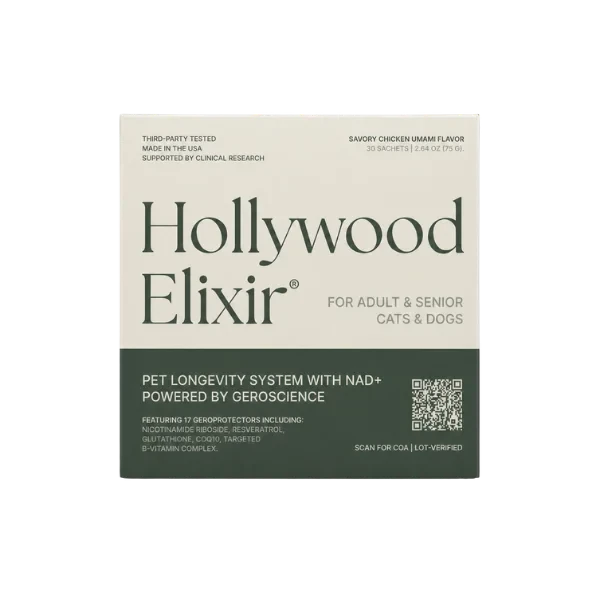
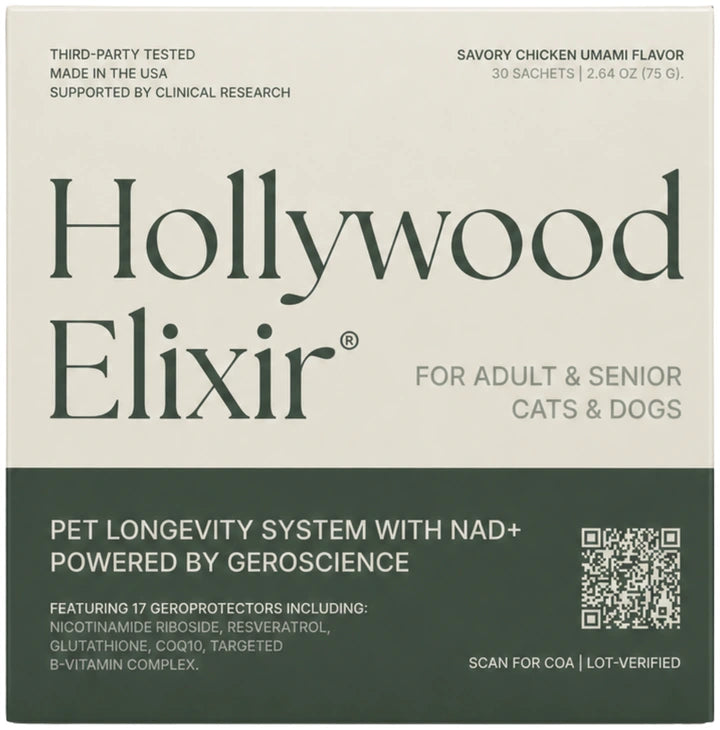
For healthy-aging nutrition beyond the equipment choice, Hollywood Elixir combines 17 actives in one daily formula, including NAD+ precursors, CoQ10 and antioxidant nutrients. Its complete ingredient-and-amount disclosure makes the whole formula easy to compare with separate supplements already in your dog’s routine. Review Hollywood Elixir’s formula and serving choices before deciding what belongs at the bowl. 6

Educational content only. This material is not a substitute for veterinary advice. Always consult your veterinarian about your dog’s specific needs. These statements have not been evaluated by the Food and Drug Administration. Products mentioned are not intended to diagnose, treat, cure, or prevent any disease.

Glossary

Paw width: The distance across the paw at its widest point. JAWZ asks for this measurement with the dog standing.

Cinching strap: An adjustable fastening that draws the slipper around the leg. Cushy-Paw's strap can be positioned around the wrist or ankle.

Rubber base: The rubber outer surface beneath the slipper that meets the floor, separate from the cushioned surface inside.

Related Reading

References

Numbered references identify the sources used for specific claims. Read the study design, species and evidence boundaries alongside each finding.

  1. Ask a Specialist: Sports Medicine and Physical Rehabilitation. Today’s Veterinary Practice · 2024Species/context: dogEvidence boundary: Specialist clinical discussion, not a randomized comparison or a universal wear schedule.↩ 1 · ↩ 2 · ↩ 3 · ↩ 4 · ↩ 5 · ↩ 6 · ↩ 7
  2. JAWZ Traction Booties. Walkabout Harnesses · Undated current pageSpecies/context: dogEvidence boundary: Manufacturer description establishes construction and instructions, not comparative performance or a clinical outcome.↩ 1 · ↩ 2 · ↩ 3 · ↩ 4
  3. Cushy-Paw Slippers. Thera-Paw · Undated current pageSpecies/context: dogEvidence boundary: Manufacturer description establishes construction and instructions, not comparative performance or a clinical outcome.↩ 1 · ↩ 2 · ↩ 3 · ↩ 4 · ↩ 5 · ↩ 6 · ↩ 7
  4. Thera-Paw Boot. Thera-Paw · Undated current pageSpecies/context: dogEvidence boundary: Manufacturer description establishes construction and instructions, not comparative performance or a clinical outcome.↩ 1 · ↩ 2
  5. 2023 AAHA Senior Care Guidelines: Pain Management. American Animal Hospital Association · 2023Species/context: dog, catEvidence boundary: Consensus guidance supports assessment and individually appropriate adaptations; it is not a product trial.↩
  6. Hollywood Elixir: current product description and supplement facts. La Petite Labs · Undated current pageSpecies/context: dog, catEvidence boundary: Manufacturer formulation and intended support only; no equipment, disease, mobility or symptom outcome is asserted.↩

FAQ

Are outdoor dog boots suitable for indoor traction?

Some products may have more than one intended use, but verify the exact model. A heavy or stiff outdoor sole may be difficult for a dog with impaired foot placement. Thera-Paw specifically labels its Thera-Paw Boot for outdoor use and offers Cushy-Paw as a separate indoor slipper. Do not assume the two are interchangeable. 1 4

What should I do if the boot keeps twisting?

Remove it and check the measurement, size and closure instructions. An oversized boot can rotate; simply tightening the strap may not solve an oversized sole or boot body. If fit remains uncertain, send the maker the measurements and ask your veterinary or rehabilitation team to assess the dog’s movement in the proposed footwear. 1

Can Cushy-Paw slippers be used for a dragging paw?

Thera-Paw does not recommend Cushy-Paw slippers for pets that knuckle or drag. A dragging paw needs an appropriate assessment and a product chosen for that particular need. Soft padding or a rubber base does not override the manufacturer’s exclusion. 3

Can my senior dog wear traction boots all day?

Do not treat an all-day marketing statement as an individual wear prescription. Veterinary guidance raises breathability and fit concerns. Arrange supervised introduction, removal and paw checks, and follow the model’s instructions plus your veterinary team’s advice. Moisture, rubbing or altered movement means the plan needs reassessment. 1

Should I buy two boots or four?

Choose the feet and purpose with your veterinary or rehabilitation team when weakness or altered placement is involved. Do not infer that four boots must be better than two. Measure each paw that will wear one, and check the exact package quantity: a pair, a single replacement and a full set are different purchases.

Dalmatian looking toward a Hollywood Elixir box held in a person's hand

Discover LPL-01: How This Fits Into a Larger Canine Longevity System

Aging in dogs is not driven by a single pathway. It’s the result of interacting biological systems—energy metabolism, oxidative stress, immune signaling, and structural integrity—changing over time.

This article explores one piece of that puzzle. If you want to understand how these pieces connect—and what actually moves the needle—you need to zoom out.

Start with the underlying science:

Keep exploring

What would you like to understand next?

Search practical guides about healthy aging, cellular energy, ingredients, and daily support for dogs.