
Cellular Senescence and Mitochondrial Health in Cats

Learn How Senescent Cells and Failing Mitochondria Drive Aging—and What to Do

Essential Summary

Why is cellular senescence and mitochondrial health important in cats?

Aging in cats is shaped by the quiet feedback loop between senescent cells and mitochondrial strain. While no supplement can “stop” time, supporting oxidative balance, cellular signaling, and steady energy production can help protect comfort and resilience. The most sensible approach is system-level support that fits safely into everyday life.

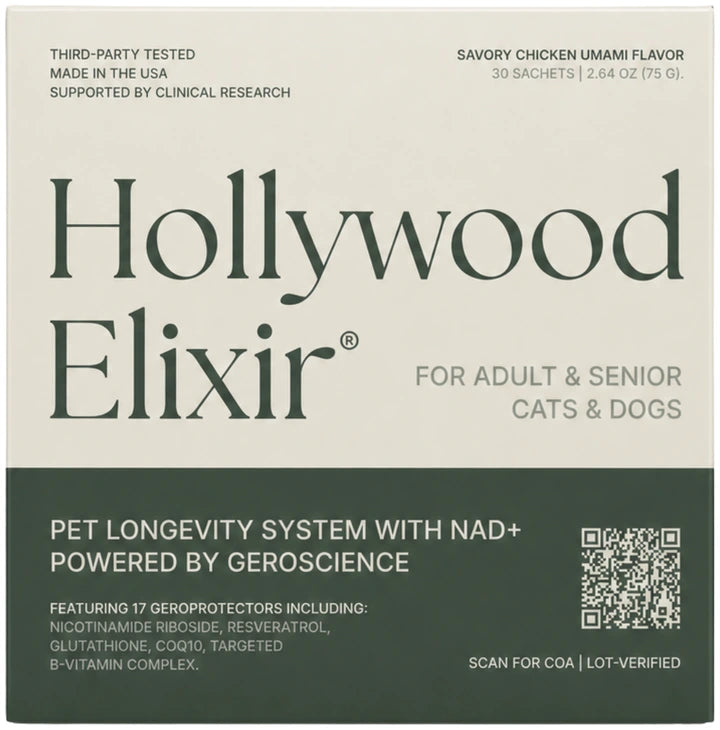
Hollywood Elixir™ is designed as system-level support for graceful aging—helping reinforce the broader metabolic network that influences cellular stress, energy steadiness, and day-to-day resilience, rather than chasing a single “anti-aging” ingredient.

Most cat owners don’t fear “aging” in the abstract. They fear the moment their cat seems less like herself—less curious, less comfortable, less sure-footed. The science behind that shift often lives at a scale you can’t see: cellular senescence and mitochondrial health in cats. Senescence describes cells that have stepped out of the normal cycle of renewal, yet remain active in ways that can change tissue tone. Mitochondria, meanwhile, help determine how well cells meet daily energy needs and handle stress, and their decline is a recurring theme in cellular aging.

The honest truth is that no supplement can make a cat young again. But it’s also true that aging is not a single switch; it’s a collection of pressures—oxidative stress, inflammatory signaling, and energy inefficiency—that can be softened. That’s where thoughtful support becomes rational. A system-level formula can reinforce the broader network that aging taxes, even when single-target strategies don’t deliver dramatic outcomes. Hollywood Elixir™ is positioned in that middle ground: not as a miracle claim, but as consistent support for the cellular environment that shapes comfort, resilience, and the feel of everyday life.

By La Petite Labs Editorial, ~15 min read

Featured Product:

  • Cellular senescence and mitochondrial health in cats are intertwined, shaping resilience over time.
  • Senescent cells can shift tissue tone toward lingering inflammation and reduced repair capacity.
  • Mitochondrial decline can contribute to cellular aging, and senescence can further strain energy handling.
  • Single-target strategies may disappoint; cat data suggests mitochondria-targeted catalase did not halt senescence onset (Mogck BA, 2024).
  • The best ways to improve mitochondrial health in cats start with steady routines, hydration, and body condition.
  • When owners seek the best supplements for cellular senescence in cats, broader network support is usually the most rational bet.
  • Hollywood Elixir™ fits a science-minded plan by supporting multiple aging-relevant systems without promising a reset.

The Quiet Biology That Shapes Aging Long Before You Notice

Aging in cats is rarely one dramatic event. It’s a slow shift in cellular priorities: repair becomes less efficient, inflammation lingers longer, and energy production grows less predictable. In the background sits the relationship between cellular senescence and mitochondrial health in cats—two processes that can amplify each other over time. Senescent cells are still alive, but they behave differently, sending signals that can disturb nearby tissues (López-Otín, 2013). Meanwhile, mitochondria—your cat’s cellular “power stations”—can lose resilience with age, changing how cells handle stress and fuel (Childs, 2014).

This matters because the visible signs owners notice—slower recovery after play, less spring in the jump, a narrower comfort zone—often reflect invisible biology. Research across aging biology links impaired mitochondrial function with increased senescence and frailty (Tomkova K, 2021). The goal is not to promise a reset. It’s to support the systems that keep daily life steady: energy, cellular housekeeping, and the inflammatory tone that shapes comfort.

Scientific mitochondria render emphasizing oxidative balance supported by how to support mitochondrial health in cats.

Cellular Senescence: When Cells Stop Dividing but Keep Signaling

Cellular senescence is a state where a cell stops dividing but doesn’t disappear. Instead, it can release signals that influence neighboring cells and tissue tone (López-Otín, 2013). In an older cat, a gradual rise in senescent cells may contribute to the “wear and tear” feeling owners recognize, even when lab work looks mostly normal.

Mitochondria sit close to this story. They help produce energy, but they also shape how cells respond to damage and stress. Mitochondrial dysfunction is a key factor in cellular senescence and aging, impacting cellular health (Miwa S, 2022). When these systems drift, the body’s ability to bounce back can narrow—subtly at first, then more noticeably.

Close-up DNA helix tied to cellular integrity and support from best ways to improve mitochondrial health in cats.

How the Keyword Connects to Real Senior-cat Moments at Home

The phrase cellular senescence and mitochondrial health in cats can sound abstract, but it maps onto familiar moments: a senior cat who needs longer to warm up, who prefers predictable routines, or who seems more sensitive to heat, cold, or travel. These aren’t moral failures or “laziness.” They’re often the outward face of cellular aging.

At the cellular level, senescence and mitochondria can reinforce each other. Senescent cells are associated with oxidative stress, and oxidative stress can strain mitochondrial performance. Over time, that can shift tissues toward lower efficiency. Supporting aging cats, then, is partly about reducing the background stressors that make this loop louder.

Protein fold visualization tied to cellular support mechanisms in mitochondrial health in aging cats.

Mitochondria and Aging: the Cost of Less Efficient Energy Handling

Mitochondrial function and cellular aging in cats are closely tied to how well cells manage energy demand. When mitochondria are less efficient, cells may compensate in ways that create more byproducts and more signaling “friction.” Cellular senescence can impact mitochondrial function, leading to altered energy metabolism in cells.

For owners, this suggests a practical priority: support steadiness rather than spikes. Big swings—overfeeding, underhydration, irregular sleep, sudden intense play—can be harder for older bodies to buffer. A calmer baseline gives mitochondria fewer reasons to struggle and tissues fewer reasons to inflame.

Pug close-up emphasizing comfort and connection supported by impact of cellular senescence on cat longevity.

Diet Is the Base Layer, but Aging Changes the Equation

Diet is the foundation, but it’s not the whole story. Many nutrients involved in mitochondrial upkeep are present in complete cat foods, yet aging can change absorption, appetite, and metabolic handling. Mitochondrial health is crucial for cellular energy production and can be compromised by senescent cells (Herranz, 2018). That means a cat can be “fed correctly” and still benefit from broader support aimed at oxidative balance and cellular housekeeping.

Think of supportive supplementation as reinforcing a network: not replacing meals, but helping the body use what it already has more smoothly. This is especially relevant when stress, illness history, or age-related changes make the system less forgiving.

Hollywood Elixir™ is amazing and makes my 13 y/o kitty young again!

— Jessie

She hopped up onto the windowsill again—first time in years.

— Charlie

“Aging rarely announces itself. It accumulates quietly, then becomes visible all at once.”

Daily Habits That Quietly Support Mitochondrial Health over Time

Owners often ask how to support mitochondrial health in cats without turning daily care into a lab experiment. The simplest answers are still the strongest: maintain a stable body condition, protect hydration, and keep movement gentle but regular. These choices reduce the metabolic “surprises” that older cells handle less elegantly.

From a biology standpoint, mitochondrial function is closely linked to cellular senescence and overall frailty in aging organisms. So the goal is to keep the whole organism less frail: fewer inflammatory triggers, fewer oxidative burdens, and more predictable routines. Supplements can fit here when they’re designed for long-term, cat-appropriate support (related: Glutathione for Cats).

Dog portrait tied to trust and long-term care supported by cellular senescence and mitochondrial health in cats.

When “Normal Aging” Is Actually a Medical Signal

It’s also worth acknowledging what supplements cannot do. They can’t erase time, and they shouldn’t be used to bypass veterinary workups when a cat’s behavior changes. The accumulation of senescent cells is linked to age-related diseases, impacting overall health in cats (Herranz, 2018). That’s a reminder to treat new symptoms—weight loss, thirst changes, vomiting, hiding—as medical signals first, “aging” second.

Once medical issues are addressed, supportive care can be a steady companion. The best supplements for cellular senescence in cats are those that fit safely alongside diagnostics, prescriptions, and the realities of feline preferences.

Dog looking ahead, capturing presence and calm energy supported by how to support mitochondrial health in cats.

Quality, Tolerability, and the Long View on Supplement Choices

If you’re evaluating the best ways to improve mitochondrial health in cats, quality matters as much as ingredients. Look for clear labeling, consistent sourcing, and formulations that avoid unnecessary stimulants or harsh additives. Cats are not small dogs; they metabolize certain compounds differently, and they can be less tolerant of strong flavors or gastrointestinal disruption.

Aging biology also suggests a “portfolio” mindset. Because mitochondrial dysfunction contributes to the overall aging process in cells, it can be sensible to support multiple protective systems at once—antioxidant buffering, cellular signaling balance, and metabolic steadiness—rather than betting everything on one narrow target.

Inside-the-box graphic showing active blend design supporting cellular senescence effects on cat health.

Aging Is Not Linear: Senescence, Cell Fate, and Resilience

The interplay between senescence and cell fate is part of why aging feels complicated. Senescence can be protective in the short term—preventing damaged cells from dividing—yet burdensome when senescent cells accumulate and keep signaling. At the same time, mitochondrial health influences whether cells can recover, adapt, or drift into dysfunction.

For cat owners, the practical takeaway is restraint. Choose supports that aim to keep cellular environments calmer: fewer oxidative spikes, fewer inflammatory surges, and better day-to-day energy handling (see: Astaxanthin for Cats). That’s the kind of support that can matter across months, not just mornings.

Choosing Supplements Without Chasing a Single Anti-aging Story

When people search for the best supplements for cellular senescence in cats, they’re often hoping for a single “senolytic” answer. In reality, feline aging support tends to be more about the environment senescent cells create—oxidative stress, inflammatory signaling, and reduced cellular flexibility—than about chasing one switch. Senescent cells can promote inflammation and tissue dysfunction, which can ripple into how organs feel and function day to day (López-Otín, 2013).

A science-minded approach looks for broad, well-tolerated support: antioxidant capacity, mitochondrial cofactors, and ingredients that help maintain normal cellular signaling (related: NAD+ for Cats). It also prioritizes quality controls, transparency, and veterinary compatibility. The best ways to improve mitochondrial health in cats usually start with fundamentals—diet, hydration, activity, sleep rhythms—then add targeted support that respects the complexity of aging rather than overselling a single molecule.

“The most credible support strategies aim for steadiness, not stimulation.”

Lab coat detail emphasizing vet-informed standards supporting best ways to improve mitochondrial health in cats.

Energy That Feels Steady: a Better Goal Than a Boost

Mitochondrial health in aging cats is not only about “more energy.” It’s about steadier energy. Mitochondria influence how cells respond to stress, how they manage oxidative byproducts, and how they decide between repair and shutdown. As mitochondrial function declines, cells can drift toward senescence, and senescence can further strain mitochondrial performance (Miwa S, 2022).

Owners often see this as variability: a cat who has good mornings and slower evenings, or who tolerates change less well than before. Supporting mitochondrial function and cellular aging in cats means thinking in systems—fuel availability, antioxidant defenses, and the cellular “cleanup” processes that keep components working longer (see: Blueberries for Cats). The aim is graceful consistency, not stimulation.

Shop Now
Curated ingredient scene highlighting bioactive blend supporting mitochondrial health in aging cats.

Mineral Balance, Iron, and Why More Is Not Always Better

Iron is essential, but it’s also reactive. In aging biology, iron handling has been tied to mitochondrial performance and frailty, suggesting that balance—not abundance—is the theme (Tomkova K, 2021). For cats, this is a reminder to avoid improvising with iron-containing supplements unless a veterinarian has identified a need. Too much of the wrong thing can create more oxidative pressure than the body comfortably buffers.

If you’re thinking about how to support mitochondrial health in cats, start by asking whether the plan respects mineral balance, kidney status, and diet composition. A well-designed aging formula should focus on network support—antioxidant systems, mitochondrial cofactors, and normal inflammatory tone—without pushing single minerals beyond what’s appropriate for a cat’s life stage (related: Antioxidants for Cats).

Shop Now
Owner showcasing product beside her pet, reflecting care through impact of cellular senescence on cat longevity.

Why Single-target Mitochondrial Fixes Can Disappoint in Cats

It’s tempting to assume that if mitochondria are involved, a mitochondria-targeted antioxidant will “solve” senescence. But cat-specific findings caution against simplistic expectations: mitochondria-targeted catalase did not inhibit the onset of cellular senescence as cats age (Mogck BA, 2024). That doesn’t make mitochondrial support irrelevant; it clarifies that aging is multi-causal and that single-target strategies may not translate into whole-body outcomes.

For owners, this is actually useful. It supports a calmer decision framework: choose interventions that are safe, broad, and compatible with long-term use, rather than chasing dramatic claims. System-level support can still be meaningful even when one narrow approach doesn’t change the overall arc.

Shop Now

Longevity as Resilience: What Aging Cells Mean for Later Years

The impact of cellular senescence on cat longevity is best understood as a pressure on resilience. Senescent cells accumulate with age and are linked to age-related disease patterns, affecting overall health in cats (Herranz, 2018). They can also influence mitochondrial energy production indirectly by changing the tissue environment—more inflammatory signaling, less efficient repair, and altered metabolic cues.

Longevity, for most families, is not just a number. It’s the quality of the later years: appetite, mobility, curiosity, and comfort. Supporting the biology that underwrites those traits means paying attention to inflammation, oxidative stress, and mitochondrial steadiness—without assuming any supplement can rewrite genetics or time.

From Cellular Stress to Daily Comfort: What Owners Actually See

Cellular senescence effects on cat health can show up as “ordinary” aging: slower healing, reduced tolerance for stress, and a body that feels less adaptable. Senescence is associated with increased oxidative stress, which can further impair mitochondrial health (Miwa S, 2022). Over time, that feedback loop can make tissues feel more reactive and less forgiving.

This is why supportive care often works best when it’s steady and unglamorous: consistent nutrition, gentle movement, predictable routines, and targeted support for antioxidant and mitochondrial systems. The goal is to reduce the background “noise” that makes aging feel harder, not to force the body into a younger state (see: Cellular Detoxification for Cats).

Comparison layout showing ingredient quality differences relevant to cellular senescence and mitochondrial health in cats.

What to Look for in a Cat-appropriate Aging Formula

If you’re comparing the best supplements for cellular senescence in cats, look for a philosophy that matches what aging biology suggests: senescence and mitochondria are intertwined, and interventions should respect that complexity. Cellular senescence can impact mitochondrial function, leading to altered energy metabolism in cells (Childs, 2014). A product that supports multiple points—oxidative balance, cellular signaling, and mitochondrial cofactors—fits the reality better than a single-ingredient bet.

Also consider practicalities: palatability, consistency of use, and whether the formula is designed for cats rather than adapted from human trends. The best ways to improve mitochondrial health in cats are the ones a cat will actually take, and that a veterinarian won’t have to “undo” later.

Shop Now
Open box with Hollywood Elixir inside, reinforcing mitochondrial health in aging cats premium cues.

Safety First: When Less Supplement Stacking Is More

Aging support should feel compatible with real life. That means avoiding aggressive stacking of supplements, especially in cats with kidney disease, hyperthyroidism, diabetes, heart disease, or those on multiple medications. Because mitochondrial function is closely linked to senescence and frailty in aging organisms, owners sometimes overcorrect with stimulatory products (Tomkova K, 2021). In cats, “more” can easily become “too much,” particularly when appetite and hydration are already delicate.

A safer posture is incremental: introduce one change at a time, watch stool and appetite, and keep your veterinarian in the loop. The point is to support comfort and resilience, not to chase rapid transformation.

Shop Now

Where Hollywood Elixir™ Fits in a Science-minded Aging Plan

A careful, science-minded owner might ask: if aging is complex and single-target solutions disappoint, why choose a product at all? The answer is that daily, system-level support can still be rational. Mitochondrial health is crucial for maintaining cellular function and longevity, particularly in aging organisms (Childs, 2014). A thoughtfully formulated blend can support the broader network—oxidative balance, cellular signaling, and metabolic steadiness—without pretending to “stop aging.”

That’s the role of a product like Hollywood Elixir™ in an aging plan: not as a replacement for diet or veterinary care, but as a consistent, cat-friendly way to reinforce the background systems that aging quietly taxes over time.

“System-level support respects complexity without surrendering to it.”

Educational content only. This material is not a substitute for veterinary advice. Always consult your veterinarian about your cat’s specific needs. These statements have not been evaluated by the Food and Drug Administration. Products mentioned are not intended to diagnose, treat, cure, or prevent any disease.

Glossary

  • Cellular Senescence: A state where cells stop dividing and can release signals that affect surrounding tissue tone.
  • Senescent Cell Accumulation: The gradual increase of senescent cells with age, associated with age-related decline.
  • Mitochondria: Cellular structures that help produce energy and influence stress responses.
  • Mitochondrial Function: How efficiently mitochondria produce energy and manage cellular stress byproducts.
  • Oxidative Stress: An imbalance where reactive molecules outpace the body’s buffering systems, potentially straining cells.
  • Inflammatory Tone: The background level of inflammatory signaling in tissues, which can rise with age.
  • Frailty: Reduced physiological reserve, often seen as slower recovery and lower tolerance for stressors.
  • Energy Metabolism: The process of converting food into usable cellular energy; can shift with aging.
  • System-Level Support: A formulation strategy that supports multiple connected aging-relevant systems rather than one target.

Related Reading

References

Mogck BA. Mitochondria-Targeted Catalase Does Not Suppress Development of Cellular Senescence during Aging.. PubMed. 2024. https://pubmed.ncbi.nlm.nih.gov/38398016/

Tomkova K. A systematic review and meta-analysis of studies that have evaluated the role of mitochondrial function and iron metabolism in frailty.. PubMed. 2021. https://pubmed.ncbi.nlm.nih.gov/34240568/

Miwa S. Mitochondrial dysfunction in cell senescence and aging.. PubMed. 2022. https://pubmed.ncbi.nlm.nih.gov/35775483/

Childs. Senescence and apoptosis: dueling or complementary cell fates?. Springer. 2014. https://link.springer.com/article/10.1007/s12015-022-10370-8

Herranz. Mechanisms and functions of cellular senescence.. Springer. 2018. https://link.springer.com/article/10.1186/s40035-024-00447-4

López-Otín. The hallmarks of aging.. Nature. 2013. https://www.nature.com/articles/s41569-021-00624-2

De Afonso Bonotto NC. The mitochondrial and cytoplasmic superoxide anion imbalance trigger the expression of certain cellular aging markers in HaCaT keratinocytes.. PubMed. 2024. https://pubmed.ncbi.nlm.nih.gov/39725767/

Qin Y. Cellular Senescence in Health, Disease, and Lens Aging.. PubMed. 2025. https://pubmed.ncbi.nlm.nih.gov/40006057/

Dominic A. Mitochondria and chronic effects of cancer therapeutics: The clinical implications.. PubMed. 2021. https://pubmed.ncbi.nlm.nih.gov/33079380/

Sharma K. Targeting mitochondrial dysfunction to salvage cellular senescence for managing neurodegeneration.. PubMed. 2023. https://pubmed.ncbi.nlm.nih.gov/37437982/

Steiner. Senescence in Bacteria and Its Underlying Mechanisms.. Nature. 2021. https://www.nature.com/articles/s12276-025-01480-7

Zorov. Mitochondrial reactive oxygen species (ROS) and ROS-induced ROS release.. 2014. https://www.mdpi.com/2073-4409/10/11/3003

Guan. Therapeutic effect of dietary ingredients on cellular senescence in animals and humans: A systematic review. 2024. https://www.sciencedirect.com/science/article/pii/S1568163724000564

Shields. Beneficial and Detrimental Effects of Reactive Oxygen Species on Lifespan: A Comprehensive Review of Comparative and Experimental Studies.. Nature. 2021. https://www.nature.com/articles/s41514-025-00291-4

Camacho-Encina. Cellular Senescence, Mitochondrial Dysfunction, and Their Link to Cardiovascular Disease. 2024. https://www.mdpi.com/2073-4409/13/4/353

FAQ

What is cellular senescence in cats, in plain language?

Cellular senescence is when a cell stops dividing but doesn’t fully “switch off.” Instead, it can release signals that influence nearby tissue, including inflammatory cues that may affect comfort over time. In older cats, it’s one reason aging can feel like a gradual loss of resilience rather than a single event.

Support typically focuses on the broader cellular environment—stress buffering and steady energy handling—where Hollywood Elixir™ can fit into a long-term plan.

Why does mitochondrial health matter more as cats get older?

Mitochondria help cells produce usable energy, but they also influence how cells respond to stress. As cats age, mitochondrial function can become less efficient, and that decline is linked to broader frailty patterns in aging biology. Owners may notice this as less tolerance for change, slower recovery, or narrower activity windows.

A sensible goal is steadier energy and calmer cellular stress, which is the kind of system-level support Hollywood Elixir™ is designed to complement.

How are senescent cells and mitochondria connected in cats?

They can reinforce each other. Mitochondrial dysfunction is considered a key contributor to cellular senescence and aging, and senescent cells are often associated with higher oxidative stress that can further strain mitochondria. In everyday terms, the cellular “power” system and the cellular “aging” system can become a feedback loop.

That’s why broad support—rather than a single-target bet—often makes sense, including options like Hollywood Elixir™ for ongoing aging support.

What are cellular senescence effects on cat health owners notice?

The effects are usually indirect: reduced bounce-back after exertion, more sensitivity to stress, and a general “less flexible” feel to the body. Senescent cells can promote inflammation and tissue dysfunction, which may shape comfort and mobility over time. These signs overlap with many medical issues, so changes deserve a veterinary check.

Once health conditions are addressed, steady system support can be helpful, including Hollywood Elixir™ as part of a consistent routine.

Can supplements stop cellular senescence in cats completely?

No responsible product should promise that. Aging is multi-causal, and even targeted approaches may not change the overall onset of senescence in cats; one cat-focused finding reported mitochondria-targeted catalase did not inhibit senescence onset with age(Mogck BA, 2024). That doesn’t make support pointless—it just reframes it as resilience support, not reversal.

For owners who want a realistic, system-level option, Hollywood Elixir™is positioned to support aging biology without dramatic claims.

What is the best timeline to see aging support benefits?

With gentle, supportive products, changes are usually subtle and gradual—often noticed as steadier day-to-day patterns rather than a sudden “boost.” Because mitochondrial function and cellular aging in cats reflect long-term cellular wear, it’s reasonable to think in weeks to months, not days. Any rapid change, good or bad, should be discussed with your veterinarian.

If you want a consistent option designed for long-term use, consider Hollywood Elixir™ alongside routine monitoring.

Are there risks when combining multiple anti-aging supplements for cats?

Yes—especially in cats with kidney disease, thyroid disease, diabetes, heart disease, or those taking prescriptions. Stacking can increase the chance of GI upset, appetite changes, or ingredient overlap (including minerals). Because aging biology links mitochondrial strain with frailty patterns, owners sometimes overcorrect with too many products at once.

A safer approach is one change at a time, with veterinary guidance, and a streamlined option like Hollywood Elixir™ to avoid unnecessary complexity.

What are quality signs for mitochondrial supplements for cats?

Look for clear ingredient disclosure, cat-appropriate formulation, and manufacturing transparency. Avoid products that rely on dramatic promises about reversing aging. Since mitochondrial health is crucial for maintaining cellular function and longevity in aging organisms, it’s worth choosing products that emphasize steady support and tolerability rather than stimulation.

For owners who prefer a system-level blend designed for graceful aging, Hollywood Elixir™ is a practical place to start.

How does inflammation relate to cellular senescence in older cats?

Senescent cells can contribute to a more inflammatory tissue environment, which may make aging feel “louder” in the body—stiffer movement, slower recovery, and less tolerance for stress. Inflammation also interacts with energy handling, so it can indirectly affect how steady a cat feels day to day.

That’s why many owners focus on broad resilience support, including Hollywood Elixir™ as part of a calm, consistent routine.

Is cellular senescence and mitochondrial health in cats breed-specific?

The underlying biology is universal, but the pace of visible aging can differ by genetics, body condition, lifestyle, and medical history. Some cats show earlier mobility changes; others show more cognitive or appetite shifts. Because senescence and mitochondrial function influence resilience, the same age can look very different across individuals.

A flexible, system-level approach—rather than breed “hacks”—is where Hollywood Elixir™ can support a wide range of aging profiles.

Do cats and dogs age the same at the cellular level?

They share many aging themes—senescent cell accumulation, mitochondrial wear, and shifting inflammatory tone—but species differences matter for metabolism and supplement tolerance. Cat-specific research reminds us that not every mitochondria-focused strategy translates into delayed senescence outcomes in cats. That’s one reason feline-formulated products are preferable to “small dog” adaptations.

For cat-first system support, Hollywood Elixir™ is built around feline needs and long-term use.

What should I ask my vet about mitochondrial health in aging cats?

Ask what’s most likely driving your cat’s changes: pain, thyroid disease, kidney disease, dental disease, or weight loss can mimic “aging.” Then ask whether a supplement is appropriate given medications and lab results. Since senescent cell accumulation is linked to age-related disease patterns in cats, it’s wise to pair support with monitoring.

If your veterinarian agrees a broad aging formula fits, you can discuss options like Hollywood Elixir™ for consistent, system-level support.

Are there side effects to watch for with aging supplements?

The most common issues are gastrointestinal: softer stool, reduced appetite, or occasional vomiting, especially when starting something new. Any behavior change that persists, or any sudden lethargy, should be treated as a medical concern rather than a “detox” narrative. Aging biology is complex, and cats can be sensitive to formulation details.

Introduce new products gradually and keep your veterinarian informed; for a cat-friendly option, consider Hollywood Elixir™ as part of a measured plan.

Can supplements interact with thyroid or kidney medications in cats?

They can. Even when ingredients seem gentle, timing, absorption, and appetite effects can matter in cats on chronic medications. Cats with kidney disease also have narrower margins for mineral balance and hydration stability. Because senescence is linked with age-related disease burden in cats, many seniors are medicated, so coordination matters.

Before adding anything new, confirm compatibility with your veterinarian; if approved, Hollywood Elixir™ can be considered as a streamlined support option.

What age should I start supporting cellular aging in cats?

There isn’t one perfect birthday. Many owners begin paying closer attention in midlife, when weight, dental health, and activity patterns start to shift. Since mitochondrial function is linked to senescence and frailty patterns in aging biology, earlier consistency can be easier than later catch-up. The right timing depends on your cat’s health history and veterinary input.

If you’re choosing a gentle, long-term approach, Hollywood Elixir™ can be part of that steady baseline.

What are the best ways to improve mitochondrial health in cats?

Start with the basics: stable body condition, hydration, high-quality complete nutrition, and gentle daily movement. Reduce chronic stressors—unpredictable feeding, conflict with other pets, poor litter access—because stress can raise oxidative burden. Mitochondrial dysfunction contributes to cellular aging, so consistency is a meaningful intervention even before supplements.

Then consider system-level support that fits long-term use, such as Hollywood Elixir™ for broader aging resilience.

Which ingredients are often discussed for cellular senescence support?

Owners often hear about antioxidants, mitochondrial cofactors, and plant compounds discussed in aging research. The key is not the trend, but whether the formula is cat-appropriate and designed for steady support. Senescent cells can influence mitochondrial energy production and tissue function, so multi-angle support is usually more coherent than single-ingredient chasing.

For a balanced approach that avoids dramatic promises, Hollywood Elixir™ is positioned as network support for aging cats.

How do I give an aging supplement to a picky cat?

Prioritize calm consistency. Offer it at the same time daily, pair it with a favored texture, and avoid turning it into a struggle that raises stress. If your cat refuses, don’t “force through” for weeks—palatability matters because long-term support only works when it’s actually taken. Aging support is about steadiness, not battles.

If you want a cat-friendly option designed for routine use, consider Hollywood Elixir™ as part of a low-friction daily ritual.

When should I call the vet about aging-related changes?

Call promptly for weight loss, appetite changes, increased thirst, vomiting, hiding, breathing changes, or sudden mobility decline. These can signal treatable disease, not just aging. Since senescent cell accumulation is linked to age-related disease burden in cats, it’s especially important not to self-diagnose “normal aging”.

After medical causes are addressed, supportive routines may include Hollywood Elixir™ for ongoing resilience support.

How does this relate to cat longevity without making promises?

The impact of cellular senescence on cat longevity is best viewed as a resilience issue: senescent cells can contribute to tissue dysfunction and inflammatory tone over time. Supporting mitochondrial steadiness and stress buffering may help maintain quality of life, but it’s not a guarantee of lifespan extension. The most honest goal is better day-to-day consistency.

For owners who want that kind of realistic, system-level support, Hollywood Elixir™ is designed to fit into a long-view aging plan.

5K+ Happy Pet Parents

Excellent 4.8

Cellular Senescence and Mitochondrial Health in Cats | Why Thousands of Pet Parents Trust Hollywood Elixir™

"My go-to nutrient-dense topper. Packed with 16 powerful anti-aging actives and superfoods!"

Chanelle & Gnocchi

"We go on runs pretty often; he use to get tired halfway through, but lately, he's been keeping up without any problem."

Cami & Clifford

"He seems more happy overall. I've also noticed he has more energy which makes our walks and playtime so much more fun."

Olga & Jordan

"I want her to live forever. She hasn't had an ear infection since!"

Madison & Azula

"My go-to nutrient-dense topper. Packed with 16 powerful anti-aging actives and superfoods!"

Chanelle & Gnocchi

"We go on runs pretty often; he use to get tired halfway through, but lately, he's been keeping up without any problem."

Cami & Clifford

"He seems more happy overall. I've also noticed he has more energy which makes our walks and playtime so much more fun."

Olga & Jordan

"I want her to live forever. She hasn't had an ear infection since!"

Madison & Azula

"My go-to nutrient-dense topper. Packed with 16 powerful anti-aging actives and superfoods!"

Chanelle & Gnocchi

"We go on runs pretty often; he use to get tired halfway through, but lately, he's been keeping up without any problem."

Cami & Clifford

"He seems more happy overall. I've also noticed he has more energy which makes our walks and playtime so much more fun."

Olga & Jordan

"I want her to live forever. She hasn't had an ear infection since!"

Madison & Azula

"My go-to nutrient-dense topper. Packed with 16 powerful anti-aging actives and superfoods!"

Chanelle & Gnocchi

"We go on runs pretty often; he use to get tired halfway through, but lately, he's been keeping up without any problem."

Cami & Clifford

"He seems more happy overall. I've also noticed he has more energy which makes our walks and playtime so much more fun."

Olga & Jordan

"I want her to live forever. She hasn't had an ear infection since!"

Madison & Azula

SHOP NOW