Dog Biting Skin

Learn What Drives Chewing and How to Rebuild Skin Defenses

Essential Summary

Why is it important to address a dog biting its skin?

When a dog keeps chewing at their skin, the priority is comfort plus protection: identify the trigger, calm the itch, and prevent further self-trauma. Parasites, allergies, and secondary infection can overlap, so patterns and a veterinary exam matter. With consistent care, owners typically see less redness, fewer chew sessions, and a smoother, better-kept coat.

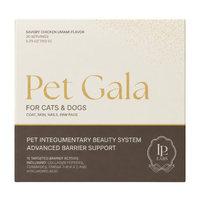
Pet Gala™ fits naturally into an itch-support routine because it’s designed for visible skin, coat, and nail presentation—daily care that shows up as softness, shine, and fewer rough-looking patches that invite nibbling. It doesn’t replace diagnosis or treatment; it supports the polished, well-kept look owners want to maintain between vet visits and grooming appointments.

Few things unsettle a pet parent faster than seeing dog biting skin—especially when the coat starts to look uneven, the skin turns pink, or a once-sleek area becomes a daily target. The good news is that most cases follow recognizable patterns. The better news is that the progress you want is visible: fewer chew sessions, less redness, less moisture, and a coat that lies smooth again.

This page focuses on the most common reasons dogs chew (parasites, allergies, irritation, and secondary infection), what to watch for at home, and when to involve your veterinarian. It also answers the practical question a science-minded owner asks next: if you already feed well and groom carefully, why add a skin-and-coat product at all? Because “adequate” isn’t the same as “noticeably comfortable and well-kept.” A daily routine that supports the skin, coat, and nails as a system can help maintain the polished signals you care about—softness, shine, and fewer rough-looking patches that invite chewing—alongside vet-led diagnosis and treatment.

By La Petite Labs Editorial, ~15 min read

Featured Product:

  • Chewing is often a comfort signal first, then a habit; early attention prevents a small itch from becoming a raw patch.
  • Track the pattern: where it happens, when it flares, and what the skin looks like before and after chewing.
  • Common drivers include parasites, allergies, contact irritation, and secondary yeast or bacterial overgrowth.
  • If skin is broken, treat it like a wound: block access, keep it clean and dry, and get veterinary guidance.
  • Visible progress looks like less redness, less moisture, reduced odor, and a coat that lies flat instead of looking chewed.
  • Grooming choices matter: gentle bathing, thorough drying, and friction-aware gear can reduce repeat flare-ups.
  • A daily skin-and-coat supplement supports the “well-kept” signals owners care about, alongside vet-led diagnosis.

When Chewing Starts, the Skin’s Story Is Already Changing

When you notice dog biting skin, it rarely starts as “bad behavior.” It’s usually a comfort problem that becomes a habit: a small itch turns into focused chewing, then the skin looks shiny, damp, or thinned where teeth keep landing. The goal is to calm the sensation and protect the surface so it can look normal again—smooth, dry, and quietly comfortable.

Start by observing patterns: is it worse after walks, after meals, at night, or right after grooming? That timing helps your vet separate allergies, parasites, irritation, and infection. Self-trauma can also open the door to secondary issues, so early attention matters—especially if you’re seeing broken skin or oozing (Asad U, 2020).

Coat shine detail showing beauty mechanisms supported by why does my dog keep biting her skin.

Itch Versus Habit: What Owners Notice Before the Vet Visit

Dog biting skin itching often looks like quick nibbles along the flank, paws, or tail base—sometimes paired with scratching, face rubbing, or scooting. The skin may appear pink, flaky, or darker than usual, and the coat can look broken where teeth keep catching the hair.

The most common buckets are parasites, allergies, infection/overgrowth, contact irritation, and less often pain or stress-related habits (Cunningham A, 2025). Because these can overlap, a clear description (where, when, and how intense) is often more useful than a single photo. Your notes help your veterinarian choose the right tests instead of guessing.

Close-up collagen structure tied to skin support from why does my dog keep biting her skin.

Quick At-home Observations That Make Vet Visits More Productive

If you’re asking, “why does my dog keep biting his skin,” start with the simplest checks: look for fleas or flea dirt with a comb, inspect between toes, and part the hair to see if the skin is red, moist, or scabby. Notice whether the itch is localized (one hotspot) or generalized (multiple areas).

Localized chewing often points to a hotspot, a sore toe, an ear issue, or a contact irritant. Generalized chewing can fit allergies or parasites. Either way, repeated biting can damage the skin barrier and invite secondary infection, which is why early evaluation is so valuable (Asad U, 2020).

Beauty ingredient model representing bioactive synergy found in why does my dog keep biting his skin.

Hot Spots and Fast Flares: Why Small Itches Become Big Patches

Hot spots (acute moist dermatitis) can appear overnight: a small itch becomes a wet, raw patch that spreads as your dog chews and licks. You may see clumped hair, a shiny surface, and a strong urge to keep working at it.

Because these areas can become infected and painful, it’s smart to get veterinary guidance quickly, especially if the patch is large or your dog can’t settle (Yoon Y, 2025). While you wait, prevent access with a cone or suit and keep the area dry. The visible aim is to stop the “wet cycle” so the skin can return to a calm, matte look.

Dog looking radiant, symbolizing beauty and care supported by how to stop dogs from biting their skin.

Paws, Toes, and Pads: the Most Common Chew Zones

Paws are a common focus when dog scratching and biting skin is driven by allergies or irritation. Dogs may chew between toes, lick the pads, or rub their face after walks. You might notice rusty saliva staining, a corn-chip odor, or redness between the digits.

Rinse paws after outdoor time, dry thoroughly, and keep hair trimmed so moisture doesn’t linger. If there’s swelling, discharge, or repeated limping, your vet may check for infection or foreign material. The visible win is simple: paws that look clean and dry, and a dog that can stand still without immediately going into a licking loop.

The scratching is completely gone, his coat looks healthy and shiny!

— Lena

He was struggling with itching, now he's glowing.

— Grace

“The goal isn’t just less chewing—it’s skin that looks calm and a coat that stays intact.”

Ears as the Hidden Trigger Behind Body Chewing

Ears can be the hidden driver behind chewing elsewhere. A dog may scratch an ear, then redirect into nibbling the shoulder, flank, or paw on the same side. If you see head shaking, odor, or dark debris, mention it—ear discomfort often travels as “itchy energy” across the body (Cunningham A, 2025).

Avoid putting anything into the ear canal unless directed. Once the ear is comfortable, many dogs stop the secondary chewing that made the coat look ragged. Owners often notice the change as a calmer expression and fewer sudden, frantic scratch bursts.

Dog portrait tied to beauty and care supported by dog biting skin itching.

Contact Irritation from Gear, Grass, and Household Products

Contact irritation is easy to overlook: new detergents, lawn treatments, rough bedding, or even a poorly fitting harness can create a small area of discomfort that becomes a chewing target. Look for symmetry (both armpits, both inner thighs) or a clear outline where gear sits.

Switch to fragrance-free laundry products, rinse well, and consider a different harness style if rubbing is visible. If the skin looks broken or the area keeps worsening, have it checked; damaged skin can become infected more easily. The visible goal is a clean line of fur regrowth and a dog who no longer “checks” that spot with their teeth.

Canine side view symbolizing beauty confidence supported through dog scratching and biting skin.

Nutrition and Visible Coat Quality During Itchy Seasons

Nutrition and skin appearance are tightly linked to what owners can see: softness, sheen, and how quickly the coat looks “fresh” after grooming. Even with a high-quality diet, some dogs benefit from additional support for the skin barrier and coat presentation, especially during seasonal itch or dry indoor months (Savu AN, 2021).

This is where a beauty-forward routine makes sense: consistent grooming, hydration, and a daily supplement that supports skin, coat, and nails as a system—so the visible signals stay steady. The practical payoff is fewer flaky patches that invite nibbling and a coat that keeps its luster between baths.

Visual ingredient map showing formulation transparency connected to dog biting skin itching.

What Your Vet May Check When Chewing Won’t Stop

A vet visit for persistent chewing is usually straightforward and targeted. Depending on what your dog’s skin looks like, your veterinarian may recommend flea control review, skin cytology for yeast/bacteria, skin scrapings for mites, or an allergy plan (Monti, 2024). The point is to confirm what’s driving the itch rather than layering random products.

Bring a timeline and photos from “good days” and “bad days.” Those comparisons help your vet see whether the issue is spreading, recurring, or shifting locations. The best outcome is not just fewer symptoms; it’s a dog whose coat looks even again—no chewed edges, no damp patches, and a calmer daily rhythm.

A Practical Plan to Reduce Itch Signals and Block Access

If you’re wondering how to stop dogs from biting their skin, think in two tracks: reduce the itch signal and block the “access.” Reducing the signal may include parasite control, allergy management, and treating secondary infection when present (Monti, 2024). Blocking access can be as simple as an e-collar for a short window, a recovery suit, or covering a hotspot so teeth can’t keep re-injuring it.

Behavior support helps too, but it works best after comfort improves. Offer chew alternatives, short training sessions, and calm enrichment during the hours your dog typically starts chewing. The visible win you’re aiming for is fewer “drive-by” nibbles, less redness, and a coat that lies flat again instead of looking ruffled around the problem area.

“Patterns matter: where it happens, when it flares, and what changes you can actually see.”

Clinical branding image reflecting trust and validation behind dog itching biting skin.

When Skin Turns Raw: Protect the Surface and Escalate Care

When dog biting skin raw becomes the headline, treat it like a wound first and an itch second. Raw patches can sting, attract licking, and become contaminated. Because bite wounds and broken skin can become infected, prompt assessment and appropriate care are important—especially when the area is deep, swollen, or painful (Yoon Y, 2025).

Until you’re seen, prevent further chewing (cone or suit), keep the area clean and dry, and avoid applying human creams unless your veterinarian approves. The most reassuring sign is when the surface stops looking wet or angry and begins to look matte and calm—less heat, less odor, and less urgency in your dog’s body language.

Shop Now
Ingredient still life illustrating clean formulation principles for why does my dog keep biting his skin.

Allergies and Recurring Itch: Patterns That Point to Triggers

Allergies are a common reason a dog keeps returning to the same spots. Environmental triggers can flare seasonally or indoors year-round; food-related reactions can look similar. Your veterinarian may recommend a structured diet trial or other allergy plan to narrow the cause (See AM, 2009).

From an owner’s perspective, the “signal” of progress is practical: fewer paw chews after coming inside, less face rubbing, and a coat that looks evenly groomed rather than patchy. Even when diet is already thoughtful, targeted skin-and-coat support can matter because the goal isn’t just adequacy—it’s a visibly comfortable, well-kept finish that holds up through everyday life.

Shop Now
Woman with Pet Gala box in cozy setting aligned with how to stop dogs from biting their skin.

Parasites You Can’t Always See, but Dogs Can Always Feel

Parasites can be easy to miss and still cause intense chewing. Fleas may be hard to spot on dark coats, and some dogs react strongly to even a few bites. Mites can also trigger persistent itch and require specific diagnostics and treatment (Monti, 2024).

If your dog scratching and biting skin is worst at the rump, tail base, or thighs, bring that detail to your appointment. The visible goal after proper prevention is not only fewer scratches, but a calmer posture—less sudden twisting to reach the skin, and fewer “nibble sessions” that leave the coat broken and uneven.

Shop Now

Yeast and Bacteria: the Odor, Grease, and Color Changes

Bacterial and yeast overgrowth often follow repeated chewing. Moisture, skin folds, and self-trauma create the perfect conditions for odor, greasiness, and a darker, thickened look in the area. Vets commonly confirm this with simple in-clinic tests and then tailor treatment (Asad U, 2020).

At home, your role is consistency: prescribed topicals exactly as directed, keeping the area dry, and preventing re-injury. The visible signs that you’re turning the corner include less smell, less shine from moisture, and a return to normal color. If the patch keeps spreading or your dog seems painful, recheck quickly.

Grooming Choices That Calm Skin and Keep Coats Polished

Grooming can either soothe or accidentally aggravate. Over-bathing, harsh shampoos, or leaving damp undercoat can make a dog itching biting skin worse. On the other hand, the right bathing cadence and thorough drying can reduce surface debris and help the coat look polished again (Savu AN, 2021).

Ask your groomer to note any redness, dandruff, or thinning. Brush as a calm ritual rather than a chore: short sessions, gentle tools, and attention to friction points like armpits and collar lines. The “beauty logic” here is simple—comfortable skin shows up as a coat that lies smoothly and reflects light evenly.

Comparison layout showing ingredient quality differences relevant to how to stop dogs from biting their skin.

Stress, Habit, and Comfort: When Chewing Becomes a Ritual

Sometimes the question “why does my dog keep biting her skin” has a non-dermatology answer: stress, boredom, or a learned soothing behavior. These cases often look like repetitive nibbling in the same quiet moments, with fewer classic allergy clues. Still, rule out medical causes first, because discomfort and anxiety can overlap.

Once comfort is addressed, build a calmer routine: predictable walks, enrichment that uses the nose, and a designated “settle” spot. The visible goal is a dog who can relax without scanning their body for the next itch—less restless shifting, fewer sudden turns to bite, and a coat that stays intact between grooms.

Shop Now
Pet Gala box in open packaging, showing premium presentation for dog scratching and biting skin.

Red Flags That Deserve a Vet Call, Not a Wait-and-see

Know when to call the vet urgently. Seek prompt care if you see rapidly spreading redness, pus, a strong odor, swelling, feverish warmth, limping, or a wound that looks deep. Broken skin can become infected and may need medical treatment to prevent complications (Yoon Y, 2025).

Also call if chewing is near the eyes, ears, genitals, or between toes—areas that can worsen quickly. If your dog has bitten hard enough to create punctures, treat it with the seriousness of a bite injury; severity and consequences can vary by location and depth (Giovannini E, 2023).

Shop Now

Keeping Good Skin Days Consistent with Simple Daily Rituals

Long-term success is about keeping the “good skin days” visible and repeatable. That means staying consistent with parasite prevention, revisiting allergy plans when seasons change, and maintaining grooming that supports a clean, dry coat. Prevention strategies work best as a combination of education, responsible routines, and attention to behavior cues (Duncan-Sutherland N, 2022).

For many owners, a daily skin-and-coat supplement becomes part of that routine because it’s easy to keep steady when life gets busy. The point isn’t to replace a balanced diet; it’s to support the visible signals you care about—softness, shine, and fewer “rough patches” that invite chewing.

“Consistency is a beauty ritual for dogs, too—clean, dry skin and a polished coat finish.”

Educational content only. This material is not a substitute for veterinary advice. Always consult your veterinarian about your dog’s specific needs. These statements have not been evaluated by the Food and Drug Administration. Products mentioned are not intended to diagnose, treat, cure, or prevent any disease.

Glossary

  • Pruritus: The medical term for itching that drives scratching, licking, or chewing.
  • Self-Trauma: Skin damage caused by the dog’s own scratching, licking, or biting.
  • Hot Spot (Acute Moist Dermatitis): A rapidly developing, wet, inflamed patch worsened by licking and chewing.
  • Skin Barrier: The outer protective layer that helps keep moisture in and irritants out.
  • Secondary Infection: Bacterial or yeast overgrowth that develops after the skin is irritated or damaged.
  • Flea Allergy Dermatitis: An allergic reaction to flea saliva that can cause intense itch even with few fleas.
  • Contact Dermatitis: Irritation triggered by something touching the skin, such as grass, detergents, or gear friction.
  • Cytology: A simple test where a vet examines skin or ear samples under a microscope for yeast or bacteria.
  • Elimination Diet Trial: A structured feeding plan used to evaluate whether food ingredients contribute to itch.

Related Reading

References

Shen J. Systematic Review: Interventions to Educate Children About Dog Safety and Prevent Pediatric Dog-Bite Injuries: A Meta-Analytic Review.. PubMed. 2017. https://pubmed.ncbi.nlm.nih.gov/26773009/

Yoon Y. Infection prevention and treatment following dog bites: a systematic review of randomized controlled trials.. PubMed. 2025. https://pubmed.ncbi.nlm.nih.gov/40175075/

Duncan-Sutherland N. Systematic review of dog bite prevention strategies.. PubMed. 2022. https://pubmed.ncbi.nlm.nih.gov/35393286/

Giovannini E. Medico-legal implications of dog bite injuries: A systematic review.. PubMed. 2023. https://pubmed.ncbi.nlm.nih.gov/37783138/

Patterson KN. Pediatric dog bite injuries in the USA: a systematic review.. PubMed. 2022. https://pubmed.ncbi.nlm.nih.gov/36474513/

Cunningham A. Surgical Management of Pediatric Dog Bites: A Systematic Review and Treatment Guideline.. PubMed. 2025. https://pubmed.ncbi.nlm.nih.gov/39462695/

Monti. Psychological Sequelae of Dog Bites in Children: A Review. 2024. https://www.mdpi.com/2227-9067/11/10/1218

Asad U. Effect of topical dermatologic medications in humans on household pets.. PubMed Central. 2020. https://pmc.ncbi.nlm.nih.gov/articles/PMC6988634/

See AM. Toxicity in three dogs from accidental oral administration of a topical endectocide containing moxidectin and imidacloprid.. PubMed. 2009. https://pubmed.ncbi.nlm.nih.gov/19673850/

Savu AN. Practical Review of the Management of Animal Bites.. PubMed Central. 2021. https://pmc.ncbi.nlm.nih.gov/articles/PMC8432645/

Kalnins NJ. Antimicrobials in dog-to-dog bite wounds: A retrospective study of 1526 dog bite events (1999-2019).. PubMed Central. 2022. https://pmc.ncbi.nlm.nih.gov/articles/PMC9708412/

Di Cesare. Gabapentin: Clinical Use and Pharmacokinetics in Dogs, Cats, and Horses. 2023. https://www.mdpi.com/2076-2615/13/12/2045/html

Fusaroli. The Reporting of a Disproportionality Analysis for Drug Safety Signal Detection Using Individual Case Safety Reports in PharmacoVigilance (READUS-PV): Development and Statement.. 2024. https://www.frontiersin.org/journals/plant-science/articles/10.3389/fphar.2022.1026182/full

Pion. Traditional and nontraditional effective and noneffective therapies for cardiac disease in dogs and cats. 2004. https://www.sciencedirect.com/topics/veterinary-science-and-veterinary-medicine/canine-medicine

Kim HT. Evaluation of Arsenic, Cadmium, Lead and Mercury Contamination in Over-the-Counter Available Dry Dog Foods With Different Animal Ingredients (Red Meat, Poultry, and Fish).. PubMed Central. 2018. https://pmc.ncbi.nlm.nih.gov/articles/PMC6209665/

Rumbeiha W. A review of class I and class II pet food recalls involving chemical contaminants from 1996 to 2008.. PubMed Central. 2011. https://pmc.ncbi.nlm.nih.gov/articles/PMC3614097/

FAQ

What does dog biting skin usually indicate in everyday life?

Dog biting skin is most often a sign of itch or irritation rather than “misbehavior.” Common drivers include parasites, allergies, contact irritation, or secondary yeast/bacterial overgrowth after repeated chewing(Cunningham A, 2025).

Because multiple causes can overlap, tracking where and when it happens helps your vet narrow the list. For daily visible support of skin, coat, and nails alongside veterinary care, many owners addPet Gala™.

Why does my dog keep biting her skin at night?

Nighttime chewing often shows up when the house is quiet and distractions drop, so mild itch feels louder. It can also correlate with warm bedding, dry indoor air, or parasites that are easy to miss during the day.

Note the timing and the exact location (paws, tail base, belly) and share it with your veterinarian. For a steady, beauty-forward routine that supports comfortable-looking skin and a polished coat, consider Pet Gala™ as part of daily care.

Why does my dog keep biting his skin after walks?

Post-walk chewing can point to contact irritation (grass, pollen, de-icers) or tiny debris between toes. Some dogs also flare with seasonal allergens that collect on the coat and paws(See AM, 2009).

Rinsing and thoroughly drying paws and the underside can reduce that “left on the skin” feeling. To support visible comfort—less redness, fewer rough patches, and a smoother coat finish—many owners pair routines withPet Gala™.

Is dog biting skin itching ever an emergency situation?

It can be urgent if the skin is broken, rapidly spreading, swollen, foul-smelling, or painful, or if your dog can’t settle. Open skin can become infected and may need prompt medical attention.

Chewing near eyes, ears, or between toes also deserves faster evaluation. For ongoing visible skin-and-coat support once your vet has a plan, you can build a daily routine with Pet Gala™.

What should I do if dog biting skin raw appears suddenly?

Treat a sudden raw patch like a wound: prevent access (cone or recovery suit), keep the area clean and dry, and arrange a veterinary visit. Broken skin can worsen quickly and may require targeted treatment.

Avoid applying human ointments unless your vet approves, since some can irritate or be unsafe if licked. After the acute issue is addressed, daily visible-care support can include Pet Gala™ to help maintain a well-kept coat and comfortable-looking skin.

How can I tell fleas are causing the chewing?

Flea-related itch often concentrates at the tail base, rump, and thighs, but sensitive dogs can chew anywhere. You may not see fleas; a flea comb and checking for “flea dirt” can help, and your vet can guide prevention choices.

If prevention has lapsed even briefly, mention it—fleas can be a small cause with a big reaction. For visible skin-and-coat support while you stabilize routines, consider Pet Gala™ as part of daily care.

Can allergies cause dog scratching and biting skin year-round?

Yes. Environmental allergies can be seasonal or persistent indoors, and food-related reactions can look similar. Your veterinarian may suggest an elimination diet or an allergy management plan to clarify triggers(See AM, 2009).

Owners often notice progress as fewer paw chews, less face rubbing, and a coat that stays intact between grooms. To support those visible signals alongside your vet’s plan, many choosePet Gala™.

Could infection be behind my dog’s chewing and odor?

Odor, greasy residue, moist redness, or darkened thick skin can suggest yeast or bacterial overgrowth, often secondary to scratching and chewing. Vets commonly confirm this with quick in-clinic testing and then tailor treatment.

Because the right therapy depends on what’s present, avoid rotating random shampoos or creams without guidance. For daily support of a clean-looking coat and comfortable skin once treatment begins, consider Pet Gala™.

How to stop dogs from biting their skin without over-bathing?

Focus on reducing triggers and blocking access rather than frequent baths. Consistent parasite prevention, vet-guided allergy plans, and treating secondary infection when present are higher-impact than repeated shampooing.

Use bathing strategically (gentle products, thorough drying) and protect hotspots with a cone or suit so skin can settle. To support a polished coat and comfortable-looking skin between baths, add Pet Gala™ to your daily routine.

Is it safe to use a cone for skin chewing?

A cone or recovery collar is commonly used short-term to prevent self-trauma while skin heals. The key is fit: it should block access to the area without restricting breathing or eating, and you should monitor for rubbing or stress.

If your dog panics or can’t rest, ask your vet about alternatives like recovery suits or soft collars. For ongoing visible skin-and-coat support once the flare calms, consider Pet Gala™.

What vet tests are common for persistent chewing and itch?

Common first-line checks include skin cytology (for yeast/bacteria), skin scrapings (for mites), and a review of flea prevention. If allergies are suspected, your vet may discuss diet trials or longer-term allergy strategies.

These steps help avoid guesswork and reduce repeat flare-ups that keep the coat looking chewed. To support visible comfort and coat quality alongside your vet’s findings, consider Pet Gala™.

Can puppies get dog biting skin issues, or mostly adults?

Both can. Puppies may chew from parasites, irritation, or early allergy patterns, while adults may develop seasonal allergies or recurrent infections. Age matters because product choices and diagnostics can differ, so it’s worth involving your veterinarian early.

If you’re seeing hair thinning, redness, or repeated chewing in a young dog, don’t wait for it to “outgrow.” For daily visible skin-and-coat support appropriate to your vet’s advice, consider Pet Gala™.

Do certain breeds chew their skin more than others?

Some breeds are more prone to allergies, skin folds, or recurrent ear issues, which can raise the odds of itch and chewing. But any dog can develop problems if parasites, irritation, or infection enter the picture.

Breed tendencies are useful context, not a diagnosis—your dog’s pattern and skin appearance matter most. To support a consistently well-kept coat and comfortable-looking skin across seasons, consider Pet Gala™ as part of daily care.

Can stress or boredom look like skin chewing in dogs?

Yes, repetitive nibbling can become a self-soothing habit, especially during quiet hours. Still, it’s important to rule out medical causes first, because discomfort and stress can reinforce each other.

Once your vet is comfortable with the skin plan, enrichment and predictable routines can reduce the “default chew” behavior. For visible skin-and-coat support that complements a calmer routine, consider Pet Gala™.

How quickly should I expect visible improvement after treatment?

Timelines vary by cause. Some dogs look calmer within days once the trigger is addressed, while coat regrowth and normalization of color can take weeks. Secondary infection or hotspots may need closer follow-up to ensure the skin stays dry and intact.

Track visible markers: less redness, fewer chew episodes, and a coat that lies flat instead of looking broken. To support those day-to-day signals as they return, consider Pet Gala™ alongside your vet’s plan.

Are there side effects from common itch medications I should watch?

Potential side effects depend on the medication your veterinarian chooses, and they can vary by dog and health history. Ask what to monitor (sleepiness, stomach upset, appetite changes) and when to recheck, especially if multiple therapies are combined.

Never add over-the-counter human meds unless your vet explicitly approves. For non-drug, daily visible support of skin and coat quality during itch seasons, consider Pet Gala™ as a routine companion.

Can supplements interact with prescriptions for itching or infections?

Interactions depend on the specific prescription and the supplement ingredients, so it’s best to share the full list with your veterinarian. This is especially important if your dog is on multiple medications or has liver, kidney, or GI sensitivities.

A vet-guided approach keeps the plan clean and avoids doubling up on similar components. If you want a daily, beauty-forward option to support skin, coat, and nails, ask your vet about adding Pet Gala™ to the routine.

Is dog biting skin the same issue in cats?

Cats can overgroom or chew for some similar reasons (parasites, allergies), but their patterns and safe treatments can differ. If you have both species at home, avoid sharing medications or topicals unless your veterinarian confirms they’re appropriate.

For dogs specifically, consistent skin-and-coat routines can help maintain a polished look once the cause is addressed. Many dog owners choose Pet Gala™ for daily visible support.

What are quality signs that a skin supplement is worth it?

Look for clear labeling, consistent dosing instructions, and a purpose aligned with visible outcomes: coat shine, natural softness, and skin that looks calm rather than reactive. Also consider whether the product fits your dog’s preferences so it’s easy to use daily.

A supplement is most valuable when it supports routines you can keep steady—because consistency is what shows in the coat. For a daily option designed around skin, coat, and nails, consider Pet Gala™.

How do I give a daily supplement to a picky dog?

Tie it to a predictable moment your dog already enjoys—breakfast, post-walk, or a calm evening routine. If your dog is suspicious, start with a small amount mixed into a favorite food and build consistency rather than negotiating each day.

The goal is a low-friction ritual that supports visible results you can notice in the coat and skin. Many owners keep it simple by using Pet Gala™ as part of the daily bowl routine.

What research themes matter most for preventing bite-related infections?

Across bite-injury discussions, a consistent theme is that infection risk rises with depth and location, and prompt wound care can reduce complications. While skin chewing isn’t the same as a dog bite injury, the lesson carries: broken skin deserves timely, appropriate care.

Once the skin is protected and healing, owners often focus on maintaining a clean, comfortable-looking surface and a glossy coat. For daily visible support, consider Pet Gala™.

When should I call the vet about dog biting skin?

Call if chewing is persistent, if the skin is raw or oozing, if there’s swelling or odor, or if your dog seems painful or unusually restless. Infections are a common complication when skin is damaged, and prompt treatment can matter(Giovannini E, 2023).

Also call sooner for toe webs, ears, face, or any rapidly expanding patch. For daily, visible skin-and-coat support that complements veterinary care, considerPet Gala™.

5K+ Happy Pet Parents

Excellent 4.8

Dog Biting Skin | Why Thousands of Pup Parents Trust Pet Gala™

"It's so good for his coat, and so easy to mix into food."

Alex & Cashew

"Gives him that glow from head to tail!"

Elisabeth & Chai

"The scratching is completely gone, his coat looks healthy and shiny."

Lena & Bear

"Magical. He was struggling with itching and shedding. Now he's literally glowing."

Grace & Ducky

"It's so good for his coat, and so easy to mix into food."

Alex & Cashew

"Gives him that glow from head to tail!"

Elisabeth & Chai

"The scratching is completely gone, his coat looks healthy and shiny."

Lena & Bear

"Magical. He was struggling with itching and shedding. Now he's literally glowing."

Grace & Ducky

"It's so good for his coat, and so easy to mix into food."

Alex & Cashew

"Gives him that glow from head to tail!"

Elisabeth & Chai

"The scratching is completely gone, his coat looks healthy and shiny."

Lena & Bear

"Magical. He was struggling with itching and shedding. Now he's literally glowing."

Grace & Ducky

"It's so good for his coat, and so easy to mix into food."

Alex & Cashew

"Gives him that glow from head to tail!"

Elisabeth & Chai

"The scratching is completely gone, his coat looks healthy and shiny."

Lena & Bear

"Magical. He was struggling with itching and shedding. Now he's literally glowing."

Grace & Ducky

SHOP NOW