
RESEARCH CORNER
Dogs - Collagen Peptide Trial

Dobenecker et al. 2024: Collagen Peptides in Dogs and Beauty-Claim Overreach

Collagen is sold everywhere as beauty, mobility, and "structure." Dobenecker 2024 is useful because it is a real dog trial, but it studied osteoarthritis patients and mobility-related endpoints - not coat gloss, nail strength, or a pet beauty formula.

Evidence grade
B
double-blind intervention trial
Species
Dogs
naturally occurring OA
Misuse risk
High
beauty-to-mobility borrowing
Last reviewed
June 7, 2026
v 2026.3
Executive Summary
SHOPPER TRANSLATION - 60-SEC READ
  1. 1 This is real dog evidence for collagen peptides. It studied dogs with naturally occurring osteoarthritis in a controlled intervention.
  2. 2 The endpoints were mobility and quality of life. Force-plate gait metrics and owner questionnaires were central; coat and nail beauty were not.
  3. 3 The result was not universal across every measure. Accelerometry did not show the same signal, which matters for claim discipline.
  4. 4 The commercial boundary is strict. Structural support evidence should not be laundered into coat gloss or beauty claims.
  5. 5 Use it as a label filter. Ask whether collagen is specified, dosed, and placed in the right support lane.

Quick answers

What did Dobenecker et al. 2024 test?

It tested specific bioactive collagen peptides in dogs with naturally occurring osteoarthritis over 12 weeks.

What did it find?

The collagen peptide group improved on several force-plate gait metrics and owner-reported quality-of-life measures.

Did it test skin, coat, or nails?

No. It was a mobility and osteoarthritis-patient study, not a pet beauty trial.

Why should skin-and-coat shoppers care?

It supports collagen peptides as serious structural ingredients, but only as indirect rationale for beauty formulas.

How does La Petite Labs use it?

We use it as structural-support context for collagen peptides in Pet Gala, while avoiding cosmetic outcome borrowing.

The oral intake of specific Bioactive Collagen Peptides (BCP) improves gait and quality of life in canine osteoarthritis patients - A translational large animal model for a nutritional therapy option

§I·Study at a Glance

The study tested specific bioactive collagen peptides in dogs with naturally occurring osteoarthritis and reported improvements in several gait and quality-of-life measures. It supports collagen-peptide seriousness for structural support, but it is not a skin/coat beauty trial and should not be used as proof of cosmetic outcomes.

Authors
Dobenecker B, Boswald LF, Reese S, Steigmeier-Raith S, Trillig L, Oesser S, Schunck M, Meyer-Lindenberg A, Hugenberg J
Journal
PLOS One
Year
2024
Cohort N
31 dogs with naturally occurring osteoarthritis
Duration
12 weeks
Intervention
Specific bioactive collagen peptides compared with an approved omega-3/vitamin E combination
Primary endpoint
Force-plate treadmill gait metrics, owner questionnaire including CBPI, accelerometry
Topic
Structural Support and Collagen
Grade B· double-blind intervention trialRelevance · HighMisuse risk · High
Plain-English Boundary

What a product is allowed to take from this paper.

The paper supports bioactive collagen peptide seriousness in a structural/mobility lane. It does not prove coat, nail, or beauty outcomes.

I · Supports

Strongest fair reading

  • Specific bioactive collagen peptides can produce measurable structural/mobility signals in dogs under a controlled protocol.
  • Collagen peptide quality and specificity matter; "collagen" is not one interchangeable ingredient.
  • Owner-reported quality of life and force-plate metrics can both matter.
  • Structural-support evidence should be separated from beauty claims.
§II.A · cite as #boundary-supports
II · Suggests

Useful shopping implications

  • Ask whether collagen peptides are specified, dosed, and appropriate to the formula claim.
  • Treat mobility and beauty endpoints as different evidence questions.
  • Look for formulas that explain collagen as part of a broader structure system.
  • Value brands that report mixed endpoints rather than only the flattering ones.
§II.B · cite as #boundary-suggests
III · Does not prove

What it does not prove

  • It does not prove coat shine, nail strength, or skin hydration outcomes.
  • It does not test cats.
  • It does not test Pet Gala or a beauty formula.
  • It does not establish treatment claims for osteoarthritis supplements generally.
§II.C · cite as #boundary-does-not-prove
IV · Claims to avoid

Language to distrust

  • "Clinically proven beauty collagen" based on this mobility study.
  • "Treats arthritis" on an untested consumer formula.
  • "Collagen is collagen" without source, peptide type, and dose context.
  • Copy that ignores the accelerometry limitation.
§II.D · cite as #boundary-avoid
§III · What Was Tested

What the researchers actually tested

Dobenecker 2024 studied collagen peptides in dogs with naturally occurring osteoarthritis.

The trial compared oral specific bioactive collagen peptides with an approved omega-3/vitamin E combination over 12 weeks. The researchers used force-plate treadmill analysis, owner questionnaires including the Canine Brief Pain Inventory, and accelerometers.

That makes it a serious structural-support paper. It also means beauty brands have to be careful: the study was not about coat gloss, skin hydration, or nail quality.

Figure 1
A structural-support trial, not a coat trial
The study enrolled dogs with naturally occurring osteoarthritis.
Source: Dobenecker et al. 2024Figure is a La Petite Labs editorial visualization of the paper design; it is not a reproduction from the article.
§IV · What Was Found

What the paper found

The collagen peptide group improved on several mobility and quality-of-life measures.

The authors reported improvements in several kinetic force-plate parameters and owner-reported quality-of-life measures in the bioactive collagen peptide group. Accelerometry did not show the same effect.

That mixed picture is still useful. It suggests a meaningful structural-support signal while reminding marketers not to flatten the paper into "collagen works for everything."

Figure 2
The endpoints were mobility-centered
Several kinetic and owner-reported signals improved; accelerometry did not.
Source: Dobenecker et al. 2024Simplified editorial summary. Read the cited paper before using these data in formal claims.
Figure 3
What transfers to the product shelf
Collagen seriousness transfers; beauty outcomes do not.
Source: La Petite Labs interpretationThis is a claim-boundary aid, not veterinary advice and not a product efficacy claim.
§V · What It Does Not Prove

What no product should claim from this paper

The paper does not prove pet beauty outcomes.

It studied dogs with osteoarthritis and mobility-related measures. It did not test coat quality, shedding, nail strength, skin hydration, or a multi-ingredient skin-and-coat formula.

It also does not authorize treatment claims for untested products. Osteoarthritis is a veterinary condition; supplement pages need careful language.

§VI · Why It Matters

Why the paper still deserves attention

It gives collagen peptides more seriousness than beauty copy usually earns.

Collagen is often sold as soft-focus glamour. This paper lives in a harder lane: gait, quality of life, and a defined patient population. That does not make it irrelevant to Pet Gala. It makes the translation more precise.

The buyer lesson is structure: collagen peptides can be meaningful, but the endpoint matters.

§VII · Shopping Translation

How this should change your shopping

Read collagen claims by endpoint.

  • Ask what type of collagen or peptide is used. Source and processing matter.
  • Ask what outcome is being claimed. Mobility, skin, coat, nails, and gut are different evidence lanes.
  • Ask whether the dose is visible. Proprietary blends make collagen impossible to evaluate.
  • Keep medical conditions with the vet. Lameness, pain, and osteoarthritis need veterinary care.
§VIII · Supplement Relevance

Where supplements can honestly fit

Collagen peptides make sense as structural support when the endpoint is not borrowed.

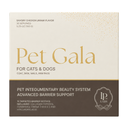
Pet Gala includes marine collagen peptides as part of a broader integumentary system. We do not use this paper to claim Pet Gala improves gait, treats osteoarthritis, or proves beauty outcomes.

The honest commercial bridge is structural rationale: collagen peptides are a serious ingredient class, and a skin-and-coat formula should disclose how they fit beside ceramides, HA, omega support, minerals, and keratin-support nutrients.

§IX · Commercial Translation

How brands turn the evidence into product claims

The common overreach is endpoint laundering.

A mobility paper becomes a beauty claim; a patient trial becomes a general wellness promise; a specific bioactive collagen peptide becomes generic "collagen."

The stronger page keeps the lanes separate. It says what was tested, what changed, what did not, and how the ingredient informs formula architecture without stealing the study outcome.

§X· Commercial honesty ·Claim Decoder

Marketing shortcuts, translated.

A quick read on the claims a pet parent is likely to see while shopping.

Common claim · overstated

"This proves collagen improves coat and nails."

The paper did not measure coat or nail outcomes.

Better interpretation

Better: specific collagen peptides have dog structural-support evidence in a mobility context.

That preserves the endpoint.

Common claim · overstated

"Our product treats arthritis."

Osteoarthritis treatment claims require direct evidence and veterinary/regulatory care.

Better interpretation

Better: collagen peptides can inform structural-support formulation.

Support language avoids disease treatment.

Common claim · overstated

"Any collagen is equivalent."

The paper tested specific bioactive collagen peptides.

Better interpretation

Better: ask for source, peptide type, and dose.

Ingredient specificity matters.

§XI· Commercial honesty ·Marketing Translation

What this means on a supplement page.

Use this as a shopper decoder: the idea can be useful, but the claim still has to stay honest.

Concept Common claim Better interpretation Caution LPL system
Bioactive collagen peptides "Collagen proven." Name the peptide type/source and dose. Generic collagen transfer is weak. Pet Gala
Mobility endpoints "Treats arthritis." Keep osteoarthritis and lameness in veterinary-care territory. Disease claims are not appropriate for untested products. LPL-01
Beauty endpoints "Clinical beauty collagen." Use as structural rationale, not coat/nail proof. Endpoint laundering is misleading. Skin and Coat Rubric
Formula architecture "Collagen does everything." Pair collagen with HA, ceramides, omegas, minerals, and keratin-support nutrients. One ingredient is not a system. Pampered System
§XII· Commercial honesty ·Buyer Checklist

Questions to ask before citing Dobenecker et al. 2024

Use these questions before accepting any study-backed product claim.

  1. Was the page clear that the study involved osteoarthritis patients?
  2. Does it avoid treating OA or pain claims?
  3. Does it avoid coat/nail proof language?
  4. Are collagen type/source/dose visible?
  5. Does it mention mixed endpoint results?
  6. Is collagen placed inside a broader formula architecture?
§XIII·LPL Interpretation

La Petite Labs' interpretation

We read Dobenecker 2024 as structural-support evidence, not beauty proof.

Pet Gala includes marine collagen peptides because structure matters to the integumentary system. But this paper does not prove Pet Gala coat, nail, or skin outcomes, and it does not authorize osteoarthritis treatment claims.

The honest translation is stronger: collagen peptides are worth taking seriously, and serious formulas should keep endpoints straight.

LPL-01 STANDARDRead the LPL-01 Standard
COLLAGEN SHOPPING LENS

Keep collagen claims in the right lane.

A strong product page should tell you what type of collagen it uses, why it belongs, and which outcomes the evidence actually measured.

§XV·FAQ

Questions careful collagen shoppers ask

Short answers for the shopping questions this study usually creates.

What did Dobenecker et al. 2024 actually test?

It tested specific bioactive collagen peptides in dogs with naturally occurring osteoarthritis over 12 weeks.

What improved?

Several force-plate gait metrics and owner-reported quality-of-life measures improved in the collagen peptide group.

Did every endpoint improve?

No. Accelerometry was not affected, which is important for careful claims.

Did the paper test coat, skin, or nails?

No. It was not a beauty or skin-and-coat trial.

What should shoppers look for?

Look for collagen source/type, dose disclosure, endpoint-specific claims, and no disease-treatment language.

How does La Petite Labs use this paper?

We use it as structural-support context for collagen peptides in Pet Gala, not as proof of beauty outcomes.

§XVI·Glossary

Plain-English terms

Useful definitions for reading the study without turning it into marketing haze.

Bioactive collagen peptides
Specific collagen-derived peptides intended to have biological activity; not all collagen ingredients are interchangeable.
Osteoarthritis
A veterinary joint disease involving pain and mobility changes; it requires veterinary care.
Force plate
A tool that measures forces during gait, often used to quantify mobility changes.
CBPI
Canine Brief Pain Inventory, an owner questionnaire used in canine pain and quality-of-life studies.
Accelerometry
Activity measurement using wearable devices; in this study it did not show the same effect.
Endpoint laundering
Using evidence from one outcome category to imply proof in another.
§XVII·References

Sources used for this translation

Primary paper first, followed by practical veterinary or nutrition references where relevant.

  1. The oral intake of specific Bioactive Collagen Peptides (BCP) improves gait and quality of life in canine osteoarthritis patients[link ↗]Dobenecker B et al.·PLOS One·2024· Primary paper
  2. LPL-01 Standard[link ↗]La Petite Labs Editorial·La Petite Labs·2026· Internal standard
  3. COA Lookup[link ↗]La Petite Labs·Quality documentation·2026· COA

Research Library is educational. It does not diagnose, treat, cure, or prevent disease, and it does not replace veterinary advice.