



5 Coat Warning Signs of Illness in Dogs & Cats
Read full insightSkin Glands in Dogs: Oily Coat and Odor Explained
See how oil glands drive a greasy coat and odor, and what calms it.
By La Petite Labs Editorial 15 min read
Skin Glands in Dogs: Oily Coat and Odor Explained
See how oil glands drive a greasy coat and odor, and what calms it.

Sebum, Barrier Lipids, and the Odor Loop

Apocrine and Eccrine Glands: Important, Not the Main Driver

Case Vignette: When Baths Stop Working

Owner Checklist: Quick At-home Signs of Oil Overload

Supplement Caution: More Is Not Always Safer

Bathing Cadence: Cleaning Without Stripping the Barrier

What Not to Do When a Dog Is Chronically Greasy

DVM Voice: Clinical Vignette of When Skin Changes Point Deeper Than the Surface
Case contributed by Sarah Calvin, DVM
Rosey, a 10-year-old Shih Tzu, was brought in after two weeks of paw redness and head shaking. Her owner had also noticed lower energy, thinning abdominal hair, and mild generalized itchiness over the previous few months.
Examination showed inflammation in the ears, skin folds, and paws. Testing confirmed mixed yeast and bacterial infections, while parasites and fungal disease were ruled out. Because Rosey’s skin changes appeared alongside reduced energy and coat thinning, her veterinarian performed a broader workup, which revealed hypothyroidism as a likely underlying contributor.
Her care required a staged approach: treating the infections, addressing the thyroid imbalance, and then restoring the skin barrier through diet, bathing support, paw care, and omega-3 supplementation.
Six months later, Rosey’s owner reported a thicker coat, fewer tangles, less breakage, no itch, and restored energy.
Clinical takeaway: Rosey’s case shows why skin and coat changes should not be treated as cosmetic alone. Healthy skin depends on immune balance, endocrine health, nutrition, barrier integrity, and daily support for resilient coat growth.
Single-case vignette. Not generalizable. Veterinary diagnosis and oversight are essential for itching, redness, ear irritation, hair thinning, recurrent infections, or suspected endocrine disease.

The Misconception: Grease Means the Dog Is “Dirty”

When Yeast Joins the Picture: Oil as Fuel

Breed, Coat Type, and Why Some Dogs Feel Oily Faster

Building a Daily Plan That Stays Predictable

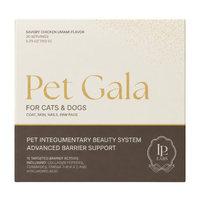
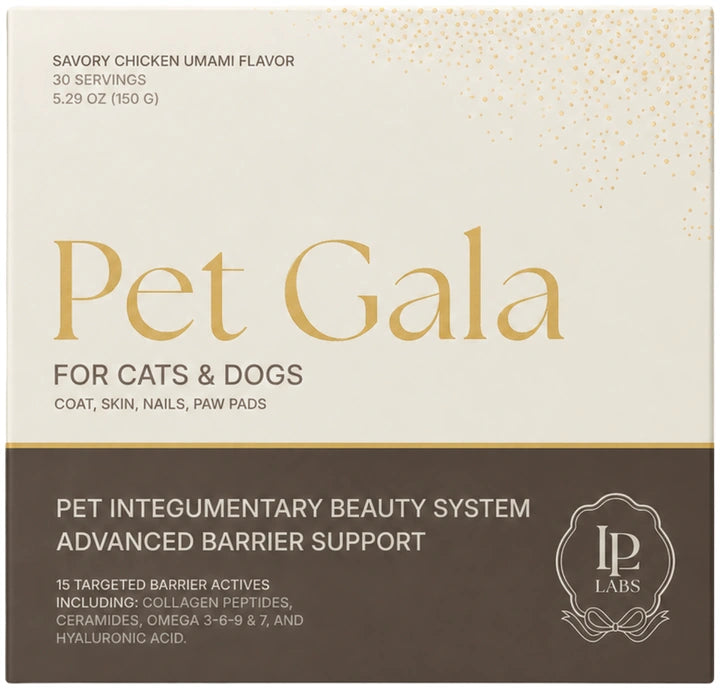
Where Pet Gala™ Fits in a Skin-support Routine
References
Numbered references identify the sources used for specific claims. Read the study design, species and evidence boundaries alongside each finding.
-
Repasy AB, Selmic LE, Kisseberth WC. Canine Apocrine Gland Anal Sac Adenocarcinoma: A Review. Study design/context: reviewSpecies/context: dogEvidence boundary: The species/context tag is inferred only from the source title; the actual study population and claim-level relevance still depend on the full methods and outcomes.↩ 1 · ↩ 2
-
Stefan Hobi, Paweł M. Bęczkowski, Ralf Mueller, et al. Malassezia dermatitis in dogs and cats. Study design/context: not-stated-in-titleSpecies/context: dog, catEvidence boundary: The species/context tag is inferred only from the source title; the actual study population and claim-level relevance still depend on the full methods and outcomes.↩ 1 · ↩ 2 · ↩ 3 · ↩ 4
-
Peters-Kennedy J, Scott DW, Loft KE, et al. Scaling dermatosis in three dogs associated with abnormal sebaceous gland differentiation. Study design/context: not-stated-in-titleSpecies/context: dogEvidence boundary: The species/context tag is inferred only from the source title; the actual study population and claim-level relevance still depend on the full methods and outcomes.↩ 1 · ↩ 2
-
Floettmann E, Lees D, Seeliger F, et al. Pharmacological inhibition of DGAT1 induces sebaceous gland atrophy in mouse and dog skin while overt alopecia is restricted to the mouse. Study design/context: not-stated-in-titleSpecies/context: dog, rodentEvidence boundary: The title names cross-species or non-pet context (dog, rodent); title-level classification does not establish efficacy, dosing, safety, or the actual study population in dogs.↩ 1 · ↩ 2
-
Heaton CM, Fernandes AFA, Jark PC, et al. Evaluation of toceranib for treatment of apocrine gland anal sac adenocarcinoma in dogs. Study design/context: not-stated-in-titleSpecies/context: dogEvidence boundary: The species/context tag is inferred only from the source title; the actual study population and claim-level relevance still depend on the full methods and outcomes.↩
-
Shastak Y, Pelletier W. Pet Wellness and Vitamin A: A Narrative Overview. Study design/context: not-stated-in-titleSpecies/context: animal-unspecifiedEvidence boundary: The title identifies an animal, pet, or veterinary context but does not establish the species or actual study population; consult the full source before applying it to an individual pet.↩ 1 · ↩ 2 · ↩ 3
-
Zafalon RVA, Perini MP, Vendramini THA, et al. Vitamin-mineral supplements do not guarantee the minimum recommendations and may imply risks of mercury poisoning in dogs and cats. Study design/context: not-stated-in-titleSpecies/context: dog, catEvidence boundary: The species/context tag is inferred only from the source title; the actual study population and claim-level relevance still depend on the full methods and outcomes.↩ 1 · ↩ 2
-
Asad U, Boothe D, Tarbox M. Effect of topical dermatologic medications in humans on household pets. Study design/context: not-stated-in-titleSpecies/context: human, animal-unspecifiedEvidence boundary: The title identifies an animal, pet, or veterinary context but does not establish the species or actual study population; consult the full source before applying it to an individual pet.↩ 1 · ↩ 2

Discover LPL-01: How This Fits Into a Complete Canine Integumentary Support System
Skin, coat, and nails aren’t cosmetic features. They’re the visible surface of deeper biological systems—barrier function, hydration balance, structural protein turnover, and lipid integrity—working in concert.
When these systems fall out of sync, it shows: dull coat, shedding, dryness, brittleness, sensitivity.
This article explores one piece of that puzzle. If you want to understand how true coat quality and skin resilience are built—and what actually moves the needle—you need to zoom out.
Start with the underlying science:
- Canine Skin & Coat Framework →
A structured view of how skin, coat, and nail health are maintained across collagen synthesis, lipid balance, and barrier function. - Barrier Protection Coverage Modeling →
A systems-level map of which integumentary pathways are most vulnerable—and how layered nutritional inputs can support them. - 2026 Market Research: Best Dog Skin & Coat Supplements →
A category review of dog formulas for coat quality, skin barrier support, fatty acid balance, collagen support, shedding, and visible beauty. - LPL-01 Standard →
The formulation system that translates these models into real-world supplementation—covering multiple pathways in a coordinated way.
Keep exploring
What would you like to understand next?
Search practical guides about skin, coat, barrier health, ingredients, and daily care for dogs.


