Boston Terrier lifespan and senior care
How Long Do Boston Terriers Live?
11–13Years, typical
Boston Terrier senior planning starts with a lively dog whose airway, heat tolerance, eyes, knees, and spine can change before the attitude does.
- Start watching at
- From 5-6 years
- Senior age
- Around 8-9 years
- Typical lifespan
- 11-13 years
Boston Terrier lifespan and Boston Terrier health problems planning: A planning range from breed guidance and dog longevity research; airway comfort, heat exposure, eye injuries, body condition, and orthopedic history can move one dog around it.
Quick Answers for Pet Parents
Direct answers to the questions people ask when they are trying to plan care.
How long do Boston Terriers live?
Most Boston Terriers are planned around 11 to 13 years. The range is useful, but one dog depends heavily on airway comfort, heat safety, eyes, body condition, knees, spine, accidents, and veterinary care.
When is a Boston Terrier considered senior?
Around 8 to 9 years is a practical senior-planning window, with baseline tracking from 5 to 6 years or earlier when breathing, heat tolerance, eyes, or orthopedic issues are present.
What health problems are Boston Terriers prone to?
Important Boston Terrier watchpoints include brachycephalic airway limits, heat stress, corneal ulcers and eye injury, patellar luxation, spinal or tail anatomy issues, allergy or skin signs, dental crowding, and weight gain.
Why is heat dangerous for Boston Terriers?
A short-faced dog cools less efficiently through panting. Humidity, excitement, car rides, and hard play can narrow the safety margin before the dog seems old.
What most affects a Boston Terrier healthspan?
Breathing margin, cooling rules, eye protection, lean weight, patella and spine comfort, dental care, and quick action on painful-eye or heat signs make the biggest practical difference.
When to Call the Vet
Split urgent signs from trends that deserve a scheduled veterinary conversation.
Go urgently
- Open-mouth struggle at rest, blue-gray gums, collapse, severe heat distress, or a Boston who cannot cool down or settle.
- A painful, closed, cloudy, bulging, or suddenly red eye, especially after play or rubbing.
- Sudden hind-leg weakness, severe back pain, seizure clusters, repeated vomiting with weakness, uncontrolled bleeding, or rapid decline.
Schedule promptly
- Louder snoring, sleep disruption, gagging, cough, slower recovery, or reduced heat tolerance.
- Squinting, face rubbing, tearing, redness, cloudiness, or light sensitivity.
- Skipping gait, slipping, stair hesitation, yelping when lifted, or stiffness after play.
- Bad breath, dropped food, gum redness, skin fold odor, paw licking, ear odor, or repeated itch.
- Weight change, thirst change, appetite change, new lumps, anxiety, or lower interest in play.
Lifespan at a Glance
The short answer with the context a careful pet parent needs.
| Typical lifespan | Plan around 11-13 years, then adjust for airway comfort, eye history, weight, knees, spine, and medical record. |
|---|---|
| Senior planning | Around 8-9 years for many Bostons; earlier if breathing, heat tolerance, eyes, or patellas are already being managed. |
| Earlier watchpoint | From 5-6 years, build sleep-breathing, heat-recovery, eye, gait, and weight baselines. |
| Defining risk | A short muzzle and big eyes make heat, breathing, and corneal pain central owner decisions. |
| Household lever | Short cool outings, lean body condition, eye-safe play, and videos of breathing or recovery. |
| Go sooner for | Open-mouth distress, blue-gray gums, collapse, heatstroke signs, a painful eye, sudden weakness, or rapid decline. |

You can’t add sand to the glass. You can change what happens while it falls.
11-13 years is the range. What fills those years — lean condition, easy movement, steady digestion, good sleep — is built one ordinary day at a time.
Start the daily system → Starting at $63/month
If your Boston Terrier still launches into play but now pants longer afterward, sleeps with more noise, squints after a toy bump, skips on one rear leg, or melts down on a humid sidewalk, the lifespan question has an emergency edge. This breed can look like a tiny athlete and still run out of airway or cooling margin fast.
The direct planning answer: most Boston Terriers live about 11 to 13 years. That is a useful range, not a guarantee. The dogs who make those years comfortable usually have families who treat breathing effort, heat recovery, eye pain, weight, knees, and spine comfort as everyday health signals.
Boston personality can trick owners. A bright, funny dog may want to keep playing after the airway, eyes, or knees have already asked for a stop. The owner job is to call time before the dog does, because some Boston Terrier problems do not offer a long warning.
If You Only Have Five Minutes
- Use 11 to 13 years as the planning band; many Boston families start senior conversations around 8 or 9.
- For this little athlete, breathing and heat lead the emergency list: resting open-mouth effort, gray-blue gums, collapse, or a dog melting down in humidity means go now.
- A painful eye also moves quickly. Squinting, cloudiness, rubbing, or a closed eye after play should not wait.
- Start a sleep-breathing clip and a heat-recovery note while the dog is well, ideally around 5 or 6.
- Lean body condition gives more room for airway, heat, knees, spine, and anesthesia.
- A skipped rear step, yelp when lifted, or sudden reluctance to jump deserves video and a planned veterinary conversation.
The dog quality of life scale is useful when breathing, sleep, eye comfort, or play recovery becomes hard to judge. Use the dog body condition calculator because a few extra pounds matter more in a compact short-faced dog.
Why Lifespan Numbers for Boston Terriers Don't Agree
Boston Terrier ranges vary because breed profiles, owner stories, and population studies are built from different dogs. A healthy Boston in a cool house with a lean body and protected eyes is not the same risk picture as a dog who overheats, snores through poor sleep, or repeatedly injures the cornea.
The range should make the household practical. A Boston Terrier may have a good senior chapter, but the plan has to start before old age: know normal breathing, know normal recovery, know how the eyes look after play, and know whether the rear legs move evenly.
For estimate vocabulary, the dog lifespan methodology explains why a range is more honest than one number. In this breed, the evidence conversation ends at the same place as the daily walk: cool, short, observed, and stopped before pride becomes risk.
The practical takeaway is not to fear every snort. It is to notice when a familiar sound becomes harder work, when a normal game creates longer recovery, or when one eye suddenly looks painful.
What Shapes a Boston Terrier's Healthspan
Boston Terrier healthspan starts with airway and heat margin first, then eye comfort, knees, spine, skin, dental care, weight, and a family that knows when play should end.
BOAS, sleep, and recovery
Brachycephalic obstructive airway syndrome can show as snoring, snorting, gagging, exercise intolerance, poor sleep, or collapse. Volume alone is not the measure; effort matters.
Film a quiet sleep clip on a cool night and another clip after a normal short walk. If the neck stretches, ribs work harder, recovery lengthens, or the dog cannot settle, your veterinarian needs to see the pattern.
Heat and humidity
Boston Terriers may be game for activity when the weather is not safe for their anatomy. Humidity, excitement, pavement, car rides, and short bursts of play can narrow cooling margin.
This is why urgent-first is appropriate for the breed. Heat distress, collapse, weakness, abnormal gum color, or uncontrolled panting is not a wait-and-see problem.
Big eyes and small accidents
The Boston face puts the eyes in the middle of daily life. A paw, branch, toy, or rough play can leave corneal pain, and the dog may only show squinting or rubbing.
Keep play eye-safe, watch after grooming or park time, and act quickly when one eye closes or clouds. Eye injuries are easier to help before they become complicated.
Patellas, stairs, and skipped steps
Patellar luxation can look intermittent: one skip, a hop, then back to normal. That pattern still deserves a note, especially if jumping, stairs, or slick floors make it worse.
Do not wait until the dog refuses the walk. Short phone videos of the skip, from behind and from the side, help your veterinarian separate knee pain from spine, hip, or foot problems.
Spine, tail, and lifting pain
Short-backed and screw-tail breeds can have spinal discomfort or body-shape issues. Hunched posture, yelping when lifted, toe dragging, weakness, or sudden reluctance to move should be treated as more than soreness.
Support the chest and rear when lifting, add traction where the dog turns, and keep furniture access predictable rather than asking for repeated launches.
Skin, teeth, and body condition
Allergy, ear irritation, dental crowding, and extra weight all reduce comfort. A Boston who smells yeasty, chews paws, drops food, or snores harder after weight gain is sending connected signals, not separate inconveniences.
At home, the breed plan is a triangle: breathing video, eye check, and recovery log. Keep those three habits simple. One cool-walk recovery note per week and one eye look after rough play will catch more useful change than a complicated chart nobody keeps.
What Aging Looks Like in a Boston Terrier
Boston Terrier aging may look like louder sleep, shorter heat tolerance, less interest in fetch on warm days, more squinting, skipped rear steps, reluctance to jump down, weight gain, dental odor, skin itch, or a dog who still acts silly but sleeps harder afterward.
Boston Terrier aging signs deserve a weather note beside the symptom note. A dog who looks fine in the living room may struggle on a humid sidewalk, after a visitor arrives, or after five minutes of toy play. Track the setting, temperature, excitement level, and recovery time, not just the sign itself. That context helps your veterinarian decide whether the problem is airway effort, heat margin, eye pain, knee pain, back pain, dental discomfort, weight, or a combination.
The hardest part is that a Boston often wants to keep participating. Refusing one more throw, carrying the dog out of heat, or ending a visit early can feel overprotective when the dog is still cheerful. In this breed, stopping early is part of care. The goal is a dog who wakes comfortable tomorrow, not a dog who proved enthusiasm today.
One useful household rule is to compare recoveries, not performances. If the same cool route now leads to more panting, more sleep noise, more eye rubbing, or less evening play, the change belongs in the record even when the walk itself looked normal. Patterns matter more than one brave outing every week.
Check against normal:
- Does recovery after the same short outing take longer?
- Is sleep noisier, more restless, or interrupted by gagging?
- Are the eyes comfortable after play and grooming?
- Is the rear-leg skip more frequent or linked to one surface?
- Has weight changed enough to affect breathing or jumping?
- Does a familiar route send this dog to shade, a cool floor, or a full stop sooner than it did last summer?
Aging can soften a Boston's stamina. It should not explain away breathing struggle, heat collapse, eye pain, repeated lameness, or a dog who cannot sleep comfortably.
When to Call a Veterinarian
Head to emergency care if your Boston is breathing open-mouthed while resting, cannot cool down, collapses, has gray-blue gums, shows severe heat distress, closes a painful eye, develops sudden hind-leg weakness, has severe back pain, clusters seizures, vomits repeatedly with weakness, bleeds uncontrollably, or declines fast.
Book this week for louder sleep, longer recovery, cough or gagging, lower heat tolerance, repeated eye redness, squinting, skipped rear steps, stair reluctance, dental odor, paw chewing, ear odor, weight drift, or activity change that does not fit the dog.
Bring sleep clips, recovery videos, weather notes, eye photos, gait clips, diet and treat details, medications, supplements, and a dated timeline. When the visit is really about comfort, score the night before you leave home; a bouncy exam-room hello can hide hours of poor sleep.
How Boston Terriers Compare With Similar Breeds
Boston Terriers sit near French Bulldogs and Pugs for airway, heat, and eye urgency, but their terrier energy makes overdoing it especially easy. Compared with Shih Tzus, Bostons are usually less coat-centered and more play-recovery centered. Compared with Labradors or Goldens, the plan is less about long walks and more about stopping small bursts safely.
For the wider range table, use the dog lifespan by breed hub. The useful Boston comparison is practical: this is a breed where the heat plan, eye plan, and recovery video can matter as much as any birthday.
Questions for Your Breeder, Rescue, or Veterinarian
For a breeder or rescue:
- What airway, heat intolerance, eye injury, cataract, patella, spine, deafness, dental, allergy, and age-at-death history is known in close relatives?
- Have parents had eye, patella, and other recommended health screening?
- Has this dog ever collapsed, overheated, needed eye treatment, skipped steps, or had airway surgery?
- What temperature, walk length, harness, and play style has been safest?
For your veterinarian:
- Would an airway exam, BOAS grading, or referral help this Boston?
- What heat rules should our household follow for this dog?
- Which eye signs are same-day problems?
- Is the skipping gait painful, and should activity or furniture access change?
- At what age should dental review, lab work, pain scoring, and comfort tracking move onto our standing calendar?
For a Boston with missing history, begin with sleep breathing, eye comfort, heat recovery, gait, teeth, skin, and body condition. Those baselines tell the truth faster than memory.
Sources
- American Kennel Club. Boston Terrier breed information. https://www.akc.org/dog-breeds/boston-terrier/
- McMillan KM, Bielby J, Williams CL, Upjohn MM, Casey RA, Christley RM. Longevity of companion dog breeds: those at risk from early death. Scientific Reports. https://www.nature.com/articles/s41598-023-50458-w
- Teng KT, Brodbelt DC, Church DB, ONeill DG, et al. Life tables of annual life expectancy and mortality for companion dogs in the United Kingdom. Scientific Reports. https://www.nature.com/articles/s41598-022-10341-6
- Creevy KE, Grady J, Little SE, et al. 2019 AAHA Canine Life Stage Guidelines. https://www.aaha.org/wp-content/uploads/globalassets/02-guidelines/canine-life-stage-2019/2019-aaha-canine-life-stage-guidelines-final.pdf
- VCA Animal Hospitals. Brachycephalic Airway Syndrome in Dogs. https://vcahospitals.com/know-your-pet/brachycephalic-airway-syndrome-in-dogs
- VCA Animal Hospitals. Corneal Ulcers in Dogs. https://vcahospitals.com/know-your-pet/corneal-ulcers-in-dogs
- VCA Animal Hospitals. Luxating Patella or Kneecap in Dogs. https://vcahospitals.com/know-your-pet/luxating-patella-or-kneecap-in-dogs
- Orthopedic Foundation for Animals. CHIC Program breed health screening information. https://ofa.org/chic-programs/browse-by-breed/
Healthspan by Life Stage
Know what to track before senior age, not only after decline appears.
Protect eyes early
Teach calm handling around the face, use eye-safe play habits, collect parent health records, and ask what airway, patella, spine, eye, and deafness history is known.
Keep the athlete cool
Maintain lean condition, avoid neck pressure, learn normal breathing at sleep and play, and do not push through heat just because the dog is enthusiastic.
Start the airway-and-eye file
Record sleep sounds, recovery after a short walk, eye comfort, gait, stairs, weight, dental comfort, and skin flares monthly.
Shorten the proof test
Use twice-yearly visits, pain review, dental review, eye checks, body-condition targets, and a written heat plan for this specific dog.
Score effort, not charm
Judge breathing work, sleep, temperature safety, eye pain, movement, appetite, toileting, anxiety, and family joy together.
Breed Health Map
The main breed-specific topics that can shape lifespan, comfort, and quality of life.
BOAS, sleep, and recovery
Noisy breathing, gagging, poor recovery, restless sleep, or collapse can reflect airway burden. Videos from home often show what the exam room misses.
Cooling margin on ordinary days
Boston Terriers can get into trouble with humidity, excitement, car rides, or short hard play. Cooling rules are daily care.
Corneal ulcers and exposed-eye pain
Squinting, rubbing, cloudiness, discharge, or a suddenly closed eye needs prompt attention because surface injury can worsen quickly.
Patellar luxation and skipped steps
Intermittent hopping, reluctance to jump, or a sudden carry-me request may be pain or kneecap instability, not mood.
Back discomfort and body shape
Hunched posture, yelping when lifted, toe drag, weakness, or trouble rising deserves a veterinary exam rather than more rest alone.
Less room for inflammation
Allergy, dental crowding, extra weight, and skin irritation all reduce the breathing and movement margin this breed needs.

One serving a day, built for aging dogs
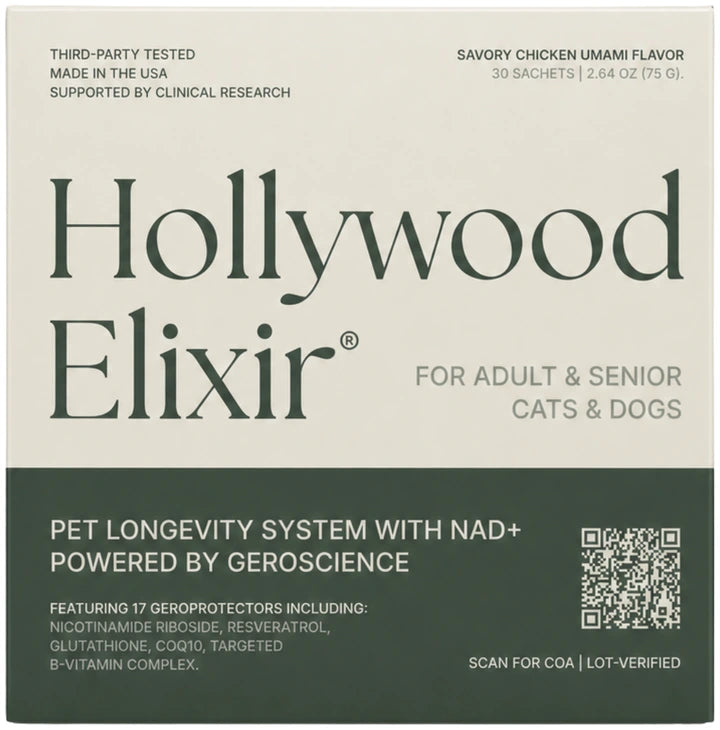
Hollywood Elixir is our daily supplement for adult and senior dogs, made to the LPL-01 standard with every active ingredient at a visible amount. It never replaces your veterinarian — it sits alongside the routine on this page.
Starting at $63/month · cancel anytime
Shop Hollywood ElixirThe 90-Day Support Routine
Ninety days of small, repeatable habits make subtle changes visible — and give any new routine a fair test.
- Week one: film normal sleep breathing and a calm recovery after a short cool walk, then save both clips with the date.
- Week one: make a heat rule for this Boston: cool-hour outings, no hot cars, shade breaks, water, and a stop-before-struggle threshold.
- Weekly: check eyes after play, listen to sleep, note gagging or cough, watch skipped steps, and feel rib and waist condition.
- Monthly: repeat recovery video, weight and body condition, gait clip, dental check, skin and ear check, and any heat or eye incidents.
- Day 90: review the breathing, heat, eye, gait, and weight trends with your veterinarian and adjust activity, referrals, dental timing, or pain care.
Tools for Tracking Comfort and Aging
Use these when a life-stage, body-condition, or quality-of-life question needs more structure.
Dog Quality of Life Scale
Use when breathing effort, heat limits, eye pain, movement, or sleep makes comfort hard to judge.
ToolDog Biological Age Calculator
Frame senior timing for a dog who may act young while airway or eye problems are already changing life.
ToolDog Body Condition Calculator
Lean condition gives a Boston more airway, heat, knee, and spine margin.
Frequently Asked Questions
Short answers to the questions owners ask most.
What is the average Boston Terrier life expectancy?
A practical planning range is 11-13 years. Airway comfort, heat safety, eye injury, body condition, orthopedic problems, accidents, and veterinary care can move one dog around that band.
Can a Boston Terrier live longer than 13?
Some do. The better target is not a record age, but comfortable breathing, safe temperature control, clear eyes, good sleep, and movement that still feels easy.
Is 8 old for a Boston Terrier?
Eight is a sensible senior-planning age. It is the time to tighten breathing, eye, dental, weight, pain, and bloodwork review, even if the dog still acts playful.
Why does my Boston Terrier pant so hard?
Panting can reflect excitement, heat, airway anatomy, pain, heart or lung disease, or weight. Hard recovery, rest distress, blue-gray gums, or collapse is urgent.
Are Boston Terrier eye problems urgent?
Painful eyes can be urgent. Squinting, cloudiness, a closed eye, sudden redness, or rubbing after play deserves prompt veterinary advice.
Do Boston Terriers get patellar luxation?
They can. A skipped rear step, intermittent hopping, reluctance to jump, or sudden carry-me behavior should be filmed and discussed with your veterinarian.
What heat signs should Boston Terrier owners watch for?
Heavy uncontrolled panting, weakness, disorientation, vomiting, collapse, bright red or blue-gray gums, or a dog who cannot cool down should be treated urgently.
How often should a senior Boston Terrier see the vet?
Twice yearly is a useful default once senior planning begins, with eye, dental, airway, pain, weight, and bloodwork timing adjusted to the dog.
Does weight matter for Boston Terrier breathing?
Yes. Extra weight reduces airway and heat margin and adds knee and spine load. Ask for a body-condition target, not just a scale number.
What should I bring to a Boston Terrier vet visit?
Bring sleep-breathing clips, heat-recovery notes, eye photos, gait videos, diet details, medications, weight trend, and a timeline of episodes.
Can home cooling replace airway care?
No. Cooling habits are protective, but worsening breathing, collapse, poor sleep, or repeated heat trouble needs veterinary assessment.
How should I judge quality of life in an older Boston?
Look at breathing effort, sleep, heat safety, eye comfort, pain, walking, appetite, toileting, anxiety, and interest in family routines together.
Should Boston Terriers use collars for walks?
Many short-faced dogs do better avoiding neck pressure; ask your veterinarian what harness or walking setup fits this dog.
Is Hollywood Elixir a treatment for Boston Terrier breathing?
No. Hollywood Elixir is not a treatment for breathing, heat, eye, knee, or spine problems, and it never replaces veterinary care.
A note from La Petite Labs
Hollywood Elixir is La Petite Labs' daily supplement for adult and senior dogs. It is not a treatment for anything on this page, and it never replaces your veterinarian.

Why Pampered belongs in a Boston Terrier 90-day plan
Pampered is La Petite Labs' complete daily system, with a recommended 90-day starting window. Use it alongside the page's filming normal sleep breathing and a calm recovery after a short cool walk, then save both clips with; for Boston Terrier, the daily record should keep circling back to airway, heat, eyes, and knees before the fit check.
Explore the Pampered™ System →