


Ragdoll lifespan and senior care
How Long Do Ragdoll Cats Live?
12–15+Years, typical
Ragdolls often live into the low to mid teens, but calm behavior can hide dental pain, weight gain, grooming trouble, and heart questions.
- Start watching at
- From 7 years
- Senior age
- 10+ years
- Typical lifespan
- 12-15+ years
Recent RVC/VetCompass work gives a low-teen breed signal and highlights dental disease, diarrhea, obesity, overgrown nails, kidney disorders, and quality-of-life decisions.
Quick Answers for Pet Parents
Direct answers to the questions people ask when they are trying to plan care.
How long do Ragdoll cats live?
Many Ragdoll cats live into the low to mid teens. A practical planning range is roughly 12 to 15+ years, with individual variation based on genetics, heart health, dental care, body condition, digestion, kidney health, lifestyle, and veterinary care.
What is the average Ragdoll life expectancy?
There is no perfect single number. Recent RVC/VetCompass work gives a low-teen mortality signal and describes Ragdolls as living as long as random-bred cats in that UK dataset. Use any average as planning context, not a prediction for one cat.
When is a Ragdoll considered senior?
Under AAHA/AAFP feline life-stage guidance, cats older than 10 are senior. Ragdoll owners should start mature-adult tracking around age 7 because weight, grooming, dental comfort, nails, digestion, heart questions, and mobility can change before a cat looks old.
What health problems are common in Ragdoll cats?
RVC reporting highlighted periodontal disease, diarrhoea, obesity, and overgrown nails among common recorded disorders. Ragdoll owners should also understand HCM risk, grooming needs, kidney or urinary signs, body condition, and quality-of-life changes.
What most affects Ragdoll healthspan?
Heart screening conversations, body condition, dental care, stool and appetite patterns, grooming tolerance, nail care, mobility, kidney and urinary monitoring, enrichment, and early veterinary attention when a calm cat changes behavior.
Lifespan at a Glance
The short answer with the context a careful pet parent needs.
| Typical lifespan framing | Often low to mid teens, with some Ragdolls living longer and some shorter. |
|---|---|
| Breed-specific evidence signal | RVC/VetCompass reported that 61.28% of Ragdolls in the 2019 cohort had at least one disorder recorded. |
| Common recorded disorders | Periodontal disease, diarrhoea, obesity, and overgrown nails appeared among common Ragdoll disorders in RVC reporting. |
| Senior age | 10+ years under AAHA/AAFP feline life-stage guidance. |
| Earlier watchpoint | 7 to 8 years for heart, dental comfort, digestion, weight, nails, coat, mobility, appetite, thirst, and litter habits. |
| Breed-specific priority | Do not let a calm temperament hide pain, weight gain, reduced grooming, dental discomfort, overgrown nails, or heart-risk questions. |

You can’t slow the clock. You can change what happens while it runs.
12-15+ years is the range. What fills those years — lean condition, easy movement, steady digestion, good sleep — is built one ordinary day at a time.
Start the daily system → Starting at $50/month
If your Ragdoll is still affectionate but jumps less, grows mats near the hips, has longer nails, drops food, has softer stool, drinks more, or seems quietly less engaged, the breed’s calm temperament may be making discomfort too easy to miss.
Here is the direct answer first: many Ragdoll cats live about 12 to 15+ years. A 2025 RVC/VetCompass study gave an encouraging breed-specific signal while also reporting common disorders in the 2019 cohort, including periodontal disease, diarrhoea, obesity, and overgrown nails. The useful plan is not fragility; it is steady monitoring.
The number is the start, not the plan. The Ragdoll trap is temperament: a breed famous for going limp in your arms will also go quiet around pain, mats, sore teeth, and an upset gut. Where a louder cat files complaints, a Ragdoll files silence — so the owner's job is to notice the things that stop happening: the jump not taken, the grooming not finished, the greeting that got shorter.
If You Only Have Five Minutes
- Plan for a low-teen to mid-teen lifespan, while remembering that one cat can land outside the range.
- Under AAHA/AAFP guidance, 10+ is senior; start mature-adult tracking around 7.
- Ask about HCM testing and heart screening, but do not treat a genetic result as a lifetime guarantee.
- Watch dental comfort, stool pattern, body condition, nails, grooming, mats, mobility, thirst, and litter habits.
- A calm Ragdoll may not protest pain loudly. New quietness, hiding, or grooming decline can matter.
- Open-mouth breathing, collapse, sudden hind-limb weakness, inability to urinate, severe pain, or rapid decline is urgent.
The senior cat signs guide is the right companion when you cannot tell whether a quieter cat is aging or hurting; the cat quality of life scale is for when the honest question is how comfortable this cat's weeks really are.
Why Lifespan Numbers for Ragdoll Cats Don't Agree
Ragdoll estimates vary because many owner profiles use broad 12 to 17 or 15+ ranges, while the newest breed-specific RVC/VetCompass work uses primary-care records. Both can be useful if they are read correctly.
The RVC study matters because it turns the lifespan conversation into practical owner monitoring: dental disease, diarrhoea, obesity, overgrown nails, grooming, kidney disorders, and quality-of-life decisions. Those are the places a family can observe change.
The cat lifespan by breed hub can help compare Ragdolls with other large or purebred cats without forcing a false ranking.
The 2025 data cuts both ways, usefully: the lifespan signal is genuinely encouraging, and the disorder list is genuinely mundane — teeth, digestion, weight, nails. Mundane is good news. It means most of what erodes a Ragdoll's comfort is visible at home and fixable at a regular appointment, not hiding in a specialist's imaging suite.
What Shapes a Ragdoll's Healthspan
Ragdoll healthspan is quiet work: heart conversations, dental comfort, digestion, body condition, nails, coat care, kidney and urinary signs, mobility, and noticing when a calm cat is less comfortable than they look.
HCM and screening nuance
UC Davis explains a Ragdoll-specific MYBPC3 mutation associated with hypertrophic cardiomyopathy, and NC State emphasizes incomplete penetrance and the limits of genetic testing. A negative result does not rule out every possible heart problem.
Dental disease
RVC reporting highlighted periodontal disease among common Ragdoll disorders. Bad breath, slower eating, one-sided chewing, dropping food, drooling, face sensitivity, or soft-food preference can point to mouth pain.
Diarrhoea and digestion
Recurrent diarrhoea, vomiting, weight loss, poor coat, dehydration, blood, severe lethargy, or persistent kitten diarrhoea deserves veterinary guidance. One loose stool is not the same as a pattern.
Obesity and body condition
A large Ragdoll should still have healthy body condition. Extra weight can make grooming, mobility, heat tolerance, litter-box posture, and senior comfort harder. Weight loss in older cats also matters.
Overgrown nails and mobility
Overgrown nails can alter gait, catch in fabric, curve toward pads, cause pain, or reveal reduced scratching, pain, weight gain, or senior decline. Nails are comfort data.
Coat, grooming, and mats
New mats can mean pain, obesity, reduced flexibility, dental discomfort, nausea, weakness, or less self-care. Sudden brushing resistance deserves a health lens, not only a grooming plan.
Kidney and urinary signs
RVC-related coverage noted kidney disorders among common causes of death. Increased thirst, larger urine clumps, weight loss, appetite decline, nausea, vomiting, or litter changes deserve attention; straining is urgent.
Making the plan real in a Ragdoll home
Build the week around three unglamorous checkpoints. The mouth: sniff the breath during a cuddle and watch one meal end to end — dropped kibble, one-sided chewing, or a cat who approaches the bowl eagerly and then hesitates is dental information. The litter box: this is a breed where stool pattern earned a place on the disorder list, so soft stool that lasts past a couple of days gets a date in your notes, not a shrug. The claws: overgrown nails on a Ragdoll usually mean the scratching post has gone unused, and that is a mobility or motivation change dressed up as a grooming chore.
Once a month, add the quiet-cat corrective: deliberately invite the jump, the game, the chase your cat used to accept, and write down what happens. A serene Ragdoll who has politely stopped playing will otherwise never volunteer that fact.
Set the house up for a heavy, agreeable, mostly-indoor cat: steps or furniture staging up to the favorite high places, so "stopped jumping" stays a choice you can observe rather than a fact you accidentally caused; a big-cat-sized litter box, because a cramped box invents behavioral problems that look medical; and food portioned by measure, not by the pleading face, since this is one of the breeds where weight arrives sociably and quietly.
For the recurring-diarrhoea question specifically, change one dietary variable at a time and give it two honest weeks before judging. Ragdoll digestion improves through patience and records far more often than through the fourth new food in a month.
What Aging Looks Like in a Ragdoll
Ragdoll aging often looks quiet: slower jumps, more sleep, less grooming, mats, longer nails, dental odor, a heavier or softer body, less play, looser stool, appetite changes, larger urine clumps, more thirst, or a cat who still wants affection but chooses easier routines.
Use the baseline test:
- Is movement different from six months ago?
- Is appetite, weight, thirst, stool, urine, or litter-box behavior different?
- Is breathing, sleep, or recovery after normal activity different?
- Is dental comfort, grooming, skin, ears, eyes, or coat different?
- Are there new lumps, wounds, mats, odors, coughs, or pain signals?
- Is joy different: greeting, play, voice, social interest, or familiar routines?
A mellow senior Ragdoll is a joy; a shut-down one is a patient. The difference is whether the calm still contains its old ingredients — greeting, grooming, appetite, the favorite lap — or has become an absence wearing the same fur.
When to Call a Veterinarian
Go-now signs for a Ragdoll: open-mouth or labored breathing, sudden hind-limb weakness or dragging with distress (treat as a possible clot), collapse, straining without urine, or a cat in obvious pain. The this-week list is where this breed's real work lives: breath that turned, meals that changed shape, soft stool that keeps returning, weight drifting in either direction, nails overgrowing, mats spreading, or a play invitation declined for the third month running.
Bring the mundane records — meal observations, stool dates, weight if you have a scale, the nail and mat notes — plus any HCM testing or family screening history. If heart screening has never come up, raise it once, plainly, and let the exam findings set the schedule; a DNA result alone, in either direction, is not the whole answer for this breed.
For the quiet-cat comfort question, the cat quality of life scale is particularly worth completing here — serenity skews every informal impression toward "fine."
How Ragdoll Cats Compare With Similar Breeds
Ragdolls and Maine Coons share large-cat and HCM conversations, while Persians bring more face, coat, kidney, and dental-care burden. Siamese cats bring a longer-lived reputation with different appetite, respiratory, amyloidosis, and behavior watchpoints.
The cat lifespan by breed hub sets these numbers alongside every other breed in the library, and the cat lifespan methodology explains what each kind of estimate can and cannot promise.
Questions for Your Breeder, Rescue, or Veterinarian
For a breeder or rescue:
- Have the parents been tested for the Ragdoll HCM mutation, and what were the results?
- Is there family history of HCM, sudden death, kidney disease, urinary stones, chronic diarrhoea, obesity, dental disease, or early death?
- What grooming, nail, body condition, stool, and dental patterns are common in this line?
For your veterinarian:
- How should we interpret this HCM test result, and is screening needed?
- What dental care schedule, weight target, and nail plan fit this cat?
- Which stool, thirst, litter, grooming, or mobility changes should prompt testing?
- When should senior bloodwork, urinalysis, blood pressure, and pain assessment begin?
A Ragdoll adopted without history needs its baseline built from scratch, and the temperament makes that urgent rather than optional: get the first dental look, body condition score, and heart auscultation early, because this is the last cat who will tell you when something changed.
Sources
- Royal Veterinary College VetCompass. The cat's out of the bag: New RVC research reveals most common health disorders in popular Ragdoll cats. https://www.rvc.ac.uk/vetcompass/news/the-cat-s-out-of-the-bag-new-rvc-research-reveals-most-common-health-disorders-in-popular-ragdoll-cats
- O'Neill DG, Bass O, Brodbelt DC, Church DB, Engdahl KS. Demography, common disorders, cause-specific mortality and life expectancy of Ragdoll cats under primary veterinary care during 2019 in the UK. Companion Animal Health and Genetics. https://doi.org/10.1186/s40575-025-00148-9
- UC Davis Veterinary Genetics Laboratory. Hypertrophic Cardiomyopathy (HCM) in Ragdolls. https://vgl.ucdavis.edu/test/ragdoll-hcm
- NC State Veterinary Hospital. Ragdoll Cat Hypertrophic Cardiomyopathy (HCM). https://hospital.cvm.ncsu.edu/services/small-animals/genetics/ragdoll-cat-hypertrophic-cardiomyopathy-hcm/
- AAHA/AAFP. 2021 AAHA/AAFP Feline Life Stage Guidelines. https://catvets.com/resource/aaha-aafp-feline-life-stage-guidelines/
- AAHA. Feline Life Stage Definitions. https://www.aaha.org/resources/2021-aaha-aafp-feline-life-stage-guidelines/feline-life-stage-definitions/
- Teng KT, Brodbelt DC, Church DB, O'Neill DG. Life tables of annual life expectancy and risk factors for mortality in cats in the UK. Journal of Feline Medicine and Surgery. https://journals.sagepub.com/doi/10.1177/1098612X241234556
- Cornell Feline Health Center. Hypertrophic Cardiomyopathy. https://www.vet.cornell.edu/departments-centers-and-institutes/cornell-feline-health-center/health-information/feline-health-topics/hypertrophic-cardiomyopathy
- Langford Vets. Ragdoll Hypertrophic Cardiomyopathy (RD-HCM). https://www.langfordvets.co.uk/diagnostic-laboratories/cat-genetic-testing/genetic-disease-and-trait-tests/ragdoll-hypertrophic-cardiomyopathy-rd-hcm/
Healthspan by Life Stage
Know what to track before senior age, not only after decline appears.
Build the baseline
Collect breeder or rescue records, parent health information, Ragdoll HCM testing if available, diet history, stool history, growth pattern, vaccination records, and early dental, heart, eye, urinary, or digestive concerns.
Keep calm from hiding risk
Use routine body condition checks, dental exams, parasite prevention, coat care, nail care, enrichment, and heart-risk conversations.
Start the healthspan dashboard
Track body weight, body condition, appetite, stool, dental breath, chewing, coat, mats, nails, jumping, resting breathing, thirst, litter clumps, social behavior, and grooming tolerance.
Protect comfort and routine
Discuss exam frequency, dental care, weight trend, bloodwork, blood pressure, heart assessment, kidney markers, pain assessment, digestive changes, urinary changes, and grooming difficulty.
Track comfort honestly
Use appetite, hydration, pain, breathing, mobility, grooming, litter-box dignity, social contact, sleep, and treatment burden to guide quality-of-life conversations.
Breed Health Map
The main breed-specific topics that can shape lifespan, comfort, and quality of life.
Ragdoll HCM and screening nuance
A Ragdoll-specific MYBPC3 mutation is associated with HCM risk, but genetic testing is not a lifetime heart guarantee and a negative mutation result does not rule out every possible heart disease.
Periodontal disease and eating comfort
Bad breath, drooling, dropped food, one-sided chewing, face sensitivity, or soft-food preference can point to mouth pain.
Diarrhoea and appetite patterns
Recurrent diarrhoea, weight loss, vomiting, dehydration, blood, severe lethargy, or kitten diarrhoea deserves veterinary guidance.
Obesity, muscle, and movement
A large Ragdoll should still have healthy body condition; extra weight can make grooming, mobility, heat tolerance, and senior comfort harder.
Overgrown nails and hidden pain
Overgrown nails can alter gait, catch in fabric, curve toward pads, cause pain, or signal reduced scratching, pain, weight gain, or senior decline.
Mats and skin comfort
New mats can point to pain, obesity, reduced flexibility, dental discomfort, nausea, weakness, or less self-care.
Thirst, urine, and litter-box signs
Increased thirst, larger urine clumps, weight loss, appetite decline, nausea, vomiting, or litter-box changes deserve attention; straining or little urine can be urgent.
Comfort over a single lifespan number
Track breathing, appetite, mobility, grooming, litter-box dignity, pain, social interest, and whether care is helping more than it burdens.

One serving a day, built for aging cats
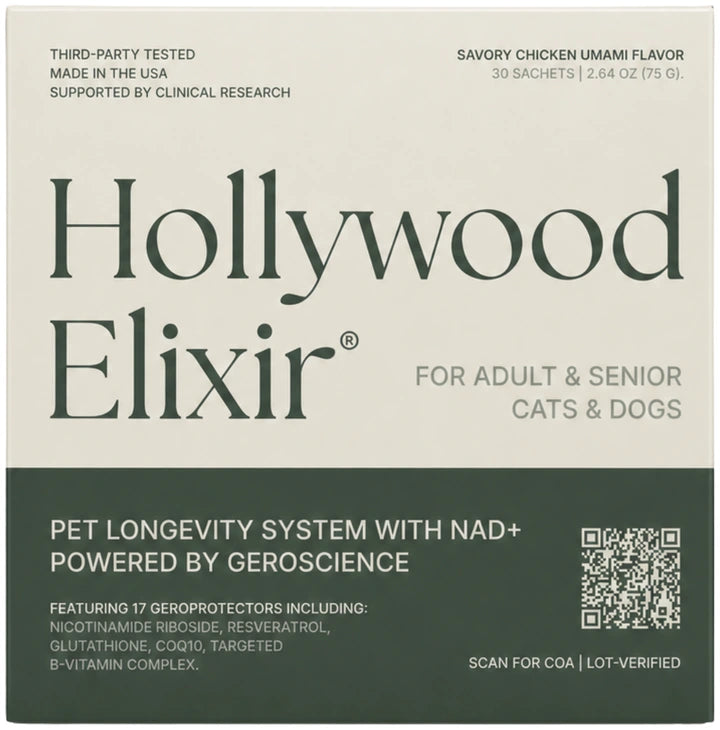
Hollywood Elixir is our daily supplement for adult and senior cats, made to the LPL-01 standard with every active ingredient at a visible amount. It never replaces your veterinarian — it sits alongside the routine on this page.
Starting at $50/month · cancel anytime
Shop Hollywood ElixirWhen to Call the Vet
Split urgent signs from trends that deserve a scheduled veterinary conversation.
Go urgently
- Open-mouth breathing, labored breathing, blue-tinged gums, collapse, sudden hind-limb weakness, severe weakness, severe pain, acute distress, or rapidly worsening breathing.
- Inability to urinate, repeated litter-box trips with little or no urine, crying in the litter box, vomiting with urinary distress, or a male cat unable to pass urine.
- Repeated vomiting with weakness, bloody diarrhoea with lethargy, dehydration, collapse, or rapid decline.
- Severe pain, sudden inability to move normally, or sudden major change from the cat's baseline.
Schedule promptly
- Bad breath, drooling, slow chewing, dropping food, one-sided chewing, or soft-food preference.
- Recurrent diarrhoea, vomiting, appetite change, weight gain, weight loss, or poor coat.
- Overgrown nails, paw sensitivity, reduced scratching, new stair hesitation, reduced jumping, limping, or trouble entering the litter box.
- New mats, grooming resistance, greasy coat, dandruff, skin redness, or reduced self-care.
- Increased thirst, larger urine clumps, appetite decline, nausea signs, vomiting, or litter-box changes.
- Hiding, irritability, reduced play, reduced social interest, or any trend clearly different from this Ragdoll's normal.
The 90-Day Support Routine
Ninety days of small, repeatable habits make subtle changes visible — and give any new routine a fair test.
- Week one: capture weight, body condition, resting breathing, jumping choices, grooming tolerance, stool pattern, litter clump size, appetite, and social interest while your Ragdoll is acting normal.
- Week one: gather breeder, rescue, HCM test, diet, grooming, dental, and stool records in one place so veterinary visits are not rebuilt from memory.
- Weekly: check coat mats, nail length, dental breath, chewing comfort, litter rhythm, stairs or perch access, and whether this relaxed cat is hiding discomfort behind calm behavior.
- Monthly: save short breathing or walking videos if anything changes, and keep easy steps, easy-entry litter boxes, gentle grooming tools, and comfortable rest spots in use.
- Day 90: compare the first notes with the current pattern and ask your veterinarian about heart, dental, digestive, weight, or mobility changes that have persisted.
Tools for Tracking Comfort and Aging
Use these when a life-stage, body-condition, or quality-of-life question needs more structure.
Cat Age Calculator
Translate age into feline life stage before subtle senior changes become obvious.
ToolCat Quality of Life Scale
Use when appetite, grooming, breathing, litter habits, mobility, or comfort are changing.
ToolCat Biological Age Calculator
Frame healthy-aging conversations with more structure.
Frequently Asked Questions
Short answers to the questions owners ask most.
What is a realistic life plan for Ragdoll Cats?
Ragdoll lifespan and Ragdoll cat lifespan should be read as planning context, not a forecast. Use 12-15+ years as the practical range, then individualize with your veterinarian around body condition, breed risk, symptoms, and health history.
Can Ragdoll Cats live longer than 12-15+ years?
Yes, some do. A range is not a ceiling. Genetics, accidents, early disease, body condition, dental care, pain control, veterinary access, and luck can move one cat above or below the common range.
When should Ragdoll senior care start?
Ragdoll senior care should start before crisis. Use 10+ years as the senior-planning marker and from 7 years for baseline tracking, earlier if symptoms or chronic disease are already present.
Which Ragdoll health issues matter most?
Ragdoll health problems and Ragdoll cat health problems that shape comfort include hcm and screening nuance, dental disease, diarrhoea and digestion, obesity and body condition. The exact priority depends on your cat's exam findings, family history, and day-to-day changes.
Which aging signs should Ragdoll owners watch?
Ragdoll aging signs include changes in appetite, weight, movement, breathing, sleep, pain, grooming, bathroom habits, social interest, recovery after activity, and willingness to do familiar routines.
What changes are urgent for a Ragdoll?
Sudden breathing distress, collapse, blue or pale gums, severe pain, seizure, rapid decline, inability to rise, or major neurologic change should be treated as urgent. Breed-specific emergency signs are listed in the watch section.
What should I track each month?
Track weight, body condition, appetite, water intake, bathroom habits, movement, breathing, dental comfort, skin or coat, eyes or ears, sleep, mood, and one change from your cat's normal.
How often should an older Ragdoll see the veterinarian?
Many senior cats benefit from at least twice-yearly check-ins, but frequency should follow the cat's risk, medications, pain, dental needs, bloodwork, weight trend, and new signs.
How does body condition affect Ragdoll healthspan?
Healthy body condition gives more mobility, breathing, heat, anesthesia, and senior comfort margin. Ask your veterinarian for a body condition score rather than guessing from looks alone.
What should I ask a breeder or rescue?
Ask what is known about lifespan, early deaths, inherited disease, major surgeries, dental problems, mobility, breathing, skin, eyes, heart, kidney, and behavior. Unknown history is common and still workable.
How do I compare Ragdoll Cats with similar breeds?
Compare the aging pattern, not the winner. Similar breeds may share one risk, but your cat's plan should come from this breed's watchpoints and your veterinarian's exam.
How do I judge quality of life in an older Ragdoll?
Look beyond appetite alone. Breathing, pain, sleep, mobility, hygiene, bathroom dignity, anxiety, social interest, and whether care is helping more than it burdens all belong in the answer.
Which tools are useful for Ragdoll owners?
Use the cat age or biological-age tool for life-stage framing and the quality-of-life scale when comfort, treatment burden, appetite, or mobility is hard to judge.
What makes Ragdoll lifespan uncertain?
Population data cannot see every line, home, accident, diagnosis, or care decision. That is why Ragdoll lifespan and Ragdoll cat lifespan belongs with ranges, baselines, and veterinary interpretation rather than exact promises.
A note from La Petite Labs
Hollywood Elixir is La Petite Labs' daily supplement for adult and senior cats. It is not a treatment for anything on this page, and it never replaces your veterinarian.

Why Pampered belongs in a Ragdoll 90-day plan
Pampered is La Petite Labs' complete daily system, with a recommended 90-day starting window. In a Ragdoll home, the match is the rhythm: capture weight, body condition, resting breathing, jumping choices, grooming tolerance, stool pattern, litter clump size, appetite, and social, repeat the checks, then bring heart, dental, digestion, and body condition trends to the day-90 review.
Explore the Pampered™ System →