



British Shorthair lifespan and senior care
How Long Do British Shorthair Cats Live?
10–13+Years, typical
British Shorthair aging is easy to miss because a solid, calm cat can hide weight drift, heart clues, urinary discomfort, and sore jumps.
- Start watching at
- From 7 years
- Senior age
- 10+ years
- Typical lifespan
- 10-13+ years
A planning range anchored to UK life-table evidence for British cats, with individual cats varying by body condition, heart history, urinary signs, dental comfort, indoor safety, and veterinary care.
Quick Answers for Pet Parents
Direct answers to the questions people ask when they are trying to plan care.
How long do British Shorthair cats live?
A practical planning range is about 10 to 13+ years. The 2024 UK life-table reported 9.58 years life expectancy at age 0 for British cats, while individual cats in that dataset ranged much older.
What is the average British Shorthair life expectancy?
There is no perfect single average for one home. Use the UK life-table signal, the cat's body condition, indoor safety, heart and urinary history, dental comfort, and veterinary monitoring together.
When is a British Shorthair considered senior?
AAHA/AAFP guidance treats cats older than 10 as senior. For British Shorthairs, begin mature-adult tracking around 7 because weight, jumping, and urinary patterns can change quietly.
What health problems should British Shorthair owners watch?
Useful watchpoints include non-ideal body weight, hypertrophic cardiomyopathy conversations, urinary or kidney signs, dental pain, reduced jumping, grooming decline, and subtle behavior changes.
What most affects a British Shorthair healthspan?
Steady body condition, early heart and urinary conversations, dental care, indoor safety, easier access to favorite perches, and fast attention to litter-box or breathing changes matter most.
Lifespan at a Glance
The short answer with the context a careful pet parent needs.
| Typical lifespan | Plan around 10 to 13+ years; the 2024 UK life-table reported 9.58 years at age 0 for British cats, with individual deaths recorded into the 20s. |
|---|---|
| Evidence caveat | The UK table grouped British Blue and British Longhair with British cats, so use the number as context rather than a promise for one British Shorthair. |
| Senior planning | Cats older than 10 are senior under AAHA/AAFP guidance; start owner baselines earlier because this breed can look unchanged while weight or pain shifts. |
| Earlier watchpoint | From about 7 years, record weight, waist feel, jumping, breathing, dental comfort, litter clumps, thirst, grooming, and social routine. |
| Breed-specific priority | Keep body condition, heart screening conversations, urinary signs, and quiet mobility changes in the same senior plan. |
| Do not normalize | A rounder waist, fewer jumps, faster breathing at rest, larger urine clumps, box straining, bad breath, hiding, or a new dislike of handling. |

You can’t slow the clock. You can change what happens while it runs.
10-13+ years is the range. What fills those years — lean condition, easy movement, steady digestion, good sleep — is built one ordinary day at a time.
Start the daily system → Starting at $50/month
If your British Shorthair still looks like the same calm sofa companion but now lands more heavily from a chair, drinks a little more, leaves larger litter clumps, breathes faster while sleeping, or objects when you feel the ribs, the lifespan question is really about subtle change under a plush coat.
Here is the direct answer first: British Shorthair cats are best planned around 10 to 13+ years, with the 2024 UK cat life-table reporting 9.58 years life expectancy at age 0 for British cats. That study grouped British Blue and British Longhair under the British-cat label, so the number is a population signal rather than a verdict on one British Shorthair.
The breed's temperament is part of the challenge. A round, quiet cat can make weight gain look like build, sore joints look like laziness, and urinary discomfort look like extra privacy. The goal is not to make the household anxious. It is to make a few measurements boring enough that change stands out before a crisis.
If You Only Have Five Minutes
- Use about 10 to 13+ years as the practical planning range, then individualize around this cat's body condition, heart history, urinary signs, dental comfort, and indoor safety.
- Cats older than 10 are senior under AAHA/AAFP guidance, but British Shorthair owners should start mature-adult tracking around 7.
- Weight is the first home lever. The 2024 UK life-table work linked non-ideal body weight with shorter lifespan patterns.
- Heart conversations matter when there is a murmur, faster resting breathing, fainting, family history, or reduced stamina.
- Larger urine clumps, increased thirst, accidents, repeated box trips, or straining deserve veterinary attention; little or no urine is urgent.
- Reduced jumping, grooming changes, bad breath, hiding, or new irritability should not be explained away as the breed being mellow.
The cat lifespan methodology explains why a life-table estimate and a household range can differ. Use the cat quality of life scale when appetite stays good but mobility, litter-box comfort, breathing, or social interest is changing.
Why Lifespan Numbers for British Shorthairs Don't Agree
British Shorthair estimates vary because sources may be measuring breed profiles, life expectancy at age 0, median age at death, registry experience, or stories of unusually old cats. The strongest current UK population signal is the 2024 VetCompass life-table: British cats had a 9.58-year life expectancy at age 0, with 194 deaths in that breed grouping and a recorded lifespan range that reached 22.32 years.
That does not mean a healthy 9-year-old British Shorthair is at the end of the road. Life tables describe a population from death records. They do not know whether your cat is indoor-only, lean, neutered, dental-pain-free, monitored for heart signs, or seeing the veterinarian before litter changes become emergencies.
The 2014 VetCompass longevity paper also matters because it reminds owners that cat lifespan evidence changes by method and sample. The honest owner response is to quote a range, keep the uncertainty visible, and put the plan where this breed actually hides risk: weight, heart clues, urine, teeth, jumping, grooming, and behavior.
What Shapes a British Shorthair's Healthspan
British Shorthair healthspan is written in quiet places: the scale, the ribs under the coat, the litter box, the sleeping breathing rate, the mouth, and the furniture the cat stops using.
Weight under the plush coat
The British Shorthair body is supposed to be substantial, but substantial is not the same as overconditioned. Use hands, not just eyes. Feel ribs, check the waist from above, note thigh muscle, and weigh the cat often enough that a trend is visible.
Non-ideal body weight is one of the few lifespan factors the 2024 UK study could link to shorter lifespan patterns. For this breed, that finding turns into a simple household rule: do not let the coat vote. Ask your veterinarian for a body condition score and meal target for this exact cat.
Heart screening conversations
Hypertrophic cardiomyopathy is a feline heart disease topic worth knowing, and British Shorthair owners should not treat every quiet cat as merely relaxed. A new murmur, faster resting breathing, fainting-like weakness, open-mouth breathing, reduced play stamina, or sudden hiding after exertion deserves attention.
Home records help here. If your veterinarian asks for resting breathing counts or videos, take them when the cat is asleep and comfortable, not after a sprint. The point is a calm baseline, not a dramatic clip.
Urinary, kidney, and hydration signs
The litter box is a healthspan tool. Larger urine clumps, more water bowl visits, constipation, blood, accidents, repeated trips, or straining tell a clearer story than a cat who still looks composed in the hallway.
Little or no urine is an emergency, especially in male cats. For less urgent changes, bring dates, photos of clump size if useful, diet details, and any history of stones, kidney disease, or urinary flare-ups. Senior screening often includes bloodwork, urinalysis, and blood pressure because kidney and urinary problems can look small at home.
Jumping, stairs, and hidden pain
A British Shorthair may not announce pain with drama. The first clue may be a cat who stops using the high perch, lands with a thud, chooses the lower sofa arm, or grooms the back less thoroughly.
Film one ordinary jump or stair route while the cat is well. Later, compare whether takeoff, landing, hesitation, or grooming reach has changed. Weight, arthritis, dental pain, heart strain, and general illness can all reduce movement before the cat ever limps.
Dental comfort and appetite myths
Eating is not proof of a comfortable mouth. Bad breath, drooling, one-sided chewing, dropped food, slower meals, face sensitivity, pawing, or a sudden preference for soft food should start a dental conversation.
Dental pain can also change grooming and mood. A British Shorthair who resents chin scratches or stops polishing that dense coat may be showing mouth pain rather than personality.
Behavior in a quiet breed
Because the breed is famously calm, families can miss withdrawal. Hiding in a new room, sleeping away from the household, resisting lifting, irritability with brushing, or less interest in a routine greeting may be the whole signal.
Write down the setting. Did the change follow a diet shift, a heat spell, a stressful visitor, a urinary episode, a missed jump, or a dental flare? Context turns a vague "not himself" into a useful veterinary appointment.
What Aging Looks Like in a British Shorthair
British Shorthair aging may look like a rounder outline, thinner thigh muscle, heavier landings, fewer high-perch visits, more sleeping, larger urine clumps, bad breath, dandruff in the coat, faster breathing at rest, or a cat who stays pleasant but participates less.
Compare the cat with its own normal:
- Can you still feel ribs under a light layer, or only plush?
- Is the same jump smooth, lower, avoided, or noisy on landing?
- Are urine clumps, thirst, stool, or box visits different?
- Does sleeping breathing look calm and familiar?
- Is grooming reaching the back and hips as well as before?
- Does the cat still choose the same social moments, or mostly observe from a distance?
Normal aging can soften play and lengthen naps. It should not excuse labored breathing, urinary straining, untreated dental pain, rapid weight change, persistent hiding, or a cat who can no longer reach ordinary comfort.
When to Call a Veterinarian
Go now for open-mouth breathing, labored breathing, blue or gray gums, collapse, fainting, repeated box trips with little or no urine, straining with distress, severe weakness, seizure, sudden blindness, suspected toxin exposure, repeated vomiting with weakness, uncontrolled bleeding, or rapid decline.
Book promptly for weight drift, reduced jumping, faster resting breathing, cough, bad breath, dropped food, larger urine clumps, increased thirst, constipation, accidents, grooming decline, hiding, irritability, appetite change, vomiting, or a coat that suddenly looks dull or greasy.
Bring the practical record: weight history, body photos, diet and treat detail, litter notes, videos of jumping or breathing if safe, dental observations, medications, supplements, and any breeder or rescue information about heart, kidney, urinary, or sudden-death history.
How British Shorthairs Compare With Similar Breeds
British Shorthairs overlap with Ragdolls and Maine Coons on calm-cat and heart-monitoring conversations, but the daily work feels different: less long-coat matting than those breeds, more attention to plush-body condition and quiet mobility changes. Persians and Himalayans add face, coat, eye, and kidney burdens; Sphynx cats share heart questions while making skin and temperature the visible daily work.
Use the cat lifespan by breed hub for the wider table. For this household, the useful comparison is not which breed wins a lifespan contest. It is which routine reveals discomfort first: in a British Shorthair, the answer is often rib feel, litter notes, breathing, and the perch the cat quietly stops choosing.
Questions for Your Breeder, Rescue, or Veterinarian
For a breeder or rescue:
- What heart disease, sudden death, kidney disease, urinary stones, dental disease, obesity, mobility, and lifespan history is known in close relatives?
- Were any heart screening, genetic testing, or veterinary records kept on the parents?
- What adult weight and body condition were typical in this line?
- Has this cat ever had urinary signs, dental procedures, fainting, rapid breathing, or persistent weight problems?
For your veterinarian:
- What body condition score should this British Shorthair maintain?
- Should we track resting breathing, and what number would worry you?
- Do the exam findings justify heart imaging, blood pressure, bloodwork, urinalysis, or dental work now?
- Are lower jumps, reduced grooming, or new handling resistance likely to be pain?
- How often should senior visits, urine checks, dental review, and quality-of-life tracking happen?
For a British Shorthair with unknown history, build the record from today's exam: body condition, heart sounds, mouth, urine plan, blood pressure if advised, jumping comfort, and the home routine the cat actually uses. A calm baseline is more useful than a dramatic story later.
Sources
- Teng KT, Brodbelt DC, Church DB, O'Neill DG, et al. Life tables of annual life expectancy and risk factors for mortality in cats in the UK. Journal of Feline Medicine and Surgery. https://journals.sagepub.com/doi/10.1177/1098612X241234556
- Royal Veterinary College VetCompass. New research from the RVC predicts the future life expectancy for companion cats. https://www.rvc.ac.uk/vetcompass/news/new-research-from-the-rvc-predicts-the-future-life-expectancy-for-companion-cats
- O'Neill DG, Church DB, McGreevy PD, Thomson PC, Brodbelt DC. Longevity and mortality of cats attending primary care veterinary practices in England. https://pmc.ncbi.nlm.nih.gov/articles/PMC10816413/
- AAHA/AAFP. 2021 Feline Life Stage Guidelines. https://catvets.com/resource/aaha-aafp-feline-life-stage-guidelines/
- AAHA. Feline Life Stage Definitions. https://www.aaha.org/resources/2021-aaha-aafp-feline-life-stage-guidelines/feline-life-stage-definitions/
- Cornell Feline Health Center. Hypertrophic Cardiomyopathy. https://www.vet.cornell.edu/departments-centers-and-institutes/cornell-feline-health-center/health-information/feline-health-topics/hypertrophic-cardiomyopathy
- Cornell Feline Health Center. Polycystic Kidney Disease. https://www.vet.cornell.edu/departments-centers-and-institutes/cornell-feline-health-center/health-information/feline-health-topics/polycystic-kidney-disease
- Cornell Feline Health Center. The Special Needs of the Senior Cat. https://www.vet.cornell.edu/departments-centers-and-institutes/cornell-feline-health-center/health-information/feline-health-topics/special-needs-senior-cat
Healthspan by Life Stage
Know what to track before senior age, not only after decline appears.
Build the record
Collect breeder or rescue records, parent heart history, any genetic test information, diet details, early dental notes, litter habits, and the cat's normal play and perch choices.
Keep the solid frame honest
Measure meals, protect play, and learn what fit feels like under a plush coat. A British Shorthair should feel sturdy, not padded beyond the ribs.
Start the quiet-change file
Track weight, rib feel, jumping height, stair or perch choices, breathing at rest, dental odor, thirst, urine clump size, grooming, and hiding every month.
Shorten the review cycle
Discuss exam frequency, bloodwork, urinalysis, blood pressure, dental timing, heart auscultation, pain assessment, and whether favorite furniture needs lower access.
Score comfort, not roundness
Judge breathing, pain, appetite, hydration, mobility, grooming, litter-box dignity, sleep, anxiety, social interest, and whether treatment is helping more than it burdens.
Breed Health Map
The main breed-specific topics that can shape lifespan, comfort, and quality of life.
The plush-body trap
The 2024 UK study linked non-ideal body weight with shorter lifespan patterns. Use scale weight plus rib, waist, and muscle checks so a dense coat does not hide change.
HCM and breathing clues
Cornell describes hypertrophic cardiomyopathy as a common feline heart disease. Ask what screening fits family history, murmurs, faster resting breathing, fainting, or lower stamina.
Clumps, straining, and kidney conversations
Larger urine clumps, increased thirst, accidents, blood, repeated box trips, or straining should not wait; little or no urine is urgent, especially in male cats.
Low drama does not mean pain-free
Reduced jumping, sleeping on lower furniture, hesitation on stairs, stiffness after rest, or grooming the back less well can point to arthritis or other pain.
A calm cat may still have mouth pain
Bad breath, drooling, dropped food, slower chewing, face sensitivity, pawing, or a new soft-food preference deserves a dental conversation.
Quiet shifts in a quiet breed
Hiding, less greeting, more sleep away from the family, irritability with lifting, or reduced play may be pain, urinary discomfort, heart strain, dental disease, or senior illness.
Grooming tells on comfort
A British Shorthair coat is short but dense; new dandruff, mats, greasy texture, or less self-care can mean weight gain, pain, nausea, dental trouble, or fatigue.

One serving a day, built for aging cats
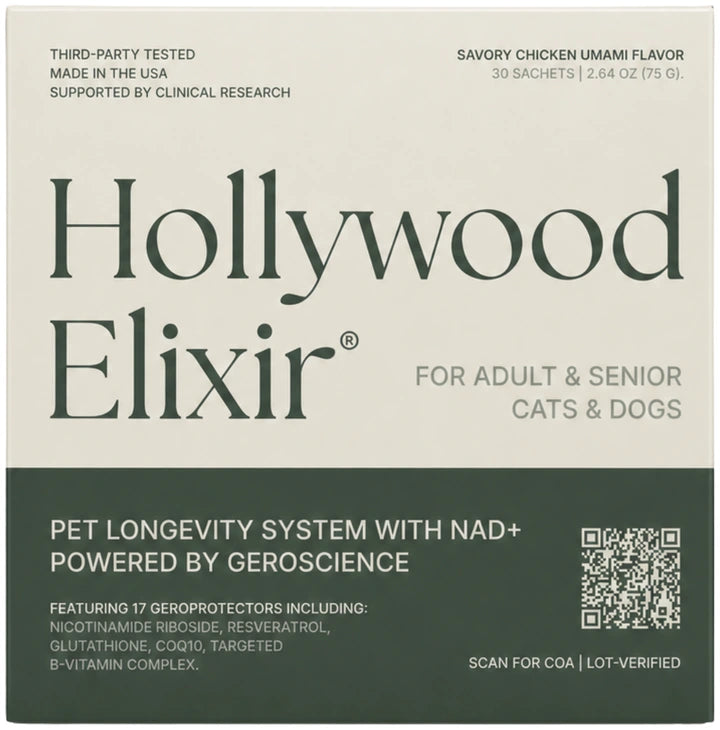
Hollywood Elixir is our daily supplement for adult and senior cats, made to the LPL-01 standard with every active ingredient at a visible amount. It never replaces your veterinarian — it sits alongside the routine on this page.
Starting at $50/month · cancel anytime
Shop Hollywood ElixirWhen to Call the Vet
Split urgent signs from trends that deserve a scheduled veterinary conversation.
Go urgently
- Open-mouth breathing, labored breathing, blue or gray gums, collapse, fainting, severe weakness, or a British Shorthair who cannot settle their breathing.
- Repeated litter-box trips with little or no urine, straining, crying in the box, blood in urine, painful abdomen, or sudden inability to pass urine.
- Seizure, sudden blindness, severe pain, repeated vomiting with weakness, jaundice, uncontrolled bleeding, suspected toxin exposure, or rapid decline.
Schedule promptly
- Weight gain or loss, a changing waist, muscle loss over the hips, reduced jumping, stiffness, or new reluctance to be lifted.
- Faster resting breathing, cough, lower stamina, fainting-like weakness, new murmur concerns, or breathing that looks effortful.
- Larger urine clumps, increased thirst, accidents, constipation, appetite change, vomiting, or litter-box behavior that differs from normal.
- Bad breath, drooling, dropped food, one-sided chewing, softer-food preference, face sensitivity, or reduced grooming.
- Hiding, irritability, more sleep away from the household, new anxiety, coat change, dandruff, or lower interest in play.
The 90-Day Support Routine
Ninety days of small, repeatable habits make subtle changes visible — and give any new routine a fair test.
- Week one: weigh the cat, photograph body shape from above and the side, record rib feel, jumping height, favorite perches, breathing at rest, litter clump size, and dental breath.
- Week one: ask your veterinarian what heart, kidney, urinary, dental, blood pressure, and weight baselines make sense for this British Shorthair's age and history.
- Weekly: check rib feel, play recovery, jumping choices, grooming quality, mouth odor, water intake, and whether the cat still uses the same sleeping and social spots.
- Monthly: repeat weight, waist photo, perch-use note, resting breathing count if your vet wants it, litter pattern, appetite, stool, grooming, and any mobility video.
- Day 90: review the trend with your veterinarian and adjust calories, dental timing, pain care, urinary workup, heart follow-up, or home access before the cat withdraws.
Tools for Tracking Comfort and Aging
Use these when a life-stage, body-condition, or quality-of-life question needs more structure.
Cat Age Calculator
Use age context when a sturdy adult still looks unchanged but habits are shifting.
ToolCat Quality of Life Scale
Use when appetite, litter-box dignity, jumping, grooming, breathing, or social comfort is harder to judge.
ToolCat Biological Age Calculator
Frame healthy-aging conversations around body condition, routine, and veterinary findings.
Frequently Asked Questions
Short answers to the questions owners ask most.
What is a realistic British Shorthair lifespan?
Use about 10 to 13+ years as a practical planning range. The 2024 UK life-table reported 9.58 years at age 0 for British cats, but individual cats vary widely.
Can British Shorthair cats live into their late teens?
Some cats do. The UK dataset recorded British cats into the 20s, but maximum ages should not be treated as the expected lifespan for one cat.
Is 10 old for a British Shorthair?
Ten is the standard senior threshold under AAHA/AAFP life-stage guidance. It is a prompt for closer monitoring, not a reason to dismiss treatable changes.
Why does weight matter so much for British Shorthairs?
A dense coat and sturdy frame can hide non-ideal body condition. Weight drift can affect mobility, grooming, anesthesia planning, and overall senior comfort.
Are British Shorthairs prone to heart disease?
Hypertrophic cardiomyopathy belongs in the heart-screening conversation for this breed. Ask your veterinarian what exam findings, family history, or breathing signs justify follow-up.
What urinary signs are urgent?
Repeated trips with little or no urine, straining, crying, blood, collapse, or a painful abdomen should be treated urgently, especially in male cats.
What early aging signs should I track?
Track weight, waist, jumping, breathing, teeth, thirst, urine clumps, stool, grooming, hiding, irritability, and interest in familiar household routines.
How often should a senior British Shorthair see the veterinarian?
Many senior cats benefit from at least twice-yearly check-ins, but your veterinarian should set timing around weight, dental needs, bloodwork, urine, blood pressure, heart findings, and pain.
What should I bring to a British Shorthair senior visit?
Bring weight history, body photos, diet details, litter notes, videos of jumping or breathing if safe, dental observations, medication lists, and family health records if available.
Is reduced jumping normal aging?
It can be age-related, but it can also be pain, arthritis, weight gain, heart strain, weakness, or vision change. Compare against your cat's own normal and ask.
Should I worry if my British Shorthair hides more?
Yes, if hiding is new or paired with appetite, litter, breathing, grooming, or movement changes. Quiet withdrawal is often the first visible sign of discomfort.
How do I judge quality of life in an older British Shorthair?
Look beyond appetite: breathing, pain, mobility, grooming, litter-box dignity, hydration, sleep, anxiety, social interest, and response to care all matter.
Should I ask a breeder about HCM or kidney history?
Yes. Ask what is known about heart disease, sudden death, kidney disease, urinary stones, dental issues, body condition, and lifespan in close relatives.
Can supplements replace a veterinary plan for British Shorthair health problems?
No. Heart, urinary, dental, pain, kidney, and breathing concerns need veterinary assessment; routine products should never delay care.
A note from La Petite Labs
Hollywood Elixir is La Petite Labs' daily supplement for adult and senior cats. It is not a treatment for anything on this page, and it never replaces your veterinarian.

Why Pampered for a British Shorthair household
Pampered is La Petite Labs' complete daily system, with a recommended 90-day starting window. This page already asks for weigh the cat, photograph body shape from above and the side, record rib feel, jumping height, favorite perches, before repeating weight, waist photo, perch-use note, resting breathing count if your vet wants it, litter pattern, appetite, stool,; Pampered gives that 90-day calendar a daily container while weight, heart, urinary, and mobility stay visible.
Explore the Pampered™ System →