"This brain supplement is proven by aged-beagle research."
The study tested diet and enrichment, not that product.
Better: the research supports senior-dog cognition as a multi-modal routine problem.
That keeps the product inside its actual role.
Your Cart
Choose the formula built for what you want to support.
Choose Your SystemIf your senior dog seems slower, less engaged, or mentally foggier, cognition research can feel urgent. The aged-beagle studies are useful because they tested nutrition and enrichment together. The lesson is not "buy a brain chew." It is: older brains respond best to a routine that combines biology, movement, learning, sleep, and veterinary review.
It tested an antioxidant and mitochondrial-cofactor enriched diet, behavioral enrichment, the combination, and controls in aged beagles.
The work found cognitive-task benefits from nutrition and enrichment, with the most useful interpretation coming from the combined routine.
No. It is not a treatment claim for canine cognitive dysfunction, and the intervention was broader than a single supplement.
Older brains need routines: vet review, pain control, sleep structure, enrichment, movement, and biology-aware nutrition.
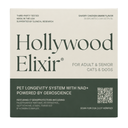
We use it to frame Hollywood Elixir as support inside a senior routine, not as a disease treatment or a copy of the aged-beagle protocol.
The aged-beagle cognition work found that enriched nutrition and behavioral enrichment can support cognitive task performance, with the combined routine carrying the strongest systems lesson. It does not prove that a single brain supplement treats cognitive disease.
This paper supports coordinated support for the aging brain. It does not authorize one-ingredient or disease-treatment claims.
The aged-beagle work is best read as a nutrition-and-enrichment model.
The study used four arms: control food and control environment, control food with enrichment, antioxidant-fortified food with control environment, and antioxidant-fortified food with enrichment. The diet included a broad antioxidant and mitochondrial-cofactor strategy. The enrichment program included physical exercise, environmental stimulation, and repeated cognitive engagement.
That context matters. The strongest reading is not that one capsule changes the aging brain. It is that the aging brain may respond to coordinated biological and behavioral support.
The aged beagles improved on controlled cognitive tasks, especially when biology and enrichment were paired.
The discrimination and reversal-learning tasks are not the same as a pet parent noticing "more sparkle" at home, but they are far more structured than ordinary supplement testimonials. They show that cognitive aging in dogs is not simply fixed decline.
The paper matters most because it refuses the single-lever story. Food chemistry, exercise, environmental novelty, learning, and repeated engagement were all part of the picture.
No single ingredient was isolated as the driver.
Antioxidants and mitochondrial cofactors were tested together as part of a complete diet, often with enrichment as a co-intervention. Attribution to vitamin E, L-carnitine, alpha-lipoic acid, or any single nutrient is not warranted by this design.
The study also does not show that adding a cognition supplement on top of a standard food reproduces the observed effect. And it is not a treatment study for clinical canine cognitive dysfunction, which requires veterinary diagnosis and care.
It made canine cognitive aging feel modifiable instead of inevitable.
For pet parents, that is emotionally important. A senior dog who is sleeping differently, wandering, or disengaging does not need a miracle promise. The dog needs careful attention: pain, senses, sleep, anxiety, movement, food, environment, and veterinary review.
The paper gives supplement brands a real opportunity and a real constraint. Aging-brain support is a serious lane. It is also too serious for "brain boost" shorthand.
For senior dog parents, the most useful translation is routine, not rescue.
A cognition supplement earns trust when it stays inside the evidence.
Responsible products can support aging-brain biology through disclosed antioxidant, mitochondrial, fatty-acid, or polyphenol pathways. They should also make it easy to pair the product with enrichment and veterinary care.
Hollywood Elixir belongs in that support conversation. It does not claim to treat cognitive disease or reproduce aged-beagle trial outcomes.
The common overreach is "backed by aged-beagle research" on a product that did not test the aged-beagle routine.
Enrichment often disappears from the marketing. The product becomes the hero, even though the study made the routine the hero.
The more honest commercial move is sharper: "This product supports aging-relevant pathways and is designed to fit into a senior routine."
A quick read on the claims a pet parent is likely to see while shopping.
"This brain supplement is proven by aged-beagle research."
The study tested diet and enrichment, not that product.
Better: the research supports senior-dog cognition as a multi-modal routine problem.
That keeps the product inside its actual role.
"Antioxidants alone reverse cognitive decline."
The intervention was broad and task-based; reversal is too strong.
Better: antioxidant and mitochondrial pathways may support aging-brain resilience.
Support language fits the evidence.
"Puzzle toys plus a chew recreate the protocol."
The protocol was a controlled research design, not a starter kit.
Better: enrichment and nutrition are complementary tools.
The practical lesson travels; the exact protocol does not.
Use this as a shopper decoder: the idea can be useful, but the claim still has to stay honest.
| Concept | Common claim | Better interpretation | Caution | LPL system |
|---|---|---|---|---|
| Mitochondrial support | "Brain boost." | Explain the aging-brain pathway and disclose actives. | Avoid disease-treatment language. | Hollywood Elixir |
| Enrichment | "Product does the work." | Pair support with walks, scent games, sleep, and vet review. | Routine is part of the evidence. | Research Library |
| Cognitive dysfunction | "Treats dog dementia." | Support healthy cognitive aging; refer clinical signs to a veterinarian. | Disease claims require direct evidence and regulatory care. | LPL-01 |
| Buyer confidence | "Backed by science." | Name the study, show the boundary, disclose the formula. | Vague backing is not evidence. | COA Lookup |
Use these questions before accepting any study-backed product claim.
We read the aged-beagle work as a routine argument.
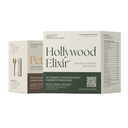
Hollywood Elixir is built around disclosed aging-biology support, including mitochondrial and antioxidant-relevant pathways. It is not a treatment for cognitive disease and it does not claim to reproduce aged-beagle trial outcomes.
The Research Library keeps that line visible: learn from the study, apply the shopping criteria, and keep product language honest.
The best senior-dog support should be easy to understand, easy to track, and honest about the difference between support and treatment.
Short answers for the shopping questions this study usually creates.
It tested an enriched diet, behavioral enrichment, the combination, and controls in aged beagles using cognitive tasks.
No. It supports a broader nutrition-and-enrichment model, not any untested product.
No. Canine cognitive dysfunction is a veterinary concern; consumer products should not use this paper as treatment proof.
Build a senior routine: vet review, pain control, sleep, enrichment, movement, and disclosed pathway support.
It should show actives, doses, pathway rationale, and claim limits.
We use it as a routine and claim-boundary lesson, not as a disease-treatment proof point.
Useful definitions for reading the study without turning it into marketing haze.
Primary paper first, followed by practical veterinary or nutrition references where relevant.
Research Library is educational. It does not diagnose, treat, cure, or prevent disease, and it does not replace veterinary advice.