Indoor and Outdoor Cat lifespan and senior care
Indoor vs Outdoor Cat Lifespan: What Evidence Shows
Housing labels do not cause birthdays; exposure pathways, early mortality, veterinary care, enrichment, geography, and controlled access explain the useful differences.
- Typical lifespan
- No causal year gap established
- Senior age
- 10+ years under feline guidance
- Start watching at
- Audit access at every life stage
A 3,108-cat necropsy series reported 7.25–9.82-year medians across housing groups, but differences were not significant after restricting analysis to cats aged at least 1 year.
Quick Answers for Pet Parents
Direct answers to the questions people ask when they are trying to plan care.
Does keeping a cat indoors guarantee a longer life?
No guarantee is possible. Indoor housing removes major hazards, while survival still reflects age, breed, neuter status, preventive care, disease, body condition, stress, and the quality of the home environment.
What did the direct indoor–outdoor mortality study find?
In a single-institution necropsy series, outdoor cats had a lower median age at death in the full sample, but housing groups did not differ significantly after cats dying before age 1 were excluded.
Which outdoor risks have the clearest mechanisms?
Vehicle trauma, bites and abscesses, FIV and other pathogen exposure, toxins, becoming lost, region-specific predators, and wildlife contact all increase with uncontrolled roaming opportunities.
What can go wrong with an indoor-only plan?
Inactivity, excess calories, resource conflict, boredom, fear, and lack of choice can impair welfare when the territory does not meet feline environmental needs.
Is controlled outdoor access meaningfully different?
Yes. A secure enclosure, cat-safe fence, or suitable harness routine can preserve sensory variety while reducing traffic, fights, range, and some wildlife contact.
Should an older roaming cat keep the same access?
Reassess it. Arthritis, weaker muscle, hearing or vision loss, cognitive change, and chronic disease can reduce escape ability and increase the cost of former routes.
Lifespan at a Glance
The short answer with the context a careful pet parent needs.
| Direct answer | Indoor living removes many roaming hazards, but available observational studies do not prove one universal number of years added by confinement. |
|---|---|
| Most relevant mortality data | One necropsy series found 9.43 years indoors, 9.82 indoor–outdoor, and 7.25 outdoors; after age-1 exclusions the group difference disappeared. |
| Main outdoor exposures | Traffic, trauma, bites, infectious and parasitic contact, toxins, becoming lost, and predators vary sharply by location and access pattern. |
| Indoor obligation | Safe territory, separated resources, vertical space, hiding, scratching, hunting-like play, movement, and predictable social contact must be supplied deliberately. |
| Useful middle ground | Catios, secure fencing, and compatible harness routines can add sensory choice while reducing roaming distance and uncontrolled encounters. |
| Better unit of decision | Replace the indoor/outdoor label with exposure dose: supervision, time of day, road access, contact network, wildlife, enclosure, and preventive care. |
| Senior adjustment | Pain, sensory change, cognition, and slower escape can make former roaming patterns less safe even when they worked earlier. |
The internet often answers this question with a dramatic pair of numbers: a long life indoors and only a few years outside. That comparison usually mixes owned pets, feral cats, kittens, intact adults, traffic deaths, and estimates with no traceable method. It sounds decisive because the categories are vague.
The defensible answer is more interesting: published records show housing-group medians from roughly 7 to 10 years in one 3,108-cat necropsy series, but that study did not establish a causal indoor-versus-outdoor lifespan gap. Outdoor-only cats had a lower median age at death in the full sample. When the investigators restricted analysis to cats that had survived beyond age 1, the indoor, indoor–outdoor, and outdoor medians clustered near 10 years and were not statistically different.
That does not make unsupervised roaming safe. It shows why “outdoor cats live X years” is too blunt. Housing is entangled with neuter status, ownership, veterinary care, vaccination, geography, roads, predators, infectious exposure, and early-life mortality. The strongest practical conclusion comes from exposure pathways: uncontrolled roaming adds preventable hazards, while indoor confinement creates a duty to provide movement, choice, hunting-like play, vertical space, secure rest, and enough environmental complexity for good welfare.
If You Only Have Five Minutes
No high-quality experiment has randomly assigned owned cats to indoor or unsupervised outdoor lives and followed them to death. Such a trial would be ethically and practically implausible. Available evidence is observational, so it can identify associations and mechanisms more confidently than a universal number of years gained.
The clearest avoidable outdoor hazards are trauma—especially road traffic injury—fights, some infectious and parasitic exposures, toxins, becoming lost, and region-specific predators. A 2024 global meta-analysis found outdoor access associated with substantially higher FIV seropositivity. A 2026 global synthesis found owned cats that roamed outdoors had higher odds of carrying zoonotic pathogens than indoor-only cats. Neither result means every roaming cat becomes infected; both make the exposure route harder to dismiss.
Indoor-only living removes many of those pathways, but walls do not supply welfare automatically. Current Feline Veterinary Medical Association guidance calls for food and water resources, safe resting places, clean toileting areas, scratching, vertical territory, play, and opportunities that simulate hunting and foraging. Inadequate environments can contribute to stress-related or behavioral problems.
Controlled outdoor access changes the decision. A catio, secure garden system, or harness routine can provide sensory variety while limiting traffic, fights, roaming distance, and wildlife contact. “Indoors or outdoors” is therefore not a binary; the meaningful variable is how much uncontrolled exposure remains.
For an individual cat, reduce the largest local hazards first. Microchip and identify the cat, neuter when appropriate, keep preventive care current, use parasite and vaccine plans based on lifestyle, remove unsupervised night roaming, and enrich the indoor territory. Transition gradually for a cat accustomed to going out.
Why Indoor and Outdoor Lifespan Numbers Don't Agree
The most directly relevant mortality study was a retrospective necropsy series from a single US institution covering 1989 to 2019. Among cats with known environment, the reported median age at death was 9.43 years for indoor-only cats, 9.82 for indoor–outdoor cats, and 7.25 for outdoor cats. Those groups differed in the full analysis.
Then came an important sensitivity check. Restricting the analysis to cats at least 1 year old produced medians of 9.98, 10.09, and 9.80 years, respectively, with no statistically significant difference. Early deaths were doing substantial work in the headline comparison. The sample was also made of cats submitted for necropsy to one institution, not a population census of all household cats.
Other longevity studies often lack precise housing data. VetCompass research on cats attending English primary-care practices reported overall longevity and cause-of-death patterns, but a setting where outdoor access is common does not create a clean indoor control group. Insurance, hospital, shelter, and owner-survey datasets each select a different slice of cat life.
Definitions drift too. “Outdoor” can mean a barn cat with no regular veterinary care, an owned cat roaming a city every night, or a neutered pet stepping into a fenced courtyard. “Indoor–outdoor” can mean five supervised minutes or twelve unsupervised hours. Unless access, ownership, age, and geography are specified, the label is not an exposure dose.
The cat lifespan methodology explains why age at death, median survival, and life expectancy cannot be swapped casually. On this question, intellectual restraint is not evasiveness. It is the difference between a useful risk assessment and folklore with decimals.
Exposure pathways, not slogans
| Pathway | Unsupervised roaming | Indoor-only trade-off | Lower-exposure option | What the research can support |
|---|---|---|---|---|
| Road traffic | Direct access to vehicles; younger cats are over-represented in traffic mortality research | Largely removed | Catio, secure fence, harness, or enclosed garden | Traffic is a documented cause of traumatic death; no single road-distance rule predicts one cat's fate |
| Predators and aggression | Encounters vary by region, time, density, and intact status | External encounters are sharply reduced | Daylight-only controlled access with secure retreat | Mechanism is credible and locally variable; universal mortality fractions are not established |
| Infectious disease | Contact with unknown cats, prey, feces, soil, and vectors increases | Exposure can still arrive via new animals, people, prey brought inside, or vectors | Lifestyle-based vaccination, parasite control, testing, and restricted contact | Outdoor access is associated with higher FIV and pathogen exposure, not certainty of infection |
| Toxins and traps | Vehicles fluids, pesticides, poisonous prey, plants, bait, and hostile human activity are harder to control | Household plants, medicines, cleaners, and strings remain important | Cat-safe enclosure plus indoor toxin audit | Hazard profile changes with place; “inside” and “outside” each require prevention |
| Fights and wounds | Territorial contact can lead to bites, abscesses, retroviral transmission, and pain | Household conflict may persist in multi-cat homes | Slow introductions, distributed resources, and protected outdoor time | Fight exposure is reducible; behavior and density modify it |
| Activity and body condition | More space may increase spontaneous movement for some cats | Sedentary routine and excess calories can promote weight gain | Daily predatory play, climbing, food puzzles, measured intake, secure outdoor exercise | Some observational studies associate confinement with obesity; causality and individual response remain mixed |
| Enrichment and choice | Novel smells, movement, climbing, and exploration occur naturally, alongside risk | Welfare is shaped by the quality and predictability of the home environment | Vertical routes, hiding, scratching, foraging, windows, rotating play, and catios | Environmental needs are well described; no single toy substitutes for a complete territory |
| Wildlife impact | Hunting and disturbance become possible even when prey is not brought home | Direct outdoor predation is removed | Enclosed access and active play | Ecological effects are established but separate from estimating the cat's own lifespan |
This matrix makes the decision adjustable. A family can reduce traffic and fight exposure without stripping away every breeze, scent, perch, and choice.
What Shapes a Cat's Healthspan Across Settings
Traffic and trauma are age-weighted risks
VetCompass mortality research found a greater proportion of younger cats dying from trauma and road traffic accidents than from other causes. A separate UK emergency-care study identified more than 1,400 road-traffic cases and again showed age patterns. These results do not tell a rural family that its road risk equals a city apartment's. They do establish that traffic deaths are not an abstract or exclusively geriatric hazard.
Location labels can mislead. One analysis found no clear association between road-traffic mortality and broad urban classification or human population density. A quiet-looking road can be fast; a dense neighborhood can have slow traffic and barriers. Map the actual route, speed, visibility, night pattern, and places where the cat crosses.
Infection follows contact networks
FIV is transmitted principally through bite exposure, which makes roaming, fighting, sex, and neuter status relevant. The 2024 global meta-analysis pooled 113 studies and reported outdoor access associated with higher seroprevalence. The 2026 zoonotic-pathogen synthesis covered more than 174,000 cats across 88 countries and found that ownership did not erase exposure when cats roamed freely.
These are population associations, not a diagnosis. Prevention belongs with a veterinarian who knows the region: vaccination where appropriate, parasite control, microchip identification, testing strategy, wound care, and prompt assessment after a fight. An indoor cat newly exposed to an untested newcomer can also acquire infection; doors are not immunity.
Indoor welfare must be engineered
The five pillars in feline environmental guidance are practical architecture: a safe place; multiple separated resources; opportunity for play and predatory behavior; positive and predictable human interaction; and respect for the cat's sense of smell. Space matters less than whether the cat can choose distance, height, concealment, and an uncontested route to essentials.
A one-bedroom home can work when it has vertical pathways and distributed resources. A large house can fail when one cat controls the only litter area or safe perch. Count routes and choices, not square meters alone. If tension, house-soiling, overgrooming, aggression, hiding, or inactivity appears after confinement, treat the environment as part of the clinical history.
Activity does not require uncontrolled roaming
Some observational studies associate indoor confinement with higher odds of overweight, particularly in young domestic shorthair cats. Other work finds more complicated relationships among breed, age, feeding, owner attachment, and reported activity. The safe conclusion is not “let an overweight cat roam.” It is that energy intake and opportunities for movement must be actively designed indoors.
Use short, frequent hunting sequences: locate, stalk, chase, pounce, and receive a small food reward. Add climbing, tunnels, food puzzles, rotation rather than permanent toy clutter, and play timed to the cat's natural active periods. Weigh food instead of estimating it, and ask the veterinary team to score both fat and muscle.
Controlled access occupies the useful middle
A catio or enclosure is not automatically enriching; it needs shade, weather protection, perches, hiding, water, and a secure transition to the home. Harness walking suits some cats and frightens others. Cat-safe fencing reduces range but may not eliminate all escape or wildlife contact.
Choose the method the cat can use without panic. Introduce equipment and barriers with food, scent, and voluntary exploration. The purpose is not to force an indoor cat outside. It is to give compatible individuals more choice at a lower exposure dose.
Transitions carry their own risk
Moving a lifelong roamer abruptly indoors can produce door dashing, vocalization, conflict, sleep disruption, and frustration. Change access in stages while expanding resources before restriction. Keep familiar routines, increase play around former outing times, block ambush points near doors, and consider veterinary or behavior support early.
The reverse transition also deserves caution. A previously indoor-only cat lacks a history with traffic, territory, other cats, toxins, and local predators. Unsupervised release is not an enrichment trial. Start with secure exposure and identification, and let behavior—not human impatience—set the pace.
What Aging Looks Like in an Indoor or Outdoor Cat
Older cats often reduce range before families recognize pain. An outdoor cat may stay closer to the door, avoid a fence, return later because movement is slower, or stop defending access to a preferred route. An indoor cat may abandon the top perch, sleep beside food, miss the litter box edge, or become less willing to cross another cat's territory.
Track setting-specific function:
- route length, time away, and time of return for any cat with access;
- jumping height, stair use, and willingness to enter an enclosure;
- wounds, broken claws, limping, coat debris, ticks, or unexplained soreness;
- litter-box posture, urine volume, stool pattern, and toileting location;
- play sequence, appetite, body condition, and muscle over the spine;
- grooming, hiding, social tolerance, sleep, and response to ordinary sounds.
An aging cat should not have to cross a risky road or defend a territory to reach stimulation. Controlled access often becomes more valuable as hearing, vision, cognition, or mobility changes. The senior cat signs guide can help separate gradual accommodation from a trend that deserves care.
When to Call a Veterinarian
Use emergency care after vehicle impact even if the cat initially walks away; internal injuries may not be obvious. Go urgently for breathing difficulty, collapse, major bleeding, paralysis, seizure, suspected toxin exposure, severe eye injury, inability to urinate, repeated straining, or a bite wound paired with weakness or fever.
Arrange a prompt appointment for any bite or abscess, a new limp, weight change, reduced jumping, altered urination, overgrooming, persistent hiding, new aggression, or a change in roaming and return time. For cats that go outside, tell the clinic about prey, fights, travel, flea and tick exposure, and whether the cat disappeared even briefly.
Bring dates, photos of wounds or environmental changes, a map of access if relevant, diet amounts, body-weight history, preventive-care records, and video of movement. The cat quality of life scale is useful when comfort and territory use change together.
How Indoor and Outdoor Cats Compare With Breed Lifespan
Housing does not replace ancestry. A Maine Coon may bring cardiac and mobility priorities into either setting. A Persian remains a brachycephalic, coat-intensive cat whether the garden is enclosed or absent. An American Shorthair still needs a body-condition and urinary plan indoors.
Use the cat lifespan by breed hub for breed estimates, then overlay the exposure matrix. One describes population biology; the other identifies preventable contact with hazards. Neither predicts an individual birthday.
Questions for Your Rescue, Breeder, or Veterinarian
For a rescue or breeder:
- What access did the cat have before, and at what times of day?
- Has the cat lived with traffic, dogs, wildlife, other cats, or a secure enclosure?
- Is the cat microchipped, neutered, vaccinated, parasite-controlled, and tested as appropriate?
- Are there past wounds, abscesses, fractures, disappearances, or stress behaviors after confinement?
For your veterinarian:
- Which infectious, parasite, and vaccine risks matter in this postcode and travel history?
- Does age, pain, vision, hearing, or cognition make current roaming less safe?
- What body- and muscle-condition target fits this cat's activity level?
- Which signs suggest frustration or inter-cat conflict rather than a purely medical problem?
- How should we transition access without creating panic or door dashing?
- Which controlled option best preserves this cat's valued behaviors?
Sources
- Kent MS, Karchemskiy S, Culp WTN, Lejeune AT, Pesavento PA. Longevity and mortality in cats: a single institution necropsy study of 3,108 cases. PLOS ONE. https://pmc.ncbi.nlm.nih.gov/articles/PMC9799304/
- O'Neill DG, Church DB, McGreevy PD, Thomson PC, Brodbelt DC. Longevity and mortality of cats attending primary care veterinary practices in England. Journal of Feline Medicine and Surgery. https://pmc.ncbi.nlm.nih.gov/articles/PMC10816413/
- McDonald JL, Farnworth MJ, Clements J. Mortality due to trauma in cats attending veterinary practices in central and south-east England. Journal of Small Animal Practice. https://pubmed.ncbi.nlm.nih.gov/28762508/
- Conroy M, O'Neill D, Boag A, Church D, Brodbelt D. Epidemiology of road traffic accidents in cats attending emergency-care practices in the UK. Journal of Small Animal Practice. https://pubmed.ncbi.nlm.nih.gov/30383291/
- Tan SML, Stellato AC, Niel L. Uncontrolled outdoor access for cats: an assessment of risks and benefits. Animals. https://pmc.ncbi.nlm.nih.gov/articles/PMC7070728/
- Wilson A, Wilson S, Marra PP, Lapen DR. Outdoor roaming of owned cats elevates risk of zoonotic pathogen exposure: a global synthesis. PLOS Pathogens. https://doi.org/10.1371/journal.ppat.1014160
- Moreira GCM, et al. Global seroprevalence and factors associated with seropositivity for feline immunodeficiency virus in cats: a systematic review and meta-analysis. Preventive Veterinary Medicine. https://pubmed.ncbi.nlm.nih.gov/39146687/
- Maniaki E, Murrell J, Langley-Hobbs SJ, Blackwell EJ. Associations between early neutering, obesity, outdoor access, trauma and feline degenerative joint disease. Journal of Feline Medicine and Surgery. https://pubmed.ncbi.nlm.nih.gov/33569999/
- Bjørnvad CR, Mortensen CB, Tams MLS, Jørgensen FK, Sandøe P, Lund TB. Feline obesity is associated with stronger owner attachment, while indoor confinement increases risk of obesity at an early age in domestic shorthaired cats. Frontiers in Veterinary Science. https://pmc.ncbi.nlm.nih.gov/articles/PMC13041544/
- Feline Veterinary Medical Association. 2024 Indoor/Outdoor Lifestyle Position Statement. https://catvets.com/resource/2024-indoor-outdoor-lifestyle-position-statement/
- Ellis SLH, Rodan I, Carney HC, et al. AAFP and ISFM Feline Environmental Needs Guidelines. Journal of Feline Medicine and Surgery. https://catvets.com/wp-content/uploads/2024/01/Environmental GuidelinesEViewFinal.pdf
Healthspan by Life Stage
Know what to track before senior age, not only after decline appears.
Prevent early exposure losses
Microchip, identify, vaccinate and parasite-control by lifestyle, discuss neutering, teach indoor play and handling, and use secure introductions rather than unsupervised release.
Build a territory worth staying in
Distribute litter, water, food, scratching, height, hiding, and play; if outdoor experience is offered, favor controlled access and record fights, wounds, prey, and return patterns.
Recheck the exposure bargain
Track weight, muscle, jumping, wounds, urine, teeth, grooming, route length, recovery, and whether the cat still navigates barriers or competitors safely.
Bring stimulation closer and safer
Shorten risky routes, improve step and litter access, preserve choice through windows or enclosures, and investigate reduced range rather than assuming the cat simply prefers home.
Change the environment before the rule
Add resources, play, door management, predictable routines, and behavior support before restricting a lifelong roamer or exposing a previously indoor cat.
Breed Health Map
The main breed-specific topics that can shape lifespan, comfort, and quality of life.
Early deaths change the housing comparison
The key necropsy study’s full-sample difference was no longer significant after removing deaths before age 1, exposing the limits of a simple indoor-versus-outdoor year claim.
Risk follows the actual route
Younger cats are over-represented in road-trauma mortality research; road speed, crossings, night access, visibility, and local barriers matter more than an urban or rural label.
Contact networks cross ownership lines
Outdoor access is associated with higher FIV seropositivity and broader pathogen exposure, while vaccination, testing, neutering, parasite control, and wound care modify—not erase—risk.
Safety without choice is incomplete
A functional home provides secure rest, separated essentials, height, hiding, scratching, predatory play, movement, clean toileting, and routes that another cat cannot monopolize.
Confinement can expose an energy mismatch
Some observational studies link indoor living with overweight, especially in young domestic shorthairs; measured food and designed activity address the mechanism without adding roaming hazards.
Exposure can be titrated
A well-built catio or secure garden adds air, scent, sun and climbing with less traffic and territorial contact; shade, escape prevention, retreat, and voluntary use remain essential.
The cat is part of an ecosystem
Unsupervised hunting and disturbance affect prey populations and neighbors even when no animal is brought home, supporting enclosure and active indoor predatory play.

One serving a day, built for aging cats
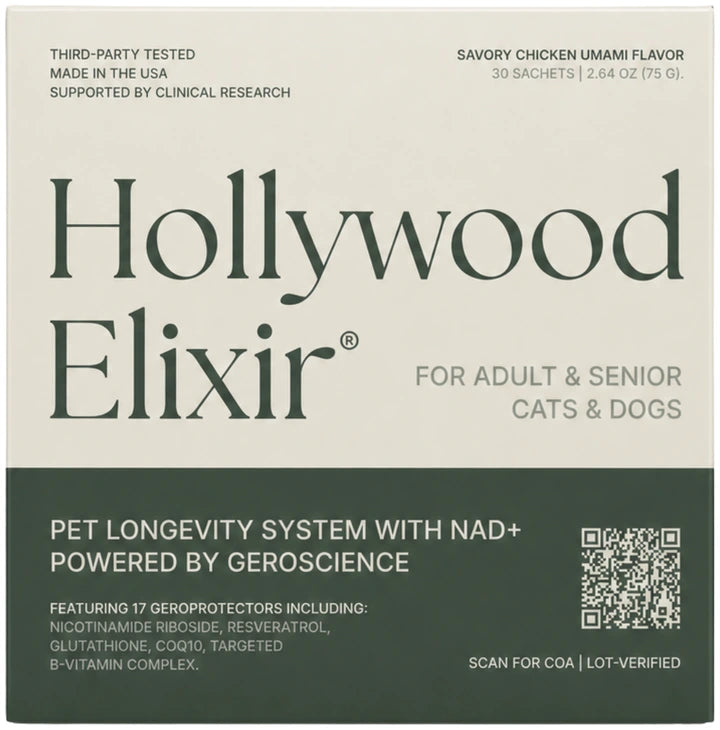
Hollywood Elixir is our daily supplement for adult and senior cats, made to the LPL-01 standard with every active ingredient at a visible amount. It never replaces your veterinarian — it sits alongside the routine on this page.
Meet Hollywood ElixirWhen to Call the Vet
Split urgent signs from trends that deserve a scheduled veterinary conversation.
Go urgently
- Any vehicle impact, major fall, collapse, breathing difficulty, paralysis, severe bleeding, or suspected internal injury.
- Repeated urinary straining without urine, seizure, suspected toxin exposure, severe eye trauma, or inability to stand.
- Deep bite wound with weakness or fever, rapidly spreading swelling, uncontrolled pain, or a missing cat returning markedly unwell.
Schedule promptly
- Any bite, abscess, new limp, broken claw, unexplained soreness, reduced jump, or sudden reluctance to use a familiar route.
- Weight or muscle change, thirst or urine change, vomiting, diarrhea, appetite shift, or declining coat condition.
- House-soiling, overgrooming, hiding, aggression, door panic, sleep disruption, or conflict after an access change.
- Roaming farther or returning later, disappearing, bringing unusual prey, losing identification, or repeated neighborhood conflict.
- An older cat staying close to home, missing barriers, becoming startled outside, or struggling to escape other animals.
The 90-Day Support Routine
Ninety days of small, repeatable habits make subtle changes visible — and give any new routine a fair test.
- Week one: map roads, crossings, predators, other cats, toxins, wildlife contact, night access, hiding places, and every point where supervision or enclosure could reduce exposure.
- Week one: audit microchip details, visible identification if appropriate, neuter status, vaccines, parasite control, retroviral testing history, emergency contact, and carrier access.
- Weekly: check skin, paws, claws, eyes, gait, appetite, litter output, play, body feel, and any wound or environmental event after access.
- Twice weekly: run short hunting-style play and rotate climbing, foraging, scent, hiding, and window opportunities so confinement does not become inactivity.
- Monthly: record weight, muscle, jumping height, territory use, return times, conflicts, prey, wounds, and whether controlled options are being used voluntarily.
- At day 90: review the exposure map and welfare record with the veterinarian, then reduce the highest remaining hazard without stripping away resources the cat values.
Tools for Tracking Comfort and Aging
Use these when a life-stage, body-condition, or quality-of-life question needs more structure.
Cat Age Calculator
Translate chronological age into a life-stage conversation before a change in territory use is dismissed as normal.
ToolCat Quality of Life Scale
Review comfort, movement, grooming, toileting, appetite, sleep, and social interest as one connected picture.
ToolCat Biological Age Calculator
Frame healthy-aging questions while keeping housing, breed, diagnoses, and individual behavior visible.
Frequently Asked Questions
Short answers to the questions owners ask most.
How much longer do indoor cats live than outdoor cats?
No universal number is established. One necropsy study found a full-sample difference, but it disappeared after restricting analysis to cats that had survived beyond age 1.
Why is the common 2-to-5-year outdoor lifespan claim unreliable?
It often mixes owned pets with feral or unowned populations and rarely states geography, age, neuter status, veterinary care, endpoint, or a traceable dataset.
What were the housing medians in the necropsy study?
Median age at death was 9.43 years indoors, 9.82 for indoor–outdoor cats, and 7.25 outdoors in the full sample. These are study results, not universal life expectancies.
Did indoor and outdoor cats differ after kitten deaths were excluded?
No statistically significant housing-group difference remained among cats aged at least 1 year in that study; medians then clustered close to 10 years.
Are outdoor cats more likely to acquire FIV?
A 2024 global meta-analysis associated outdoor access with higher FIV seropositivity. Risk also reflects fighting, sex, neuter status, geography, and the local cat contact network.
Is an indoor-only lifestyle always better for welfare?
Not automatically. It removes external hazards, but good welfare still requires choice, safe rest, separated resources, clean toileting, height, hiding, scratching, play, movement, and predictable interaction.
Can a catio replace free roaming?
For many cats it can provide valuable sensory access with lower exposure, though enclosure size, shade, perches, retreat, security, weather, and the cat’s voluntary comfort determine its quality.
Is harness walking suitable for every cat?
No. Some cats learn it comfortably and others freeze or panic. Introduce equipment gradually and use another controlled option when the cat does not engage voluntarily.
Do indoor cats become overweight more often?
Some observational studies find an association, especially in young domestic shorthairs, but feeding, activity, breed, age, and owner behavior interact. Measure food and design daily movement.
Should a roaming cat be kept indoors at night?
Night restriction can reduce some traffic, predator, fight, and wildlife exposure, but local risks differ. Controlled access is safer than assuming a curfew removes every hazard.
How do I transition an outdoor cat indoors?
Expand vertical territory, hiding, litter and feeding resources, predatory play, and door management before reducing access. Change gradually and seek veterinary or behavior help when distress persists.
What preventive care does an outdoor-access cat need?
Microchip and identification, vaccination, parasite control, neutering and retroviral testing should be individualized to region, travel, contact, hunting, and medical history with a veterinarian.
Why might an older outdoor cat stay closer to home?
Pain, muscle loss, hearing or vision change, cognitive decline, illness, conflict, or altered territory can all reduce range. A new pattern deserves assessment rather than an age assumption.
Does Hollywood Elixir offset outdoor risk for cats?
No. Hollywood Elixir is La Petite Labs’ daily supplement for adult and senior cats; it cannot prevent traffic injury, fights, infection, toxins, predation, escape, or a deficient environment.
A restrained note from La Petite Labs
Hollywood Elixir is La Petite Labs’ daily supplement for adult and senior cats. It does not offset uncontrolled roaming hazards or replace preventive care, environmental enrichment, diagnosis, or veterinary treatment.