Immunomodulation for Cats

Identify Immune Overdrive vs Suppression—and the Steps That Rebalance It

Essential Summary

Why is immunomodulation for cats important?

Immunomodulation for cats is about steadiness: supporting an immune response that’s appropriately alert, not perpetually loud. Diet quality, gut comfort, stress load, and age all shape that balance over time. The most credible support is conservative, consistent, and easy to maintain—designed to complement veterinary care rather than compete with it.

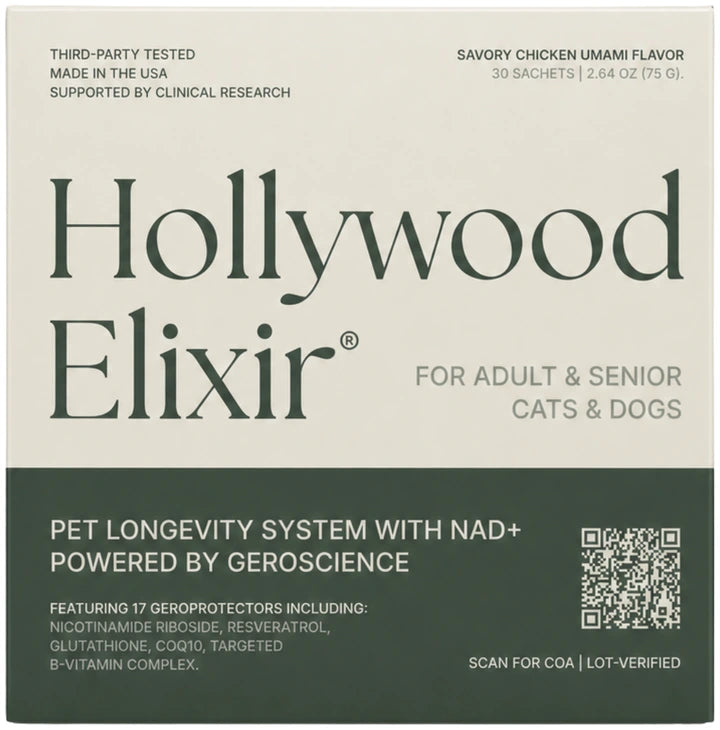
Hollywood Elixir™ is designed as system-level support for aging cats—helping maintain the metabolic steadiness and recovery capacity that immune balance quietly depends on. Rather than chasing a single “immune ingredient,” it supports the broader network that helps your cat stay resilient through stress, seasonal shifts, and the subtle changes of later life.

Most people arrive at immunomodulation for cats with a familiar mix of hope and unease. A cat who used to be unbothered now scratches more, digests less predictably, or seems to take longer to recover from small disruptions. The internet offers two unhelpful extremes: “boost the immune system” or “do nothing.” Real immune health lives in the middle—calibration, not escalation.

In cats, immune steadiness is inseparable from the basics: consistent intake, appropriate protein building blocks, gut comfort, and a life with manageable stress. Cats’ dietary amino acid patterns influence immune function, which is one reason nutrition quality matters so much. But even with good food, modern life introduces friction—aging, indoor allergens, dental inflammation, weight plans, and appetite variability. Those factors can make an “adequate” baseline feel less steady in practice.

This is the honest reason a careful, science-minded owner still considers a product: not to replace diet, and not to promise disease outcomes, but to support the broader resilience network that helps the immune system behave proportionately. Hollywood Elixir™ is positioned in that lane—system-level support for aging and recovery capacity—so your cat’s immune balance has a calmer foundation to work from, day after day.

By La Petite Labs Editorial, ~15 min read

Featured Product:

  • Immunomodulation for cats aims for balance, not a blanket “boost,” especially when symptoms swing between flare and calm.
  • Diet matters, but real-world intake can drift with picky eating, aging, or calorie restriction—making steadier support more relevant over time.
  • The gut is a major staging ground for immune tone; digestive inconsistency can ripple outward into skin, energy, and comfort.
  • Allergy-prone cats often benefit from fewer variables: clearer triggers, calmer routines, and conservative, cat-appropriate choices.
  • Senior cats face changing immune coordination; a “best” plan is usually the one that’s simplest to sustain and easiest to monitor.
  • Safety comes first: medically complex cats and those on prescriptions should treat new supplements as vet-guided variables, not experiments.
  • Hollywood Elixir™ fits the science-minded owner’s logic by supporting the broader resilience network—beyond single-nutrient thinking—so immune balance has a steadier foundation.

A Quiet Definition of Immune Balance in the Feline Body

Immunomodulation for cats is less about “boosting” and more about restoring proportion: a response that’s alert when it should be, and quiet when it must be. In real life, that balance can be strained by age, chronic stress, indoor allergens, dental inflammation, digestive upset, or the simple accumulation of small burdens over time. The goal is steadiness—fewer swings between overreaction and under-response—while respecting that every cat’s immune set point is individual.

Because cats are obligate carnivores, immune resilience is tightly tied to dietary building blocks, including specific amino acids that support normal immune function (Sun M, 2024). Yet “adequate on paper” doesn’t always feel adequate in the body—especially in seniors, picky eaters, or cats on restricted-calorie plans where nutrient intake can drift (Grant, 2025). Thoughtful immunomodulation therapy for cats often starts with fundamentals (diet, sleep, stress, oral health) and then considers targeted support that fits the cat’s life stage.

Scientific view of cellular energy centers tied to dog vitality with effective immunomodulation for cats.

When Immune Support Becomes a Practical, Everyday Question

When people search for the best immunomodulation for cats, they’re usually describing a pattern: recurring skin flares, seasonal itch, frequent “off” days, slow bounce-back after stress, or digestive sensitivity that seems to echo into everything else. These aren’t diagnoses by themselves, but they are signals that the immune system is spending too much time at the extremes—either too vigilant or not quite coordinated.

Aging adds another layer. Commercial senior diets can vary widely in nutrient density and overall formulation, which matters because older cats often eat less and absorb differently (Summers SC, 2020). Meanwhile, the gut—where much of immune “training” happens—can be sensitive to abrupt food changes or low-quality inputs (Prantil LR, 2016). Effective immunomodulation for cats is often the art of reducing friction: steadier routines, fewer dietary surprises, and support that doesn’t ask the body to work harder to get the same result.

DNA strand illustration representing antioxidant support pathways in immunomodulation therapy for cats.

Modulation, Not Hype: Three Ideas Worth Keeping Separate

It helps to separate three ideas that get blended together online: immune stimulation, immune suppression, and immune modulation. Stimulation pushes activity up; suppression pushes activity down. Immunomodulation aims for calibration—supporting appropriate responses while discouraging needless inflammation. That distinction matters because “more immune” is not always better, particularly in cats with allergy tendencies or chronic inflammatory conditions.

Veterinary medicine already uses true immunomodulation therapy for cats in specific contexts, including allergy desensitization approaches and prescription immunomodulators when indicated (Senti G, 2012). Those tools are powerful and should be vet-directed. In the everyday wellness context, an immunomodulation supplement for cats should be framed more modestly: supporting the body’s broader resilience—metabolic steadiness, oxidative balance, and recovery capacity—so immune signaling has a calmer background to operate within.

Bioactive protein structure illustrating synergy in wellness supported by effective immunomodulation for cats.

Natural Foundations That Shape Resilience Without Drama

Natural immunomodulation for cats often begins with what’s least glamorous: consistency. Cats are exquisitely responsive to environmental change, and stress can shape immune tone over time. A predictable feeding window, stable litter routines, and a quiet place to retreat can matter as much as any capsule. If your cat’s symptoms track with household disruption, travel, new pets, or construction noise, that pattern is worth taking seriously.

Nutrition is the second pillar. Cats rely on specific dietary amino acids and patterns that influence immune function (Sun M, 2024). But real-world feeding can be messy: appetite dips, selective eating, and weight-loss plans can unintentionally narrow nutrient intake (Grant, 2025). The most credible “natural” approach doesn’t pretend food is perfect; it simply treats diet quality, palatability, and regular intake as part of immune support, not separate from it.

Pug portrait highlighting companionship and steady support from natural immunomodulation for cats.

The Gut as a Daily Influence on Immune Steadiness

The gut is not just digestion; it’s an interface with the outside world. A large share of immune activity is coordinated around the intestinal lining, where the body decides what’s harmless, what’s threatening, and what should be ignored. When stools are inconsistent, appetite is erratic, or vomiting becomes “normal,” immune balance can become harder to maintain.

Diet composition and quality influence this environment, and commercial diets can vary in both nutritional profile and microbiological quality (Prantil LR, 2016). For cats with chronic enteropathy concerns, veterinary guidance is essential, and consensus recommendations emphasize structured evaluation rather than guesswork (Boothe DM, 1990). In that context, immunomodulation supplements for cats are best viewed as supportive—helping the body maintain steadier baseline function—while the primary plan addresses the underlying digestive trigger.

Hollywood Elixir™ is amazing and makes my 13 y/o kitty young again!

— Jessie

She hopped up onto the windowsill again—first time in years.

— Charlie

“The goal isn’t a louder immune system. It’s a steadier one.”

Allergy-prone Cats and the Value of Fewer Variables

Allergy is one of the clearest places where “modulation” is more accurate than “boosting.” The goal is not to amplify immune activity, but to reduce inappropriate reactivity and improve tolerance. In specialist settings, immunotherapy can be used to retrain allergic responses, including approaches designed to induce tolerance more efficiently (Senti G, 2012).

At home, the practical version is calmer: reduce exposure where possible, support skin barrier health, and avoid supplement stacks that add novelty without clarity. If itch, ear debris, or recurrent skin lesions are persistent, a veterinarian should rule out parasites, infection, and food reactions before you invest in “best immunomodulation supplements for cats.” The most effective plan is usually the one with the fewest moving parts—and the best follow-through.

Elegant dog portrait reflecting alertness and natural vitality supported by best immunomodulation supplements for cats.

Senior Cats, Changing Needs, and a Narrower Margin

Senior cats deserve their own immune conversation. Aging can change how immune responses are coordinated, sometimes leading to slower recovery, more inflammation, or less predictable reactions to stressors (Robson D, 2003). At the same time, older cats may eat smaller meals, become more selective, or develop dental discomfort that quietly reduces intake.

Food choice matters here, but it’s not always straightforward. Studies evaluating senior cat foods show meaningful variation in nutrient content and caloric density (Summers SC, 2020). That means two “senior” labels can support very different outcomes in the real world. Effective immunomodulation for cats in later life often looks like system support: maintaining appetite, preserving lean mass, and supporting cellular resilience so immune work doesn’t compete with basic maintenance.

Canine profile image reflecting strength and steadiness supported by natural immunomodulation for cats.

Weight Plans, Nutrient Density, and Hidden Tradeoffs

If your cat is overweight, immune support has an extra constraint: calorie restriction can unintentionally narrow nutrient intake. In obese cats fed certain over-the-counter weight-loss diets, lower intakes of amino acids and vitamins have been documented, highlighting the risk of “less food” becoming “less nutrition”(Grant, 2025). That matters because immune balance depends on adequate building blocks and steady energy availability.

This is where a well-designed immunomodulation supplement for cats can make conceptual sense: not as a shortcut, but as a way to support the broader metabolic network while you and your veterinarian manage weight carefully. The best immunomodulation for cats in a weight plan is the one that respects constraints—palatable, simple, and compatible with a measured feeding strategy.

Supplement breakdown graphic emphasizing no fillers approach within immunomodulation supplements for cats.

What Quality Looks Like in Cat Immune Support Products

It’s reasonable to ask what “quality” looks like when you’re comparing immunomodulation supplements for cats. Start with restraint: clear ingredient disclosure, conservative positioning, and a product that doesn’t promise to fix diseases. Next, look for manufacturing seriousness—batch consistency, stability considerations, and dosing instructions that encourage veterinary involvement for medically complex cats.

Also consider the cat, not the label. A supplement that is theoretically elegant but impossible to administer will fail in practice. Palatability, texture, and routine fit are not minor details; they determine adherence. Finally, remember that diet quality varies across categories, including specialized diets (Prantil LR, 2016). A supplement should complement a sound feeding plan, not compensate for a chaotic one.

Safety First: When Caution Is the Most Loving Choice

Safety is the quiet center of any immune conversation. Cats can be sensitive to ingredients that are tolerated in other species, and “natural” is not a safety guarantee. If your cat is on prescription immunomodulators, the bar for caution rises. For example, cyclosporine has been evaluated for safety and tolerability in cats when used daily over extended periods, under veterinary supervision (Roberts ES, 2014). That kind of context should make owners more—not less—careful about adding new products.

Ask your veterinarian before starting any immunomodulation therapy for cats if your cat has chronic disease, is immunocompromised, is pregnant, or is taking multiple medications. The goal is compatibility: support that doesn’t complicate monitoring, appetite, or gastrointestinal comfort. A good plan is one your vet can understand at a glance.

“In practice, the best plan is often the simplest plan you can keep consistent.”

Branded lab coat reflecting precision and trust supporting best immunomodulation for cats.

Timelines and Tracking: How to Notice Real Change

Owners often want a timeline: when will an immune-support plan “work”? With immunomodulation for cats, the honest answer is that you’re usually watching for trends, not overnight reversals. Skin comfort may shift gradually; stool consistency may stabilize in small increments; energy can become less variable. The most useful metric is whether the bad days become less frequent and less intense.

Because immune balance is influenced by diet and intake consistency, changes to food can confound your read on a supplement. Nutrient variation across diets—especially in senior formulas—can change baseline behavior and appetite (Summers SC, 2020). If you’re testing an immunomodulation supplement for cats, keep other variables steady for a few weeks, and track one or two outcomes you can actually observe.

Shop Now
Curated ingredient scene highlighting bioactive blend supporting effective immunomodulation for cats.

Red Flags That Belong in a Veterinary Exam Room

There are moments when immune support should pause and a veterinarian should lead. Sudden lethargy, fever, rapid weight loss, labored breathing, persistent vomiting, blood in stool, or a new lump are not “immune imbalance” problems to troubleshoot at home. They are medical problems until proven otherwise. The same is true for recurring infections or wounds that don’t heal normally.

Cats also carry unique infectious risks and immune considerations across life stages, and your veterinarian will interpret signs in that context (Colombo S, 2018). If you’re considering effective immunomodulation for cats because your cat seems “run down,” ask for a basic exam and appropriate testing first. Support works best when it’s layered onto a clear understanding of what you’re supporting.

Shop Now
Pet owner presenting supplement, highlighting home wellness supported by immunomodulation supplements for cats.

Choosing Support That Fits Your Cat’s Actual Life

The phrase best immunomodulation for cats can be misleading because it implies a single winner. In reality, the best choice is the one that matches the cat’s constraints: age, appetite, medical history, and the owner’s ability to be consistent. A complicated regimen is rarely a strong regimen.

A practical decision framework is simple. First, confirm basics: complete diet, stable intake, and a plan for dental and parasite control. Second, decide what you’re trying to shift: skin comfort, digestive steadiness, recovery after stress, or senior resilience. Third, choose support that is system-level rather than single-claim. Cats’ immune function is intertwined with dietary patterns and amino acid availability (Sun M, 2024), but resilience also depends on how well the whole organism manages daily wear.

Shop Now

Why “Boosting” Often Misses the Point for Cats

A note on “boosting”: it’s a word that sells certainty, but biology rarely cooperates. Immune responses are meant to be context-aware. Too much activity can look like chronic inflammation; too little can look like poor defense. Immunomodulation for cats is the more mature goal because it respects that the right response changes with the moment.

This is also why stacking multiple immune products can backfire. You lose the ability to interpret cause and effect, and you increase the chance of gastrointestinal upset. If your cat has a diagnosed immune-mediated condition, or is receiving prescription immunomodulators, keep all additions conservative and vet-reviewed. Long-term immunomodulatory medications in cats are managed with monitoring for a reason (Roberts ES, 2014).

Where Hollywood Elixir™ Fits for Science-minded Owners

Where does a product like Hollywood Elixir™ fit if you already feed a good diet? The honest answer is that diet is necessary, but it’s not always sufficient for the lived reality of aging, stress, and modern indoor life. Even within “complete and balanced” categories, nutrient density and formulation choices can vary, especially in senior foods.

A system-level supplement is not trying to replace a single nutrient. It’s meant to support the broader network that helps a cat stay steady: energy handling, cellular maintenance, and recovery capacity—so immune signaling has a more stable foundation. That’s the commercial logic that remains after scientific honesty: you’re not buying a miracle; you’re buying consistency, in a form that fits daily life.

Benchmark graphic emphasizing formulation depth and rigor behind immunomodulation supplements for cats.

Administration and Adherence: the Unseen Determinants

Administration matters more than most people admit. Cats notice texture, smell, and routine disruptions, and a supplement that creates conflict can increase stress—working against the very balance you’re trying to support. If you’re using immunomodulation supplements for cats, choose a method you can repeat calmly: mixed into a familiar food, offered at a predictable time, and paired with a neutral ritual.

Keep a short log for two weeks: appetite, stool quality, coat feel, scratching frequency, and overall demeanor. If you see vomiting, diarrhea, or food refusal, stop and reassess with your veterinarian. For cats with chronic gastrointestinal issues, structured evaluation is preferred over trial-and-error (Boothe DM, 1990). The goal is a plan that is both tolerable and interpretable.

Shop Now
Supplement box revealed in soft light, reflecting premium immunomodulation therapy for cats positioning.

Cats Are Not Small Dogs: Species-specific Considerations

Cats are not small dogs, and immune support should not be copy-pasted across species. Their nutritional needs are distinct, and immune function is closely tied to carnivore-specific dietary patterns. Ingredients that are benign for dogs can be inappropriate for cats, and dosing philosophies don’t translate cleanly.

This is one reason to be cautious with “universal” immune blends. If you’re seeking natural immunomodulation for cats, prioritize cat-appropriate formulation, conservative claims, and a routine you can maintain. And if your cat is medically complex, treat every new addition as a variable that should be discussed with your veterinarian, not a lifestyle accessory.

Shop Now

A Durable Plan for Comfort, Consistency, and Calm

The most reassuring immune plan is the one that feels quiet: fewer flare cycles, steadier digestion, and a cat who seems more comfortable in their own skin. Immunomodulation for cats is ultimately about reducing extremes and supporting durability across a life. It’s not a promise of perfect health; it’s a commitment to fewer avoidable stressors and better baseline support.

If you want a single takeaway, make it this: choose interventions that you can sustain, that your veterinarian can endorse, and that respect the cat’s individuality. The best immunomodulation supplements for cats are the ones that fit into a coherent system—diet, environment, medical oversight, and a carefully chosen daily support that doesn’t ask the body to gamble.

“System-level support matters most when life isn’t perfectly controlled.”

Educational content only. This material is not a substitute for veterinary advice. Always consult your veterinarian about your cat’s specific needs. These statements have not been evaluated by the Food and Drug Administration. Products mentioned are not intended to diagnose, treat, cure, or prevent any disease.

Glossary

  • Immunomodulation: Support aimed at balancing immune responses rather than simply increasing or decreasing activity.
  • Immune Tolerance: The ability to remain calm toward harmless stimuli (like many environmental exposures) without overreacting.
  • Inflammation: A normal protective response that can become problematic when persistent or disproportionate.
  • Allergen: A substance that can trigger an inappropriate immune response in sensitive individuals.
  • Immunotherapy: Vet-directed treatment intended to retrain immune responses, often used in allergy contexts.
  • Obligate Carnivore: A species (like cats) with nutritional needs shaped by a meat-based evolutionary diet.
  • Amino Acids: Protein building blocks that support many body functions, including normal immune function.
  • Gut Microbiome: The community of microbes in the digestive tract that can influence digestion and immune tone.
  • Chronic Enteropathy: Long-standing digestive disease patterns that require veterinary evaluation and structured management.
  • System-Level Support: A strategy that supports overall resilience (energy, recovery, steadiness) rather than targeting a single symptom.

Related Reading

References

Sun M. Considerations on amino acid patterns in the natural felid diet: a review.. PubMed Central. 2024. https://pmc.ncbi.nlm.nih.gov/articles/PMC11603590/

Summers SC. Evaluation of nutrient content and caloric density in commercially available foods formulated for senior cats.. PubMed Central. 2020. https://pmc.ncbi.nlm.nih.gov/articles/PMC7517497/

Prantil LR. Nutritional analysis and microbiological evaluation of commercially available enteral diets for cats.. PubMed. 2016. https://pubmed.ncbi.nlm.nih.gov/26317493/

Grant. Ex vivo energy restriction in obese cats reveals more amino acid and vitamin intakes below recommendations with over-the-counter compared to veterinary weight-loss diets. PubMed. 2025. https://pubmed.ncbi.nlm.nih.gov/41135581/

Senti G. Intralymphatic immunotherapy for cat allergy induces tolerance after only 3 injections.. PubMed. 2012. https://pubmed.ncbi.nlm.nih.gov/22464647/

Roberts ES. Safety, tolerability, and pharmacokinetics of 6-month daily dosing of an oral formulation of cyclosporine (ATOPICA for cats®) in cats.. PubMed. 2014. https://pubmed.ncbi.nlm.nih.gov/24134659/

Robson D. Review of the pharmacokinetics, interactions and adverse reactions of cyclosporine in people, dogs and cats.. PubMed. 2003. https://pubmed.ncbi.nlm.nih.gov/12833934/

Foster AP. Immunomodulation and immunodeficiency.. PubMed. 2004. https://pubmed.ncbi.nlm.nih.gov/15030560/

Boothe DM. Drug therapy in cats: mechanisms and avoidance of adverse drug reactions.. PubMed. 1990. https://pubmed.ncbi.nlm.nih.gov/2185205/

Colombo S. Ciclosporin and the cat: Current understanding and review of clinical use.. PubMed. 2018. https://pubmed.ncbi.nlm.nih.gov/29478396/

Finno CJ. Veterinary Pet Supplements and Nutraceuticals.. PubMed Central. 2020. https://pmc.ncbi.nlm.nih.gov/articles/PMC7802882/

FAQ

What is immunomodulation for cats in plain language?

Immunomodulation for cats means supporting an immune response that stays proportionate—active when needed, quieter when it isn’t. It’s different from “boosting,” which implies more activity is always better.

For many households, the practical goal is fewer swings: less reactivity, steadier digestion, and smoother recovery after stress. A system-level daily option that fits routine can complement veterinary care, including Hollywood Elixir™

Why does immune balance matter more as cats age?

As cats get older, immune coordination can become less predictable, and recovery from everyday stressors may take longer(Robson D, 2003). That doesn’t mean something is “wrong”; it means the margin for disruption narrows.

Because senior diets and intake can vary, many owners focus on steadiness rather than quick fixes. A consistent, cat-friendly routine that supports whole-body resilience can pair well withHollywood Elixir™

How is immunomodulation different from immune boosting in cats?

“Boosting” suggests turning the immune system up. Immunomodulation suggests tuning it—supporting appropriate responses while discouraging needless inflammation. That distinction matters when a cat’s issue is reactivity rather than weakness.

If you’re choosing support, look for conservative claims and a plan you can keep stable long enough to observe trends. For system-level daily support, consider Hollywood Elixir™

Can diet alone support immunomodulation for cats?

A complete diet is foundational, and cats depend on carnivore-specific amino acid patterns that influence immune function. In an ideal world, intake is steady and needs are met consistently.

In real life, appetite shifts, aging, and restricted-calorie plans can narrow what a cat actually consumes. That’s why some owners add system-level support that complements diet, such asHollywood Elixir™

What signs suggest my cat may need immune support?

Patterns matter more than single days: recurring itch, frequent digestive upset, slow bounce-back after stress, or a general sense of increased sensitivity. These signs aren’t diagnoses, but they can justify a thoughtful conversation with your veterinarian.

If medical causes are ruled out, a consistent routine and conservative daily support can be reasonable. Many owners who prioritize steadiness choose Hollywood Elixir™

Is an immunomodulation supplement for cats safe daily?

Daily use can be appropriate, but “safe” depends on the cat’s health status, medications, and ingredient tolerances. Cats with chronic disease or complex histories should treat any new supplement as something to review with their veterinarian.

This is especially important if your cat uses prescription immunomodulators, which are monitored for safety over time(Roberts ES, 2014). For a gentle, routine-friendly option, considerHollywood Elixir™

What side effects should I watch for with immune supplements?

The most common issues are gastrointestinal: reduced appetite, vomiting, looser stool, or food refusal. Behavioral changes—hiding, agitation, or unusual lethargy—also matter because they can signal discomfort.

If side effects appear, stop the new product and check in with your veterinarian, especially if symptoms persist beyond a day. For a daily option designed to fit calmly into routine, look at Hollywood Elixir™

Can immunomodulation supplements for cats interact with medications?

Yes. Any supplement can add variables—absorption changes, appetite effects, or overlapping actions—especially in cats taking multiple prescriptions. The risk is less about dramatic reactions and more about muddying monitoring and symptom interpretation.

If your cat takes immunomodulatory medications, your veterinarian may want a stable baseline before adding anything new. For a system-level support option you can discuss with your vet, considerHollywood Elixir™

Is immunomodulation for cats helpful for seasonal allergies?

It can be, when the goal is calmer reactivity rather than “more immune.” In veterinary settings, allergy-directed immunotherapy exists and is designed to shift tolerance over time(Senti G, 2012).

At home, the most useful approach is often reducing triggers and supporting skin comfort while keeping routines steady. For daily, system-level resilience support during seasonal shifts, considerHollywood Elixir™

How long until I see results from immune support?

With immunomodulation for cats, look for gradual trends rather than instant changes. Many owners track small markers: fewer scratch episodes, steadier stool, more consistent appetite, and less “up and down” energy.

To get a clean read, keep food and routine stable while you observe. If you want a simple daily support that’s easy to keep consistent, consider Hollywood Elixir™

What makes the best immunomodulation supplements for cats trustworthy?

Trustworthy products are conservative in their promises, transparent about ingredients, and designed for cats rather than “all pets.” They also respect real-world use: palatability, clear directions, and a formulation that doesn’t require stacking multiple products.

You’re looking for something that supports the broader resilience network, not a single-ingredient miracle story. For a system-level option aligned with that philosophy, consider Hollywood Elixir™

How do I give an immune supplement to a picky cat?

Start by minimizing novelty: introduce it when your cat is calm, mix with a familiar small portion, and avoid changing food at the same time. Consistency matters more than intensity; a routine that creates conflict can increase stress.

If refusal persists, stop and reassess rather than escalating pressure. A daily support designed to fit gently into routine is often the most realistic choice, such as Hollywood Elixir™

Does immunomodulation for cats differ for kittens and adults?

Yes. Kittens are still developing immune “judgment,” while adults are maintaining it, and seniors may experience changing coordination over time(Robson D, 2003). That means the same approach won’t fit every life stage.

For younger cats, the priority is usually excellent nutrition, parasite control, and minimizing stressors. For adult and senior cats needing steady daily support, considerHollywood Elixir™

Can indoor stress affect immune balance in cats?

Yes. Stress doesn’t need to be dramatic to matter; small, repeated disruptions can shape appetite, sleep, and digestive comfort, all of which influence immune steadiness. Many “immune” concerns improve when routines become calmer and more predictable.

Think of support as lowering background noise so the body can respond proportionately. For a daily, system-level option that fits a quiet routine, consider Hollywood Elixir™

Is gut health part of effective immunomodulation for cats?

Often, yes. The gut is a major site of immune interaction, and chronic digestive instability can make immune balance harder to maintain. Diet quality and consistency matter, and some cats need veterinary evaluation rather than supplement trialing(Boothe DM, 1990).

If your veterinarian is comfortable with supportive care alongside a primary plan, a system-level daily option can be a reasonable layer, includingHollywood Elixir™

Should I choose natural immunomodulation for cats over prescriptions?

They serve different roles. Prescription immunomodulators are used when a veterinarian determines the risk-benefit is appropriate, and they’re monitored for safety and response. “Natural” options are typically supportive and should not replace medical care when a condition requires it.

A sensible approach is to treat supportive products as part of a broader plan—diet, environment, and veterinary oversight. For system-level daily support you can discuss with your vet, consider Hollywood Elixir™

What if my cat is on a weight-loss plan?

Weight management can unintentionally reduce nutrient intake if the diet isn’t carefully chosen. In obese cats on some over-the-counter weight-loss diets, lower amino acid and vitamin intakes have been reported. That can matter for overall resilience.

Work with your veterinarian to keep nutrition dense while calories are controlled, then consider supportive layers that don’t complicate the plan. A system-level daily option to discuss is Hollywood Elixir™

Can cats and dogs use the same immune supplements?

It’s not a good assumption. Cats have distinct nutritional requirements and rely on carnivore-specific dietary patterns that influence immune function. Ingredients and dosing philosophies that are common in dog products may not be appropriate for cats.

If you want immune support, choose a cat-focused product with conservative claims and a routine-friendly format. For a cat-designed daily option, consider Hollywood Elixir™

When should I call the vet about immune concerns?

Call promptly for sudden lethargy, fever, breathing changes, persistent vomiting, blood in stool, rapid weight loss, or wounds that don’t heal. Also call if “minor” symptoms recur in cycles; patterns can point to underlying issues that deserve testing.

Once medical causes are addressed, supportive care can be layered thoughtfully. For a system-level daily support option to discuss after evaluation, consider Hollywood Elixir™

What research exists on immunomodulation therapy for cats?

In veterinary medicine, immunomodulation therapy for cats includes prescription immunomodulators and allergy immunotherapy approaches. For example, immunotherapy methods have been studied for inducing tolerance in allergic contexts.

Wellness-oriented support is typically broader and more conservative, focusing on resilience rather than disease outcomes. For a system-level daily support option aligned with that approach, consider Hollywood Elixir™

How do I decide on the best immunomodulation for cats?

Decide based on constraints, not hype: your cat’s age, appetite, medical history, and the specific pattern you want to improve (skin comfort, digestive steadiness, or recovery after stress). Then choose the simplest plan you can keep consistent.

Avoid stacking multiple products at once; it makes outcomes hard to interpret. For a single, system-level daily support option that fits a coherent routine, consider Hollywood Elixir™

5K+ Happy Pet Parents

Excellent 4.8

Immunomodulation for Cats | Why Thousands of Pet Parents Trust Hollywood Elixir™

"My go-to nutrient-dense topper. Packed with 16 powerful anti-aging actives and superfoods!"

Chanelle & Gnocchi

"We go on runs pretty often; he use to get tired halfway through, but lately, he's been keeping up without any problem."

Cami & Clifford

"He seems more happy overall. I've also noticed he has more energy which makes our walks and playtime so much more fun."

Olga & Jordan

"I want her to live forever. She hasn't had an ear infection since!"

Madison & Azula

"My go-to nutrient-dense topper. Packed with 16 powerful anti-aging actives and superfoods!"

Chanelle & Gnocchi

"We go on runs pretty often; he use to get tired halfway through, but lately, he's been keeping up without any problem."

Cami & Clifford

"He seems more happy overall. I've also noticed he has more energy which makes our walks and playtime so much more fun."

Olga & Jordan

"I want her to live forever. She hasn't had an ear infection since!"

Madison & Azula

"My go-to nutrient-dense topper. Packed with 16 powerful anti-aging actives and superfoods!"

Chanelle & Gnocchi

"We go on runs pretty often; he use to get tired halfway through, but lately, he's been keeping up without any problem."

Cami & Clifford

"He seems more happy overall. I've also noticed he has more energy which makes our walks and playtime so much more fun."

Olga & Jordan

"I want her to live forever. She hasn't had an ear infection since!"

Madison & Azula

"My go-to nutrient-dense topper. Packed with 16 powerful anti-aging actives and superfoods!"

Chanelle & Gnocchi

"We go on runs pretty often; he use to get tired halfway through, but lately, he's been keeping up without any problem."

Cami & Clifford

"He seems more happy overall. I've also noticed he has more energy which makes our walks and playtime so much more fun."

Olga & Jordan

"I want her to live forever. She hasn't had an ear infection since!"

Madison & Azula

SHOP NOW