RESEARCH CORNER
Senior Cats · Nutrition Study

Cupp et al. 2006: The Purina Senior Cat Longevity Trial and Supplement Claims

If your cat is getting older, this study matters because it helps separate responsible senior-cat support from lifespan marketing. Purina researchers followed 90 healthy senior cats and found that cats eating a specific complete diet lived longer than controls. The useful lesson for shoppers is not “buy antioxidants.” It is: ask whether your cat’s daily routine supports aging as a system — food, body condition, gut comfort, fatty-acid balance, and evidence-literate add-ons.

Evidence grade
A
controlled feeding study
Species
Cats
senior, mixed colony
Misuse risk
High
lifespan-claim stretching
Last reviewed
June 6, 2026
v 2026.2
Executive Summary
SHOPPER TRANSLATION · 60-SEC READ
  1. 1 The practical lesson is not “buy antioxidants.” The cats that lived longer ate a full daily diet architecture, not a capsule, chew, powder, or oil layered onto a random food.
  2. 2 The strongest shopping takeaway is systems thinking. For an older cat, look for support across body condition, gut comfort, omega-fatty-acid balance, and antioxidant defense — with a role you can actually understand.
  3. 3 The study result was meaningful, but narrow. In 90 healthy senior cats, Diet 3 had about a 61% lower hazard of death versus control during the study and roughly one extra year of average life.
  4. 4 Do not let a product borrow the outcome. A supplement can support related pathways; it cannot claim to reproduce a complete-diet trial unless that product was tested the same way.
  5. 5 Use the paper as a buyer filter. Favor brands that disclose actives, explain where the product fits next to food and vet care, and say plainly what the study does not prove.

Quick answers

What was the Cupp senior cat longevity study?

The Cupp senior cat longevity study was a controlled feeding study in 90 healthy senior cats that compared different complete diets over time.

Did antioxidants alone extend cat lifespan?

No. The antioxidant-only diet did not significantly outperform control. The strongest result came from the fuller diet system that combined antioxidants, dried whole chicory root, and fatty acids.

Does the study prove supplements extend cat lifespan?

No. It tested complete diets, not add-on supplements. A supplement can support related pathways, but it should not claim to reproduce the survival result unless directly tested.

What should cat parents learn from the study?

The practical lesson is systems thinking: senior-cat support should consider food, body condition, lean mass, gut comfort, fatty-acid balance, antioxidant defense, and veterinary care.

How does this fit into La Petite Labs Research Library?

This page is part of Research Library and the LPL-01 evidence system: we translate important pet nutrition research into shopping criteria while keeping product claims inside the evidence.

Effect of Nutritional Interventions on Longevity of Senior Cats

§I·Study at a Glance

The Cupp/Purina senior-cat study is valuable because it tested daily nutrition over time in older cats. Diet 3 combined vitamin E, β-carotene, dried whole chicory root, and an n-3/n-6 fatty-acid blend, and cats on that diet lived significantly longer than controls. The paper does not let any brand turn one ingredient, one supplement format, or one modern product into a proven lifespan intervention.

Authors
Cupp CJ, Jean-Philippe C, Kerr WW, Patil AR, Perez-Camargo G
Journal
International Journal of Applied Research in Veterinary Medicine
Year
2006; reprinted 2007
Cohort N
90 cats, age-stratified at enrollment: 7–9, 10–12, and 13+ years
Duration
Fed for remaining lifetime; initial results reported after ~5 years
Intervention
Diet 3 (active): β-carotene 5 mg/1000 kcal + vitamin E ~149.5 IU/1000 kcal total + dried whole chicory root (prebiotic) + n-3/n-6 oil blend — vs Diet 2 (antioxidants only, vitamin E ~140.7 IU/1000 kcal + β-carotene 5 mg/1000 kcal) vs Diet 1 (control, ~69.9 IU vitamin E/1000 kcal)
Primary endpoint
Survival, body weight and condition, clinical markers, fecal microflora, pathology findings
Topic
Longevity & Aging
Grade A· Long-term controlled feedingRelevance · HighMisuse risk · High
Plain-English Boundary

What a product is allowed to take from this paper.

This is the line between useful science and marketing overreach. The study can shape how you evaluate senior-cat support; it cannot be pasted onto an unrelated product claim.

I · Supports

Strongest fair reading

  • A specific complete diet was associated with longer survival in healthy senior cats than the control diet.
  • The strongest-performing diet combined antioxidants, chicory root, and an n-3/n-6 fatty-acid blend rather than relying on antioxidants alone.
  • The result supports a systems view of senior-cat nutrition: daily food, body condition, gut ecology, fatty acids, and antioxidant status can matter together.
  • The study gives shoppers a better question than “does this ingredient sound anti-aging?”: does the product fit coherently into the cat’s whole routine?
§II.A · cite as #boundary-supports
II · Suggests

Useful shopping implications

  • Look for brands that disclose actives and explain the product’s role next to the base diet.
  • Treat senior-cat support as a routine, not a miracle ingredient.
  • Prefer claims about pathway support and daily resilience over claims that imply lifespan extension.
  • Ask whether the brand explains the evidence boundary before asking you to buy.
§II.B · cite as #boundary-suggests
III · Does not prove

What it does not prove

  • It does not prove that vitamin E, β-carotene, chicory root, or fatty acids alone caused the result.
  • It does not prove that a supplement added to a different base food can reproduce the outcome.
  • It does not establish claims for dogs, younger cats, or cats with active disease.
  • It does not make “clinically proven longevity” fair language for products that were not tested in the trial.
§II.C · cite as #boundary-does-not-prove
IV · Claims to avoid

Language to distrust

  • “Clinically proven to extend cat lifespan” on a supplement that was not tested here.
  • “Antioxidants extend cat life” when antioxidants alone did not significantly beat control.
  • “Backed by a senior-cat longevity study” without explaining that the study tested a complete diet.
  • Product copy that jumps from a real paper to a guarantee, cure, or disease-management implication.
§II.D · cite as #boundary-avoid
§III · What Was Tested

What the researchers actually did

The researchers did not test a longevity treat. They tested what happened when senior cats lived on different complete diets.

Ninety healthy mixed-breed cats, ages 7 to 17, entered a controlled feeding study. Cats were balanced by age, body condition, and gender, then assigned to one of three diets:

  • Diet 1: control. A nutritionally complete and balanced adult cat food.
  • Diet 2: antioxidants. The control food plus vitamin E and β-carotene.
  • Diet 3: full nutrition system. Diet 2 plus dried whole chicory root and a blend of n-3 and n-6 fatty acids.

The diets were fed as the exclusive food for the remaining lifetime of each cat, with the published paper reporting initial longevity and health outcomes after about five years. That single detail is the heart of the shopper translation: the study tested the daily nutritional environment, not an add-on product.

FIGURE 1 · DIET COMPOSITION
The study compared diets, not supplements.
Diet 3 was the full nutrition system: antioxidants plus chicory root plus an n-3/n-6 fatty-acid blend, fed as the cats’ exclusive food.
Complete foodAntioxidants (vit E + β-carotene)Prebiotic + oil blend
Source: Cupp et al., Int J Appl Res Vet Med 5(3):133–149 (2007).Rendered by La Petite Labs Editorial from the published paper. Not an independent re-analysis.
§IV · What Was Found

What changed for the cats

The strongest result was survival: Diet 3 cats lived longer than control cats.

After adjusting for each cat’s age at enrollment, Diet 3 showed a hazard ratio of 0.39 versus Diet 1 (95% CI 0.20–0.74, P = 0.004). In plain English: during the study period, the Diet 3 group’s hazard of death was about 39% of the control group’s. Purina’s own summary describes the average lifespan difference as about one year.

Diet 2, the antioxidant-only diet, did not significantly outperform control. That matters because it keeps the paper from becoming a lazy antioxidant sales pitch.

The Diet 3 group also showed better maintenance of body weight, body condition, and lean body mass over time. The paper reported fewer thyroid pathologies at necropsy in Diet 3 cats and a non-significant trend toward fewer gastrointestinal pathologies. Those findings are interesting, but they should not be turned into disease claims for consumer supplements.

FIGURE 2 · HAZARD OF DEATH
Diet 3 was associated with a lower hazard of death than control.
Cox proportional hazards model, adjusted for the cat's age at the start of the study. Diet 2 trended lower than Diet 1 but the difference did not reach statistical significance.
Diet 1 (Control)Diet 2 (Antioxidants only)Diet 3 (Full system)★ statistically significant
Source: Cupp et al., Int J Appl Res Vet Med 5(3):133–149 (2007). Cox PH model · Table 4.Rendered by La Petite Labs Editorial from the published paper. Not an independent re-analysis.
FIGURE 3 · DISEASE AT NECROPSY
Some health markers also moved in a better direction, with important limits.
Histopathology in cats that died during the study. Analysis was preliminary because not all cats had died at the time of reporting.
Diet 1 (Control)Diet 3 (Full system)
Source: Cupp et al., Int J Appl Res Vet Med 5(3):133–149 (2007). Histopathology among cats deceased at time of report.Rendered by La Petite Labs Editorial from the published paper. Not an independent re-analysis.
§V · What It Does Not Prove

What no supplement should claim from this paper

This paper does not give any modern supplement permission to say it extends cat lifespan.

The most important limitation is format. A complete diet fed as the only food is not the same intervention as a sachet, chew, capsule, oil, or topper added to a different diet. Different base foods, different doses, different palatability, different nutrient interactions, different cats.

The second limitation is attribution. Because Diet 3 combined multiple changes, the study cannot tell you that one ingredient did the work. The result may reflect additive or synergistic effects across the whole formula.

The third limitation is population. These were healthy senior cats in a controlled setting. The paper does not prove outcomes for younger cats, dogs, or cats already managing a medical condition. A responsible brand should say those limits before it leans on the study’s authority.

§VI · Why It Matters

Why the study still deserves attention

Because senior-cat nutrition research with this kind of duration is rare.

Most pet supplement shopping happens in a fog of promising words: anti-aging, vitality, immune support, gut support, longevity. This study is useful because it gives the conversation a firmer object. It says daily nutrition can matter in older cats, but it also shows how easy it is to overread the evidence.

The best lesson is ordinary and powerful: aging support should be built around a cat’s daily life. Food intake. Body condition. Lean mass. Stool and gut comfort. Hydration. Vet monitoring. A product is only valuable if it fits into that reality.

That makes the paper more useful as a shopping filter than as a slogan. It teaches you to ask better questions before you trust beautiful packaging.

§VII · Shopping Translation

How this should change your shopping

If your cat is older, the buying question is not “what ingredient sounds anti-aging?” It is “what daily routine gives my cat the best chance to stay sturdy, comfortable, and well-fed?”

Use the study as a calmer shopping lens:

  • Start with the bowl. A supplement cannot compensate for a poor or badly tolerated base diet. If your cat is losing weight, vomiting, refusing food, drinking more, or changing litter-box habits, that is a vet conversation first.
  • Look for a whole-routine role. Strong senior-cat support should make sense next to food, body condition, hydration, and veterinary care — not pretend to replace them.
  • Prefer disclosed actives over pretty category words. “Antioxidant support” is only useful if the formula tells you what is inside and how much your cat receives.
  • Watch the claim size. “Supports healthy aging pathways” is a different claim from “extends lifespan.” One can be responsible; the other requires direct product evidence.

The emotional payoff is simple: you are not shopping for immortality. You are trying to give an older cat a routine that is easier to understand, easier to discuss with your vet, and less dependent on marketing leaps.

§VIII · Supplement Relevance

Where supplements can honestly fit

A supplement earns trust when it knows its place.

The honest role is complement, not replacement. A senior-cat supplement can support related pathways — antioxidant defense, mitochondrial cofactors, fatty-acid intake, gut comfort, skin and coat quality, or routine consistency — while staying clear that it was not the tested diet.

That makes disclosure more important, not less. If a brand wants to talk about aging biology, it should show the actives, the amounts, the format, the testing path, and the reason those choices make sense for cats.

The safest commercial sentence is often the strongest one: this product is designed to support a responsible senior-cat routine; it does not claim to reproduce a lifespan study.

§IX · Commercial Translation

The three marketing claims to be careful with

This study is easy to misuse because its headline is commercially irresistible.

Claim 1: “Antioxidants extend cat lifespan.” Too big. The antioxidant-only diet did not significantly outperform control. The strongest result came from the fuller diet architecture.

Claim 2: “Inspired by the Purina longevity study.” Maybe fair, maybe foggy. It depends whether the brand explains that the paper tested a complete diet, not the product being sold.

Claim 3: “Senior cat longevity formula.” This can be useful category language only if the claim stays at support and selection criteria. It becomes a problem when it implies a measured lifespan outcome.

§X· Commercial honesty ·Claim Decoder

Marketing shortcuts, translated.

A quick read on the claims a pet parent is likely to see while shopping.

Common claim · overstated

“This proves antioxidants extend cat lifespan.”

Antioxidants were part of the study, but the antioxidant-only diet did not significantly beat control.

Better interpretation

Better: the paper supports multi-pathway daily nutrition for senior cats.

The strongest result belonged to the fuller diet architecture, not one ingredient category.

Common claim · overstated

“Our supplement is backed by this longevity result.”

A supplement is a different format from a complete diet fed as the only food.

Better interpretation

Better: the product may support related pathways if its own formula is disclosed and sensible.

The correct bridge is pathway support and buyer education, not outcome borrowing.

Common claim · overstated

“This senior-cat study proves a dog longevity claim too.”

Species, dosing, diet matrix, and endpoints all change the evidence question.

Better interpretation

Better: cat evidence can inform thinking, while dog claims need dog-relevant evidence.

Research translation is strongest when the species and intervention match.

§XI· Commercial honesty ·Marketing Translation

What this means on a supplement page.

Use this as a shopper decoder: the concept can be useful, but the claim still has to stay honest.

Concept Common claim Better interpretation Caution LPL system
Antioxidant support “Anti-aging antioxidants for cats.” Fair only as antioxidant-defense support at disclosed doses, not as a lifespan claim. The antioxidant-only diet did not significantly outperform control. Hollywood Elixir
Prebiotic fiber “Gut support inspired by senior-cat longevity research.” Potentially useful if the fiber/prebiotic story is specific and dose-aware. The study did not prove chicory alone drove the survival outcome. Research Library
EPA/DHA fatty acids “Omega support for senior cat longevity.” Fairer as fatty-acid or skin/coat support unless the product has direct longevity evidence. Cats need species-appropriate sources and clear dosing logic. Pet Gala
Senior-cat nutrition system “Clinically proven senior-cat longevity system.” Only fair for the studied diet protocol. For consumer routines, say support system and disclose the evidence boundary. Do not let bundle language inherit a complete-diet trial. Pampered System
§XII· Commercial honesty ·Buyer Checklist

Questions to ask before citing Cupp et al. 2006

Use these questions before accepting any study-backed aging claim.

  1. Was this exact product tested in senior cats, or is it borrowing from a diet study?
  2. Does the claim stay at support, or does it imply a lifespan outcome?
  3. Are the active ingredients and per-serving amounts disclosed?
  4. Does the product explain where it fits next to food, hydration, body condition, and veterinary care?
  5. Does the brand say what the study did not prove?
  6. Is the format realistic for daily use with your cat?
  7. Is there testing, COA access, or quality documentation?
  8. Would the page still feel honest if the big study name were removed?
§XIII·LPL Interpretation

La Petite Labs’ interpretation

We read the Cupp study as a systems lesson, not a product shortcut.

The strongest takeaway is that older cats deserve routines built around daily nutritional architecture: food first, body condition, gut comfort, fatty-acid balance, antioxidant defense, and claims that stay inside the evidence.

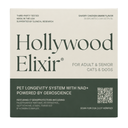
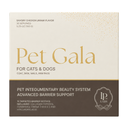
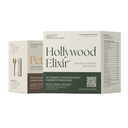
This Research Library page is part of the LPL-01 evidence system: study first, claim boundary second, product interpretation last. Hollywood Elixir is our aging-biology support sachet for dogs and cats, built around disclosed actives and a daily routine format. It is not the Cupp diet and it does not claim to reproduce the Cupp survival result. The Pampered System extends that routine logic by pairing Hollywood Elixir with Pet Gala for broader daily support.

That restraint is not weakness. It is the trust signal. A serious pet parent should be able to learn from the science, understand the product’s role, and never feel tricked into thinking a study proved something it did not.

LPL-01 STANDARDRead the LPL-01 Standard
SENIOR-CAT SHOPPING LENS

Bring the same discipline to the product shelf.

The goal is not to chase a lifespan promise. It is to choose support that is disclosed, daily, cat-appropriate, and honest about what the science can and cannot say.

§XV·FAQ

Questions careful cat parents ask

Short answers for the shopping questions this study usually creates.

What did the Cupp senior cat study actually test?

It tested complete diets fed as the cats’ exclusive food. The strongest-performing diet combined antioxidants, dried whole chicory root, and a blend of n-3 and n-6 fatty acids on top of the control food.

Does this prove a supplement can extend my cat’s life?

No. The study supports the idea that daily nutrition can matter for senior cats, but it does not prove that any capsule, powder, chew, oil, or topper reproduces a complete-diet trial.

What should I look for when shopping for senior-cat support?

Look for disclosed actives, cat-appropriate dosing, a clear role next to the base diet, testing or quality documentation, and claims that explain their limits.

What is the biggest red flag?

Be careful when a brand turns this study into a single-ingredient lifespan claim, especially if the product itself was not tested in senior cats.

Where can supplements fit responsibly?

They can support related pathways such as antioxidant defense, fatty-acid intake, gut comfort, or daily routine consistency, but they should be framed as complements to food and veterinary care.

How does La Petite Labs use this study?

We use it as a systems-thinking lesson for senior nutrition. We do not claim that Hollywood Elixir or the Pampered System reproduce the study’s survival result.

§XVI·Glossary

Plain-English terms

Useful definitions for reading the study without turning it into marketing haze.

Antioxidant blend
Nutrients that help the body manage oxidative stress. In this study, antioxidant support was part of a fuller diet system, not a standalone proven lifespan ingredient.
Prebiotic fiber
A food component that supports beneficial gut microbes. The Cupp study used dried whole chicory root as the prebiotic source in Diet 3.
EPA / DHAeicosapentaenoic acid / docosahexaenoic acid
Long-chain omega-3 fatty acids from marine sources. Particularly relevant in cats, which convert plant-based ALA omega-3 to EPA/DHA poorly.
Complete diet
A food intended to provide the animal’s full daily nutrition. This matters because the study tested complete diets, not add-on supplements.
Survival analysis
A way researchers compare time-to-event outcomes, such as death during a study. Hazard ratios describe relative risk over time, not a guarantee for an individual cat.
Senior cat
Cats commonly classified as senior from approximately 10 years onward, with sub-categories for geriatric (often 15+ years). Specific cut-offs vary by veterinary organization.
Oxidative stress
An imbalance between reactive oxygen species production and antioxidant defense, implicated in age-related cellular damage.
§XVII·References

Sources and notes

Primary source and adjacent nutrition references used to keep this page inside the evidence boundary.

  1. Effect of Nutritional Interventions on Longevity of Senior Cats[link ↗]Cupp CJ, Jean-Philippe C, Kerr WW, Patil AR, Perez-Camargo G·International Journal of Applied Research in Veterinary Medicine·2006; reprinted in Vol. 5, No. 3, 2007· Peer-reviewed
  2. WSAVA Global Nutrition Guidelines — Body Condition Score charts[link ↗]World Small Animal Veterinary Association·WSAVA Global Nutrition Committee·ongoing· Regulatory
  3. Senior Care Guidelines and feline life-stage guidanceAAFP / AAHA and related feline-care authorities·Journal of Feline Medicine and Surgery·Current edition to verify· Guideline review
  4. AAFCO Cat Food Nutrient Profiles[link ↗]Association of American Feed Control Officials·AAFCO Official Publication·current edition· Regulatory

Last reviewed by La Petite Labs Editorial on June 6, 2026. This page is an interpretation guide, not veterinary advice.