



Burmese lifespan and senior care
How Long Do Burmese Cats Live?
12–16Years, typical
Burmese lifespan planning should pair the breed's long-lived life-table signal with daily tracking of weight, thirst, urine, appetite, mouth pain, and play.
- Start watching at
- From 7 years
- Senior age
- 10+ years
- Typical lifespan
- 12-16 years
The 2024 UK life-table reported Burmese life expectancy at age 0 of 14.42 years, a long-lived signal; breed guides may give wider ranges.
Quick Answers for Pet Parents
Direct answers to the questions people ask when they are trying to plan care.
How long do Burmese cats live?
Use about 12 to 16 years as a practical planning range. The 2024 UK life-table reported Burmese life expectancy at age 0 of 14.42 years.
What is the average Burmese life expectancy?
The clearest modern life-table figure here is 14.42 years at age 0. Use it as long-lived context, not a guarantee for one Burmese cat.
When is a Burmese considered senior?
Cats older than 10 are senior under AAHA/AAFP guidance. Start structured Burmese tracking around 7 so weight, thirst, urine, dental, appetite, and mobility changes are caught early.
What Burmese cat health problems should owners watch?
Watch diabetes signs, weight and body condition, increased thirst or urination, kidney and urinary signs, dental disease, mouth or face pain, hypokalemic weakness, mobility change, and quality of life.
What most affects Burmese healthspan?
Healthy body condition, diabetes awareness, litter-box monitoring, dental care, pain recognition, safe activity, senior diagnostics, and early comfort care matter most.
Lifespan at a Glance
The short answer with the context a careful pet parent needs.
| Typical lifespan | Use 12 to 16 years as a practical owner range, with the 2024 UK life-table reporting 14.42 years at age 0 for Burmese cats. |
|---|---|
| Evidence caveat | The 2024 figure is encouraging population evidence, not a promise for one cat's diabetes, kidney, dental, mobility, or home-safety future. |
| Burmese senior timing | Cats older than 10 are senior under AAHA/AAFP guidance; start Burmese baselines around 7. |
| Earlier watchpoint | Track weight, body condition, appetite, thirst, litter clumps, urination, dental comfort, face rubbing, neck strength, jumping, play, and social routines. |
| Breed-specific priority | A people-focused Burmese can stay present even while weight, thirst, mouth pain, muscle weakness, or urinary signs are changing. |
| Do not normalize | Weight drift, increased thirst, larger urine clumps, accidents, ravenous appetite with weight loss, face pain, weak neck carriage, lower jumps, hiding, or fading play. |

You can’t slow the clock. You can change what happens while it runs.
12-16 years is the range. What fills those years — lean condition, easy movement, steady digestion, good sleep — is built one ordinary day at a time.
Start the daily system → Starting at $50/month
If your Burmese still follows you from room to room but now drinks more, makes bigger urine clumps, begs hard for food, loses weight, chews oddly, rubs the face, jumps lower, or stops playing with the usual spark, the lifespan question has become practical.
The direct answer: Burmese cats are best planned around 12 to 16 years, and the 2024 UK cat life-table reported Burmese life expectancy at age 0 of 14.42 years. That is one of the long-lived signals in the table, but it does not remove the need for close daily tracking.
A Burmese can be very present while something is wrong. Social cats may keep greeting, talking, climbing onto laps, or asking for food even while diabetes signs, kidney changes, mouth pain, weakness, or mobility pain are building. The page is not about treating personality as proof of health. It is about turning personality into a baseline.
If You Only Have Five Minutes
- Anchor planning at 12 to 16 years, while treating the 14.42-year 2024 UK life-table result as useful population context.
- Cats older than 10 are senior under AAHA/AAFP guidance; begin Burmese baselines around 7.
- Watch weight, body condition, appetite, thirst, litter clumps, urination, dental breath, face rubbing, neck strength, jumping, play, and social routines.
- Diabetes warning patterns can include increased thirst, increased urination, appetite change, weight loss, vomiting, and lethargy.
- Kidney and urinary clues often start as more water intake, larger urine clumps, accidents, constipation, vomiting, blood, or repeated box trips.
- Mouth pain, face pawing, weak head carriage, wobbliness, lower jumps, hiding, or fading play deserve dates, not guesses.
The cat lifespan methodology explains why a life-table number can differ from breed-guide ranges. The senior cat signs guide can help separate normal aging from changes that need a veterinarian.
Why Lifespan Numbers for Burmese Cats Don't Agree
Burmese lifespan estimates vary because sources are built differently. PetMD lists an average range of 10 to 17 years for Burmese cats. The 2024 UK life-table used veterinary clinical records and reported 14.42 years at age 0 for Burmese cats, a strong long-lived signal.
Those numbers answer different questions. A breed guide range is useful for broad planning. A life-table estimate is useful because it follows a defined veterinary dataset. Neither one can see your cat's weight trend, glucose risk, dental comfort, kidney markers, urine changes, indoor safety, family history, or speed of care when signs appear.
The practical reading is simple: plan for a long relationship, but do not let the long-lived label delay care. A Burmese can accumulate slow problems while still seeming bright: a little more thirst, a little more food-seeking, a smaller waist, a missed jump, a new face rub, or a litter box that needs cleaning sooner.
Long-lived evidence should make monitoring more disciplined, not more casual.
What Shapes a Burmese Cat's Healthspan
Burmese healthspan is shaped by body condition, diabetes awareness, kidney and urinary monitoring, dental and face comfort, hypokalemic weakness awareness, appetite, mobility, social stress, senior diagnostics, and quality-of-life decisions.
Diabetes and body condition
PetMD notes that Burmese cats may be at increased risk for diabetes. That does not mean every Burmese will develop diabetes, but it does mean weight, thirst, appetite, and litter-box patterns deserve structure.
Use scale weight, rib feel, waist, thigh muscle, treat count, meal timing, appetite notes, water intake, urine clump size, and energy after play. A compact, muscular cat can look normal while gaining fat or losing muscle.
The concerning pattern is not just one sign. Increased thirst plus bigger urine clumps, a bigger appetite plus weight loss, vomiting, lethargy, or food urgency that feels new should move from memory into a dated note and a veterinary conversation.
Kidney and urinary signs
Kidney and urinary problems are common senior-cat concerns, and they can look small at home. Increased thirst, larger urine clumps, accidents, constipation, vomiting, appetite change, weight loss, blood in urine, repeated box trips, or straining should be recorded.
Little or no urine is urgent. For less urgent changes, bring dates, clump-size notes, water-bowl changes, food changes, medication lists, and any history of urinary flare-ups.
For older Burmese cats, ask what baseline bloodwork, urinalysis, blood pressure, and follow-up timing make sense. Litter information is more useful when it is specific.
Dental and face comfort
PetMD describes feline orofacial pain syndrome as a Burmese concern. Mouth and face pain can be easy to misread because it may look like fussiness, grooming distress, food selectivity, or sudden irritation.
Watch bad breath, drooling, red gums, dropped food, slower chewing, one-sided chewing, pawing at the mouth, face rubbing, sudden dislike of brushing, yelping while eating, or reluctance to be touched around the head.
Dental disease and face pain both matter because eating, grooming, play, and social contact all pass through the mouth and head. A cat who still seeks you may still be uncomfortable.
Hypokalemic weakness
PetMD notes hypokalemic polymyopathy as a genetic Burmese condition. The everyday owner version is to notice strength and posture: a weak head carriage, wobbliness, trouble walking, sudden fatigue, reluctance to jump, or unusual collapse.
This is especially important in young Burmese cats, but weakness at any age deserves attention. Senior cats can also look weak because of pain, kidney disease, dehydration, diabetes, heart disease, or injury, so do not guess from the sofa.
If the neck, legs, or landing confidence changes, record video safely and call your veterinarian.
Appetite and play
Burmese cats can be enthusiastic, social, and food-interested. That makes appetite changes useful, but easy to misread.
Eating less is a problem. Begging much more can also be a problem, especially with weight loss, thirst, larger urine clumps, vomiting, or lower energy. A playful cat who no longer finishes a chase, misses jumps, or stops asking for games is giving health information.
Keep play outlets predictable: wand sessions, puzzle feeders, safe climbing, supervised exploration, and places to rest away from household noise. The goal is not exhaustion. It is repeatable movement you can compare over time.
Social attachment and stress
PetMD describes Burmese cats as people-focused and often vocal. That closeness is part of why health changes can be missed. The cat may still be near you, but with less ease.
Track whether the cat initiates contact, rests comfortably, tolerates handling, recovers after visitors, sleeps normally, and can be left for reasonable periods without distress. A new clingy pattern, withdrawal, irritability, night vocalizing, or hiding can be pain, illness, anxiety, or environmental stress.
What Aging Looks Like in a Burmese
Burmese aging may look like a softer body condition, a thinner thigh, a heavier middle, more thirst, larger urine clumps, stronger appetite with weight loss, bad breath, slower chewing, face rubbing, lower jumps, shorter play, more sleep, or a cat who still follows people but does less when it arrives.
Use the social-athlete checklist:
- Is weight stable by scale, rib feel, waist, and muscle?
- Are thirst, urine clumps, stool, vomiting, and accidents changing?
- Does appetite match body condition, or is the cat eating more while shrinking?
- Does the mouth look comfortable during meals and grooming?
- Are head carriage, landing, climbing, and play still normal?
- Does the cat still seek people with comfort, not just neediness?
Normal aging can make a Burmese sleep more and play in shorter bursts. It should not explain away urinary straining, rapid weight loss, untreated mouth pain, repeated vomiting, hard breathing, collapse, a weak neck, inability to rise, or a cat who seems socially present but functionally smaller each week.
When to Call a Veterinarian
Use emergency care for open-mouth breathing, hard breathing effort, blue or gray gums, collapse, fainting, seizure, sudden blindness, severe weakness, sudden hind-limb pain or paralysis, repeated vomiting with weakness, suspected toxin exposure, inability to rise, severe face or mouth pain, repeated litter-box trips with little or no urine, or a weak head carriage that appears suddenly.
Book a visit for weight gain or loss, increased thirst, larger urine clumps, accidents, increased appetite, reduced appetite, vomiting, constipation, bad breath, drooling, dropped food, face rubbing, grooming distress, wobbliness, lower jumping, stiffness, hiding, irritability, or a social routine that changes.
Bring weight history, food and treat details, water and litter notes, photos of litter changes if helpful, dental and face-pain observations, safe movement videos, breeder or rescue records, medication lists, and a timeline of social or play changes.
When later-life decisions get complicated, score a Burmese with the cat quality of life scale and include appetite, hydration, breathing, mouth comfort, pain, mobility, litter-box access, sleep, anxiety, social contact, play, and treatment burden.
How Burmese Cats Compare With Similar Breeds
Burmese and Birman cats both have strong 2024 life-table signals, but daily care feels different. Burmese planning is short-coated and intensely routine-based: appetite, thirst, litter, body condition, face comfort, weakness, play, and people-seeking behavior. Birman planning adds more coat and grooming burden.
Compared with British Shorthairs, Burmese cats may be more socially insistent, so illness can be hidden inside normal following or vocalizing. Compared with Ragdolls, Burmese changes may show first as sharper shifts in play, appetite, and household participation.
Compared with Persians, Burmese cats usually do not carry the same flat-faced and coat burden, but that does not make them low-maintenance. The daily work is to catch trends early before a long-lived cat loses function.
The cat lifespan by breed hub is the wider map; at home, the better comparison is this Burmese against its own pattern of eating, drinking, urinating, jumping, talking, playing, following, and resting.
Questions for Your Breeder, Rescue, or Veterinarian
For a breeder or rescue:
- What lifespan, early deaths, diabetes, FOPS or mouth pain, hypokalemic polymyopathy testing, kidney disease, urinary signs, dental disease, weight history, appetite issues, and mobility problems are known in close relatives?
- What adult body condition, meal pattern, play level, litter habit, and social routine were normal in this family?
- Has this cat ever had increased thirst, urinary signs, vomiting, appetite crashes, dental work, face pain, weakness, collapse, mobility problems, or unusual hiding?
- What food, handling, play, grooming, and alone-time routines have kept the cat comfortable?
For your veterinarian:
- What weight, waist, rib feel, and muscle pattern should count as normal for this Burmese?
- Do the thirst, litter, appetite, weight, dental, face, or movement changes suggest bloodwork, urinalysis, blood pressure, glucose testing, dental review, pain assessment, or genetic-history follow-up?
- Could the appetite change be diabetes, dental pain, kidney disease, GI disease, stress, or pain?
- Which weakness, urinary, mouth, breathing, appetite, or movement signs should be seen promptly?
- How often should senior diagnostics and dental checks happen for this cat?
A Burmese with unknown history starts with measurable basics: weight, appetite, thirst, urine, mouth, strength, movement, play, and the social routines the cat keeps. Long-lived potential becomes useful only when it leads to earlier, more specific care.
Sources
- PetMD. Burmese Cat Breed Health and Care. https://www.petmd.com/cat/breeds/burmese
- Teng KT, Brodbelt DC, Church DB, O'Neill DG, et al. Life tables of annual life expectancy and risk factors for mortality in cats in the UK. Journal of Feline Medicine and Surgery. https://journals.sagepub.com/doi/10.1177/1098612X241234556
- Royal Veterinary College VetCompass. New research from the RVC predicts the future life expectancy for companion cats. https://www.rvc.ac.uk/vetcompass/news/new-research-from-the-rvc-predicts-the-future-life-expectancy-for-companion-cats
- O'Neill DG, Church DB, McGreevy PD, Thomson PC, Brodbelt DC. Longevity and mortality of cats attending primary care veterinary practices in England. https://pmc.ncbi.nlm.nih.gov/articles/PMC10816413/
- AAHA/AAFP. 2021 Feline Life Stage Guidelines. https://catvets.com/resource/aaha-aafp-feline-life-stage-guidelines/
- Cornell Feline Health Center. The Special Needs of the Senior Cat. https://www.vet.cornell.edu/departments-centers-and-institutes/cornell-feline-health-center/health-information/feline-health-topics/special-needs-senior-cat
- Cornell Feline Health Center. Hypertrophic Cardiomyopathy. https://www.vet.cornell.edu/departments-centers-and-institutes/cornell-feline-health-center/health-information/feline-health-topics/hypertrophic-cardiomyopathy
- Cornell Feline Health Center. Chronic Kidney Disease. https://www.vet.cornell.edu/departments-centers-and-institutes/cornell-feline-health-center/health-information/feline-health-topics/chronic-kidney-disease
Healthspan by Life Stage
Know what to track before senior age, not only after decline appears.
Build the inherited-risk file
Collect breeder or rescue records, parent health information, diabetes history, FOPS or mouth-pain notes, hypokalemia testing if available, diet, litter habits, play style, and social pattern.
Keep food and play measurable
Use measured meals, daily play, body-condition checks, toothbrushing practice, parasite control, safe indoor outlets, and social routines that prevent stress without overfeeding.
Start the Burmese trend line
Track weight, waist, muscle, appetite, thirst, urine clumps, accidents, stool, vomiting, breath, chewing, face rubbing, neck posture, jumping, play, and vocal or social changes monthly.
Match home notes with diagnostics
Discuss exam frequency, bloodwork, urinalysis, blood pressure, glucose or diabetes concerns, dental timing, kidney screening, pain review, and mobility support.
Score comfort through daily function
Judge appetite, hydration, breathing, pain, mouth comfort, mobility, litter-box access, sleep, anxiety, social interest, play, treatment burden, and whether care still helps.
Breed Health Map
The main breed-specific topics that can shape lifespan, comfort, and quality of life.
Stocky should not hide body-condition drift
Track scale weight, rib feel, waist, appetite, thirst, urine volume, treat count, play stamina, and glucose conversations so diabetes signs are not mistaken for normal appetite.
The litter box is part of the lifespan plan
Increased thirst, larger urine clumps, accidents, repeated trips, blood, straining, constipation, vomiting, appetite change, or weight loss should be dated and discussed.
Mouth discomfort can look behavioral
Bad breath, drooling, dropped food, one-sided chewing, pawing at the mouth, face rubbing, sudden grooming distress, or food refusal should prompt dental and pain review.
Neck and limb strength deserve attention
A weak head carriage, wobbliness, trouble walking, sudden fatigue, reluctance to jump, or unusual collapse should be treated as health information, especially in young Burmese cats.
Hungry does not always mean healthy
Begging more, eating less, vomiting, nausea, weight loss despite appetite, or sudden food selectivity can reflect diabetes, dental pain, kidney disease, GI disease, pain, or stress.
A playful cat should keep easy routes
Lower jumps, shorter chases, stiffness, missed landings, less fetch, poor recovery after play, or hesitation on shelves can reflect pain, weakness, weight change, or injury.
Attachment can mask illness
A Burmese that shadows people may still be unwell. Track whether the cat asks for contact, rests comfortably, plays normally, sleeps well, and tolerates handling.
Personality is not a pain score
Track appetite, hydration, breathing, mouth comfort, pain, mobility, litter-box dignity, sleep, anxiety, social interest, play, treatment burden, and whether comfort is improving.

One serving a day, built for aging cats
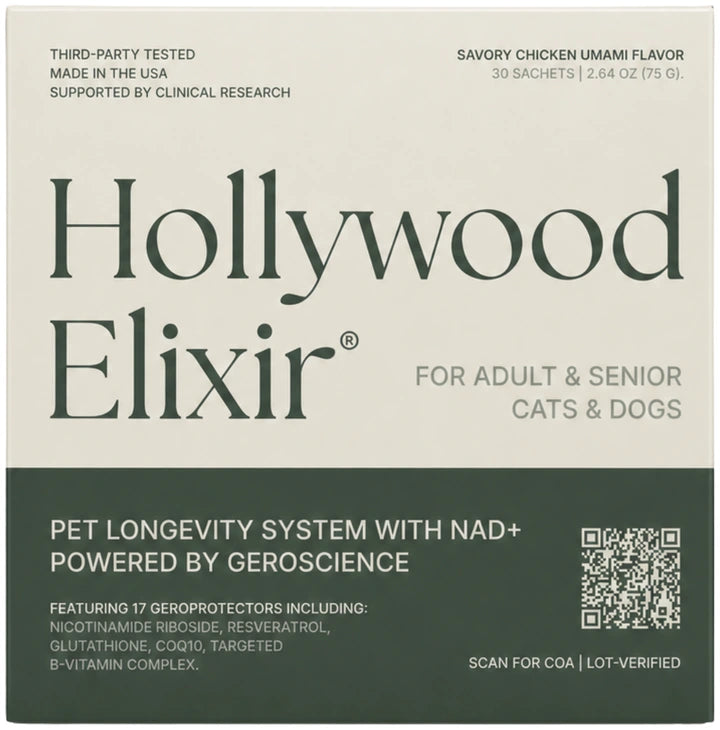
Hollywood Elixir is our daily supplement for adult and senior cats, made to the LPL-01 standard with every active ingredient at a visible amount. It never replaces your veterinarian — it sits alongside the routine on this page.
Starting at $50/month · cancel anytime
Shop Hollywood ElixirWhen to Call the Vet
Split urgent signs from trends that deserve a scheduled veterinary conversation.
Go urgently
- Open-mouth breathing, hard breathing effort, blue or gray gums, collapse, fainting, seizure, sudden blindness, severe weakness, or rapid decline.
- Sudden hind-limb pain or paralysis, repeated vomiting with weakness, uncontrolled bleeding, suspected toxin exposure, severe face or mouth pain, or inability to rise.
- Repeated litter-box trips with little or no urine, straining with distress, blood in urine, painful abdomen, extreme thirst with weakness, or a weak neck that will not support the head.
Schedule promptly
- Weight loss or gain, increased appetite, reduced appetite, increased thirst, larger urine clumps, vomiting, constipation, diarrhea, or accidents.
- Bad breath, drooling, dropped food, one-sided chewing, pawing at the mouth, face rubbing, grooming distress, or sudden food refusal.
- Weak head carriage, wobbliness, lower jumping, stiffness, missed landings, less play, hiding, irritability, or a social routine that fades.
- Repeated vocalizing with discomfort, poor recovery after activity, new sleep disruption, or stress when left alone.
- Bring weight history, food notes, water and litter observations, dental videos if safe, movement clips, and breeder or rescue records.
The 90-Day Support Routine
Ninety days of small, repeatable habits make subtle changes visible — and give any new routine a fair test.
- Week one: record weight, rib feel, waist, appetite, water intake, litter clumps, urine frequency, stool, dental breath, favorite routes, play pattern, and normal social schedule.
- Week one: choose measured meals and a repeatable weigh-in so a compact Burmese body does not hide weight or muscle change.
- Weekly: check thirst, litter clumps, appetite, breath, chewing, face comfort, jumping, play recovery, and whether the cat still seeks people in familiar ways.
- Monthly: repeat body-condition notes, update litter and vomiting records, mark appetite changes, and add one mobility or play observation.
- Day 90: review diabetes clues, kidney and urinary signs, dental or face pain, hypokalemic weakness concerns, mobility, and quality of life with your veterinarian.
Tools for Tracking Comfort and Aging
Use these when a life-stage, body-condition, or quality-of-life question needs more structure.
Cat Age Calculator
Use age context when a social cat still seems engaged but small body, litter, or appetite trends are appearing.
ToolCat Quality of Life Scale
Use when diabetes signs, mouth pain, weakness, urinary changes, or social withdrawal affect daily comfort.
ToolCat Biological Age Calculator
Frame healthy-aging conversations around long-lived evidence and measurable Burmese routines.
Frequently Asked Questions
Short answers to the questions owners ask most.
What is a realistic Burmese lifespan?
Burmese lifespan planning can use about 12 to 16 years, with the 2024 UK life-table reporting a long-lived 14.42 years life expectancy at age 0.
Are Burmese cats long-lived?
The 2024 UK life-table gives Burmese cats a strong long-lived signal. That should encourage earlier monitoring for weight, diabetes signs, kidney and urinary signs, dental pain, weakness, mobility, and comfort.
When should Burmese senior care start?
Burmese senior care should start before crisis. Use 10+ as the senior marker and begin baselines around 7 for weight, appetite, thirst, litter, teeth, movement, and social routines.
Which Burmese cat health problems matter most?
Burmese cat health problems that shape comfort include diabetes risk, weight drift, increased thirst or urination, kidney and urinary signs, dental disease, face pain, hypokalemic weakness, mobility pain, and appetite changes.
Which aging signs should Burmese owners watch?
Burmese aging signs include weight drift, bigger urine clumps, thirst, accidents, ravenous appetite with weight loss, bad breath, face rubbing, weak neck carriage, lower jumps, less play, hiding, and reduced social interest.
Why does diabetes awareness matter for Burmese cats?
PetMD notes Burmese cats may have increased diabetes risk. Watch thirst, urination, appetite, weight, vomiting, and energy, then discuss trends promptly instead of waiting for crisis.
What urinary signs need attention?
Repeated box trips, little or no urine, straining, blood, accidents, larger clumps, increased thirst, constipation, vomiting, appetite change, or weight loss should be recorded and discussed.
What mouth or face signs should owners take seriously?
Bad breath, drooling, dropped food, one-sided chewing, pawing at the mouth, face rubbing, grooming distress, food refusal, or sudden handling sensitivity should prompt veterinary review.
What weakness signs are concerning?
A weak head carriage, wobbliness, trouble walking, sudden fatigue, collapse, missed jumps, or inability to rise deserves prompt veterinary attention, especially with Burmese hypokalemia history.
How often should an older Burmese see the vet?
Many senior cats benefit from at least twice-yearly check-ins, with timing adjusted to weight, glucose concerns, bloodwork, urinalysis, blood pressure, dental findings, pain, weakness, and new signs.
What should I ask a breeder or rescue?
Ask about lifespan, early deaths, diabetes, FOPS or mouth pain, hypokalemic polymyopathy testing, kidney or urinary signs, dental disease, weight history, appetite, and mobility.
Is Hollywood Elixir something my Burmese needs?
No supplement is a need. Hollywood Elixir is La Petite Labs' daily supplement for adult and senior cats, not a treatment for anything on this page.
A note from La Petite Labs
Hollywood Elixir is La Petite Labs' daily supplement for adult and senior cats. It is not a treatment for anything on this page, and it never replaces your veterinarian.

Why Pampered matches Burmese watchpoints
Pampered is La Petite Labs' complete daily system, with a recommended 90-day starting window. The Burmese routine here is specific: recording weight, rib feel, waist, appetite, water intake, litter clumps, urine frequency, stool, dental breath, favorite routes, play and return to diabetes and weight, kidney and urinary, dental and face pain, and hypokalemic weakness, so Pampered belongs beside those notes instead of replacing them.
Explore the Pampered™ System →