Maltese lifespan and senior care
How Long Do Maltese Live?
12–15Years, typical
Maltese longevity can be generous, but comfort depends on mouth care, knees, airway noise, eyes, weight, and tiny changes caught early.
- Start watching at
- From 7 years
- Senior age
- Around 10-11 years
- Typical lifespan
- 12-15 years
Maltese lifespan and Maltese health problems planning: A practical planning range from breed guidance and dog longevity research; dental disease, patellas, airway signs, heart history, and accidents can shift one dog around it.
Quick Answers for Pet Parents
Direct answers to the questions people ask when they are trying to plan care.
How long do Maltese live?
Many Maltese are planned around 12 to 15 years, with individual dogs moving above or below that band because of dental care, patellas, airway signs, heart history, accidents, and veterinary care.
When is a Maltese considered senior?
Around 10 to 11 years is a practical senior-planning window, with baseline tracking from about 7 years or earlier when dental, knee, cough, or eye signs appear.
What health problems are Maltese prone to?
Useful Maltese watchpoints include periodontal disease, patellar luxation, tracheal collapse signs, tear staining and eye irritation, heart murmurs or cough, liver-shunt history in young dogs, weight change, and dental pain.
What most affects a Maltese healthspan?
Comfort often depends on mouth care, lean body condition, safe jumping, knee comfort, airway and cough monitoring, eye comfort, and prompt care when appetite or behavior changes.
What early aging signs matter in a Maltese?
Watch breath, dropped food, softer food preference, honking cough, skipped rear steps, tear-stain change, squinting, thirst change, sleep change, and lower interest in handling.
Lifespan at a Glance
The short answer with the context a careful pet parent needs.
| Typical lifespan | Plan around 12-15 years, with some Maltese living longer when teeth, knees, weight, and chronic disease are managed. |
|---|---|
| Senior planning | Around 10-11 years for many Maltese; earlier when dental, patella, trachea, heart, or eye problems are present. |
| Earlier watchpoint | From 7 years, track breath, chewing, cough, knee skips, tear changes, weight, thirst, and sleep. |
| Defining risk | The long calendar can hide mouth pain and small-dog orthopedic or airway problems for years. |
| Household lever | A weekly mouth, knee, cough, eye, and rib-feel check in the same calm routine. |
| Do not shrug off | Bad breath, dropped food, honking cough, knee skipping, squinting, collapse, or sudden appetite change. |

You can’t add sand to the glass. You can change what happens while it falls.
12-15 years is the range. What fills those years — lean condition, easy movement, steady digestion, good sleep — is built one ordinary day at a time.
Start the daily system → Starting at $63/month
If your Maltese still dances at the pantry but now has stronger breath, coughs when excited, skips a rear step, squints through tear staining, or wants softer food while acting otherwise normal, the lifespan question is about a long calendar with tiny warning signs.
The direct planning answer: many Maltese live about 12 to 15 years. Some live longer. The useful work is protecting the mouth, knees, airway, eyes, weight, and injury margin so those years stay comfortable instead of merely impressive.
Small dogs can hide big discomfort. A Maltese may keep eating through dental pain, keep following the family with sore knees, or cough in a way that becomes background noise. Owners do best when they treat little changes as real information.
If You Only Have Five Minutes
- Use 12 to 15 years as the working range, then adjust for this dog's teeth, knees, cough, eyes, heart history, weight, and medical record.
- Senior planning usually starts around 10 or 11, with baseline notes from about 7.
- Bad breath, red gums, dropped food, one-sided chewing, or face sensitivity deserves attention even when appetite stays strong.
- A honking cough, cough after excitement, or changed breathing should be interpreted by your veterinarian.
- Skipped rear steps, stair hesitation, slipping, or reluctance to jump can be knee pain, not drama.
- Tear staining is not always cosmetic when it changes alongside squinting, redness, rubbing, or discharge.
The senior dog signs guide helps keep universal aging signs in view. Use the dog body condition calculator when a few ounces of weight change would matter.
Why Lifespan Numbers for Maltese Don't Agree
Maltese lifespan estimates vary because toy-breed profiles, veterinary records, and owner stories mix different lines, sizes, lifestyles, dental histories, and accident risks. A dog with clean dental records and safe furniture habits is not the same planning case as one with chronic mouth pain and repeated jumps from a high sofa.
The range should not make owners complacent. Long-lived toy dogs can spend years with preventable discomfort if bad breath, cough, tear changes, and knee skips become ordinary. The point of quoting a generous range is to start earlier, not later.
A Maltese senior plan should also respect the puppy and young-adult history, even when the current dog seems stable. Ask whether there was ever concern for a liver shunt, unexplained poor growth, odd neurologic episodes after meals, appetite crashes, or abnormal bloodwork, because old records can explain how carefully future anesthesia, dental work, and medication choices should be reviewed. For rescue dogs, write down what is unknown instead of pretending it is normal. A long-lived toy dog can collect many small procedures over time, and each one is easier to plan when the veterinary team understands teeth, knees, cough, heart, liver history, and previous recovery. The useful habit is not worrying about every possibility. It is keeping a compact medical timeline so a small dog with a long life does not become a pile of disconnected memories.
The dog lifespan methodology explains why ranges are more honest than promises. For Maltese families, the practical answer is to build a quiet comparison file: mouth, cough, knees, eyes, weight, appetite, thirst, and sleep.
An old Maltese should be judged by comfort, not just age. Seeing, chewing, breathing, walking, sleeping, and seeking family contact matter more than reaching a particular birthday.
What Shapes a Maltese Healthspan
Maltese healthspan is shaped by dental care, patellar comfort, cough and airway signs, eyes and tear staining, heart and stamina clues, weight, injury prevention, and fast attention to small changes.
Mouth comfort comes first
Periodontal disease can hide behind a normal appetite. Breath that turns sour, inflamed gums, tartar, dropped kibble, one-sided chewing, face pawing, or dodging muzzle handling should put dental care on the clinic agenda.
Home brushing can help the right dog, but it is not a substitute for diagnosing pain, infection, loose teeth, or anesthesia needs. A comfortable mouth changes sleep and mood.
Knees and tiny skips
Patellar luxation can show as a hop, skip, or brief carry-me request, then disappear. That pattern is still worth recording.
Film from behind and from the side when it is safe. Your veterinarian can use the video to separate knee instability from hip, back, foot, or pain problems.
Cough and airway clues
A honking cough, cough after excitement, gagging, exercise cough, or worsening collar sensitivity deserves veterinary interpretation. Several conditions can sound similar at home.
Use a harness if your veterinarian recommends it, keep weight lean, and record when the cough happens: after barking, drinking, pulling, heat, sleep, or activity.
Eyes, tear staining, and face checks
Tear staining can be cosmetic, but change matters. Squinting, rubbing, redness, discharge, light sensitivity, or a suddenly different eye should not be hidden by face hair.
Take the same face photo monthly. It gives you a calmer way to decide whether staining, eye comfort, or skin irritation has changed.
Heart, stamina, and fainting-like episodes
Toy dogs can develop heart murmurs and cough patterns that need monitoring. Lower stamina, fainting-like weakness, breathing change, or nighttime cough should move from worry to appointment.
Do not judge seriousness by body size. A small dog with blue-gray gums, collapse, or labored breathing needs urgent care.
Weight, injury prevention, and long senior years
Small weight gains affect knees, airway, heat tolerance, anesthesia margin, and energy. Repeated jumps from high furniture can also turn small anatomy into a big problem.
At home, keep the Maltese routine simple: mouth, cough, knees, eyes, rib feel, appetite, thirst, sleep, and handling tolerance. A long life gives you time to catch trends, if you write them down.
What Aging Looks Like in a Maltese
Maltese aging may look like stronger breath, softer food preference, more coughing after excitement, skipped rear steps, less jumping, changed tear staining, cloudier eyes, more sleep, thirst change, weight drift, or a dog who still wants closeness but resists mouth or leg handling.
Check against the individual dog:
- Is breath different than it was six months ago?
- Is chewing slower, one-sided, or messier?
- Does cough happen in a new setting or more often?
- Are rear-leg skips linked to stairs, excitement, or slick floors?
- Has tear staining changed with rubbing or squinting?
- Are appetite, thirst, bathroom habits, sleep, or social interest changing together?
Normal aging can make naps longer. It should not normalize mouth pain, breathing effort, collapse, painful eyes, repeated knee pain, or a dog who no longer rests comfortably.
When to Call a Veterinarian
Go now for labored breathing, blue-gray or pale gums, collapse, seizure clusters, uncontrolled bleeding, severe pain, repeated vomiting with weakness, suspected toxin exposure, sudden inability to walk, or a painful closed eye.
Book promptly for bad breath, red gums, dropped food, honking cough, cough after excitement, skipped rear steps, stair hesitation, tear-stain change with eye irritation, squinting, weight change, appetite change, thirst change, new lumps, or sleep disruption.
Bring mouth photos, dental history, cough videos, gait clips, eye photos, diet and treat details, medications, supplements, weight trend, and a dated timeline. If the worry is comfort, complete the dog quality of life scale before the visit.
How Maltese Compare With Similar Breeds
Maltese overlap with Yorkshire Terriers, Pomeranians, Chihuahuas, and Havanese on long-lived toy-dog planning: teeth, knees, cough, weight, and safe handling. Compared with Shih Tzus or Pugs, Maltese are usually less brachycephalic, but cough, mouth pain, and eye comfort still deserve respect.
Use the dog lifespan by breed hub for ranges across breeds. The useful Maltese comparison is practical: a few small habits can protect a long senior chapter.
Questions for Your Breeder, Rescue, or Veterinarian
For a breeder or rescue:
- What dental, patella, trachea, heart, liver, eye, and lifespan history is known in close relatives?
- What screening or veterinary records are available?
- Has this dog had dental extractions, cough episodes, knee problems, eye treatment, or appetite crashes?
- What grooming, harness, food, and home-access routine has worked?
For your veterinarian:
- What dental schedule is realistic for this mouth?
- Does this cough need airway, trachea, heart, or other workup?
- Are these rear-leg skips painful, and should furniture access change?
- Which eye signs are same-day problems?
- When should bloodwork, blood pressure, pain review, and quality-of-life tracking become routine?
For a Maltese with unknown history, start with mouth, cough, knees, eyes, weight, appetite, thirst, and safe jumping. The first baseline is more useful than guessing how long the dog will live. Recheck the same list after any dental procedure, cough episode, fall, or appetite change, because recovery patterns often reveal the next senior-care priority.
Sources
- American Kennel Club. Maltese breed information. https://www.akc.org/dog-breeds/maltese/
- McMillan KM, Bielby J, Williams CL, Upjohn MM, Casey RA, Christley RM. Longevity of companion dog breeds: those at risk from early death. Scientific Reports. https://www.nature.com/articles/s41598-023-50458-w
- Teng KT, Brodbelt DC, Church DB, ONeill DG, et al. Life tables of annual life expectancy and mortality for companion dogs in the United Kingdom. Scientific Reports. https://www.nature.com/articles/s41598-022-10341-6
- Creevy KE, Grady J, Little SE, et al. 2019 AAHA Canine Life Stage Guidelines. https://www.aaha.org/wp-content/uploads/globalassets/02-guidelines/canine-life-stage-2019/2019-aaha-canine-life-stage-guidelines-final.pdf
- VCA Animal Hospitals. Dental Disease in Dogs. https://vcahospitals.com/know-your-pet/dental-disease-in-dogs
- VCA Animal Hospitals. Luxating Patella or Kneecap in Dogs. https://vcahospitals.com/know-your-pet/luxating-patella-or-kneecap-in-dogs
- VCA Animal Hospitals. Tracheal Collapse in Dogs. https://vcahospitals.com/know-your-pet/tracheal-collapse-in-dogs
- Orthopedic Foundation for Animals. CHIC Program breed health screening information. https://ofa.org/chic-programs/browse-by-breed/
Healthspan by Life Stage
Know what to track before senior age, not only after decline appears.
Build mouth and knee baselines
Teach tooth checks, paw handling, face wiping, gentle lifting, and harness habits. Ask what dental, patella, heart, liver, and eye history is known.
Prevent tiny-dog drift
Keep dental care active, avoid unsafe furniture launches, maintain lean weight, and learn normal cough, gait, appetite, and tear patterns.
Start the long-life file
Monthly notes on breath, chewing, cough, knees, eyes, weight, thirst, sleep, and handling tolerance give senior years a real baseline.
Review little changes sooner
Use twice-yearly veterinary conversations, dental review, pain review, bloodwork, eye checks, and a body-condition target.
Protect dignity at small scale
Judge mouth pain, breathing, sleep, movement, appetite, toileting, anxiety, and social interest together.
Breed Health Map
The main breed-specific topics that can shape lifespan, comfort, and quality of life.
Periodontal disease and hidden pain
Bad breath, red gums, dropped food, one-sided chewing, or soft-food preference can mean pain even when appetite remains strong.
Patellar luxation and skipped steps
A rear-leg skip, bunny-hop, stair hesitation, or sudden carry-me request should be filmed and discussed.
Tracheal-collapse style cough signs
A honking cough, exercise cough, excitement cough, or worsening collar sensitivity deserves veterinary interpretation.
Comfort behind the cosmetic clue
Changing tear stains, squinting, redness, rubbing, or discharge can point to irritation, dental issues, or eye disease.
Murmurs, cough, and fatigue
Cough, lower stamina, fainting-like weakness, or changed breathing should not be dismissed because the dog is small.
Tiny margins add up
Small weight changes, jumps from furniture, dental pain, and missed meals can have outsized effects in toy dogs.

One serving a day, built for aging dogs
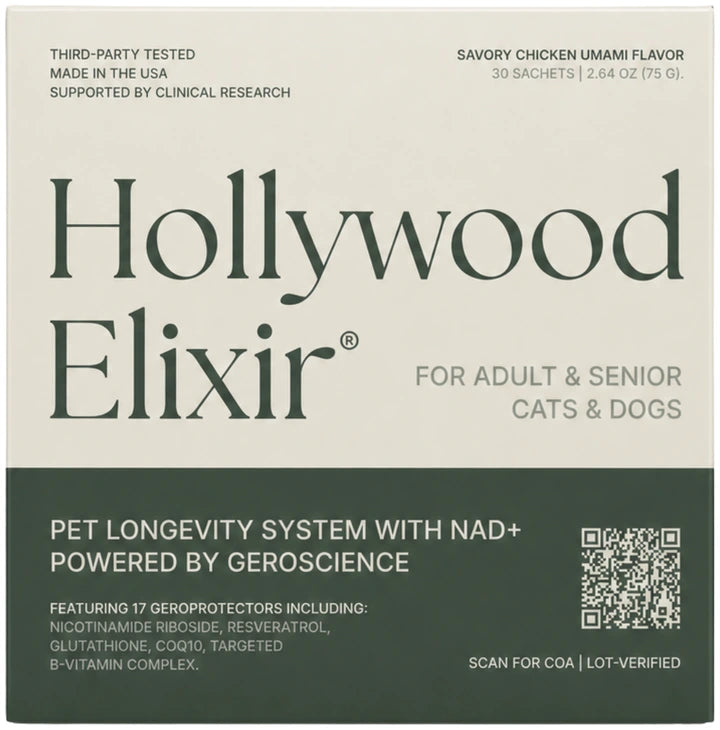
Hollywood Elixir is our daily supplement for adult and senior dogs, made to the LPL-01 standard with every active ingredient at a visible amount. It never replaces your veterinarian — it sits alongside the routine on this page.
Starting at $63/month · cancel anytime
Shop Hollywood ElixirWhen to Call the Vet
Split urgent signs from trends that deserve a scheduled veterinary conversation.
Go urgently
- Labored breathing, blue-gray or pale gums, collapse, seizure clusters, uncontrolled bleeding, or rapid decline.
- Repeated vomiting with weakness, suspected toxin exposure, sudden inability to walk, severe pain, or major neurologic change.
- A painful, closed, cloudy, bulging, or suddenly red eye, especially with rubbing or light sensitivity.
Schedule promptly
- Bad breath, red gums, dropped food, one-sided chewing, soft-food preference, or resisting mouth handling.
- Honking cough, cough after excitement, exercise cough, gagging, or changed breathing at rest.
- Skipped rear steps, stair hesitation, slipping, reluctance to jump, or pain when lifted.
- Changing tear stain, squinting, discharge, rubbing, cloudy eyes, or light sensitivity.
- Weight change, appetite change, thirst change, sleep change, new lumps, anxiety, or lower interest in handling.
The 90-Day Support Routine
Ninety days of small, repeatable habits make subtle changes visible — and give any new routine a fair test.
- Week one: photograph teeth, gums, eyes, tear staining, body shape, and any gait skip; record normal cough or quiet breathing.
- Week one: switch walks to a harness if your veterinarian recommends it and reduce repeated furniture launches with steps or lower access.
- Weekly: check breath, chewing, cough, eye comfort, rear-leg skips, rib feel, and whether handling is still welcomed.
- Monthly: repeat weight, body condition, gait clip, mouth check, tear photo, cough note, thirst, appetite, and sleep pattern.
- Day 90: review dental, knee, cough, eye, and weight trends with your veterinarian and adjust care timing.
Tools for Tracking Comfort and Aging
Use these when a life-stage, body-condition, or quality-of-life question needs more structure.
Dog Quality of Life Scale
Use when mouth pain, cough, sleep, mobility, or appetite makes comfort hard to judge.
ToolDog Biological Age Calculator
Place a long-lived toy dog in a life stage before small changes accumulate.
ToolDog Body Condition Calculator
A hands-on body-condition check matters when coat and small size hide weight drift.
Frequently Asked Questions
Short answers to the questions owners ask most.
What is the average Maltese life expectancy?
A practical planning range is 12-15 years. Dental care, patellas, airway signs, heart history, accidents, and veterinary care can move one dog around it.
Can a Maltese live longer than 15?
Some do. The better goal is comfortable teeth, breathing, knees, eyes, sleep, appetite, and family engagement throughout the long senior chapter.
Is 10 old for a Maltese?
Ten is a sensible senior-planning age. It should trigger better dental, cough, knee, eye, bloodwork, weight, and pain review.
Why does dental care matter so much for Maltese?
Small mouths can hide painful periodontal disease. Bad breath, red gums, dropped food, or face sensitivity deserves attention even if the dog still eats.
Do Maltese get patellar luxation?
They can. A skipped rear step, bunny hop, stair hesitation, or sudden reluctance to jump should be filmed and discussed with your veterinarian.
What does a honking cough mean in a Maltese?
It can have several causes, including tracheal or airway irritation. Cough patterns should be interpreted by a veterinarian, especially if worsening or paired with breathing effort.
Are tear stains just cosmetic?
Not always. Changing tear stains, squinting, rubbing, discharge, or redness can point to eye irritation, dental issues, or other medical problems.
How often should a senior Maltese see the vet?
Twice yearly is a useful default once senior planning begins, with dental, cough, heart, eye, pain, and bloodwork timing adjusted to the dog.
Does weight matter for Maltese healthspan?
Yes. Even small gains can affect knees, airway comfort, heart workload, heat tolerance, and anesthesia margin.
What should I bring to a Maltese vet visit?
Bring mouth photos, dental history, cough videos, gait clips, eye photos, diet details, medications, weight trend, and a timeline of changes.
Can home tooth brushing replace dental care?
No. Home care helps, but painful teeth, infection, loose teeth, and anesthesia planning need veterinary care.
How should I judge quality of life in an older Maltese?
Look at mouth comfort, breathing, sleep, knees, appetite, toileting, anxiety, handling tolerance, and interest in family routines together.
A note from La Petite Labs
Hollywood Elixir is La Petite Labs' daily supplement for adult and senior dogs. It is not a treatment for anything on this page, and it never replaces your veterinarian.

Why Pampered matches Maltese watchpoints
Pampered is La Petite Labs' complete daily system, with a recommended 90-day starting window. Pampered can share the same 90-day track as this guide's photographing teeth, gums, eyes, tear staining, body shape, and any gait skip; record normal cough or quiet breathing, with dental, knees, airway, and eyes and tear staining used as the Maltese watch list.
Explore the Pampered™ System →