
Common claim · overstated
"Reishi boosts immunity."
Too vague; the paper measured specific immune markers.
Better interpretation
Better: Ganoderma lucidum showed immune-marker signals at a defined dose in dogs.
This is concrete and source-aligned.
Reishi can sound either ancient and mystical or aggressively biohacked. Kayser 2024 is better than both. It tested Ganoderma lucidum in adult beagles and found an immune-marker signal at the highest dose, while also reporting what did not change.
It tested daily top-dressed Ganoderma lucidum supplementation at 0, 5, 10, and 15 mg/kg body weight in adult beagles.
The highest-dose group showed immune-marker signals, including higher rabies vaccine-specific serum IgG after vaccination.
No. The study reported no broad impact on overall health, macronutrient digestibility, fecal microbial DNA, or skin/coat health.
No. Immune markers are not disease prevention or treatment claims.
We use it as a functional-ingredient and immune-support reference for careful pathway language, not as disease-proof marketing.
Forty adult beagles received top-dressed Ganoderma lucidum at different mg/kg doses. The 15 mg/kg group showed signals such as higher rabies vaccine-specific serum IgG after vaccination, while overall health, digestibility, fecal microbial DNA, and skin/coat health were not negatively affected or clearly changed in broad ways.
This paper supports dog-specific immune-support plausibility for a defined reishi protocol. It does not support disease-protection or vaccine-like claims.
Kayser 2024 tested a defined mushroom ingredient in dogs.
Forty adult beagles were assigned to control or Ganoderma lucidum groups at 5, 10, or 15 mg/kg body weight. The supplement was top-dressed after feeding. After a control adaptation period, dogs received the treatment for 28 days, with vaccination during the study and blood sampling over time.
That makes the paper useful because it is dog-specific and endpoint-specific. It is not a generic reishi myth page.
The immune-marker signal appeared strongest at 15 mg/kg.
The authors reported higher rabies vaccine-specific serum IgG in the 15 mg/kg group after vaccination, along with trends in immune-cell measures such as B-cell MHC-II and phagocytosis patterns.
Just as important, the study did not report broad disruption of macronutrient digestibility, overall health, fecal microbial DNA, or skin/coat health. That mixed specificity is the trustworthy part.
Immune markers are not disease protection.
The paper does not prove that reishi prevents infections, treats illness, replaces vaccination, or broadly "boosts" immunity. It also does not prove skin/coat benefits, microbiome remodeling, or finished-product efficacy.
The responsible translation is narrower: Ganoderma lucidum has dog-specific immune-support data at a defined dosing protocol.
Mushroom ingredients are everywhere, but dog-specific data are thinner than the marketing suggests.
This study gives shoppers a better way to read the category. It asks for species, dose, endpoint, and what did not change. That is much more useful than "ancient superfood" language.
For brands, it raises the bar: do not say immune protection when the paper measured immune markers.
Read mushroom claims with a dose-and-endpoint lens.
Functional ingredients can support immune-aging pathways when claims stay precise.
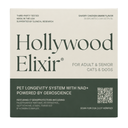
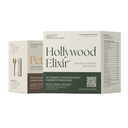
Hollywood Elixir is designed around disclosed aging-biology support, including antioxidant, mitochondrial, NAD+, and immune-balance relevant lanes. This paper is useful for thinking about functional ingredient discipline, not for claiming disease protection.
The common overreach is "immune boost."
That phrase is usually too vague. Does the brand mean vaccine response marker, innate immune cell trend, inflammation balance, infection resistance, allergy support, or something else?
The better page says exactly what the study measured, what dose was used, and which outcomes did not change.
A quick read on the claims a pet parent is likely to see while shopping.
"Reishi boosts immunity."
Too vague; the paper measured specific immune markers.
Better: Ganoderma lucidum showed immune-marker signals at a defined dose in dogs.
This is concrete and source-aligned.
"Protects against illness."
Disease protection was not tested.
Better: supports immune-system function markers.
Support language stays inside the evidence.
"Also improves coat and microbiome."
The paper did not show broad skin/coat or fecal microbial DNA changes.
Better: report the null findings clearly.
Null findings sharpen credibility.
Use this as a shopper decoder: the idea can be useful, but the claim still has to stay honest.
| Concept | Common claim | Better interpretation | Caution | LPL system |
|---|---|---|---|---|
| Reishi species | "Mushroom blend." | Name Ganoderma lucidum and dose/form. | Mushroom species are not interchangeable. | Hollywood Elixir |
| Immune marker | "Immune protection." | Frame as support for immune markers or immune balance. | Do not imply disease prevention. | LPL-01 |
| Quality | "Ancient superfood." | Show identity, contaminants, and COA/testing logic. | Botanical quality varies. | COA Lookup |
| Outcome specificity | "Supports everything." | Say what changed and what did not. | Broad claims weaken the paper. | Research Library |
Use these questions before accepting any study-backed product claim.
We read Kayser 2024 as a good model for functional-ingredient discipline.
The paper is useful because it is dog-specific, dose-aware, and honest about mixed endpoints. That is exactly the standard shoppers should apply to immune-support claims.
Hollywood Elixir should be read through the same lens: disclosed actives, pathway explanation, testing visibility, and no disease-protection language.
A useful product page should name the ingredient, dose, endpoint, and boundary instead of leaning on "boost" language.
Short answers for the shopping questions this study usually creates.
It tested Ganoderma lucidum supplementation at 0, 5, 10, and 15 mg/kg body weight in adult beagles.
The highest-dose group showed immune-marker signals, including higher rabies vaccine-specific serum IgG after vaccination.
No broad skin/coat impact was reported in the study.
No. Immune markers are not disease-prevention claims.
Look for mushroom species, form, dose, endpoint, and quality controls.
We use it as a model for precise immune-support language, not as a disease claim.
Useful definitions for reading the study without turning it into marketing haze.
Primary paper first, followed by practical veterinary or nutrition references where relevant.
Research Library is educational. It does not diagnose, treat, cure, or prevent disease, and it does not replace veterinary advice.

