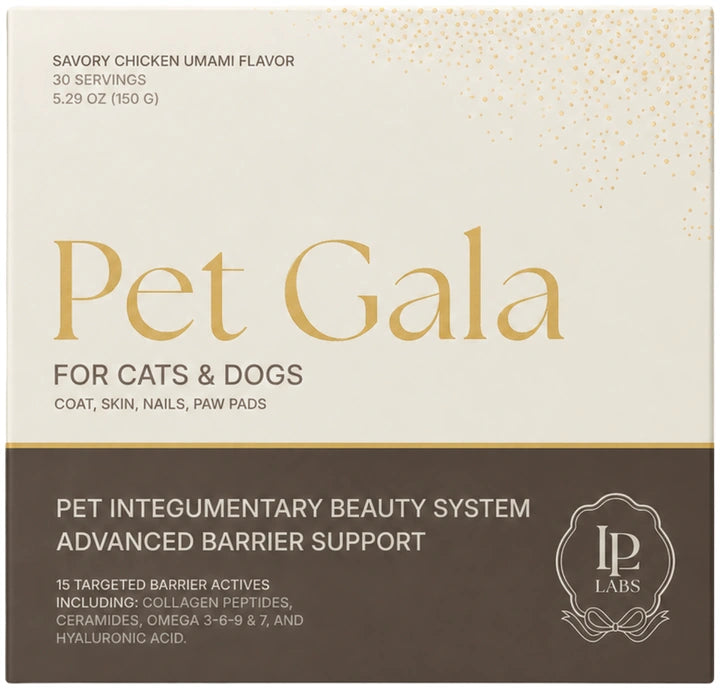
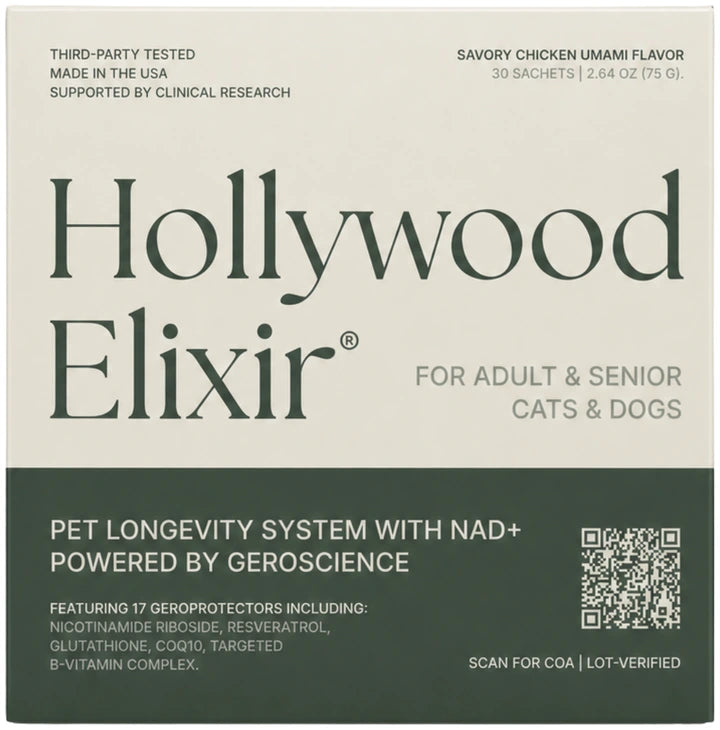
Disclosure: La Petite Labs sells Pampered, a daily wellness system that may be relevant to some Tomlyn shoppers — both brands sell daily support products. It is not a substitute for Tomlyn's Nutri-Cal gels or veterinary guidance.
Tomlyn Pros and Cons
Pros
- Honest corporate identity: the Vetoquinol parentage is stated plainly, with country-level manufacturing disclosure (United States and Canada).
- Genuinely useful use-case guidance on the flagship: Nutri-Cal's pages define exactly who it's for — dogs refusing food, sick or aging animals, picky eaters, active dogs needing extra calories.
- A mostly disciplined register: the products sell on use-cases in support framing, without disease-treatment claims.
- A legacy product with real history: Nutri-Cal has decades of shelf presence across kitten, cat, puppy, and dog variants.
Cons
- "Clinically studied ingredients" and "proven, scientific knowledge" appear with no citation anywhere on the reviewed surfaces.
- "Veterinarian-formulated" and "veterinarian-approved" name no veterinarian — from a brand whose parent employs many.
- No guaranteed analysis or per-active amounts render on the flagship product pages we reviewed — "concentrated source of vitamins and minerals" is the disclosure.
- No testing artifact of any kind: no laboratory, COA, lot lookup, or panel on the retail surfaces.
The Vocabulary Without the Documents
What makes Tomlyn's gaps notable is who owns it. Vetoquinol is a veterinary pharmaceutical company — a business built on dossiers, trials, and regulatory submissions — and our separate review of its vet-channel supplements found the same shape: real institutional depth upstream, thin public paper downstream. Tomlyn is that pattern at retail volume. The phrase "clinically studied ingredients" sits on the brand page the way a seal sits on a label, and nothing on any reviewed page says which ingredients, studied by whom, published where. The right-levels claim — ingredients "formulated at the right levels" — is asserted on the same pages that decline to print the levels.
None of this reads as misdirection; it reads as unfinished. The About page's most disarming line — "These are the products we buy for our own pets" — is probably true. It is also the trust model of a family brand, wearing the vocabulary of a pharmaceutical one.
How to verify Tomlyn yourself: ask for (1) the guaranteed analysis for your Nutri-Cal variant — the physical label carries more than the webpage shows, so ask for the panel itself, (2) the studies behind "clinically studied ingredients," by name, and (3) your lot's COA with the testing laboratory named.
Public Transparency Score: 59.5/100
Under the 2026 Brand Transparency Rubric, Tomlyn earns a 59.5/100 Public Transparency Score — Disclosure Gaps (scored as of 2026-07-03). The score measures what a buyer can publicly verify before purchase — labels, rationale, evidence, named experts, testing access, manufacturing disclosure, claim discipline, and findability. It is not an effectiveness score, a safety score, or a best-brand ranking.
The shape: manufacturing, claims, and accessibility at 6 — carried by honest parentage and clean use-case marketing — against testing at 2, evidence at 3, labels at 4, and experts at 4. The record was rebuilt from live-fetched, locally archived surfaces with every quote verified verbatim. For a Vetoquinol property, the fix list is almost embarrassingly available: print the panels, cite the studies, name a vet — the parent has all three in a filing cabinet.
Best fit: owners who need Nutri-Cal's specific job — calories into a pet that won't eat — under veterinary guidance. Keep comparing if: the pharma-adjacent vocabulary is what's persuading you; the retail pages carry none of the documents it implies.
Owner Reviews and Price
What owners actually say (verified-purchase reviews and Amazon's aggregation on the Nutri-Cal listings — the cat gel at 4.2 stars over ~6,700 ratings, the puppy gel at 4.8 over ~6,200, re-checked 2026-07-04; personal observations, not proof): this review base is unlike any other in our set because the stakes are — these are owners of animals that stopped eating. The puppy variant's "life-saving" theme runs 92-to-0 in Amazon's tally, and the cat reviews supply the texture: a 19-year-old cat who had hidden under the bed to die, coaxed back to eating — her owner's nickname for the tube is reverent; a 20-year-old Siamese in a four-cat household of a 25-year cat veteran; a post-surgery kitten who could only ever eat with help. The failure mode is just as consistent: cats who refuse it entirely ("a big gloppy mess" — consistency mentions run 28-to-110 negative), taste splitting 156-to-81 on the cat listing, digestibility dead even at 98-to-98, and a pointed 1-star urging caution with elderly cats after a bad experience. The practical read matches the product's job: when a compromised animal will take it, owners describe it as a bridge that mattered; when the animal won't, there is no plan B in the tube — and either way, an animal that isn't eating is already a veterinary case, not a supplement case.
Where La Petite Labs Fits
The overlap is the daily support lane at its edge — Tomlyn's probiotic and joint products versus Pampered — while Nutri-Cal itself is a caloric-support product with no La Petite Labs equivalent, and this page makes no claim against it.
The ledger: Tomlyn brings honest parentage and a legacy flagship. Pampered's difference is the documentation Tomlyn's retail surface skips: all 13 actives at per-active milligrams, per-batch heavy-metal, microbial, and potency testing by named labs — NSF and Eurofins — with a public COA lookup, and six named DVM contributors where Tomlyn has an unnamed approval. Neither brand has a finished-formula clinical trial — La Petite Labs says so plainly, which is precisely the sentence "clinically studied ingredients" is engineered to avoid.
Final Verdict: Should You Try Tomlyn?
For Nutri-Cal's actual job: it remains the pet-store standard for a reason, and if your vet has recommended calorie support, the product's decades of use are worth something real — buy it for that, with your vet supervising, and ask for the panel the webpage doesn't show. For the rest of the line, apply the discount this review documents: the clinical vocabulary is unbacked on every page we checked, and a brand owned by a pharmaceutical company earns no benefit of the doubt for leaving its evidence at the office. The tolerance notes in our sample argue for gradual introduction — again, standard practice for the fragile animals this flagship serves.
FAQ
Is Tomlyn legit?
Yes — Vetoquinol's US retail supplement line, with the Nutri-Cal legacy flagship, honest corporate disclosure, and US/Canada manufacture. Its gaps are unbacked clinical vocabulary and absent panels, names, and testing artifacts.
What is Tomlyn Nutri-Cal?
A high-calorie nutritional gel — "a concentrated source of vitamins and minerals" with omega-3, -6, and -9 fatty acids — for dogs, cats, puppies, and kittens that need calories they won't take from food: sick, aging, or picky animals.
Is Nutri-Cal vet recommended?
The pages say "veterinarian-formulated" and the About page says "veterinarian-approved formulas" — no veterinarian is named anywhere. Your own vet's recommendation is the meaningful one, and Nutri-Cal's use-cases (animals refusing food) warrant one anyway.
Is Tomlyn clinically proven?
The brand page says "clinically studied ingredients"; no study, citation, or reference appears anywhere on the reviewed surfaces. Ask for the studies by name.
Who owns Tomlyn?
Vetoquinol, the global veterinary pharmaceutical company — stated plainly on the About page. We review Vetoquinol's vet-channel supplements separately in our report.
Where is Tomlyn made?
In the United States and Canada, per the About page. No facility is named, and no GMP or audit language appears on the retail surfaces.
Does Tomlyn publish COAs or ingredient amounts?
Neither, on the pages we reviewed: no guaranteed analysis renders on the flagship pages, and no COA, laboratory, or lot document exists on the retail surfaces. Request both.
What does Nutri-Cal cost?
Checked 2026-07-03: $16.99 for the 4.25 oz kitten variant — value-tier across the line.
How does Tomlyn compare with Pampered?
Different jobs at the flagship level (caloric support versus daily wellness). On documentation: Pampered publishes per-active milligrams, per-batch named-lab testing (NSF, Eurofins) with a public COA lookup, and six named DVM contributors; Tomlyn's retail pages publish none of these. Neither has a finished-formula trial.
What should I verify before buying Tomlyn?
The guaranteed analysis for your variant, the studies behind the clinical language, your lot's COA, and — for Nutri-Cal's intended audience of compromised animals — your veterinarian's supervision plan.
Sources Reviewed
Sources note: Five surfaces of the Vetoquinol Pets USA storefront were live-fetched and locally archived on 2026-07-03, with every quote verified verbatim against the archived HTML. Public materials show what a buyer can verify; they cannot establish product safety, efficacy, medical suitability, or current pricing.
Tomlyn pages reviewed
- Vetoquinol Pets USA storefront — reviewed for navigation and brand placement.
- Tomlyn brand page — reviewed for the "clinically studied ingredients" and right-levels claims.
- About Vetoquinol — reviewed for parentage, US/Canada manufacture, and the veterinarian-approved language.
- Nutri-Cal for Dogs and the cat/kitten variants — sampled for use-case framing and the absent analysis panel.
Owner-review surfaces
- Retail and forum surfaces — sampled 2026-07-03 (63 extracted items across 16 sources, low confidence); used only as buyer-experience context, not efficacy evidence.
- Amazon flagship listings (verified-purchase reviews and Amazon's review aggregation) — re-checked 2026-07-04; used only as buyer-experience context, not efficacy evidence.