


Scottish Fold lifespan and senior care
How Long Do Scottish Fold Cats Live?
11–15Years, typical
Scottish Fold lifespan planning has to be welfare-first: folded ears are linked with cartilage and joint disease, so comfort outranks appearance at every age.
- Start watching at
- From kittenhood, with formal baselines by 7 years
- Senior age
- 10+ years
- Typical lifespan
- 11-15 years
Use 11 to 15 years as a cautious owner planning range. The 2024 UK cat life-table gives broad cat context, but Scottish Fold care is driven more by welfare, cartilage, joint, mobility, heart, and kidney risk than by one reliable breed-specific lifespan number.
Quick Answers for Pet Parents
Direct answers to the questions people ask when they are trying to plan care.
How long do Scottish Fold cats live?
Use about 11 to 15 years as a cautious planning range. For Scottish Folds, the more important question is whether daily life stays comfortable.
What is the average Scottish Fold life expectancy?
There is no single breed-specific life-table number to treat as settled. Use broad cat longevity context and build the plan around pain, mobility, heart, kidney, weight, and quality of life.
When is a Scottish Fold considered senior?
Cats older than 10 are senior under AAHA/AAFP guidance, but Scottish Fold comfort tracking should begin in kittenhood and become structured by 7.
What Scottish Fold health problems should owners watch?
Watch osteochondrodysplasia, cartilage and joint pain, arthritis, stiffness, mobility loss, ear discomfort, weight gain, body condition, HCM signs, kidney or PKD signs, and quality of life.
What most affects Scottish Fold healthspan?
Pain recognition, weight control, low-impact home design, litter-box access, orthopedic bedding, senior diagnostics, heart and kidney screening, and honest comfort scoring matter most.
Lifespan at a Glance
The short answer with the context a careful pet parent needs.
| Typical lifespan | Use 11 to 15 years as a cautious planning range, with the understanding that comfort and mobility can matter more than age. |
|---|---|
| Evidence caveat | The 2024 UK life-table is useful for broad cat context, but Scottish Fold-specific planning should center on osteochondrodysplasia and pain monitoring. |
| Scottish Fold senior timing | Cats older than 10 are senior under AAHA/AAFP guidance; Scottish Fold joint and comfort checks should begin much earlier. |
| Earlier watchpoint | Track walking, jumping, landing, tail flexibility, paw shape, grooming reach, litter-box posture, ear comfort, weight, appetite, thirst, and mood. |
| Breed-specific priority | Folded ears are part of the same cartilage story as Scottish Fold joint disease; comfort has to outrank appearance. |
| Do not normalize | Hesitation, stiffness, sleeping more, reduced play, poor grooming, litter-box change, aggression, hiding, weight gain, or avoiding touch. |

You can’t slow the clock. You can change what happens while it runs.
11-15 years is the range. What fills those years — lean condition, easy movement, steady digestion, good sleep — is built one ordinary day at a time.
Start the daily system → Starting at $50/month
If your Scottish Fold is sleeping more, hesitating before a jump, landing stiffly, grooming less, changing litter-box posture, gaining weight, avoiding touch, or acting irritable after handling, the lifespan question has to start with comfort.
The direct answer: Scottish Fold cats are best planned around 11 to 15 years, but their healthspan depends heavily on pain control, mobility, weight, heart and kidney screening, and honest quality-of-life scoring. The folded ears are not just a look. They are part of a cartilage and joint story that can affect daily life.
This page is not here to shame families who already love a Scottish Fold. It is here to keep the cat's body at the center. Appearance is never the goal. Comfortable walking, resting, grooming, eating, using the litter box, and choosing contact are the goal.
If You Only Have Five Minutes
- Use 11 to 15 years as a cautious planning range, but do not let the number outrank comfort.
- Cats older than 10 are senior under AAHA/AAFP guidance; Scottish Fold pain tracking should start much earlier.
- The folded-ear trait is linked with osteochondrodysplasia, which affects cartilage and can mean arthritis, joint pain, and mobility limits.
- Watch hesitation before jumps, lower routes, stiffness, limping, tail rigidity, paw changes, poor grooming, sleeping more, and reduced play.
- Weight control is pain control: extra body condition can make sore joints work harder.
- Ear redness, odor, debris, scratching, discharge, head shaking, or touch sensitivity deserves a vet check.
Use the cat lifespan methodology when a page has stronger evidence for risk and welfare than for a clean breed-specific age. The senior cat signs guide can help, but Scottish Fold pain signs should not wait for senior age.
Why Scottish Fold Lifespan Estimates Differ
Some breed guides give a typical lifespan range for Scottish Folds. The 2024 UK cat life-table is useful for broad cat longevity context, but the key Scottish Fold evidence is not a neat lifespan promise. It is welfare evidence about cartilage, bone, and joint disease.
PetMD describes osteochondrodysplasia, often called Scottish Fold disease, as a condition that affects cartilage throughout the body and can result in early arthritis, pain, and behavior changes. Published genetic work has linked the folded-ear phenotype with a TRPV4 variant and osteochondrodysplasia. Older clinical reports also describe disease in heterozygous Scottish Fold cats.
That means owners should not treat 11 to 15 years as the whole answer. A Scottish Fold can reach an older age and still have a poor healthspan if pain is normalized. Another cat may need major comfort decisions earlier. The better question is: can this cat move, rest, groom, use the box, and seek people without unmanaged pain?
For Scottish Folds, lifespan planning is welfare planning.
What Shapes a Scottish Fold's Healthspan
Scottish Fold healthspan is shaped by osteochondrodysplasia, arthritis, joint pain, mobility setup, body condition, ear comfort, heart screening, kidney and PKD monitoring, dental care, senior diagnostics, and quality-of-life decisions.
Osteochondrodysplasia and cartilage
Osteochondrodysplasia is not an ear-only issue. The ear fold is visible, but the concern is cartilage and bone throughout the body. Some cats show more discomfort than others, so owners need to watch the individual cat rather than assume either disaster or normality.
Track tail flexibility, paw shape, stance, walking stride, turning, stair choices, jump height, landing confidence, grooming reach, litter-box posture, sleep location, and reaction to handling. Video is useful because small stiffness becomes easier to see when compared month by month.
The tone should stay direct: folded ears may look distinctive, but comfort outranks the feature.
Arthritis and joint pain
Pain in cats can be quiet. Sleeping more, pausing before jumps, avoiding stairs, using lower furniture, missing landings, grooming less, resisting being picked up, growling, hiding, or changing litter-box habits can all be pain information.
Do not wait for dramatic limping. A Scottish Fold who stops using the window perch, chooses the floor, or no longer asks for a familiar game may be making a pain accommodation.
Ask your veterinarian how to assess pain, what home changes are useful, and when medication, imaging, weight change, or referral should be discussed. Never give human pain medicine unless a veterinarian directs it.
Home setup and mobility
The home should remove unnecessary impact. Use low beds, ramps, stable steps, nonslip mats, wide low-entry litter boxes, shallow food and water stations, and warm resting places that do not require jumping.
Keep play short and low. Wand toys can stay near the floor. Puzzle feeding can be placed where the cat does not have to twist or leap. Scratching surfaces should include horizontal and easy-angle options, not only tall posts.
The best home setup lets the cat choose movement without paying for it afterward.
Weight and body condition
PetMD notes the cycle clearly: joint pain can reduce activity, and weight gain can add more joint burden. That makes portion control and body-condition tracking a welfare tool, not a cosmetic project.
Use scale weight, rib feel, waist, muscle over the hips and thighs, treat count, meal size, stool quality, and activity notes. If weight rises while play drops, assume comfort needs review.
Weight loss also matters. Pain, kidney disease, dental disease, heart disease, appetite change, or chronic illness can all shrink a cat. Record trends rather than relying on how the cat looks in a round body shape.
Ears and handling
Scottish Fold ear care should be gentle. Redness, odor, debris, scratching, head shaking, discharge, swelling, or touch sensitivity should be checked. Do not dig into the ear or force handling for appearance.
Handling matters beyond ears. If the cat dislikes hip, paw, tail, back, or shoulder touch, do not dismiss it as personality. Pain can change what contact feels safe.
Heart, kidney, and senior screening
PetMD lists hypertrophic cardiomyopathy and polycystic kidney disease as Scottish Fold health concerns. HCM can be quiet until signs become serious. PKD and kidney disease may first show as thirst, larger urine clumps, appetite decline, weight loss, vomiting, or muscle wasting.
For an adult or senior Scottish Fold, ask what exam frequency, bloodwork, urinalysis, blood pressure, heart review, dental checks, and kidney or PKD screening make sense. If there are breeder records or genetic test results, bring them.
Breathing effort, collapse, fainting, sudden hind-limb pain, or repeated box trips with little urine should not wait.
What Aging Looks Like in a Scottish Fold
Scottish Fold aging may look like lower jumps, shorter play, more floor-level resting, stiffness after sleep, hesitation on stairs, poor grooming near the back or hips, mats, weight gain, weight loss, increased thirst, larger urine clumps, ear discomfort, irritability, hiding, or a cat who wants company but no longer wants to be picked up.
Use the comfort-first checklist:
- Can the cat walk, turn, and rise without visible strain?
- Are jumps and landings still easy, or has the cat chosen lower routes?
- Does grooming reach the back, hips, tail base, and rear legs?
- Is litter-box entry low enough and posture comfortable?
- Are weight, thirst, urine clumps, appetite, and stool changing?
- Does the cat still choose contact, or only tolerate it?
Normal aging can make any cat calmer. It should not explain away ongoing stiffness, untreated pain, repeated avoidance, poor grooming, litter-box trouble, breathing effort, collapse, rapid weight change, or a cat who is present but no longer comfortable.
When to Call a Veterinarian
Use urgent care for open-mouth breathing, hard breathing effort, blue or gray gums, collapse, fainting, seizure, sudden blindness, sudden hind-limb pain or paralysis, inability to rise, acute severe lameness, severe pain when touched, repeated vomiting with weakness, suspected toxin exposure, or repeated litter-box trips with little or no urine.
Book a visit for hesitation before jumping, lower routes, stiffness, limping, tail rigidity, paw swelling, reduced play, poor grooming, matting, litter-box posture changes, accidents, sleeping more, aggression, hiding, weight gain, weight loss, increased thirst, larger urine clumps, appetite change, ear odor, ear redness, or head shaking.
Bring videos of walking, turning, jumping, landing, stairs, litter-box posture, grooming reach, and handling reactions. Add weight history, diet and treat notes, litter records, medication lists, breeder or rescue records, and any genetic testing.
When later-life choices become hard, score the cat with the cat quality of life scale. For a Scottish Fold, include pain, movement, grooming dignity, litter-box access, sleep, appetite, hydration, breathing, anxiety, social contact, and treatment burden.
How Scottish Folds Compare With Similar Breeds
Scottish Folds belong in a different planning category from standard low-evidence breed pages because the central issue is not only senior aging. The fold trait itself changes the care lens.
Compared with Scottish Straights, the key question is whether the cat has the fold-associated cartilage risk and what history is known. Compared with Manx or Cymric pages, the shared principle is welfare-first monitoring: structure, movement, litter-box function, and pain are not side notes.
Compared with Munchkin planning, the common ground is home design and honest mobility scoring. The details differ, but the owner job is similar: reduce strain, notice pain early, and refuse to treat a body-shape feature as more important than the cat's comfort.
The wider comparison lives in the cat lifespan by breed hub. Inside your home, compare your Scottish Fold to its own history: how it rises, lands, grooms, rests, eats, urinates, asks for contact, and responds to touch.
Questions for Your Breeder, Rescue, or Veterinarian
For a breeder or rescue:
- What is known about osteochondrodysplasia, arthritis, lameness, tail stiffness, paw changes, pain medication, early deaths, HCM, PKD, kidney disease, ear problems, and quality of life in close relatives?
- Were folded-ear cats bred only to straight-eared cats, and what genetic or veterinary records are available?
- Has this cat ever shown hesitation, stiffness, poor grooming, litter-box posture changes, aggression, hiding, ear discomfort, weight problems, or trouble being handled?
- What home setup, litter box, bedding, play style, and grooming routine has kept the cat most comfortable?
For your veterinarian:
- Which signs in this Scottish Fold are pain, and which are normal movement for this individual?
- Should we use pain scoring, imaging, bloodwork, urinalysis, blood pressure, dental review, heart review, kidney screening, or PKD testing?
- What target body condition reduces joint load without causing muscle loss?
- Which home changes would lower daily strain right now?
- What signs mean this cat should be seen promptly rather than waiting for a routine visit?
A Scottish Fold with unknown history starts with the daily body: walking, rising, landing, grooming, litter access, ears, weight, thirst, appetite, and the cat's willingness to be touched. Healthspan is not how the cat looks. It is how the cat feels moving through the day.
Sources
- PetMD. Scottish Fold Cat Breed Health and Care. https://www.petmd.com/cat/breeds/scottish-fold
- Teng KT, Brodbelt DC, Church DB, O'Neill DG, et al. Life tables of annual life expectancy and risk factors for mortality in cats in the UK. Journal of Feline Medicine and Surgery. https://journals.sagepub.com/doi/10.1177/1098612X241234556
- Royal Veterinary College VetCompass. New research from the RVC predicts the future life expectancy for companion cats. https://www.rvc.ac.uk/vetcompass/news/new-research-from-the-rvc-predicts-the-future-life-expectancy-for-companion-cats
- Gandolfi B, Alamri S, Darby WG, et al. A dominant TRPV4 variant underlies osteochondrodysplasia in Scottish fold cats. Osteoarthritis and Cartilage. https://doi.org/10.1016/j.joca.2016.03.019
- Takanosu M, Takanosu T, Suzuki H, Suzuki K. Incomplete dominant osteochondrodysplasia in heterozygous Scottish Fold cats. Journal of Small Animal Practice. https://doi.org/10.1111/j.1748-5827.2008.00561.x
- AAHA/AAFP. 2021 Feline Life Stage Guidelines. https://catvets.com/resource/aaha-aafp-feline-life-stage-guidelines/
- Cornell Feline Health Center. The Special Needs of the Senior Cat. https://www.vet.cornell.edu/departments-centers-and-institutes/cornell-feline-health-center/health-information/feline-health-topics/special-needs-senior-cat
- Cornell Feline Health Center. Polycystic Kidney Disease. https://www.vet.cornell.edu/departments-centers-and-institutes/cornell-feline-health-center/health-information/feline-health-topics/polycystic-kidney-disease
Healthspan by Life Stage
Know what to track before senior age, not only after decline appears.
Do not wait for obvious limping
Collect breeder or rescue records, parent testing if available, fold status, orthopedic notes, tail and paw observations, baseline videos, diet history, litter habits, ear checks, and social pattern.
Make comfort the baseline
Use measured meals, low-impact play, nonslip routes, low perches, wide litter boxes, grooming checks, ear checks, and monthly video comparisons of walking, turning, jumping, and landing.
Treat tiny movement changes as data
Track weight, body condition, appetite, thirst, urine clumps, stool, grooming reach, tail flexibility, paw thickening, stair choices, jumping, sleep, mood, and handling tolerance monthly.
Pair pain scoring with diagnostics
Discuss exam frequency, bloodwork, urinalysis, blood pressure, kidney and PKD screening, heart findings, dental timing, arthritis management, and home modifications.
Let comfort outrank the calendar
Judge appetite, hydration, breathing, pain, mobility, grooming dignity, litter-box access, sleep, anxiety, social interest, treatment burden, and whether movement is still humane.
Breed Health Map
The main breed-specific topics that can shape lifespan, comfort, and quality of life.
This is a whole-body comfort issue
The folded-ear trait is linked with cartilage and bone abnormalities. Watch stiffness, hesitation, painful touch, paw or tail changes, reduced play, poor grooming, and behavioral shifts.
Small hesitations can be pain
Sleeping more, pausing before jumps, choosing lower routes, missing landings, avoiding stairs, growling when handled, or changing litter posture should be treated as possible joint pain.
Design the home for low-impact movement
Use ramps, low beds, wide boxes, nonslip mats, shallow food and water access, soft resting spots, and stable routes so the cat does not have to earn comfort.
Extra weight raises joint burden
Track scale weight, rib feel, waist, appetite, treat count, activity, landing confidence, and body condition because pain can reduce movement and weight can worsen pain.
Ear shape is not the care goal
Redness, odor, debris, scratching, head shaking, touch avoidance, or pain around the ears deserves review. Handle gently and do not force cosmetic cleaning.
Breathing changes should not wait
Heart murmurs, breathing effort, collapse, fainting, severe weakness, poor recovery after movement, or sudden hind-limb pain needs prompt veterinary attention.
Thirst and litter notes matter
Increased thirst, larger urine clumps, weight loss, appetite decline, vomiting, muscle loss, accidents, blood, straining, or repeated box trips should be dated and discussed.
Pain can hide inside a gentle personality
Score appetite, hydration, breathing, pain, walking, jumping, grooming, litter-box dignity, sleep, anxiety, social interest, and treatment burden without excusing discomfort.

One serving a day, built for aging cats
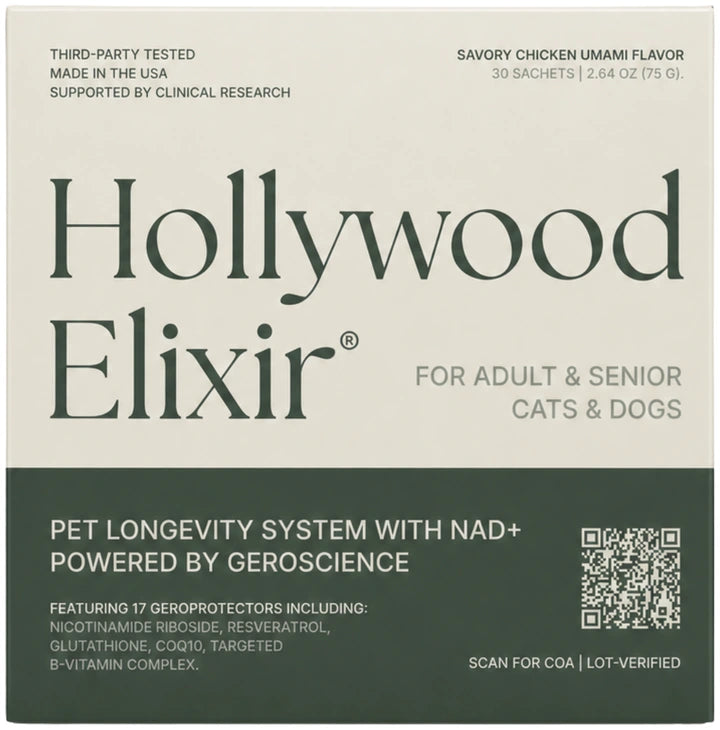
Hollywood Elixir is our daily supplement for adult and senior cats, made to the LPL-01 standard with every active ingredient at a visible amount. It never replaces your veterinarian — it sits alongside the routine on this page.
Starting at $50/month · cancel anytime
Shop Hollywood ElixirWhen to Call the Vet
Split urgent signs from trends that deserve a scheduled veterinary conversation.
Go urgently
- Open-mouth breathing, hard breathing effort, blue or gray gums, collapse, fainting, seizure, sudden blindness, severe weakness, or rapid decline.
- Sudden hind-limb pain or paralysis, inability to rise, severe pain when touched, repeated vomiting with weakness, uncontrolled bleeding, suspected toxin exposure, or traumatic injury.
- Repeated litter-box trips with little or no urine, straining with distress, blood in urine, painful abdomen, acute inability to walk, or sudden extreme lameness.
Schedule promptly
- Hesitation before jumping, lower routes, missed landings, stiffness, limping, tail rigidity, paw swelling, reduced play, sleeping more, or reluctance to be handled.
- Poor grooming, matting, overgrooming, litter-box posture change, accidents, hiding, aggression, irritability, or a usually gentle cat avoiding contact.
- Weight gain or loss, appetite change, increased thirst, larger urine clumps, vomiting, constipation, diarrhea, or muscle loss.
- Ear redness, odor, debris, scratching, head shaking, touch sensitivity, discharge, or repeated ear discomfort.
- Bring videos of walking, jumping, stairs, litter-box posture, grooming reach, and pain behavior, plus weight, diet, and litter records.
The 90-Day Support Routine
Ninety days of small, repeatable habits make subtle changes visible — and give any new routine a fair test.
- Week one: record weight, rib feel, appetite, water intake, litter clumps, stool, walking route, jump height, landing confidence, grooming reach, tail flexibility, paw shape, ear comfort, and normal sleep spots.
- Week one: lower one essential route, add nonslip footing, and choose a litter box the cat can enter without a high step.
- Weekly: check movement videos, appetite, water, litter, ears, coat, grooming, handling tolerance, and whether play remains easy rather than forced.
- Monthly: repeat body-condition notes, compare walking and jumping clips, mark new rest spots, and list any behavior that might be pain.
- Day 90: review osteochondrodysplasia signs, arthritis comfort, weight, ear health, kidney and PKD clues, heart concerns, and quality of life with your veterinarian.
Tools for Tracking Comfort and Aging
Use these when a life-stage, body-condition, or quality-of-life question needs more structure.
Cat Age Calculator
Use age context carefully because Scottish Fold comfort concerns can begin long before classic senior age.
ToolCat Quality of Life Scale
Use when pain, mobility, grooming, litter access, or treatment burden changes daily life.
ToolCat Biological Age Calculator
Frame healthy-aging conversations around welfare, not appearance.
Frequently Asked Questions
Short answers to the questions owners ask most.
What is a realistic Scottish Fold lifespan?
Scottish Fold lifespan planning can use about 11 to 15 years, but comfort matters more than reaching a number. Pain-free daily function is the real healthspan target.
Why is Scottish Fold lifespan a welfare-sensitive topic?
Scottish Fold cats are welfare-sensitive because the folded-ear trait is linked with osteochondrodysplasia, a cartilage and bone disorder that can cause arthritis, joint pain, and mobility limits.
When should Scottish Fold senior care start?
Use 10+ as the senior marker for general cat care, but begin Scottish Fold pain, movement, weight, ear, and home-access tracking in kittenhood and make it structured by 7.
Which Scottish Fold health problems matter most?
Scottish Fold health problems that shape comfort include osteochondrodysplasia, cartilage and joint pain, arthritis, stiffness, mobility loss, weight gain, ear discomfort, HCM signs, PKD or kidney signs, and quality of life.
Which aging signs should Scottish Fold owners watch?
Scottish Fold aging signs include hesitation, lower jumps, stiffness, limping, sleeping more, poor grooming, litter-box changes, irritability, hiding, weight drift, thirst, and reduced social comfort.
Does every Scottish Fold need pain monitoring?
Yes. The level of discomfort can vary, but Scottish Fold care should assume pain monitoring is routine, not optional.
What home changes help a Scottish Fold?
Low beds, ramps, nonslip floors, wide low-entry litter boxes, reachable food and water, orthopedic resting spots, and shorter play sessions can reduce daily joint strain.
What ear signs need attention?
Ear redness, odor, debris, scratching, head shaking, discharge, touch sensitivity, or repeated discomfort should be checked. Ear care should be gentle and comfort-based.
How does weight affect Scottish Fold healthspan?
Extra weight increases joint burden and can reduce movement. Track scale weight, body condition, treats, activity, and pain signs with your veterinarian.
How often should an older Scottish Fold see the vet?
Many senior cats benefit from at least twice-yearly check-ins, with Scottish Fold timing adjusted to pain, movement, weight, bloodwork, urinalysis, blood pressure, heart findings, kidney signs, ears, and daily function.
What should I ask a breeder or rescue?
Ask about osteochondrodysplasia signs, fold status, parent testing, arthritis, lameness, tail or paw changes, pain medication, HCM, PKD, kidney disease, ear problems, lifespan, and reasons for rehoming.
Is Hollywood Elixir something my Scottish Fold needs?
No supplement is a need. Hollywood Elixir is La Petite Labs' daily supplement for adult and senior cats, not a treatment for pain, arthritis, kidney disease, HCM, PKD, or anything on this page.
A note from La Petite Labs
Hollywood Elixir is La Petite Labs' daily supplement for adult and senior cats. It is not a treatment for anything on this page, and it never replaces your veterinarian.

Why Pampered matches Scottish Fold watchpoints
Pampered is La Petite Labs' complete daily system, with a recommended 90-day starting window. This page already asks for recording weight, rib feel, appetite, water intake, litter clumps, stool, walking route, jump height, landing confidence, grooming reach, before repeating body-condition notes, compare walking and jumping clips, mark new rest spots, and list any behavior that might; Pampered gives that 90-day calendar a daily container while osteochondrodysplasia, arthritis and joint pain, mobility setup, and weight and body condition stay visible.
Explore the Pampered™ System →