

Munchkin lifespan and senior care
How Long Do Munchkin Cats Live?
12–15Years, typical
Munchkin lifespan planning puts comfort over novelty: short-leg structure, movement, pain, lordosis and pectus honesty, teeth, litter, and senior care.
- Start watching at
- From 7 years
- Senior age
- 10+ years
- Typical lifespan
- 12-15 years
No reliable Munchkin lifespan study exists — the range is general-cat evidence, with structure and comfort watched case by case.
Quick Answers for Pet Parents
Direct answers to the questions people ask when they are trying to plan care.
How long do Munchkin Cats live?
Munchkin Cats are best planned around 12 to 15 years, with the evidence caveat that no reliable breed-only life table exists for this rare cat.
What is Munchkin life expectancy?
Munchkin life expectancy should be treated as a planning range. Start with short-leg structure, pain, weight, home access, litter comfort, chest or spine history, mouth health, and kidney records.
When is a Munchkin considered senior?
Cats older than 10 are senior under AAHA/AAFP guidance, but baseline notes around 7 help catch short-leg movement, stair access, chest or spine history, dental comfort, litter output, and pain behavior changes earlier.
What Munchkin health problems should owners watch?
Watch mobility pain, obesity, lordosis or pectus history, dental disease, constipation or urinary signs, kidney disease, arthritis, and stress from inaccessible spaces.
What most affects Munchkin healthspan?
Low routes, traction, weight control, pain review, dental care, litter access, honest structural records, and senior diagnostics matter most.
How should I use related-breed evidence for a Munchkin?
Use related breeds as question prompts, not as a prediction. Ask how short-leg movement, stair access, chest or spine history, dental comfort, litter output, and pain behavior, body condition, dental comfort, kidney records, and mobility look in this individual cat.
Lifespan at a Glance
The short answer with the context a careful pet parent needs.
| Typical lifespan | Use 12 to 15 years as a cautious planning range, not as a breed-specific life-table statistic. |
|---|---|
| Evidence caveat | The International Cat Association. Munchkin Breed Introduction supplies breed context; the 2024 UK cat life-table is broader feline evidence, not a Munchkin-only lifespan statistic. |
| Munchkin senior timing | Cats older than 10 are senior under AAHA/AAFP guidance; begin Munchkin baselines around 7 for short-leg movement, stair access, chest or spine history, dental comfort, litter output, and pain behavior. |
| Earlier watchpoint | Track short-leg gait, stair use, jump attempts, landing comfort, chest shape history, spine notes, weight, dental breath, appetite, thirst, urine clumps, stool, and hiding. |
| Breed-specific priority | Welfare-sensitive structure means comfort comes before novelty; lordosis and pectus concerns should be discussed honestly without inventing rates. |
| Do not normalize | Do not normalize reluctance to move, hard landings, spine pain, chest effort, constipation, urinary strain, bad breath, weight gain, hiding, or pain during handling. |
| Evidence handling | Thin breed evidence should lead to better records, not a false average. For Munchkin, keep short-leg movement, stair access, chest or spine history, dental comfort, litter output, and pain behavior tied to dates, diagnoses, and veterinary follow-up. |
| Home baseline | The strongest home file is simple and repeatable: weight, appetite, water, litter, mouth comfort, movement, grooming or coat notes, and one clear description of what changed first. |

You can’t slow the clock. You can change what happens while it runs.
12-15 years is the range. What fills those years — lean condition, easy movement, steady digestion, good sleep — is built one ordinary day at a time.
Start the daily system → Starting at $50/month
If your Munchkin still wants to follow you but now hesitates at a step, lands hard from the sofa, resists being lifted, gains weight, strains in the litter box, drops food, or breathes with unusual effort, lifespan has become a comfort-before-novelty question.
The direct answer: Munchkin Cats are best planned around 12 to 15 years, but that is a cautious owner range rather than a breed-specific survival statistic. The care plan should prioritize movement comfort, chest and spine history, accessible rooms, teeth, litter, weight, and pain assessment rather than celebrating short legs.
Munchkin planning is welfare-sensitive. Short legs are the defining structure, and any discussion of lifespan has to be honest about mobility, lordosis, pectus excavatum, pain, and the limits of breed-specific data.
If You Only Have Five Minutes
- Use 12 to 15 years as the Munchkin lifespan planning range while saying plainly that a breed-specific life-table dataset is not available for comfort over novelty.
- Start baselines around 7 for short-leg movement, stair access, chest or spine history, dental comfort, litter output, and pain behavior, then use 10+ as the senior-care marker under AAHA/AAFP guidance.
- Welfare-sensitive structure means comfort comes before novelty; lordosis and pectus concerns should be discussed honestly without inventing rates.
- Track short-leg gait, stair use, jump attempts, landing comfort, chest shape history, spine notes, weight, dental breath, appetite, thirst, urine clumps, stool, and hiding; small changes are more useful when dated than when remembered weeks later.
- For a Munchkin file centered on short-leg movement, stair access, chest or spine history, dental comfort, litter output, and pain behavior, open-mouth breathing, collapse, urinary straining, paralysis, or repeated vomiting with weakness needs urgent care.
- Do not normalize reluctance to move, hard landings, spine pain, chest effort, constipation, urinary strain, bad breath, weight gain, hiding, or pain during handling.
The cat lifespan methodology helps separate comfort over novelty from registry or breed-profile context and life-table evidence. Pair the senior cat signs guide with short-leg movement, stair access, chest or spine history, dental comfort, litter output, and pain behavior notes.
Why Lifespan Numbers for Munchkin Cats Don't Agree
Munchkin lifespan evidence is not a clean breed-only life table; structural welfare questions make careful observation more important than a confident average. The 2024 UK cat life-table helps with modern feline context, but short-leg movement, stair access, chest or spine history, dental comfort, litter output, and pain behavior keep it from becoming a clean Munchkin survival curve.
That uncertainty should make the owner record more specific. For this cat, the useful calendar follows short-leg movement, stair access, chest or spine history, dental comfort, litter output, and pain behavior, appetite, water, litter, movement, and any history the breeder, rescue, or veterinarian can verify.
Anecdotes about long-lived relatives are encouraging but not enough. The safer Munchkin plan is to measure short-leg movement, stair access, chest or spine history, dental comfort, litter output, and pain behavior, update the file after diagnoses, and treat changed function as evidence even when the birthday still sounds young.
What Shapes a Munchkin's Healthspan
Munchkin healthspan is shaped by comfort over novelty, short-leg access and traction, lordosis and pectus honesty, weight and joint load, dental and litter access, senior pain assessment, and senior diagnostics that turn household observations into veterinary decisions.
Comfort over novelty and short-leg access and traction
For comfort over novelty, connect the note to short-leg access and traction: what changed, when it started, and whether appetite, weight, litter, movement, grooming, or social routine changed at the same time.
Short-leg access and traction and comfort over novelty
This Munchkin short-leg access and traction detail matters beside comfort over novelty because thin breed evidence makes individual trend records more valuable than confident averages.
Lordosis and pectus honesty and comfort over novelty
Photos or short videos can help with lordosis and pectus honesty and comfort over novelty, especially when the change involves short-leg movement, stair access, chest or spine history, dental comfort, litter output, and pain behavior, eating, litter posture, or handling tolerance.
Weight and joint load and comfort over novelty
For weight and joint load, connect the note to comfort over novelty: what changed, when it started, and whether appetite, weight, litter, movement, grooming, or social routine changed at the same time.
Dental and litter access and comfort over novelty
This Munchkin dental and litter access detail matters beside comfort over novelty because thin breed evidence makes individual trend records more valuable than confident averages.
Senior pain assessment and comfort over novelty
Photos or short videos can help with senior pain assessment and comfort over novelty, especially when the change involves short-leg movement, stair access, chest or spine history, dental comfort, litter output, and pain behavior, eating, litter posture, or handling tolerance.
What Aging Looks Like in a Munchkin
Munchkin aging may first show up through short-leg movement, stair access, chest or spine history, dental comfort, litter output, and pain behavior, appetite, thirst, urine clumps, stool, grooming, play recovery, or a changed relationship with familiar rooms.
Because evidence is thin, compare short-leg movement, stair access, chest or spine history, dental comfort, litter output, and pain behavior against this cat's earlier normal before deciding that a quiet change is just age.
- Are short-leg movement, stair access, chest or spine history, dental comfort, litter output, and pain behavior stable compared with three months ago?
- Do appetite, thirst, urine clumps, stool, vomiting, weight trend, and comfort over novelty still match the Munchkin baseline?
- Does this Munchkin still chew, groom, jump, land, and rest without new hesitation around short-leg movement, stair access, chest or spine history, dental comfort, litter output, and pain behavior?
- Does handling around short-leg movement, stair access, chest or spine history, dental comfort, litter output, and pain behavior still feel comfortable rather than painful or irritating?
- Does the cat still choose familiar people, rooms, and routines when short-leg movement, stair access, chest or spine history, dental comfort, litter output, and pain behavior start to shift?
Normal aging can make a Munchkin more selective around short-leg movement, stair access, chest or spine history, dental comfort, litter output, and pain behavior. It should not excuse breathing distress, urinary blockage signs, rapid weight loss, untreated dental pain, severe mobility loss, collapse, or a cat whose comfort over novelty no longer fits normal life.
When to Call a Veterinarian
Use urgent care when short-leg movement, stair access, chest or spine history, dental comfort, litter output, and pain behavior are joined by breathing effort, collapse, paralysis, severe pain, repeated vomiting with weakness, urinary straining with little output, or rapid decline.
Book a prompt visit for reluctance to move, hard landings, spine pain, chest effort, constipation, urinary strain, bad breath, weight gain, hiding, or pain during handling, especially when more than one sign appears in the same month.
Bring weight history, meal notes, litter records, safe videos of short-leg movement, stair access, chest or spine history, dental comfort, litter output, and pain behavior, coat or skin photos if relevant, dental observations, medication lists, and any breeder or rescue history. Use the cat quality of life scale when comfort over novelty makes comfort hard to judge.
How Munchkin Cats Compare With Similar Breeds
Compared with Minuet cats, Munchkins have the short-leg issue without the same Persian-family face and coat layer.
Compared with Scottish Fold pages, this is not cartilage-folding language; the welfare question is short-limb structure, access, and pain.
Questions for Your Breeder, Rescue, or Veterinarian
For a breeder or rescue:
- What lifespan, early deaths, dental disease, kidney disease, urinary signs, arthritis, appetite problems, weight issues, and short-leg movement, stair access, chest or spine history, dental comfort, litter output, and pain behavior history are known in close relatives?
- Which health records, genetic notes, screening results, or veterinary summaries explain short-leg movement, stair access, chest or spine history, dental comfort, litter output, and pain behavior rather than relying on memory?
- Has this cat ever had dental work, urinary signs, constipation, vomiting, appetite crashes, mobility pain, breathing episodes, or unexplained weight change connected with comfort over novelty?
- What feeding, grooming, play, litter, and handling routines kept older Munchkin relatives comfortable when short-leg movement, stair access, chest or spine history, dental comfort, litter output, and pain behavior changed?
For your veterinarian:
- What weight, muscle, and home-access target fits this Munchkin with short-leg movement, stair access, chest or spine history, dental comfort, litter output, and pain behavior?
- Do the changes in short-leg movement, stair access, chest or spine history, dental comfort, litter output, and pain behavior call for diagnostics now?
- Should we update bloodwork, urinalysis, blood pressure, dental review, pain assessment, or screening tied to short-leg movement, stair access, chest or spine history, dental comfort, litter output, and pain behavior?
- Which breathing, urinary, appetite, dental, mobility, or comfort signs matter fastest when short-leg movement, stair access, chest or spine history, dental comfort, litter output, and pain behavior change?
- What home changes would protect comfort without removing normal enrichment?
A Munchkin with thin records starts with measurable facts: short-leg movement, stair access, chest or spine history, dental comfort, litter output, and pain behavior, appetite, water, litter, mouth, movement, and the routines the cat still chooses.
Sources
- The International Cat Association. Munchkin Breed Introduction. https://tica.org/breed/munchkin/
- PetMD. Munchkin Cat Breed Health and Care. https://www.petmd.com/cat/breeds/munchkin
- Teng KT, Brodbelt DC, Church DB, O'Neill DG, et al. Life tables of annual life expectancy and risk factors for mortality in cats in the UK. Journal of Feline Medicine and Surgery. https://journals.sagepub.com/doi/10.1177/1098612X241234556
- Royal Veterinary College VetCompass. New research from the RVC predicts the future life expectancy for companion cats. https://www.rvc.ac.uk/vetcompass/news/new-research-from-the-rvc-predicts-the-future-life-expectancy-for-companion-cats
- O'Neill DG, Church DB, McGreevy PD, Thomson PC, Brodbelt DC. Longevity and mortality of cats attending primary care veterinary practices in England. https://pmc.ncbi.nlm.nih.gov/articles/PMC10816413/
- AAHA/AAFP. 2021 Feline Life Stage Guidelines. https://catvets.com/resource/aaha-aafp-feline-life-stage-guidelines/
- Cornell Feline Health Center. The Special Needs of the Senior Cat. https://www.vet.cornell.edu/departments-centers-and-institutes/cornell-feline-health-center/health-information/feline-health-topics/special-needs-senior-cat
- Cornell Feline Health Center. Dental Disease. https://www.vet.cornell.edu/departments-centers-and-institutes/cornell-feline-health-center/health-information/feline-health-topics/dental-disease
- Cornell Feline Health Center. Chronic Kidney Disease. https://www.vet.cornell.edu/departments-centers-and-institutes/cornell-feline-health-center/health-information/feline-health-topics/chronic-kidney-disease
- Cornell Feline Health Center. Hypertrophic Cardiomyopathy. https://www.vet.cornell.edu/departments-centers-and-institutes/cornell-feline-health-center/health-information/feline-health-topics/hypertrophic-cardiomyopathy
Healthspan by Life Stage
Know what to track before senior age, not only after decline appears.
Build the first record
Collect breeder or rescue records, diet, weight, litter habits, dental development, and the first normal notes for short-leg movement, stair access, chest or spine history, dental comfort, litter output, and pain behavior.
Keep normal measurable
Use measured meals, dental practice, safe climbing, grooming or handling routines, and simple records for short-leg movement, stair access, chest or spine history, dental comfort, litter output, and pain behavior.
Start the comparison file
Track weight, appetite, thirst, urine clumps, stool, dental breath, grooming or coat comfort, movement, and short-leg movement, stair access, chest or spine history, dental comfort, litter output, and pain behavior monthly.
Pair home notes with diagnostics
Discuss bloodwork, urinalysis, blood pressure, dental timing, pain assessment, kidney signs, body condition, and any change in short-leg movement, stair access, chest or spine history, dental comfort, litter output, and pain behavior.
Score comfort through function
Judge appetite, hydration, breathing, pain, mouth comfort, mobility, grooming dignity, litter access, sleep, anxiety, social interest, and treatment burden.
Breed Health Map
The main breed-specific topics that can shape lifespan, comfort, and quality of life.
Short-leg comfort
Short-leg comfort should be tracked beside appetite, weight, litter, dental comfort, movement, and behavior so a single odd day does not become the whole story.
Lordosis history
Lordosis history should be tracked beside appetite, weight, litter, dental comfort, movement, and behavior so a single odd day does not become the whole story.
Pectus excavatum history
Pectus excavatum history should be tracked beside appetite, weight, litter, dental comfort, movement, and behavior so a single odd day does not become the whole story.
Load on short limbs
Load on short limbs should be tracked beside appetite, weight, litter, dental comfort, movement, and behavior so a single odd day does not become the whole story.
Access and posture
Access and posture should be tracked beside appetite, weight, litter, dental comfort, movement, and behavior so a single odd day does not become the whole story.
Mouth comfort
Mouth comfort should be tracked beside appetite, weight, litter, dental comfort, movement, and behavior so a single odd day does not become the whole story.
Pain and home routes
Pain and home routes should be tracked beside appetite, weight, litter, dental comfort, movement, and behavior so a single odd day does not become the whole story.
Senior records
Senior records should be tracked beside appetite, weight, litter, dental comfort, movement, and behavior so a single odd day does not become the whole story.

One serving a day, built for aging cats
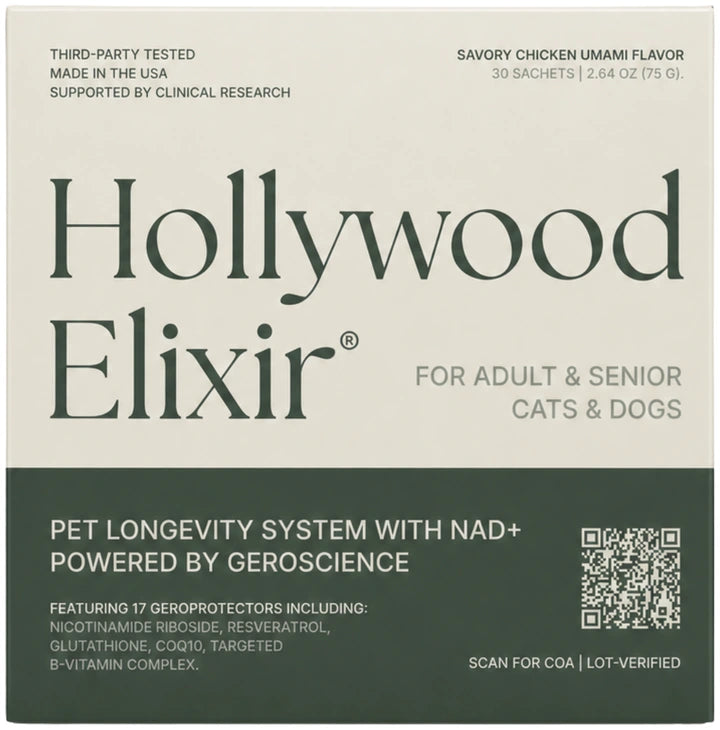
Hollywood Elixir is our daily supplement for adult and senior cats, made to the LPL-01 standard with every active ingredient at a visible amount. It never replaces your veterinarian — it sits alongside the routine on this page.
Starting at $50/month · cancel anytime
Shop Hollywood ElixirWhen to Call the Vet
Split urgent signs from trends that deserve a scheduled veterinary conversation.
Go urgently
- Open-mouth breathing, hard breathing effort, blue or gray gums, collapse, seizure, sudden hind-limb pain, paralysis, or inability to rise.
- Repeated litter-box trips with little or no urine, straining with distress, blood with pain, painful abdomen, or severe weakness.
- Repeated vomiting with weakness, suspected toxin exposure, traumatic injury, uncontrolled bleeding, severe pain, or rapid decline.
Schedule promptly
- reluctance to move, hard landings, spine pain, chest effort, constipation, urinary strain, bad breath, weight gain, hiding, or pain during handling.
- Weight gain or loss, appetite change, vomiting, thirst, larger urine clumps, constipation, diarrhea, accidents, or muscle loss.
- Bad breath, drooling, dropped food, slower chewing, grooming decline, matting, coat change, skin irritation, or face sensitivity.
- Lower jumps, stiffness, poor play recovery, hiding, irritability, reduced social contact, unusual fatigue, or handling resentment.
- Bring weight records, food notes, litter logs, dental clues, movement clips, coat or skin photos, and breeder or rescue records.
The 90-Day Support Routine
Ninety days of small, repeatable habits make subtle changes visible — and give any new routine a fair test.
- Week one: record short-leg movement, stair access, chest or spine history, dental comfort, litter output, and pain behavior, appetite, water intake, urine clumps, stool, weight, rib feel, dental breath, jumps, landings, grooming, and social routine.
- Week one: set stable steps, grippy landing spots, a low route to favorite places, easy litter access, and measured meals.
- Weekly: check mouth, coat or skin, appetite, water, litter, movement, handling comfort, and whether the cat still chooses familiar routines.
- Monthly: repeat weight, body condition, litter trends, activity clips, grooming notes, and any diagnosis-specific observations.
- Day 90: review the pattern with your veterinarian and adjust calories, dental timing, pain support, grooming, diagnostics, or home access.
Tools for Tracking Comfort and Aging
Use these when a life-stage, body-condition, or quality-of-life question needs more structure.
Cat Age Calculator
Use age context when short-leg movement, stair access, chest or spine history, dental comfort, litter output, and pain behavior starts to change.
ToolCat Quality of Life Scale
Use when comfort, mobility, appetite, litter habits, or treatment burden needs a steadier score.
ToolCat Biological Age Calculator
Frame healthy-aging conversations around measurable body condition and daily function.
Frequently Asked Questions
Short answers to the questions owners ask most.
What is a realistic Munchkin lifespan?
Munchkin lifespan planning can use 12 to 15 years as a cautious owner range while short-leg movement, stair access, chest or spine history, dental comfort, litter output, and pain behavior, dental comfort, kidney and urinary records, body condition, mobility, and senior diagnostics decide how closely the plan is watched.
Do Munchkin Cats have a breed-specific average lifespan?
No reliable Munchkin-specific life-table average is available in the sources used here. The range combines breed-profile context, the 2024 UK cat life-table, and this cat's records.
When should Munchkin senior care start?
Use 10+ as the formal senior marker and start baselines around 7 for short-leg movement, stair access, chest or spine history, dental comfort, litter output, and pain behavior. Earlier notes matter when structure can make small movement changes important before the cat looks senior.
Which Munchkin health problems matter most?
Watch mobility pain, obesity, lordosis or pectus history, dental disease, constipation or urinary signs, kidney disease, arthritis, and stress from inaccessible spaces.
Which aging signs should Munchkin owners watch?
Watch reluctance to move, hard landings, spine pain, chest effort, constipation, urinary strain, bad breath, weight gain, hiding, or pain during handling.
What should I track at home for a Munchkin?
Track short-leg gait, stair use, jump attempts, landing comfort, chest shape history, spine notes, weight, dental breath, appetite, thirst, urine clumps, stool, and hiding, plus medication changes, diagnoses, and what the cat does differently after activity or meals.
What changes are urgent for this breed?
Breathing distress, collapse, paralysis, severe pain, repeated vomiting with weakness, or repeated box trips with little urine needs urgent care.
How often should an older Munchkin see the vet?
Many older Munchkin cats benefit from twice-yearly senior visits, adjusted to dental, kidney, urinary, weight, mobility, comfort, and any breed-specific history.
What should I ask a breeder or rescue?
Ask about lifespan, early deaths, dental disease, kidney disease, urinary signs, arthritis, weight issues, appetite problems, and short-leg movement, stair access, chest or spine history, dental comfort, litter output, and pain behavior in close relatives.
How should I adjust the home for an older Munchkin?
Use stable steps, low resting options, easy litter access, measured meals, dental care, gentle grooming or handling, and records that expose quiet pain.
How do I keep thin evidence honest?
Treat the published range as a planning tool, then update the schedule when weight, mouth comfort, movement, skin or coat, litter habits, appetite, breathing, or daily routine changes.
Which records matter most before the next visit?
Bring dated notes on short-leg movement, stair access, chest or spine history, dental comfort, litter output, and pain behavior, weight, appetite, thirst, urine clumps, stool, mouth comfort, medications, movement clips, and the first day the household noticed a change.
Can related breeds predict my Munchkin's lifespan?
Related or foundation breeds can suggest questions, but they cannot predict this cat. Use them to ask about short-leg movement, stair access, chest or spine history, dental comfort, litter output, and pain behavior, dental comfort, kidney and urinary records, body condition, mobility, and senior diagnostics, then let veterinary findings and home trends lead.
Should supplements be part of this Munchkin plan?
Ask your veterinarian before adding anything, especially when pain, structure, breathing, urinary, dental, kidney, or mobility questions are already present.

Why Pampered fits a Munchkin spine-safety routine
Pampered is La Petite Labs' complete daily system, with a recommended 90-day starting window. In a Munchkin home, the match is the rhythm: recording short-leg movement, stair access, chest or spine history, dental comfort, litter output, and pain behavior, appetite, water, repeat the checks, then bring structure, spine, chest, and weight trends to the day-90 review.
Explore the Pampered™ System →