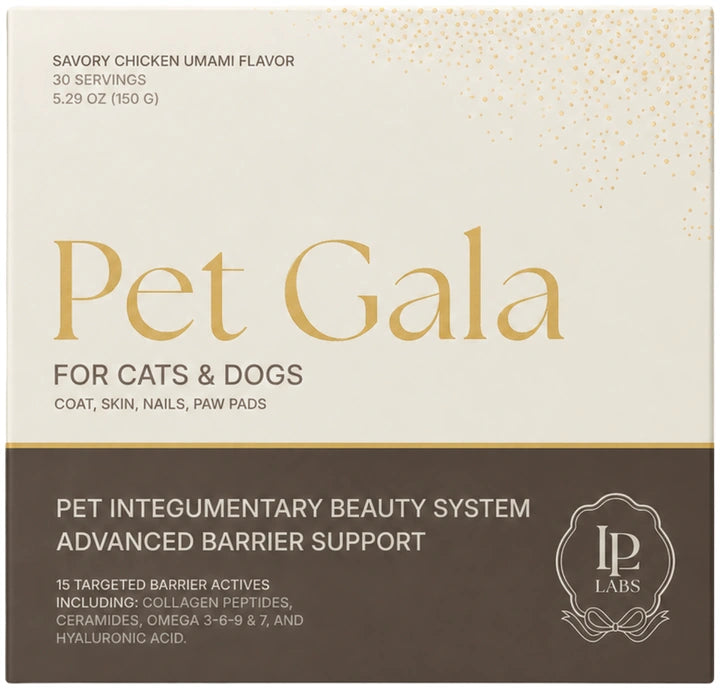
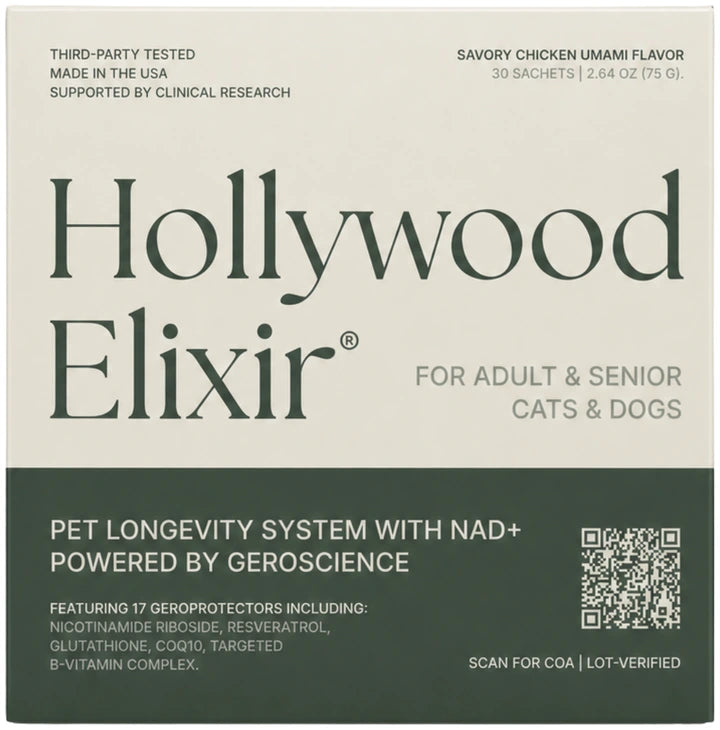
Disclosure: La Petite Labs sells Pampered, a daily wellness system that may be relevant to some Finn shoppers. It is not a substitute for Finn's calming or joint-specific chews.
Finn Pros and Cons
Pros
- Complete per-active dose disclosure across all six core soft chews — from Organic Passion Flower 125 mg on Calming Aid to Glucosamine HCl 500 mg on Hip & Joint — with defined per-chew servings, weight-based dosing charts, and on-page inactive lists.
- Quality-system disclosure names three frameworks: a US cGMP-compliant facility that is SQF certified and NASC certified via third-party audit.
- The batch-testing description is unusually specific: every batch described as lab-tested for Salmonella, Listeria, and Enterobacteriaceae before leaving the facility, with unique lot-code traceability.
- Three veterinarians named with credential letters directly on the home page and product pages (Dr. Laura Robinson, DVM; Dr. Kerri Nelson, DVM, PGRS-C; Dr. Farren Billand, DVM).
- Core product claim hygiene is disciplined: "helps occasional stiffness," "supports calm & relaxation" — qualified structure-function language throughout.
Cons
- "Clinically proven" and "selected based on clinical research" carry no citation anywhere on the reviewed surface — no author, journal, title, or link — and URL probes confirm no science, research, or studies page exists to hold one.
- No third-party laboratory is named and no COA or lot lookup is published: the well-described testing and traceability cannot be checked by a buyer.
- The named DVMs' published role is endorsement quotes; no formulator is disclosed, and none of the three carries a biography or institution.
- Manufacturing, testing, and sourcing detail lives only in the footer-linked Gorgias help center rather than the primary site; the facility is identified at country level only.
- The dominant owner-review friction is operational: shipping/fulfillment complaints lead the entire sample (33 items).
The Labels Are Better Than the Brand Lets On
Every one of Finn's six core chews publishes the panel most brands hide: named actives with per-chew milligram amounts, defined serving sizes, weight-based dosing charts, and inactive lists. Calming Aid itemizes all seven actives per 2.5 g chew; Hip & Joint itemizes nine, glucosamine HCl 500 mg at the top. The home page even names key actives in the product blurbs before you click.
For a buyer or veterinarian screening exact intakes — melatonin content in a calming chew is precisely the kind of thing worth checking — Finn's surface answers immediately. On labels, this brand behaves like a transparency leader.
"Clinically Proven," Citing Nothing
Here is the gap our borrowed-evidence flag exists for. Brand-level language says "clinically proven" and describes ingredients as "selected based on clinical research." The reviewed surface contains zero citations behind either statement — not one author, journal, title, or link — and a sitemap walk plus URL probes confirm there is no science, research, or studies page on the site at all. Among the evidence-claiming brands in our review set, this is the emptiest bibliography.
To be precise about what that means: the ingredients Finn uses (glucosamine, chondroitin, MSM, passionflower, melatonin) do have research literatures; the brand just doesn't connect its claims to any of it. The claim language is confident; the receipts are absent. If the clinical framing is part of why you're buying, make the brand produce its sources.
Described Testing, Missing Documents — and a Help-Center Trust Hub
Finn's testing description is among the most specific in our set: every batch tested for Salmonella, Listeria, and Enterobacteriaceae before leaving the facility, with unique lot codes for traceability. The quality system is named three ways — cGMP-compliant, SQF certified, NASC certified via third-party audit.
Two problems keep that from counting fully. First, none of it is documented for buyers: no laboratory is named, no COA is published, no lot lookup exists — the description is help-center text, not a checkable artifact. Second, location: nearly all of this substance lives in the footer-linked Gorgias help center rather than on the site proper. A buyer who doesn't think to open support articles will conclude the brand discloses almost nothing — and on the primary surface, they'd be right.
The veterinary layer follows the same pattern: three DVMs are genuinely named with credential letters — visibility most brands lack — but their published role is endorsement quotes. No formulator is disclosed, and none of the three carries a bio or institution.
How to verify Finn yourself: email support for (1) the COA for your lot with the lab named — the lot code on your bag is the handle, (2) the citations behind "clinically proven," and (3) who formulated the products the three DVMs endorse.
Public Transparency Score: 64/100
Under the 2026 Brand Transparency Rubric, Finn earns a 64/100 Public Transparency Score — Disclosure Gaps (scored as of 2026-06-13). The score measures what a buyer can publicly verify before purchase — labels, rationale, evidence, named experts, testing access, manufacturing disclosure, claim discipline, and findability. It is not an effectiveness score, a safety score, or a best-brand ranking.
The shape: labels (8) and manufacturing-system naming (8) score like a leader; evidence (4 — clinical language, zero citations) is the anchor dragging the total, with testing (5) documented-in-words-only. The fix list is short and cheap: publish one COA, cite one study, move the help-center content onto the site.
Best fit: buyers who decide on complete labels and qualified claim language. Keep comparing if: you need any citation behind the clinical framing, or a testing document you can see.
Owner Reviews and Price
What owners actually say (verified-purchase reviews and Amazon's aggregation on the Calming Aid — 4.0 stars over ~3,400 ratings, re-checked 2026-07-04; personal observations, not proof): the calming split, again, with Finn's version running somewhat warmer than the category's — calming-effect mentions 258-to-40 positive and overall effectiveness 237-to-78, roughly a quarter of the voice reporting little. The positive notes cluster on the format: dogs take them easily, taste runs 107-to-8, and the melatonin-forward formula gets credited for evening and event use specifically. The negative ledger is the usual pair — a meaningful didn't-work minority, and value-for-money running 14-to-29 against for a premium-priced chew. Melatonin earns its own practical note the label already implies: it's a drowsiness-capable active, so evening-vs-daytime timing and your vet's view on dose matter more here than with botanical-only blends. A four-star crowd for a calming product is, in this category, a good showing — and still a coin with two sides.
Prices checked 2026-06-22: Calming Aid and Hip & Joint each $34 one-time or $28.90 on subscription. Weight-based dosing means bigger dogs consume jars faster — compute monthly cost from the dosing chart, and weigh the shipping-friction pattern if you subscribe.
Where La Petite Labs Fits
The overlap is the broad daily-wellness lane — Finn's multivitamin-style chews versus Pampered — not the calming or joint lanes, which deserve category-specific comparisons.
The ledger runs close on labels: both brands publish complete per-active panels with no proprietary blends, and Finn's weight-based dosing charts are a genuine usability point. The separation is documentation. Pampered carries per-batch heavy-metal, microbial, and potency testing by named labs (NSF and Eurofins) with a public COA lookup — the artifacts Finn describes but doesn't show — plus six named DVM contributors with stated roles rather than endorsement quotes, and research pages that cite their sources with evidence grades. Neither brand has a clinical trial on its finished formula; La Petite Labs says so explicitly, while Finn's "clinically proven" says otherwise without showing anything. On claim honesty, that difference is the review.
Final Verdict: Should You Try Finn?
Buy with reasonable confidence if complete labels, named quality frameworks, and qualified product claims cover your decision — and the operational reviews don't spook you. Verify first if the clinical language is part of the appeal: ask for the citations and your lot's COA, because neither is posted, and the brand's own lot codes prove the traceability exists to share. Pause for the standard reasons — melatonin-containing calming products warrant a veterinary conversation for dogs on medications, and a complete diet may not need a broad supplement at all.
FAQ
Is Finn legit?
Yes — a 2020-founded DTC brand with NASC certification, fully itemized labels, and three named veterinarians. Its verification gap is documents, not identity.
Is Finn clinically proven?
The brand uses that language with no citation anywhere on its surface — no study, author, journal, or link, and no science page exists. The ingredients have research literatures; Finn doesn't connect its claims to them. Ask for sources if this matters to your purchase.
Does Finn publish COAs or name its lab?
No. Testing is described specifically (Salmonella, Listeria, Enterobacteriaceae per batch, with lot codes) in help-center text, but no laboratory is named and no COA or lot lookup is buyer-accessible. Request your lot's certificate by email.
What is in Finn Calming Aid?
All seven actives are disclosed per 2.5 g chew — Organic Passion Flower 125 mg down to Melatonin 1 mg — with weight-based dosing. The melatonin content is exactly why a vet conversation is worthwhile for dogs on other medications.
Are Finn products vet formulated?
Three veterinarians are named with credential letters (Dr. Laura Robinson, DVM; Dr. Kerri Nelson, DVM, PGRS-C; Dr. Farren Billand, DVM), but their published role is endorsement quotes. No formulator is disclosed.
Where is Finn made?
In a US-based cGMP-compliant facility that is SQF certified and NASC certified via third-party audit, per the help center. The facility is not named at city or state level.
What do Finn owner reviews say?
Across 108 sampled items (medium confidence): shipping/fulfillment friction leads everything (33 items), with packaging and price complaints alongside; product-side reports are milder and mixed. Buyer-experience context, not efficacy evidence.
How much does Finn cost?
Checked 2026-06-22: Calming Aid and Hip & Joint each $34 one-time, $28.90 on subscription. Weight-based dosing changes monthly cost — check the chart for your dog's size.
Why is all the good information in Finn's help center?
That is the accessibility flaw our scoring flags: the manufacturing, testing, and traceability substance lives in footer-linked Gorgias support articles rather than the primary site. It exists — you just have to know to look.
How does Finn compare with Pampered?
Only in the broad daily-wellness lane. Labels run close — both fully itemized, no blends. The separation: Pampered publishes its testing (named labs, per-batch panels, public COA lookup) and cites its research; Finn describes testing without documents and claims research without citations.
What should I verify before buying Finn?
The per-chew panel and dosing chart for your dog's weight (on the page), your lot's COA and the lab name (by email), the citations behind the clinical language, and delivery terms given the shipping-complaint pattern.
Sources Reviewed
Sources note: Brand evidence was verified as of 2026-06-13, owner-review surfaces as of 2026-06-21, and prices as of 2026-06-22. Public materials show what a buyer can verify; they cannot establish product safety, efficacy, medical suitability, or current pricing. Statements about missing pages reflect sitemap walks and URL probes at the check dates.
Finn brand and help-center pages
- Finn homepage — reviewed for claim language, named DVMs, and active-naming in product blurbs.
- Finn help center (food safety, "how we're different") — reviewed for the microbial-panel description, lot-code traceability, and the cGMP/SQF/NASC disclosure.
- Sitemap walk and URL probes — confirmed no science, research, or studies page exists on the site.
Sampled product pages
- Calming Aid — sampled for the seven-active panel, melatonin content, dosing chart, and price.
- Hip & Joint — sampled for the nine-active panel and price.
- Multivitamin and remaining core chews — sampled for line-wide panel consistency.
Owner-review surfaces
- Reddit, Amazon, Chewy, Walmart, Trustpilot, and BBB surfaces — sampled 2026-06-21 (108 extracted items, medium confidence); used only as buyer-experience context, not efficacy evidence.