
Brain Health for Dogs

Identify Early Cognitive Decline and the Steps That Help Protect Neurons

Essential Summary

Why is brain health for dogs important?

Brain health for dogs is best supported through steady routines, age-appropriate nutrition, gentle movement, and calm enrichment. Because aging affects the whole body, many owners choose supplements as system-level support rather than a single-ingredient fix. The goal is a dog who stays engaged, comfortable, and recognizable across the years.

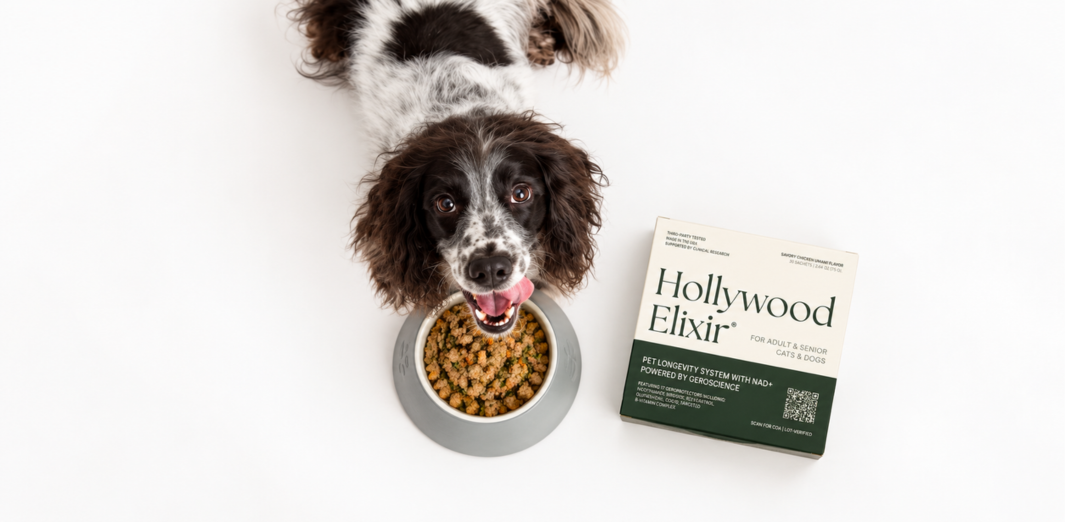
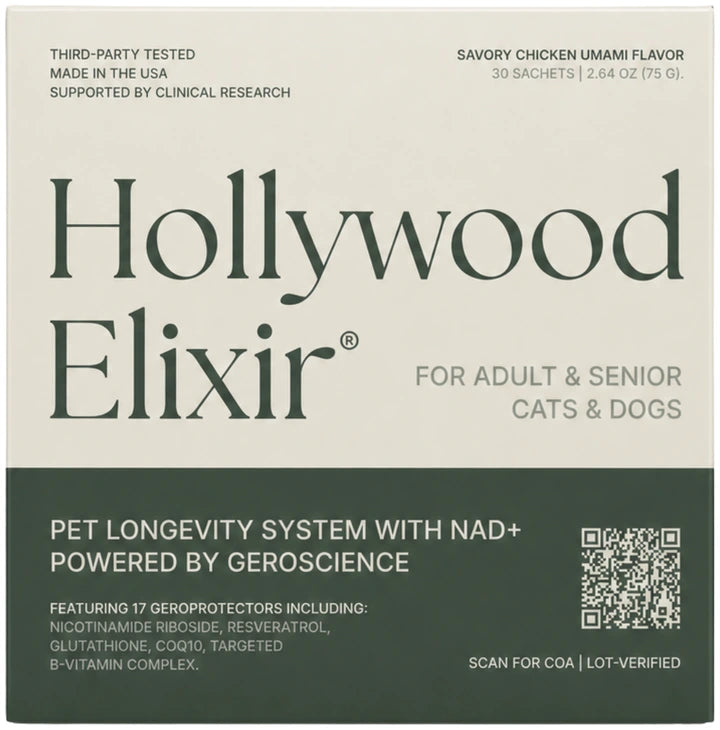
Hollywood Elixir™ is designed for whole-dog aging support—helping reinforce the broader systems that influence focus, steadiness, and day-to-day vitality—so brain support doesn’t depend on chasing one “magic” nutrient.

Most people arrive at the topic of brain health for dogs with a specific moment in mind: a pause at the wrong door, a new restlessness at night, a dog who seems less delighted by the usual game. It can feel personal, because cognition is where personality lives. But cognitive aging is also ordinary biology—quiet, gradual, and shaped by the same forces that shape the rest of the body: sleep, stress, movement, and nutrition.

The most useful approach is not to hunt for a single “brain ingredient,” but to support the conditions that keep a dog steady. Senior diets can differ from adult diets, and certain nutrients are linked to cognitive function and may help support aging dogs. Still, even excellent food can’t fully account for the metabolic shifts that come with time. That’s why some owners consider brain health supplements for dogs—not as a replacement for diet, but as system-level support for aging itself.

A careful, science-minded owner might reasonably ask why a supplement belongs in the picture at all. The honest answer is that the goal isn’t to “fix” the brain; it’s to reinforce the broader network that helps the brain do its job: stable energy, resilience under stress, and the cellular upkeep that becomes harder with age. When a product is designed around that whole-dog frame, it can complement the daily choices that matter most—without pretending to be a shortcut.

By La Petite Labs Editorial, ~15 min read

Featured Product:

  • Brain health for dogs is less about tricks and more about steadiness, curiosity, and comfort in familiar routines.
  • Normal aging can look like slower transitions; sudden disorientation or rapid change deserves veterinary attention.
  • Senior nutrition can differ from adult formulas, and certain nutrients are linked with cognitive support in older dogs.
  • The most reliable brain health tips for dogs are consistent sleep, gentle daily movement, and low-frustration enrichment.
  • “Natural” is not automatically risk-free; choose dog-specific products and introduce changes one at a time.
  • Quality matters: transparent sourcing, testing, and realistic claims are better signals than flashy “best” labels.
  • A supplement can still be worth it for science-minded owners because aging is system-wide, and supporting the broader network can help preserve the life you share.

A Clear View of Cognitive Aging and Daily Comfort over Time

Brain health for dogs is easy to reduce to a single idea—memory—but most owners recognize it as something broader: steadiness, curiosity, and a familiar ease in daily routines. Over time, the brain’s needs become more visible. A dog who once adapted instantly may take longer to settle, startle more easily, or seem less interested in play. None of this automatically signals disease, but it does suggest that “support” should be thought of as a whole-body project, not a quick fix.

Nutrition is part of that project. Adult and senior diets can differ meaningfully in nutrient composition, and certain nutrients are associated with cognitive function in aging dogs (German K, 2025). Yet even a well-formulated diet can’t control every variable that shapes aging: stress, sleep quality, activity patterns, and the metabolic wear that accumulates quietly across years. That’s where brain health products for dogs can make sense—not as replacements for food, but as system-level support for the networks that keep a dog bright and resilient (see: Anti-aging Supplements for Dogs).

Mitochondria illustration showing cellular energy support linked to natural brain health for dogs.

The Small Habits That Quietly Shape a Dog’s Mental Sharpness

When people search for brain health tips for dogs, they’re often responding to a quiet fear: that the dog they know will become harder to reach. The good news is that many supportive choices are ordinary and humane—sleep, movement, and mental engagement that respects a dog’s temperament. The brain thrives on predictability, but it also needs small, safe novelty: a new sniffing route, a short training refresh, a puzzle that doesn’t frustrate.

Nutrition sits underneath all of it. Senior formulations can differ from adult diets in ways that may matter for cognitive support (related: Best Senior Dog Supplements for Longevity). Still, “best” rarely means “most complicated.” A dog who eats consistently, maintains a healthy body condition, and has a day structured around calm stimulation is already doing many of the things that protect long-term brain function.

Genetic imagery reflecting cellular wellness supported by brain health supplement for dogs.

Normal Aging Versus Concerning Change: Knowing the Difference

It helps to separate two ideas: normal aging and concerning change. Normal aging can look like slower transitions—taking longer to settle after guests arrive, pausing before jumping into the car, or preferring shorter play sessions. Concerning change is sharper: sudden disorientation, new aggression, collapse, head tilt, seizures, or a dramatic shift in sleep-wake patterns. Those are veterinary questions, not supplement questions.

For the wide middle ground—subtle shifts that feel real but not emergent—support tends to work best when it’s layered: diet that fits the life stage, daily movement, and enrichment that doesn’t overstimulate (see: Superfoods for Dogs). That’s also where a brain health supplement for dogs can be considered as an adjunct, with the goal of supporting steadiness rather than chasing a dramatic “before and after.”

Protein model representing bioactive synergy and support found in brain health supplement for dogs.

Enrichment That Calms: Scent, Play, and Gentle Problem-solving

Mental enrichment is often described as “keeping the brain busy,” but the better frame is emotional regulation. A dog who gets appropriate problem-solving opportunities tends to cope better with change. Choose enrichment that matches your dog’s style: scent work for the thoughtful sniffer, gentle shaping games for the eager learner, or slow foraging for the dog who relaxes through searching.

Keep sessions short and end early, before frustration. For older dogs, the win is not intensity; it’s consistency. If you’re pairing enrichment with brain health products for dogs, you’re creating a two-part support system: the daily experiences that keep the mind engaged, and the nutritional support that helps the body sustain those experiences comfortably.

Pug close-up emphasizing comfort and connection supported by brain health for dogs.

Sleep and Nighttime Rhythm: the Overlooked Cornerstone

Sleep is one of the most overlooked pillars of brain health for dogs. Older dogs may nap more, but they can also sleep more lightly, waking to small sounds or pacing at night. Before you assume it’s “just age,” check the basics: pain, temperature, nighttime bathroom needs, and whether the household schedule has changed.

A calmer evening routine can make a visible difference: a predictable last walk, dimmer lights, and a comfortable bed with good traction nearby. If you’re using a supplement, judge it partly by whether it supports smoother nights without making your dog seem dulled. The aim is a dog who rests well and wakes up recognizable.

Hollywood Elixir™ is amazing and makes my 13 y/o young again!

— Jessie

We go on runs. Lately he's been keeping up with no problem!

— Cami

“The clearest goal isn’t a smarter dog—it’s a steadier one.”

Movement as Brain Support: Confidence, Balance, and Curiosity

Movement supports the brain because it supports everything that keeps a dog comfortable in their body. For seniors, “exercise” often means frequent, gentle outings rather than a single long session. Traction, joint comfort, and pacing matter. A dog who feels steady on their feet is more willing to explore, and exploration is a kind of cognitive nourishment.

If your dog is slowing down, resist the urge to do less across the board. Do differently instead: shorter walks, more sniff time, fewer slippery surfaces, and warm-up minutes before play. These are brain health tips for dogs that work because they protect confidence—one of the quiet drivers of engagement.

Close-up weimaraner showing calm strength and presence supported by brain health for dogs.

Stress Load and Emotional Regulation in Everyday Home Life

Stress is not only emotional; it’s physiological. A dog who is chronically overstimulated—too many chaotic greetings, too little decompression, unpredictable schedules—often looks “less sharp” simply because their baseline is strained. Supporting calm is therefore part of natural brain health for dogs, especially in households with children, frequent visitors, or multiple pets.

Build small buffers: a quiet room, a consistent feeding time, and permission to opt out of social pressure. If you add a supplement, keep the rest of the environment stable so you can tell what’s helping. The most convincing improvements are the ones that show up as ease, not excitement.

Dog portrait from the side highlighting a thoughtful gaze supported by brain health tips for dogs.

Nutrition Basics That Make Supplements More Likely to Help

Owners sometimes focus on “brain ingredients” and miss the foundation: hydration, digestion, and steady energy. If meals are inconsistent, stools are frequently loose, or appetite is unpredictable, the brain is unlikely to look its best. In that sense, the best brain health for dogs starts with the most basic signs of wellness.

Diet composition can vary across life stages, and senior-focused adjustments may support cognitive function in aging dogs. If you’re considering supplements, treat them as additions to a stable baseline—especially for older dogs who may be less tolerant of abrupt changes. Slow transitions and simple routines are underrated forms of care.

Product overview visual highlighting formulation integrity aligned with brain health for dogs.

Medication and Supplement Stacking: Avoiding Unforced Mistakes

A brain health supplement for dogs should fit alongside veterinary care, not compete with it. If your dog takes prescription medications, ask your veterinarian or pharmacist to check for interactions. General principles of drug–supplement interactions apply in veterinary patients, especially when multiple products are combined (Bookout W, 2024). This is less about fear and more about respect for complexity.

Also consider what you’re already using: joint chews, calming aids, dental products, fortified foods. Stacking can unintentionally create overlap or higher-than-intended exposures. A simpler, well-chosen supplement plan is often safer than a cabinet full of “just in case” products.

How to Recognize Quality When Comparing Supplement Options

If you’re comparing brain health supplements for dogs, look first for clarity: a complete ingredient list, a stated purpose that avoids miracle language, and a company willing to discuss sourcing and testing. Quality signals matter because supplements can vary in consistency, and labels don’t always tell the full story (Corsato Alvarenga I, 2024). A “best brain health supplements for dogs” claim should be earned by transparency, not volume.

Next, consider fit. A thoughtful formula supports aging as a connected system—energy, stress response, and cellular maintenance—rather than chasing a single trendy compound. Finally, consider your dog’s reality: appetite, sensitivities, and the routines you can keep. The best plan is the one you can sustain without turning every meal into a negotiation.

“Support works best when it protects routines your dog already trusts.”

Branded lab coat reflecting precision and trust supporting best brain health supplements for dogs.

Safety First: Sensitivities, Medications, and Thoughtful Introductions

Safety deserves more attention than it usually gets in conversations about natural brain health for dogs. “Natural” does not automatically mean gentle, and the brain is not a place to experiment casually. Some compounds that affect neurotransmitters can have real risks; repeated exposure to certain serotonin-targeting inhibitors has been associated with neurotoxic effects in dogs in research settings (Chang JC, 2014). That doesn’t mean common supplements are dangerous, but it does underline the principle: choose products designed for dogs, and involve your veterinarian when your dog has medical complexity.

Be especially careful if your dog is on behavior medications, seizure medications, or has liver or kidney disease. Introduce one new product at a time, watch for appetite changes, GI upset, restlessness, or unusual sedation, and stop the product if something feels off. A calm, methodical approach is part of good brain care.

Shop Now
Hollywood Elixir surrounded by ingredients, showing antioxidant diversity in brain health tips for dogs.

When to Start Support and What “Earlier” Really Means

Owners often ask when to start a brain health supplement for dogs. The quiet answer is: earlier than you think, but only when it fits the dog in front of you. Middle age is when small changes in stamina, sleep, and stress tolerance can begin to show. Starting support before a dog feels “old” can be a way of protecting routines you value—walks that stay pleasant, training that stays fun, and a home that stays predictable.

For senior dogs, the goal is often steadiness rather than transformation. Pair any supplement choice with the basics that keep the brain supplied: consistent meals, hydration, and gentle daily movement. Dietary adjustments can play a meaningful role in maintaining cognitive abilities in older dogs (German K, 2025), and supplements can be layered in when diet alone doesn’t feel like enough support for the whole aging picture.

Shop Now
Pet owner presenting supplement, highlighting home wellness supported by brain health products for dogs.

Breed, Size, and Temperament: Matching Support to the Dog

Breed, size, and life history shape what “best brain health for dogs” looks like. Large breeds may show age-related changes earlier, while small breeds may live long enough for subtle cognitive shifts to become more noticeable. Dogs with intense working backgrounds can be especially sensitive to boredom and routine disruption; their “brain health” is often expressed as emotional regulation as much as memory.

Instead of chasing a universal best product, match support to your dog’s pattern. If your dog is easily unsettled, prioritize calm routines and predictable enrichment. If your dog seems less engaged, focus on novelty that stays kind: short scent games, gentle training refreshers, and social time that doesn’t overwhelm. Supplements can complement these choices, but they can’t replace them (related: The Best Antioxidant Supplements for Dogs).

Shop Now

Diet Foundations: Energy Stability, Digestion, and Long-term Fit

Food choices influence the brain indirectly through energy stability and overall health. In long-term research, carbohydrate source selection in dog diets has been studied for its broader health impacts over extended periods (Morris EM, 2025). For many dogs, the practical takeaway is simple: choose a diet your dog digests well, that maintains a stable body condition, and that your veterinarian agrees fits your dog’s needs.

If you feed a non-traditional diet, aim for extra rigor. Dogs can maintain clinical and hematological health on a commercial plant-based diet over a year in published work (Linde A, 2024), but that doesn’t mean every formulation is equal. Brain support depends on the whole nutritional foundation. Supplements are best used to reinforce a strong baseline, not to patch a diet that isn’t meeting essential needs.

Ingredient Trends, Heart Health Concerns, and Staying Levelheaded

Some owners worry that certain ingredient trends in dog food could affect long-term health, and by extension, the brain. For example, pulse ingredients have been investigated for potential links to canine dilated cardiomyopathy, and researchers emphasize that causation has not been established and more study is needed (Mansilla WD, 2019). The point isn’t to panic; it’s to stay thoughtful about diet choices and to work with your veterinarian when you’re unsure.

Brain health tips for dogs often start with the unglamorous: consistent nutrition, stable energy, and a body that can comfortably move. When the heart, muscles, and digestion are supported, the brain tends to look better too—because the dog’s whole day feels easier.

Benchmark graphic emphasizing formulation depth and rigor behind brain health tips for dogs.

Tracking Changes Without Obsession: Simple Notes That Clarify

A practical way to track brain health for dogs is to watch for pattern changes, not isolated moments. Keep notes for two weeks: sleep timing, interest in play, response to cues, and any new anxiety around familiar sounds or spaces. Owner-observed behavior patterns are often the earliest signal that something has shifted, and structured check-ins can make those shifts easier to discuss with a veterinarian (Tauro A, 2018).

If you’re trying a supplement, track the same measures. The goal is not perfection; it’s clarity. When you can describe what changed and when, you’re more likely to choose the right next step—whether that’s adjusting routines, changing diet, or continuing a product that seems to support steadiness.

Shop Now
Packaging reveal image highlighting brand care aligned with best brain health supplements for dogs.

Timeline Expectations: Subtle Wins, Not Dramatic Transformations

It’s reasonable to want a timeline. With brain health products for dogs, changes—if they appear—tend to be subtle: a little more engagement, smoother evenings, or fewer moments of confusion. Because daily life fluctuates, give any new routine enough time to show a pattern, and avoid stacking multiple changes at once. If you change food, add a supplement, and start a new training plan in the same week, you won’t know what helped.

Also keep expectations honest. Supplements are not a substitute for medical care when a dog is disoriented, suddenly anxious, or showing rapid decline. In those cases, the best “brain support” is prompt evaluation, then a plan that includes both veterinary guidance and home routines that reduce stress.

Shop Now

Why Supplements Still Matter for Science-minded, Careful Owners

A science-minded owner might ask: if diet and routine matter most, why choose a supplement at all? The answer is that aging is not a single-nutrient problem. Even when a diet is well designed, the broader metabolic network that supports cellular maintenance, stress resilience, and day-to-day energy can still benefit from targeted support—especially as a dog’s needs change with time (German K, 2025).

The best brain health supplements for dogs are the ones that fit into real life: consistent, well-tolerated, and aligned with a whole-dog approach. When you choose a product for system-level support, you’re not betting on a single ingredient; you’re reinforcing the conditions that help your dog stay present and comfortable across the years.

“Natural is a source description, not a safety guarantee.”

Educational content only. This material is not a substitute for veterinary advice. Always consult your veterinarian about your dog’s specific needs. These statements have not been evaluated by the Food and Drug Administration. Products mentioned are not intended to diagnose, treat, cure, or prevent any disease.

Glossary

  • Cognitive Aging: Gradual changes in learning, memory, and adaptability that can occur as dogs get older.
  • Enrichment: Activities that provide safe mental engagement, such as scent games, foraging, and gentle training.
  • Sleep-Wake Rhythm: The daily pattern of rest and activity; disruptions can affect mood and attention.
  • Stress Load: The cumulative effect of stressors (noise, change, overstimulation) that can influence behavior and focus.
  • Behavioral Baseline: Your dog’s typical patterns of sleep, appetite, sociability, and responsiveness used for comparison over time.
  • Supplement Stacking: Using multiple supplements at once, which can increase overlap and make side effects harder to identify.
  • Life-Stage Nutrition: Feeding designed for adult, senior, or other life stages; formulations can differ in nutrient emphasis.
  • Tolerance: How well a dog handles a product day to day, commonly reflected in appetite, stool quality, energy, and sleep.
  • Quality Signals: Practical indicators like transparent labeling, sourcing, and testing practices that help evaluate supplements.

Related Reading

References

German K. Exploratory analysis of nutrient composition of adult and senior dog diets.. PubMed Central. 2025. https://pmc.ncbi.nlm.nih.gov/articles/PMC12757753/

Morris EM. Different carbohydrate sources in dog foods supported overall health and cardiac function: an 18-mo prospective study in healthy adult dogs.. PubMed Central. 2025. https://pmc.ncbi.nlm.nih.gov/articles/PMC12408985/

Linde A. Domestic dogs maintain clinical, nutritional, and hematological health outcomes when fed a commercial plant-based diet for a year.. PubMed Central. 2024. https://pmc.ncbi.nlm.nih.gov/articles/PMC11020905/

Mansilla WD. Special topic: The association between pulse ingredients and canine dilated cardiomyopathy: addressing the knowledge gaps before establishing causation.. PubMed Central. 2019. https://pmc.ncbi.nlm.nih.gov/articles/PMC6396252/

Chang JC. Pathology and Neurotoxicity in Dogs after Repeat Dose Exposure to a Serotonin 5-HT1B Inhibitor.. PubMed. 2014. https://pubmed.ncbi.nlm.nih.gov/24791065/

Bassalo D. The canine blood-brain barrier in health and disease: focus on brain protection.. PubMed. 2025. https://pubmed.ncbi.nlm.nih.gov/39791202/

Tauro A. Metronidazole-induced neurotoxicity in 26 dogs.. PubMed. 2018. https://pubmed.ncbi.nlm.nih.gov/30478843/

Corsato Alvarenga I. Tolerability of long-term cannabidiol supplementation to healthy adult dogs.. PubMed. 2024. https://pubmed.ncbi.nlm.nih.gov/38009749/

Bookout W. Safety study of cannabidiol products in healthy dogs.. PubMed. 2024. https://pubmed.ncbi.nlm.nih.gov/38496308/

Wallery JJ. Evaluation of chronic toxicity of cyclocreatine in beagle dogs after oral gavage administration for up to 23 weeks.. PubMed. 2021. https://pubmed.ncbi.nlm.nih.gov/34411581/

Di Salvo. Pharmacokinetics, efficacy, and safety of cannabidiol in dogs: an update of current knowledge. 2023. https://www.frontiersin.org/journals/veterinary-science/articles/10.3389/fvets.2023.1204526/full

Mealey. Ivermectin. 2013. https://www.sciencedirect.com/topics/veterinary-science-and-veterinary-medicine/clinical-veterinary-pharmacology

Ahmed. Bioaccumulation of heavy metals in some commercially important fishes from a tropical river estuary suggests higher potential health risk in children than adults.. Nature. 2019. https://www.nature.com/articles/s41598-021-00467-4

FAQ

What does brain health for dogs actually refer to?

In everyday terms, it means how steady your dog feels in their routines: learning, memory, sleep-wake rhythm, and emotional regulation. It’s also about how comfortably they process the world—sounds, changes in the home, and new environments.

Because aging is whole-body, brain support usually works best when paired with diet, movement, and calm enrichment. Many owners add a supplement as part of that broader plan, including Hollywood Elixir™

Why does brain health matter more as dogs get older?

As dogs age, small shifts in sleep, stress tolerance, and engagement can become more noticeable. What once looked like “personality” can start to look like effort—taking longer to settle, reacting more strongly to noise, or seeming less interested in play.

Supporting aging early is often about preserving the ease of daily life, not chasing a dramatic change. For owners who want system-level support alongside routines, Hollywood Elixir™

What are early signs that a dog may need support?

Look for pattern changes rather than one-off moments: new nighttime restlessness, more startle responses, reduced interest in games, or slower response to familiar cues. These can be subtle and still meaningful when they persist for weeks.

If changes are sudden, severe, or paired with collapse, seizures, or head tilt, treat it as a veterinary issue first. For gentle, gradual shifts, many owners consider Hollywood Elixir™

Can diet alone support brain health for dogs?

Diet is foundational, and senior vs adult formulas can differ in ways that may matter for cognitive support. If your dog eats a complete, well-tolerated food and maintains a healthy body condition, you’ve already done a lot.

Still, aging isn’t only a nutrient checklist; it’s a whole system under changing demands. Some owners add a supplement to support the broader aging network, including Hollywood Elixir™

What should I look for in brain health supplements for dogs?

Prioritize transparency: clear labeling, realistic claims, and a company that discusses sourcing and testing. Supplement quality can vary, so those signals matter more than flashy “best” language(Corsato Alvarenga I, 2024).

Then consider fit—your dog’s sensitivities, appetite, and routine. A product that’s easy to give consistently is often the most useful over time, including Hollywood Elixir™

Are there side effects with a brain health supplement for dogs?

Possible side effects depend on ingredients and the individual dog, but owners most often notice digestive upset, appetite changes, restlessness, or unusual sleepiness. Introduce one new product at a time so you can identify what caused what.

If anything feels off, stop the product and check in with your veterinarian—especially for seniors or dogs with chronic conditions. For a system-support approach designed for daily use, consider Hollywood Elixir™

Is “natural brain health for dogs” always safer?

Not automatically. “Natural” describes a source, not a safety profile, and the brain is sensitive to compounds that influence signaling. Research in dogs shows that repeated exposure to certain serotonin-targeting inhibitors can cause neurotoxic effects in experimental settings(Chang JC, 2014).

That’s why dog-specific formulation, appropriate dosing guidance, and veterinary input matter—especially if your dog takes other medications. Many owners choose a conservative, whole-body option like Hollywood Elixir™

Can brain supplements interact with my dog’s medications?

Yes, interactions are possible—particularly when a dog takes seizure medications, behavior medications, or multiple prescriptions. General drug–supplement interaction principles apply in veterinary patients, and stacking products can create unexpected overlap(Bookout W, 2024).

Bring your supplement label to your veterinarian and ask specifically about interactions and timing. If you want a supplement designed for broad aging support, you can also discuss Hollywood Elixir™

When should I start supporting brain health for dogs?

Many owners begin in midlife, when small changes in stamina, sleep, or stress tolerance start to appear. Starting earlier can be a way to protect routines you value, rather than waiting for a bigger shift.

For seniors, the goal is often steadiness and comfort. If you’re considering adding a supplement, choose one you can give consistently and discuss it at wellness visits, including Hollywood Elixir™

How long does it take to notice results from supplements?

If a supplement helps, the change is often subtle: smoother evenings, a bit more engagement, or fewer “stuck” moments. Because daily behavior varies, it’s best to watch for patterns over several weeks rather than day-to-day fluctuations.

Keep other variables stable while you evaluate—don’t change food, training, and supplements all at once. For owners who want steady, system-level support, Hollywood Elixir™

What are simple brain health tips for dogs at home?

Aim for calm consistency: predictable sleep, gentle daily movement, and short enrichment that doesn’t frustrate. Scent games, slow foraging, and brief training refreshers tend to be kinder than high-arousal play for many older dogs.

Also protect comfort—traction on floors, manageable stairs, and pain control if needed—because a dog who feels steady explores more. Many owners pair these basics with Hollywood Elixir™

Do large breeds need different brain support than small breeds?

Often, yes in timing and emphasis. Large breeds may show age-related changes earlier, while small breeds may live long enough for subtle cognitive shifts to become more apparent. Activity history matters too—working dogs can be especially sensitive to boredom and routine disruption.

Rather than chasing a universal “best,” match support to your dog’s pattern: calm, engagement, and comfort. For broad aging support that fits many lifestyles, consider Hollywood Elixir™

Is a brain health supplement for dogs okay for daily use?

Daily use can be reasonable when the product is designed for consistent administration and your veterinarian agrees it fits your dog’s health profile. The practical question is tolerance: appetite, stool quality, energy, and sleep should remain stable.

Avoid rotating multiple products “just because,” since stacking can make it harder to spot side effects or interactions. For a steady, system-focused option, many owners choose Hollywood Elixir™

What’s the difference between calming aids and brain supplements?

Calming aids are typically aimed at situational stress—storms, travel, separation—while brain-focused products are usually positioned around long-term steadiness, engagement, and aging support. There can be overlap, because stress and cognition influence each other.

If your dog seems both anxious and less engaged, start by stabilizing routines and ruling out pain, then consider a product that supports the broader aging picture, such as Hollywood Elixir™

Can I combine joint supplements with brain health supplements for dogs?

Sometimes, but it’s worth checking for ingredient overlap and total “stacking.” Dogs often end up on multiple chews and powders, and that can complicate tolerance or create unintended combinations. Interaction principles matter most when other medications are involved(Bookout W, 2024).

If joint comfort improves, brain-related behaviors can look better too, simply because the dog moves more confidently. For a streamlined, whole-body aging approach, consider Hollywood Elixir™

How do I choose the best brain health supplements for dogs?

Start with your goal: steadier nights, more engagement, or smoother adaptation to change. Then choose a product with transparent labeling, sensible claims, and quality controls; supplement consistency can vary, so those basics matter(Corsato Alvarenga I, 2024).

Finally, choose what you can give reliably—consistency is often more important than complexity. If you want system-level aging support rather than a single-ingredient bet, look at Hollywood Elixir™

Are brain health products for dogs regulated like medications?

No. Supplements are not evaluated the same way as prescription drugs, which is why brand transparency and testing practices matter. Look for clear ingredient lists, contact information, and a willingness to discuss sourcing and quality checks.

If a product promises to cure or reverse disease, treat that as a red flag and ask your veterinarian for guidance. For a more restrained, aging-support approach, consider Hollywood Elixir™

Can cats use a brain health supplement for dogs?

It’s usually not a good idea to assume cross-species safety. Cats metabolize some ingredients differently, and dosing guidance and palatability are often species-specific. If you’re concerned about a cat’s cognitive changes, start with a veterinary visit and a cat-appropriate plan.

If you’re shopping for a dog, choose products formulated for dogs and discuss household safety if pets share bowls. For dog-focused aging support, consider Hollywood Elixir™

What research exists around nutrition and brain aging in dogs?

Published work notes that adult and senior dog diets can differ substantially, and certain nutrients are linked to cognitive function; dietary adjustments in senior dogs may help maintain cognitive abilities. That supports the idea that nutrition is a meaningful lever.

At the same time, aging is multifactorial, so many owners combine good nutrition with system-level support. One option designed for that broader approach is Hollywood Elixir™

When should I call a vet about cognitive changes?

Call promptly for sudden disorientation, collapse, seizures, head tilt, rapid behavior change, or new aggression. Also call if nighttime pacing is severe, if appetite drops, or if your dog seems painful—medical issues can masquerade as “brain” problems.

For gradual changes, schedule a wellness visit and bring notes on sleep, routines, and triggers. If your veterinarian agrees, you can discuss adding supportive products like Hollywood Elixir™

5K+ Happy Pet Parents

Excellent 4.8

Brain Health for Dogs | Why Thousands of Pup Parents Trust Hollywood Elixir™

"He seems more happy overall. I've also noticed he has more energy which makes our walks and playtime so much more fun."

Olga & Jordan

"He's got way more energy now! We go on runs pretty often; he use to get tired halfway through, but lately, he's been keeping up without any problem."

Cami & Clifford

"I want her to live forever. She hasn't had an ear infection since!"

Madison & Azula

"It helps with her calmness, her immune system. I really like the clean ingredients. Highly recommend La Petite Labs!"

Maple & Cassidy

"He seems more happy overall. I've also noticed he has more energy which makes our walks and playtime so much more fun."

Olga & Jordan

"He's got way more energy now! We go on runs pretty often; he use to get tired halfway through, but lately, he's been keeping up without any problem."

Cami & Clifford

"I want her to live forever. She hasn't had an ear infection since!"

Madison & Azula

"It helps with her calmness, her immune system. I really like the clean ingredients. Highly recommend La Petite Labs!"

Maple & Cassidy

"He seems more happy overall. I've also noticed he has more energy which makes our walks and playtime so much more fun."

Olga & Jordan

"He's got way more energy now! We go on runs pretty often; he use to get tired halfway through, but lately, he's been keeping up without any problem."

Cami & Clifford

"I want her to live forever. She hasn't had an ear infection since!"

Madison & Azula

"It helps with her calmness, her immune system. I really like the clean ingredients. Highly recommend La Petite Labs!"

Maple & Cassidy

"He seems more happy overall. I've also noticed he has more energy which makes our walks and playtime so much more fun."

Olga & Jordan

"He's got way more energy now! We go on runs pretty often; he use to get tired halfway through, but lately, he's been keeping up without any problem."

Cami & Clifford

"I want her to live forever. She hasn't had an ear infection since!"

Madison & Azula

"It helps with her calmness, her immune system. I really like the clean ingredients. Highly recommend La Petite Labs!"

Maple & Cassidy

SHOP NOW