



Balinese lifespan and senior care
How Long Do Balinese Cats Live?
12–16Years, typical
Balinese lifespan planning respects the longhaired Siamese relationship while tracking coat, appetite, eyes, teeth, breathing, weight, and social routine.
- Start watching at
- From 7 years
- Senior age
- 10+ years
- Typical lifespan
- 12-16 years
Use 12 to 16 years as a cautious planning range. Balinese are longhaired Siamese-family cats, but reliable breed-specific life-table evidence is limited.
Quick Answers for Pet Parents
Direct answers to the questions people ask when they are trying to plan care.
How long do Balinese Cats live?
Balinese Cats are best planned around 12-16 years. Plan around 12 to 16 years while being clear that Balinese-specific life-table data is thin.
What is the average Balinese life expectancy?
Balinese life expectancy should be treated as a planning range, not a guarantee. Use the Siamese-family context carefully, then build this cat's plan from coat, appetite, eyes, mouth, breathing, weight, and routine.
When is a Balinese considered senior?
Cats older than 10 are senior under AAHA/AAFP guidance; Balinese baselines should start around 7 while voice, appetite, and coat still feel normal. The voice and social routine can change before the cat looks old, so earlier notes help.
What Balinese health problems should owners watch?
Watch PRA and vision changes, dental disease, respiratory signs, appetite and weight drift, coat and grooming decline, kidney or urinary signs, and pain.
What most affects Balinese healthspan?
Vision-aware home setup, dental care, measured meals, coat checks, respiratory follow-up, senior lab work, safe climbing, and social baselines matter most.
Lifespan at a Glance
The short answer with the context a careful pet parent needs.
| Typical lifespan | Use 12 to 16 years as a Balinese planning range, then individualize around eyes, coat, appetite, weight, dental comfort, breathing, and social rhythm. |
|---|---|
| Evidence caveat | The Balinese range comes from breed-profile context; the 2024 UK life-table adds broader cat evidence, not a clean Balinese-only statistic. |
| Balinese senior timing | Cats older than 10 are senior under AAHA/AAFP guidance; Balinese baselines should start around 7 while voice, appetite, and coat still feel normal. |
| Earlier watchpoint | Track coat texture, grooming reach, appetite, weight, dental breath, night vision, coughing, breathing, jumping, thirst, urine clumps, voice, and attachment pattern. |
| Breed-specific priority | Balinese cats are the longhaired Siamese branch; the coat, plume, grooming reach, and quieter drift patterns need their own plan. |
| Do not normalize | Do not normalize weight loss, appetite change, coughing, hard breathing, dim-room hesitation, bad breath, grooming decline, mats, hiding, or sudden quietness. |

You can’t slow the clock. You can change what happens while it runs.
12-16 years is the range. What fills those years — lean condition, easy movement, steady digestion, good sleep — is built one ordinary day at a time.
Start the daily system → Starting at $50/month
If your Balinese still glides through the house with a plume in the air but now leaves mats near the hips, calls differently, loses weight under the coat, coughs, drops food, hesitates in a dark hallway, or stops sleeping in the same social place, lifespan has become a pattern question.
The direct answer: Balinese cats are best planned around 12 to 16 years. They are the longhaired Siamese branch, so the family relationship is real, but a Balinese care plan is not the Siamese plan with a coat added. Breed-specific life-table evidence is thin, and the plan has to say that plainly.
A Balinese owner gets two kinds of evidence: the Oriental-family appetite, voice, and social baseline, plus coat evidence that a Siamese owner does not have. A plume that tangles, a back that resists combing, or a cat who quits a bedtime ritual can be the early clue.
If You Only Have Five Minutes
- Use 12 to 16 years as the Balinese lifespan planning range, not as a prediction for one cat.
- This breed is the longhaired Siamese branch; use that ancestry honestly while giving the coat and household routine their own weight.
- Start structured notes around 7 and senior-style discussions at 10+, especially for appetite, weight, teeth, vision, breathing, coat, and social behavior.
- Progressive retinal atrophy belongs in the watch list, so dim-room hesitation, bumping, jump refusal, or new anxiety in changed rooms deserves attention.
- Coughing, open-mouth breathing, collapse, pale gums, rapid weight loss, bad breath, or urinary straining should not be folded into personality.
- Mats and grooming decline are health data when a cat who used to maintain the plume no longer can.
Read the cat lifespan methodology when Siamese-family reputation and modern life-table evidence feel mismatched. Use the senior cat signs guide for universal changes, then add Balinese coat and social baselines.
Why Lifespan Numbers for Balinese Cats Don't Agree
Balinese lifespan numbers disagree because the breed is often discussed through Siamese-family reputation, while modern veterinary life-table data may not isolate enough Balinese cats to support a precise estimate.
That means the range on this page is a cautious owner range. It should prompt earlier care, not confidence that a social cat will simply glide into the late teens without dental, weight, kidney, eye, or respiratory checks.
The longhaired relationship to Siamese matters for conversations about PRA, appetite and weight change, respiratory signs, and behavior. It does not erase the practical coat difference. Grooming reach, mats, and plume care can reveal pain before a sleek-coated relative would show it.
Use age 7 to create the record: a normal voice, normal dinner pattern, normal night movement, normal combing tolerance, and normal litter evidence. Later, the record will be more useful than a remembered personality.
What Shapes a Balinese's Healthspan
Balinese healthspan is shaped by Siamese-family inheritance, long coat maintenance, vision, dental comfort, breathing signs, appetite and weight, kidney and urinary monitoring, and the social schedule that tells you when this cat is not well.
Longhaired Siamese, not a copy
The relationship is ancestry, not permission to reuse sentences. Balinese cats need Siamese-family awareness for eyes, appetite, voice, and breathing, but the long coat adds grooming reach, mats, hairball context, and body-condition concealment.
Vision and PRA watchpoints
Dim-room hesitation, dilated pupils, bumping, jump refusal, changed confidence after furniture moves, or anxiety in unfamiliar rooms can be early vision information. Night lights and stable routes help while your veterinarian evaluates the eyes.
Coat, mats, and grooming dignity
A silky coat can make weight loss look elegant and pain look like grooming laziness. New mats behind legs, under the tail, or along the hips deserve a body check, not just a combing session.
Appetite, weight, and mouth comfort
Eating less, eating more while losing weight, bad breath, dropped food, drooling, one-sided chewing, vomiting, or food selectivity should be dated. Dental disease, kidney disease, thyroid disease, GI disease, and stress can overlap.
Breathing and coughs
Coughing or wheezing is never a style of talking. Record timing, triggers, and recovery if it is safe, then ask your veterinarian. Open-mouth breathing, blue or gray gums, collapse, or severe effort skips the appointment calendar and goes urgent.
Social rhythm as a diagnostic tool
A Balinese may show illness by changing the map of affection: no longer supervising breakfast, avoiding the pillow, calling at odd times, or sitting nearby without participating. Treat social changes as measurable, especially in older cats.
What Aging Looks Like in a Balinese
Balinese aging may look like a duller plume, mats, lower jumps, quieter greetings, louder night calls, weight loss, bad breath, coughing, dim-room caution, larger urine clumps, constipation, or a cat who wants people but not handling.
Compare today with this cat's social map. Where did the cat sleep, call, climb, eat, and groom six months ago? A Balinese plan works when those routines become evidence instead of nostalgia.
- Is the coat still clean through the hips, tail base, chest, and rear legs?
- Are appetite, weight, thirst, stool, vomiting, and urine clumps stable?
- Does the cat still navigate dim rooms and familiar shelves confidently?
- Are breath, chewing, and face handling comfortable?
- Has the voice, greeting, bedtime pattern, or social distance changed?
- Does play end normally, or does breathing or fatigue stop it early?
Normal aging can make a Balinese more selective about height and conversation. It should not explain away rapid weight loss, recurrent cough, open-mouth breathing, sudden blindness, urinary straining, untreated dental pain, or a cat who drops the routines that defined home.
When to Call a Veterinarian
Use emergency care for open-mouth breathing, hard breathing effort, blue or gray gums, collapse, seizure, sudden blindness, sudden hind-limb pain, repeated vomiting with weakness, suspected toxin exposure, inability to rise, or repeated box trips with little urine.
Book a visit for weight drift, appetite change, vomiting, thirst, larger clumps, bad breath, dropped food, mats, grooming decline, coughing, wheezing, dim-room hesitation, hiding, changed voice, or reduced social contact.
Bring weight history, meal notes, cough videos if safe, coat and mat observations, dental signs, litter records, vision notes, medication lists, and breeder or rescue records. The cat biological age calculator can help frame timing for a cat who still behaves young.
How Balinese Cats Compare With Similar Breeds
Compared with Siamese cats, Balinese planning keeps the voice and appetite baseline but adds coat, plume, grooming reach, and mat geography. Compared with Oriental Shorthairs, the Balinese may give less sleek-body visibility, so hands and combing matter more.
Tonkinese cats share part of the social-family conversation but bring a different Burmese-Siamese blend and urinary caution. Use the cat lifespan by breed hub for the family map, then judge this Balinese by coat, eyes, mouth, breath, and social habits.
Questions for Your Breeder, Rescue, or Veterinarian
For a breeder or rescue:
- What lifespan, early deaths, PRA, respiratory disease, asthma, dental disease, kidney disease, appetite problems, pica, and behavior changes are known in close relatives?
- Were eye records or genetic test results available where relevant?
- Has this cat ever had coughing, vomiting, dental work, urinary signs, vision problems, fabric chewing, appetite crashes, or grooming decline?
- What coat care, feeding, climbing, and social routines kept this cat most comfortable?
For your veterinarian:
- What weight and muscle condition should this Balinese maintain?
- Do the appetite, dental, coat, litter, breathing, or vision changes call for diagnostics?
- Should we update bloodwork, urinalysis, blood pressure, dental review, eye exam, pain assessment, or respiratory workup?
- How should home lighting or furniture change if vision is questionable?
- Which cough, breathing, appetite, or urinary signs are urgent for this cat?
A Balinese with unknown history starts with a coat comb, a weigh-in, a mouth check, a litter record, and a map of the places the cat still chooses.
Sources
- PetMD. Balinese Cat Breed Health and Care. https://www.petmd.com/cat/breeds/balinese
- The International Cat Association. Balinese Breed Introduction. https://tica.org/breed/balinese/
- Teng KT, Brodbelt DC, Church DB, O'Neill DG, et al. Life tables of annual life expectancy and risk factors for mortality in cats in the UK. Journal of Feline Medicine and Surgery. https://journals.sagepub.com/doi/10.1177/1098612X241234556
- Royal Veterinary College VetCompass. New research from the RVC predicts the future life expectancy for companion cats. https://www.rvc.ac.uk/vetcompass/news/new-research-from-the-rvc-predicts-the-future-life-expectancy-for-companion-cats
- O'Neill DG, Church DB, McGreevy PD, Thomson PC, Brodbelt DC. Longevity and mortality of cats attending primary care veterinary practices in England. https://pmc.ncbi.nlm.nih.gov/articles/PMC10816413/
- AAHA/AAFP. 2021 Feline Life Stage Guidelines. https://catvets.com/resource/aaha-aafp-feline-life-stage-guidelines/
- Cornell Feline Health Center. The Special Needs of the Senior Cat. https://www.vet.cornell.edu/departments-centers-and-institutes/cornell-feline-health-center/health-information/feline-health-topics/special-needs-senior-cat
- Cornell Feline Health Center. Dental Disease. https://www.vet.cornell.edu/departments-centers-and-institutes/cornell-feline-health-center/health-information/feline-health-topics/dental-disease
Healthspan by Life Stage
Know what to track before senior age, not only after decline appears.
Build the first record
Collect parent and line history, especially eye and respiratory notes, and teach gentle combing, mouth handling, nail care, and carrier routines.
Keep normal measurable
Use measured meals, vertical enrichment, coat checks, toothbrushing practice, and safe removal of string-like chew hazards if this individual mouths fabric or cords.
Start the trend file
Track weight, appetite, coat, grooming reach, tooth odor, night confidence, voice, coughs, breathing, litter evidence, and preferred social routes monthly.
Pair home notes with diagnostics
Discuss bloodwork, urinalysis, blood pressure, dental timing, eye changes, respiratory signs, pain assessment, kidney markers, and home lighting.
Score comfort through function
Score appetite, hydration, breathing, pain, vision, grooming dignity, litter access, sleep, anxiety, social contact, and treatment burden.
Breed Health Map
The main breed-specific topics that can shape lifespan, comfort, and quality of life.
Longhaired Siamese context
Balinese cats share Siamese-family context but need separate coat, grooming, and body-condition tracking.
PRA awareness
Dim-room hesitation, bumping, dilated pupils, or changed jump confidence should be discussed.
Mats as health clues
New tangles can reflect pain, reduced flexibility, dental disease, nausea, weakness, or weight change.
Mouth comfort
Bad breath, dropped food, one-sided chewing, drooling, or face sensitivity deserves review.
Coughs and breathing
Coughing, wheezing, poor recovery, or hard breathing should not be dismissed as vocal behavior.
Appetite and muscle
Eating more while losing weight, appetite decline, vomiting, or muscle loss needs dates and a veterinary plan.
Senior-cat evidence
Thirst, larger clumps, constipation, accidents, blood, or repeated box trips should be tracked.
Social routine changes
Night calling, sudden quietness, hiding, clinginess, or fading routines can reflect pain or illness.

One serving a day, built for aging cats
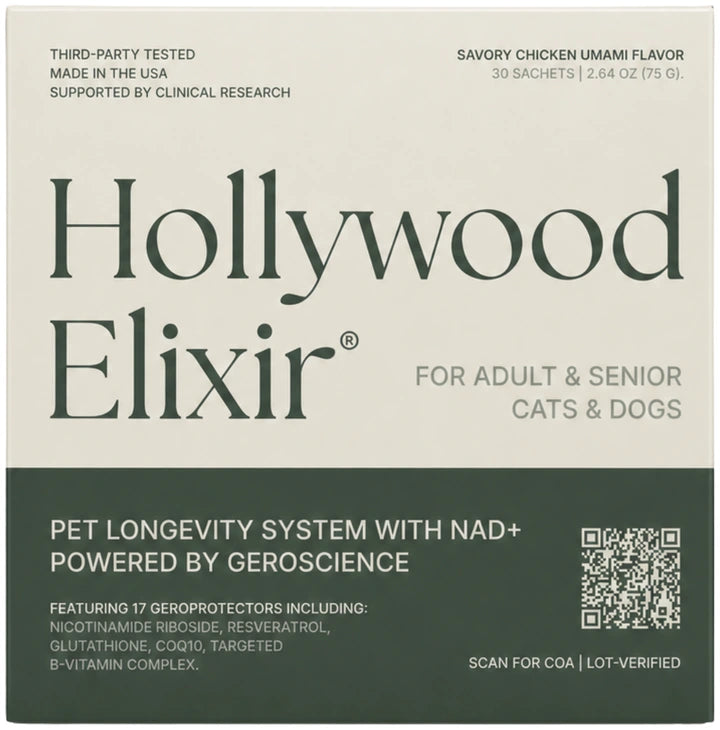
Hollywood Elixir is our daily supplement for adult and senior cats, made to the LPL-01 standard with every active ingredient at a visible amount. It never replaces your veterinarian — it sits alongside the routine on this page.
Starting at $50/month · cancel anytime
Shop Hollywood ElixirWhen to Call the Vet
Split urgent signs from trends that deserve a scheduled veterinary conversation.
Go urgently
- Open-mouth breathing, hard breathing effort, blue or gray gums, collapse, seizure, sudden blindness, or sudden hind-limb pain.
- Repeated litter-box trips with little or no urine, straining with distress, blood with pain, severe weakness, or painful abdomen.
- Repeated vomiting with weakness, suspected toxin exposure, inability to rise, traumatic fall, uncontrolled bleeding, or rapid decline.
Schedule promptly
- Dim-room hesitation, bumping, dilated pupils, missed jumps, lower routes, anxiety in changed rooms, or sudden clumsiness.
- Weight loss or gain, appetite change, vomiting, increased thirst, larger urine clumps, constipation, diarrhea, accidents, or muscle loss.
- Mats, coat dullness, grooming decline, brushing pain, bad breath, drooling, dropped food, slower chewing, or face sensitivity.
- Coughing, wheezing, poor recovery after play, unusual fatigue, hiding, changed voice, night calling, or social withdrawal.
- Bring weight history, meal notes, litter records, coat observations, cough videos if safe, vision notes, and breeder or rescue records.
The 90-Day Support Routine
Ninety days of small, repeatable habits make subtle changes visible — and give any new routine a fair test.
- Week one: record weight, rib feel, coat condition, mat locations, appetite, dental breath, voice pattern, night navigation, cough history, thirst, litter clumps, and favorite social routes.
- Week one: add night lights or stable low routes if vision is uncertain, and remove risky string-like chew items if this cat mouths fabric or cords.
- Weekly: check coat, hips, mouth, eyes, voice, appetite, breathing, and whether the cat still keeps normal social appointments.
- Monthly: repeat body-condition notes, grooming map, activity clips, litter records, cough notes, and social-routine observations.
- Day 90: review trends with your veterinarian and adjust dental timing, eye follow-up, respiratory workup, calories, senior labs, pain support, or home lighting.
Tools for Tracking Comfort and Aging
Use these when a life-stage, body-condition, or quality-of-life question needs more structure.
Cat Age Calculator
Use age context when a social longhaired cat still seems young but changes coat, voice, vision, or appetite.
ToolCat Quality of Life Scale
Use when dental pain, breathing, grooming dignity, vision, or treatment burden changes daily comfort.
ToolCat Biological Age Calculator
Frame healthy-aging conversations around body condition, social rhythm, and function.
Frequently Asked Questions
Short answers to the questions owners ask most.
What is a realistic Balinese lifespan?
Balinese lifespan planning can use 12-16 years, with individual care shaped by PRA awareness, coat care, dental comfort, breathing signs, appetite, body condition, kidney and urinary records, and social routine.
Are Balinese Cats long-lived cats?
They are often planned for the teens, but the honest work is earlier tracking because Balinese-specific life-table evidence is limited.
When should Balinese senior care start?
Use 10+ as the senior marker and begin baselines around 7 for coat, appetite, weight, teeth, eyes, breathing, litter, and voice.
Which Balinese health problems matter most?
PRA, dental disease, respiratory signs, appetite and weight drift, coat and grooming decline, kidney or urinary signs, and pain are the practical watchpoints.
Which Balinese aging signs should owners watch?
Watch mats, grooming decline, weight loss, appetite change, coughing, wheezing, dim-room hesitation, bad breath, larger urine clumps, changed voice, hiding, or lost routines.
Why does Balinese evidence feel thin?
Balinese numbers are often inferred from breed profiles and Siamese-family context. The 2024 UK cat life-table gives broader context, not a precise Balinese statistic.
What should I track at home for a Balinese?
Track coat, mats, weight, appetite, breath, chewing, vision in dim light, coughing, thirst, litter, jumping, voice, and social schedule.
What changes are urgent in a Balinese?
Open-mouth breathing, collapse, sudden blindness, blue or gray gums, sudden hind-limb pain, repeated vomiting with weakness, or straining with little urine is urgent.
How often should an older Balinese see the vet?
Older Balinese cats often benefit from twice-yearly senior check-ins, adjusted to dental findings, eye signs, respiratory signs, weight, kidneys, and blood pressure.
What should I ask a breeder or rescue about a Balinese?
Ask about lifespan, PRA, respiratory disease, asthma, dental disease, kidney disease, appetite problems, pica, and early deaths in relatives.
How should I adjust the home for an older Balinese?
Keep grooming gentle, add stable routes and night lights if vision changes, protect litter access, and preserve social routines that make change visible.
How is Balinese senior tracking different from Siamese senior tracking?
Keep the relationship visible, then add coat-based evidence. Mats, plume care, grooming reach, hairball changes, and body condition under the coat can show pain or illness differently than a short-coated Siamese baseline.
Is Hollywood Elixir something my Balinese needs?
No supplement is a need. Hollywood Elixir is La Petite Labs' daily supplement for adult and senior cats, not a treatment for PRA, respiratory disease, dental disease, kidney disease, arthritis, appetite change, weight loss, or anything else on this page.
A note from La Petite Labs
Hollywood Elixir is La Petite Labs' daily supplement for adult and senior cats. It is not a treatment for anything on this page, and it never replaces your veterinarian.

Why Pampered matches Balinese watchpoints
Pampered is La Petite Labs' complete daily system, with a recommended 90-day starting window. Pampered can share the same 90-day track as this guide's recording weight, rib feel, coat condition, mat locations, appetite, dental breath, voice pattern, night navigation, cough history, thirst,, with ancestry, vision, coat, and dental used as the Balinese watch list.
Explore the Pampered™ System →