Shetland Sheepdog lifespan and senior care
How Long Do Shetland Sheepdogs Live?
12–14Years, typical
Sheltie longevity is usually generous, but the real plan is eyes, MDR1 records, teeth, weight, coat handling, and quiet gait changes.
- Start watching at
- From 6-7 years
- Senior age
- Around 9-10 years
- Typical lifespan
- 12-14 years
Shetland Sheepdog lifespan, Shetland Sheepdog life expectancy, Shetland Sheepdog senior planning, and Shetland Sheepdog health problems: plan by the low-to-mid teens while keeping eye history, MDR1 status, dental comfort, body condition, and mobility in the record.
Quick Answers for Pet Parents
Direct answers to the questions people ask when they are trying to plan care.
How long do Shetland Sheepdogs live?
Most Shetland Sheepdogs are best planned around 12 to 14 years. That is a range for planning, not a prediction for one dog.
What is Shetland Sheepdog life expectancy?
Shetland Sheepdog life expectancy is usually framed as 12-14 years, with individual outcomes shaped by genetics, body condition, accidents, veterinary care, and breed-specific health history.
When is a Shetland Sheepdog considered senior?
Around 9-10 years is a sensible senior-planning window; earlier monitoring makes sense when risk factors are already present.
What health problems are Shetland Sheepdogs prone to?
MDR1 records, eye disease, dental comfort, weight, coat handling, mobility, and senior confidence.
What most affects a Shetland Sheepdog healthspan?
A monthly eye-light, mouth, rib, nail, coat, stair, and medication-record check.
Lifespan at a Glance
The short answer with the context a careful pet parent needs.
| Typical lifespan | Plan around 12-14 years, then adjust for this dog's record and daily reality. |
|---|---|
| Senior planning | Around 9-10 years; begin earlier if the dog already has chronic disease, pain, or major risk history. |
| Earlier watchpoint | From 6-7 years, start tracking the patterns that usually change first in this breed. |
| Healthspan priorities | MDR1 records, eye disease, dental comfort, weight, coat handling, mobility, and senior confidence. |
| Household lever | A monthly eye-light, mouth, rib, nail, coat, stair, and medication-record check. |
| Do not shrug off | Unknown MDR1 status before high-risk drugs, painful eyes, mouth odor, sudden vision change, or repeated slipping. |
| Daily baseline | Sheltie owners should keep a dated record for medication, eyes, dental, mobility and the first change that repeats. |
| Vet-visit prep | Bring short videos, clear photos, diet details, medication lists, and the Sheltie timeline instead of relying on memory. |

You can’t add sand to the glass. You can change what happens while it falls.
12-14 years is the range. What fills those years — lean condition, easy movement, steady digestion, good sleep — is built one ordinary day at a time.
Start the daily system → Starting at $63/month
If your Sheltie still barks the household into order but now hesitates at stairs, misses a treat tossed to one side, mats behind the ears, or needs a medication conversation where MDR1 status is unknown, the lifespan question becomes a record-keeping question.
The practical answer: most Shetland Sheepdogs live about 12 to 14 years. Many owners get a long senior chapter, and that makes early notes on eyes, teeth, drugs, weight, and movement more valuable.
If You Only Have Five Minutes
- Use 12 to 14 years as the planning band, then adjust for this dog's eye history, dental care, weight, mobility, and medication safety.
- Senior planning usually starts around 9 or 10, but eye records and MDR1 status belong in the file long before that.
- Ask your veterinarian whether MDR1 testing or documentation is needed before drugs that can be risky for susceptible herding dogs.
- Watch vision confidence: dim rooms, stairs, toys tossed sideways, and hesitation on unfamiliar surfaces reveal more than bright daylight.
- Dental odor is not a small-dog detail; mouth pain can change sleep, appetite, grooming tolerance, and mood.
- Use monthly coat handling to check skin, ribs, lumps, nails, and exactly where brushing suddenly bothers the dog.
Use linked tools when notes need structure.
Why Lifespan Numbers for Shetland Sheepdogs Don't Agree
Sheltie lifespan estimates can look reassuring because the breed is small-to-medium and often long-lived. The mistake is to let a good number delay eye exams, dental care, weight control, or medication-safety documentation.
Published longevity data and breed guidance give the outer frame, but a Sheltie household lives with quieter clues: altered stair confidence, cloudy eyes, mouth odor, less jumping onto the sofa, and coat mats that mean handling or flexibility changed.
The dog lifespan methodology helps separate population estimates from an individual dog whose eye and medication history may matter more than the average.
What Shapes a Shetland Sheepdog's Healthspan
The Sheltie plan is not a generic herding page. It is a small, watchful dog with coat, teeth, eyes, MDR1 documentation, and gait changes that can be missed because the dog keeps participating.
MDR1 and drug sensitivity records
In the shetland sheepdog standing on a porch after a coat check, medication shows up through ordinary choices before it looks medical.
MDR1 and drug sensitivity records is the watchpoint; the owner clue is this: Use 12 to 14 years as the planning band, then adjust for this dog's eye history, dental care, weight, mobility, and medication safety.
For medication patterns, bring dates, photos, or video.
Collie eye anomaly, PRA, cataracts, and confidence
In the shetland sheepdog standing on a porch after a coat check, eyes shows up through ordinary choices before it looks medical.
Collie eye anomaly, PRA, cataracts, and confidence is the watchpoint; the owner clue is this: Senior planning usually starts around 9 or 10, but eye records and MDR1 status belong in the file long before that.
For eyes patterns, bring dates, photos, or video.
Small mouth, big comfort cost
In the shetland sheepdog standing on a porch after a coat check, dental shows up through ordinary choices before it looks medical.
Small mouth, big comfort cost is the watchpoint; the owner clue is this: Ask your veterinarian whether MDR1 testing or documentation is needed before drugs that can be risky for susceptible herding dogs.
For dental patterns, bring dates, photos, or video.
Hocks, hips, nails, and stairs
In the shetland sheepdog standing on a porch after a coat check, mobility shows up through ordinary choices before it looks medical.
Hocks, hips, nails, and stairs is the watchpoint; the owner clue is this: Watch vision confidence: dim rooms, stairs, toys tossed sideways, and hesitation on unfamiliar surfaces reveal more than bright daylight.
For mobility patterns, bring dates, photos, or video.
A fluffy outline hides body condition
In the shetland sheepdog standing on a porch after a coat check, weight and coat shows up through ordinary choices before it looks medical.
A fluffy outline hides body condition is the watchpoint; the owner clue is this: Dental odor is not a small-dog detail; mouth pain can change sleep, appetite, grooming tolerance, and mood.
For weight and coat patterns, bring dates, photos, or video.
Mats as health information
In the shetland sheepdog standing on a porch after a coat check, skin and grooming shows up through ordinary choices before it looks medical.
Mats as health information is the watchpoint; the owner clue is this: Use monthly coat handling to check skin, ribs, lumps, nails, and exactly where brushing suddenly bothers the dog.
For skin and grooming patterns, bring dates, photos, or video.
Keep the 90-day routine simple and repeatable.
For this Sheltie, ordinary scenes matter.
Baseline focus: A monthly eye-light, mouth, rib, nail, coat, stair, and medication-record check.
Action threshold: Unknown MDR1 status before high-risk drugs, painful eyes, mouth odor, sudden vision change, or repeated slipping.
Ordinary notes work best. Track date, trigger, recovery, and recurrence.
What Aging Looks Like in a Shetland Sheepdog
Aging in a Sheltie may look like quieter stairs, less precise foot placement, clingier behavior in dim rooms, new mouth odor, a coat that mats faster, or a dog who still supervises everything but moves less freely.
Do not compare this dog with a Collie or a Miniature American Shepherd. The Sheltie version is smaller, more coat-hidden, and often more dental-and-eye weighted.
Useful comparison points:
- Medication: what changed first?
- Eyes: what repeats?
- Dental: what can be filmed?
- Mobility: what can be photographed?
- Weight and coat: what changed at home?
Gentler routines are normal. Unmanaged distress is not.
When to Call a Veterinarian
Go urgently for collapse, seizure clusters, labored breathing, blue-gray or pale gums, sudden blindness with distress, severe pain, uncontrolled bleeding, or rapid decline.
Book promptly for vision hesitation, cloudy eyes, squinting, dental odor, weight change, new medication questions, repeated slipping, grooming pain, cough, thirst change, or appetite change.
Bring MDR1 results if available, eye records, dental history, diet details, gait clips, coat-handling notes, medication list, and a timeline of behavior changes.
Bring a comfort score if days feel borderline.
How Shetland Sheepdogs Compare With Similar Breeds
Compared with Collies, Shelties share eye and MDR1 conversations but age in a smaller body where teeth, coat, and household stairs may show trouble first. Compared with Miniature American Shepherds, the Sheltie plan is less about sport intensity and more about meticulous home baselines.
The dog lifespan by breed hub helps compare ranges; the Sheltie record stays practical: eyes, drugs, teeth, coat, ribs, and stairs.
Questions for Your Breeder, Rescue, or Veterinarian
For a breeder or rescue:
- What eye clearances, MDR1 status, dental history, hip history, thyroid history, and family lifespan details are known?
- Have close relatives had CEA, PRA, cataracts, seizures, allergies, autoimmune disease, or early tooth loss?
- How did older dogs in this line move, see, eat, and tolerate grooming?
For your veterinarian:
- Should we test or document MDR1 status before future medications?
- What eye findings should trigger referral or closer monitoring?
- What dental schedule is realistic for this mouth?
- Does the gait clip suggest pain, nail issues, or neurologic change?
Unknown history still gets a baseline. Start with records, body condition, and a home log.
Sources
- American Kennel Club. Shetland Sheepdog breed information. https://www.akc.org/dog-breeds/shetland-sheepdog/
- McMillan KM, Bielby J, Williams CL, Upjohn MM, Casey RA, Christley RM. Longevity of companion dog breeds: those at risk from early death. Scientific Reports. https://www.nature.com/articles/s41598-023-50458-w
- Teng KT, Brodbelt DC, Church DB, O'Neill DG, et al. Life tables of annual life expectancy and mortality for companion dogs in the United Kingdom. Scientific Reports. https://www.nature.com/articles/s41598-022-10341-6
- Creevy KE, Grady J, Little SE, et al. 2019 AAHA Canine Life Stage Guidelines. https://www.aaha.org/wp-content/uploads/globalassets/02-guidelines/canine-life-stage-2019/2019-aaha-canine-life-stage-guidelines-final.pdf
- Orthopedic Foundation for Animals. CHIC Program breed health screening information. https://ofa.org/chic-programs/browse-by-breed/
- Mealey KL, Bentjen SA, Gay JM, Cantor GH. Ivermectin sensitivity in collies is associated with a deletion mutation of the mdr1 gene. Pharmacogenetics. https://pubmed.ncbi.nlm.nih.gov/11707687/
- VCA Animal Hospitals. Cataracts in Dogs. https://vcahospitals.com/know-your-pet/cataracts-in-dogs
- VCA Animal Hospitals. Dental Disease in Dogs. https://vcahospitals.com/know-your-pet/dental-disease-in-dogs
Healthspan by Life Stage
Know what to track before senior age, not only after decline appears.
Build the record
Save eye, MDR1, dental, hip, and family records; teach tooth, paw, ear, and coat handling gently.
Protect the working baseline
Keep the dog lean under the coat, maintain dental care, and learn normal vision confidence on stairs and dim floors.
Start the comparison file
Start monthly checks for eyes, teeth, ribs, nails, gait, coat mats, thirst, appetite, and social confidence.
Shorten the review cycle
Discuss dental work, eye exams, bloodwork, pain, weight targets, and medication flags at least twice yearly.
Protect comfort, not the number
Score sight, mouth comfort, movement, sleep, anxiety, appetite, toileting, and connection with the family.
Breed Health Map
The main breed-specific topics that can shape lifespan, comfort, and quality of life.
MDR1 and drug sensitivity records
MDR1 is a safety record, not an internet diagnosis. Keep test results or veterinarian notes easy to find before parasite drugs, sedatives, pain drugs, or emergency medications are chosen. Sheltie baseline note: Cloudy eyes, squinting, bumping, dim-light hesitation, or sudden reluctance on stairs. Use this row to decide what changed, when it repeated, and what proof to bring.
Collie eye anomaly, PRA, cataracts, and confidence
Eye history belongs in breeder questions and senior visits. New bumping, hesitation in dim light, squinting, or cloudy change deserves a veterinary eye conversation. Sheltie baseline note: Bad breath, tartar, red gums, dropped food, or muzzle sensitivity. Use this row to decide what changed, when it repeated, and what proof to bring.
Small mouth, big comfort cost
Bad breath, red gums, tartar, dropped food, or reluctance during muzzle handling can matter before appetite changes. Sheltie baseline note: Grooming pain, mats in new places, skin odor, paw licking, or coat neglect. Use this row to decide what changed, when it repeated, and what proof to bring.
Hocks, hips, nails, and stairs
Shelties can look careful rather than obviously lame. Track stair rhythm, jumping, nail length, slipping, and willingness to turn tightly. Sheltie baseline note: Weight change, slipping, slower rising, nail overgrowth, or reduced jumping. Use this row to decide what changed, when it repeated, and what proof to bring.
A fluffy outline hides body condition
Rib feel and waist checks beat visual guessing. Extra weight worsens knees, dental anesthesia margin, heat, and movement. Sheltie baseline note: Medication-safety questions, thirst change, appetite change, cough, seizure-like episodes, or behavior shifts. Use this row to decide what changed, when it repeated, and what proof to bring.
Mats as health information
Mats behind ears, tail, or trousers can signal reduced flexibility, pain, damp skin, or less tolerance for handling. Sheltie baseline note: Cloudy eyes, squinting, bumping, dim-light hesitation, or sudden reluctance on stairs. Use this row to decide what changed, when it repeated, and what proof to bring.

One serving a day, built for aging dogs
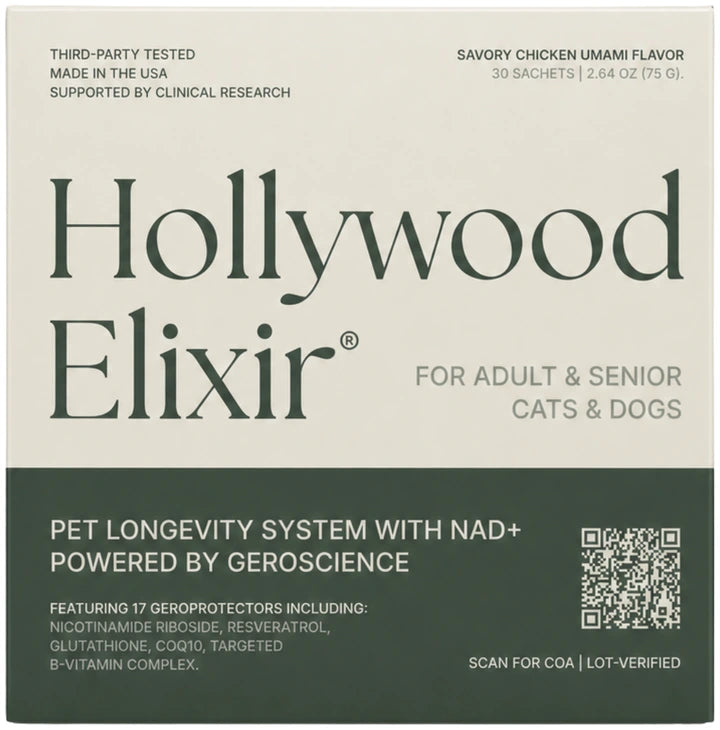
Hollywood Elixir is our daily supplement for adult and senior dogs, made to the LPL-01 standard with every active ingredient at a visible amount. It never replaces your veterinarian — it sits alongside the routine on this page.
Starting at $63/month · cancel anytime
Shop Hollywood ElixirWhen to Call the Vet
Split urgent signs from trends that deserve a scheduled veterinary conversation.
Go urgently
- Collapse, labored breathing, pale or blue-gray gums, seizure clusters, uncontrolled bleeding, or rapid decline.
- Sudden painful eye, sudden blindness with distress, severe weakness, or inability to walk normally.
- Suspected medication reaction, severe vomiting with weakness, or profound disorientation.
Schedule promptly
- Cloudy eyes, squinting, bumping, dim-light hesitation, or sudden reluctance on stairs.
- Bad breath, tartar, red gums, dropped food, or muzzle sensitivity.
- Grooming pain, mats in new places, skin odor, paw licking, or coat neglect.
- Weight change, slipping, slower rising, nail overgrowth, or reduced jumping.
- Medication-safety questions, thirst change, appetite change, cough, seizure-like episodes, or behavior shifts.
The 90-Day Support Routine
Ninety days of small, repeatable habits make subtle changes visible — and give any new routine a fair test.
- Week one: gather eye records, MDR1 results if available, dental history, current medications, gait video, and clear photos of eyes and body shape.
- Week one: set a coat-handling route that includes ears, trousers, tail, belly, feet, teeth, rib feel, and nail length.
- Weekly: check eyes in normal light, breath, gums, coat mats, skin, nails, stair rhythm, and willingness to be brushed.
- Monthly: repeat weight, rib feel, gait clip, vision-confidence note, dental odor note, thirst, appetite, and sleep pattern.
- Day 90: review the notes with your veterinarian and adjust eye monitoring, dental timing, medication records, pain care, or body-condition goals.
Tools for Tracking Comfort and Aging
Use these when a life-stage, body-condition, or quality-of-life question needs more structure.
Dog Quality of Life Scale
Use when vision, dental pain, movement, or anxiety changes make comfort hard to score.
ToolDog Biological Age Calculator
A long-lived Sheltie benefits from life-stage timing before obvious decline.
ToolDog Body Condition Calculator
Rib feel matters because coat can hide weight creep.
Frequently Asked Questions
Short answers to the questions owners ask most.
What is the average Shetland Sheepdog life expectancy?
A practical planning range is 12-14 years. Individual dogs move around that band because of genetics, body condition, accidents, veterinary care, and the breed-specific risks on this page.
Is 9-10 old for a Shetland Sheepdog?
9-10 years is a sensible senior-planning window, not a reason to assume every change is normal aging.
Which Shetland Sheepdog health issues deserve early tracking?
MDR1 records, eye disease, dental comfort, weight, coat handling, mobility, and senior confidence.
What early aging signs matter most for Shelties?
A monthly eye-light, mouth, rib, nail, coat, stair, and medication-record check.
Which signs should Sheltie owners treat urgently?
Unknown MDR1 status before high-risk drugs, painful eyes, mouth odor, sudden vision change, or repeated slipping.
How often should a senior Shetland Sheepdog see the vet?
Twice yearly is a useful default once senior planning begins, with timing adjusted for pain, dental disease, bloodwork, eyes, heart, urinary signs, or other history.
Does weight matter for Shetland Sheepdog lifespan?
Yes. Lean body condition improves comfort, movement, heat margin, anesthesia margin, and the ability to notice real medical change.
What should I bring to a Shetland Sheepdog senior visit?
Bring dated notes, short videos, photos of visible changes, diet and treat details, medications, supplements, and a timeline of what changed first.
Can home tracking replace veterinary care for a Shetland Sheepdog?
No. Home tracking makes visits more useful, but pain, breathing problems, urinary trouble, eye signs, dental disease, collapse, and rapid decline need veterinary care.
How should I judge quality of life in an older Shetland Sheepdog?
Look at breathing, sleep, pain, movement, appetite, toileting, anxiety, and interest in familiar routines together rather than using one signal alone.
What does the 90-day routine track for a Shetland Sheepdog?
It sets the week-one baseline, repeats the same checks, and brings day-90 patterns back to the veterinarian for practical adjustment.
Which home notes help most for a Shetland Sheepdog?
Dated photos, short videos, meal details, medication lists, and a simple timeline are usually more useful than a long memory-based description.
Is Hollywood Elixir something my Shetland Sheepdog needs?
No supplement is a need, and Hollywood Elixir is not a treatment for anything on this page. It is La Petite Labs' daily supplement for adult and senior dogs.
Can Shetland Sheepdogs live past 14?
Some do. Long life is realistic for many Shelties, but eye comfort, dental care, safe medication choices, lean weight, and early pain care shape how good those years feel.
Do all Shelties need MDR1 testing?
Not every dog has the mutation, but knowing status or documenting your veterinarian's plan can prevent medication uncertainty later.
Are Sheltie eye problems always obvious?
No. Vision loss can show first as hesitation, missed toys, stair caution, or anxiety in dim spaces rather than a visibly dramatic eye.
A note from La Petite Labs
Hollywood Elixir is La Petite Labs' daily supplement for adult and senior dogs. It is not a treatment for anything on this page, and it never replaces your veterinarian.

Why Pampered fits a Shetland Sheepdog eye-check routine
Pampered is La Petite Labs' complete daily system, with a recommended 90-day starting window. For a Shetland Sheepdog household, it can sit beside this page's gathering eye records, MDR1 results if available, dental history, current medications, gait video, and clear photos of eyes and repeating weight, rib feel, gait clip, vision-confidence note, dental odor note, thirst, appetite, and sleep pattern, keeping medication, eyes, dental, and mobility in the day-90 conversation.
Explore the Pampered™ System →