



Savannah lifespan and senior care
How Long Do Savannah Cats Live?
12–20Years, typical
Savannah Cat planning uses 12-20 years for F1-F2 and F3-F4+ cats; generation changes legality, size, handling, and housing more than lifespan proof.
- Start watching at
- From 7 years
- Senior age
- 10+ years
- Typical lifespan
- 12-20 years
Use 12-20 years as a broad breed-profile planning range. F1/F2 Savannah Cats and F3/F4+ Savannah Cats use the same 12-20 year planning range because sources do not provide generation-specific life tables; generation changes legality, size, housing, and handling expectations.
Quick Answers for Pet Parents
Direct answers to the questions people ask when they are trying to plan care.
How long do Savannah Cats live?
Savannah Cats are best planned around 12-20 years. Use 12 to 20 years as a broad planning range because available lifespan figures are breed-profile ranges, not generation-specific survival data.
What is the average Savannah life expectancy?
Savannah life expectancy should be treated as a planning range, not a guarantee. A real plan records generation, legality, space, enrichment, socialization, weight, teeth, eyes, litter, and the cat-specific stress signals that appear when needs are not met.
When is a Savannah considered senior?
Cats older than 10 are senior under AAHA/AAFP guidance; begin Savannah baselines around 7 because a high-energy hybrid cat may keep moving while pain, stress, dental disease, or vision change is building. A Savannah may still seem lively while weight, mouth, litter, grooming, or movement is already changing.
What Savannah health problems should owners watch?
Watch PRA, pyruvate kinase deficiency history, dental disease, injury risk, weight drift, urinary and kidney signs, stress behavior, escape danger, and pain that changes jumping or handling.
What most affects Savannah healthspan?
Legal ownership, breeder transparency, secure housing, vertical enrichment, measured meals, vision awareness, senior labs, dental care, and prompt injury assessment matter most.
How long do F1 Savannah cats live?
F1 Savannah Cats should be planned around 12 to 20 years; the bigger difference is legal status, size, handling, housing, and safe veterinary access.
How long do F2 Savannah cats live?
F2 Savannah Cats should also be planned around 12 to 20 years because published sources do not give a separate F2 survival table.
How long do F4 Savannah cats live?
F4 or later Savannah Cats also use 12 to 20 years; later generation changes manageability more than a proven lifespan number.
Lifespan at a Glance
The short answer with the context a careful pet parent needs.
| Typical lifespan | Use 12 to 20 years as a broad Savannah planning range while tracking generation, legal status, enrichment, vision, blood-health records, weight, teeth, and mobility. |
|---|---|
| Evidence caveat | PetMD lists 12 to 20 years and TICA lists 12 to 15+ years; neither should be treated as a generation-specific life table. |
| Savannah senior timing | Cats older than 10 are senior under AAHA/AAFP guidance; begin Savannah baselines around 7 because a high-energy hybrid cat may keep moving while pain, stress, dental disease, or vision change is building. |
| Earlier watchpoint | Track F1, F2, F3, or F4 generation notes, local legality, escape risk, vertical space, appetite, weight, dental breath, night vision, play recovery, litter, and stress behavior. |
| Breed-specific priority | Savannah planning must be honest about serval ancestry, F1-F4 differences, legal restrictions, energy needs, and whether the home can provide a safe indoor environment. |
| Do not normalize | Do not normalize escape attempts, destructive frustration, night-vision changes, coughing, hard breathing, weight loss, dental pain, urinary distress, or fear around handling. |

You can’t slow the clock. You can change what happens while it runs.
12-20 years is the range. What fills those years — lean condition, easy movement, steady digestion, good sleep — is built one ordinary day at a time.
Start the daily system → Starting at $50/month
If your Savannah still clears a refrigerator-height route but now paces at doors, chews from boredom, misses night landings, drops food, coughs after hard play, loses weight, drinks more, or turns handling into a negotiation, the lifespan question has moved beyond a number.
The direct answer: Savannah cats are best planned around 12 to 20 years. F1 Savannah Cats and F2 Savannah Cats should still use the broad 12 to 20 year planning range because published sources do not separate them into a cleaner life table. F3, F4, and later Savannah Cats also use 12 to 20 years; generation changes size, behavior, legal status, and household fit more than a proven lifespan number.
A Savannah page that ignores generation is not honest. PetMD notes that F1 cats have one African serval parent and that higher generations generally become smaller and more manageable, while TICA warns that ownership can be restricted because of serval ancestry. Those facts belong beside any lifespan range.
If You Only Have Five Minutes
- Use 12 to 20 years as the broad Savannah lifespan planning range, then refine by F1-F4 generation, legality, environment, health records, and daily behavior.
- Check state, city, lease, and insurance rules before assuming ownership is legal or practical.
- F1 and F2 cats may create very different space, handling, and safety demands than F3, F4, or later cats.
- Progressive retinal atrophy (PRA) and pyruvate kinase deficiency belong in breeder questions, so ask for actual test records rather than verbal reassurance.
- Energy is a health issue: poor enrichment can produce stress, escape risk, injury, and behavior that makes medical care harder.
- Urgent care is needed for breathing distress, collapse, severe injury, sudden blindness, repeated vomiting with weakness, or urinary straining with little output.
Use the cat lifespan methodology for the evidence split, then add a Savannah-specific file for generation, law, housing, and enrichment. The cat quality of life scale is helpful when high energy makes comfort hard to judge.
Why Lifespan Numbers for Savannah Cats Don't Agree
Savannah lifespan numbers disagree because sources mix breed-profile ranges, registry summaries, and owner experience. The breed also includes generation labels that affect size, behavior, legality, and expectations. A single average would hide the most important owner questions.
PetMD gives 12 to 20 years and explains F1, F2, and higher-generation differences. TICA gives 12 to 15+ years and emphasizes high energy, vertical space, and legal restrictions in some places. Those are useful sources, but neither is a veterinary life table sorted by F1, F2, F3, and F4.
The 2024 UK cat life-table helps with general feline aging, not with hybrid-generation forecasting. It supports the habit of senior screening, body-condition monitoring, and age-stage interpretation; it does not answer whether one early-generation Savannah will behave like another.
Plan around controllables: lawful ownership, secure housing, enrichment, veterinary access, socialization, dental care, genetic-test records, and early response to injury, urinary signs, breathing changes, or vision clues.
What Shapes a Savannah's Healthspan
Savannah healthspan is shaped by generation honesty, legal and environmental fit, secure enrichment, PRA and pyruvate kinase deficiency records, dental care, body condition, injury prevention, urinary and kidney monitoring, and stress levels that allow veterinary care.
F1-F4 generation is not decoration
An F1 Savannah has one serval parent; F2, F3, and F4 labels move farther from that cross but do not erase individuality. Earlier generations may be taller, more intense, harder to house, and subject to stricter rules. Later generations often suit ordinary companion homes better, but the owner still has to confirm temperament, legality, and care capacity.
Legal status and veterinary access
A Savannah that is illegal where it lives is already in a welfare problem because routine care can become secretive or delayed. Ask about state, municipal, landlord, travel, boarding, and veterinary policies before acquisition. Keep paperwork accessible so emergency care does not become an argument at the worst time.
Energy, vertical space, and frustration
High energy is not a charming footnote. Door fixation, destructive climbing, water mischief, pacing, overgrooming, vocal distress, or aggression after under-stimulation can mean the home is not meeting the cat. Structured play, tall routes, puzzles, scent work, and secure outdoor access can protect both body and behavior.
Vision and PRA watchpoints
PRA risk means night behavior deserves attention. Dim-room hesitation, bumping, wide pupils, missed landings, anxiety after furniture moves, or refusal to jump down should be treated as vision information. A fast athletic cat with changing sight needs safer routes before an injury proves the point.
Pyruvate kinase deficiency and stamina
Ask whether breeding cats were tested for pyruvate kinase deficiency. Pale gums, weakness, poor exercise tolerance, fast heart rate, lethargy, or collapse are not training problems. A veterinarian should evaluate stamina changes, especially when the cat once recovered quickly from hard play.
Teeth, weight, and food puzzles
A lean, tall cat can still develop dental disease or drift in weight. Track scale weight, ribs, thigh muscle, appetite, treat calories, bad breath, drooling, dropped food, and chewing changes. Puzzle feeding should slow meals and enrich the day, not hide a cat who is eating poorly.
Injury and escape risk
A Savannah may jump higher, push doors harder, or investigate hazards more aggressively than the family expected. Falls, limb pain, torn nails, wounds, heat exposure, and outdoor escape need serious handling. Secure screens, door routines, microchip details, and safe climbing surfaces are part of healthspan.
Senior care for a still-active hybrid
An older Savannah may still demand action while joints, kidneys, teeth, or vision are changing. Senior screening should not wait until the cat stops moving. Lower route options, traction, quieter games, and predictable schedules let a high-energy cat age without losing control of the home.
What Aging Looks Like in a Savannah
Savannah aging may look like a shorter jump sequence, more door pacing, changed night confidence, lower tolerance for handling, bad breath, weight drift, cough after exertion, longer recovery, larger urine clumps, or a cat whose frustration increases as physical capacity narrows.
The question is not whether the cat is still energetic. The question is whether the same energy now costs more: more recovery, more agitation, more missed landings, more avoidance, or more conflict around care.
- Is the generation, legal paperwork, microchip, and veterinary access file current?
- Are doors, screens, catio panels, and vertical routes still secure for this cat?
- Does night navigation look as confident as it did six months ago?
- Are weight, muscle, appetite, breath, thirst, urine clumps, and stool stable?
- Does hard play end with normal recovery rather than coughing, collapse, or crankiness?
- Can the cat accept necessary handling without fear, pain, or escalating stress?
Normal aging can make a Savannah more selective about jumps. It should not be used to excuse illegal housing, chronic under-enrichment, repeated escape attempts, labored breathing, sudden blindness, collapse, untreated wounds, urinary straining, or a cat whose stress makes care impossible.
When to Call a Veterinarian
Use emergency care for open-mouth breathing, severe breathing effort, collapse, seizure, sudden blindness, sudden hind-limb pain, traumatic fall, deep wound, heat distress, repeated vomiting with weakness, inability to rise, or repeated box trips with little urine.
Book promptly for night-vision changes, missed landings, coughs, pale gums, poor play recovery, weight drift, bad breath, dropped food, increased thirst, larger clumps, accidents, stress pacing, escape attempts, hiding, or new handling intolerance.
Bring generation records, legal paperwork if relevant, breeder test results, diet notes, weight history, videos of movement or breathing, enrichment logs, litter records, dental observations, and medication lists. The cat biological age calculator can help frame timing but cannot judge hybrid management.
How Savannah Cats Compare With Similar Breeds
Compared with Bengal cats, Savannah planning places more weight on serval ancestry, generation labels, height, legality, and secure space. Compared with Chausie cats, the Savannah page needs the F1-F4 discussion stated plainly rather than folded into a general hybrid warning.
Abyssinian and Oriental Shorthair pages can help with activity and social baselines, but they do not replace Savannah-specific legal and environmental planning. Use the cat lifespan by breed hub for the broader map, then audit this cat by generation, space, stress, vision, teeth, litter, and movement.
Questions for Your Breeder, Rescue, or Veterinarian
For a breeder or rescue:
- What generation is this cat, and can you provide written pedigree, serval ancestry, registration, and local legality guidance?
- Were breeding cats tested for PRA and pyruvate kinase deficiency, and can you share the records?
- What lifespan, early deaths, vision disease, anemia, heart disease, dental disease, kidney disease, urinary signs, injuries, and behavior problems are known in relatives?
- How did older relatives tolerate veterinary handling, indoor life, children, other pets, doors, harness work, boarding, and travel?
For your veterinarian:
- What senior screening schedule fits this Savannah generation, temperament, and housing setup?
- Do the night vision, stamina, weight, dental, litter, or stress changes suggest diagnostics now?
- How can we reduce injury risk without removing needed exercise?
- What handling plan makes exams, blood draws, imaging, and dental care possible with low stress?
- Which urinary, breathing, vision, injury, or behavior changes should be treated as urgent?
A Savannah with incomplete records needs a practical file before anything else: generation, law, breeder testing, weight, teeth, eyes, litter, enrichment, escape risk, and veterinary handling.
Sources
- PetMD. Savannah Cat Breed Health and Care. https://www.petmd.com/cat/breeds/savannah
- The International Cat Association. Savannah Breed Introduction. https://tica.org/breed/savannah/
- Teng KT, Brodbelt DC, Church DB, O'Neill DG, et al. Life tables of annual life expectancy and risk factors for mortality in cats in the UK. Journal of Feline Medicine and Surgery. https://journals.sagepub.com/doi/10.1177/1098612X241234556
- Royal Veterinary College VetCompass. New research from the RVC predicts the future life expectancy for companion cats. https://www.rvc.ac.uk/vetcompass/news/new-research-from-the-rvc-predicts-the-future-life-expectancy-for-companion-cats
- O'Neill DG, Church DB, McGreevy PD, Thomson PC, Brodbelt DC. Longevity and mortality of cats attending primary care veterinary practices in England. https://pmc.ncbi.nlm.nih.gov/articles/PMC10816413/
- AAHA/AAFP. 2021 Feline Life Stage Guidelines. https://catvets.com/resource/aaha-aafp-feline-life-stage-guidelines/
- Cornell Feline Health Center. The Special Needs of the Senior Cat. https://www.vet.cornell.edu/departments-centers-and-institutes/cornell-feline-health-center/health-information/feline-health-topics/special-needs-senior-cat
- Cornell Feline Health Center. Dental Disease. https://www.vet.cornell.edu/departments-centers-and-institutes/cornell-feline-health-center/health-information/feline-health-topics/dental-disease
- Cornell Feline Health Center. Chronic Kidney Disease. https://www.vet.cornell.edu/departments-centers-and-institutes/cornell-feline-health-center/health-information/feline-health-topics/chronic-kidney-disease
Healthspan by Life Stage
Know what to track before senior age, not only after decline appears.
Build the first record
Collect generation, serval ancestry, legal paperwork, PRA and pyruvate kinase deficiency testing, vaccination, diet, socialization, and handling records before the kitten comes home.
Keep normal measurable
Build secure doors, cat-safe vertical routes, leash or harness training only if calm, puzzle feeding, dental handling, and a normal record for voice, jumps, appetite, and litter.
Start the trend file
Track weight, muscle, play recovery, nighttime navigation, household stress, escape attempts, appetite, dental breath, thirst, urine clumps, stool, and any injury after high jumps.
Pair home notes with diagnostics
Discuss bloodwork, urinalysis, blood pressure, dental timing, pain assessment, vision changes, injury history, kidney markers, and home changes that keep movement safe.
Score comfort through function
Score appetite, hydration, breathing, pain, mobility, dental comfort, vision, anxiety, escape frustration, sleep, litter access, social contact, and treatment burden.
Breed Health Map
The main breed-specific topics that can shape lifespan, comfort, and quality of life.
F1-F4 context
Generation can affect size, behavior, legality, housing demands, and owner expectations.
Ownership restrictions
Illegal or unclear ownership can delay care and create preventable welfare problems.
PRA awareness
Night blindness, missed landings, wide pupils, or anxiety after furniture changes should be discussed.
Pyruvate kinase deficiency
Ask for genetic-test records and watch weakness, pale gums, poor stamina, or collapse.
High-energy housing
Vertical space, puzzles, safe play, and secure outdoor options reduce stress and injury risk.
Mouth comfort
Bad breath, dropped food, drooling, or one-sided chewing can change behavior and appetite.
Jumping and injury
Falls, limb pain, noisy landings, and lower routes need attention in a tall athletic cat.
Senior-cat basics
Thirst, larger clumps, accidents, blood, or repeated box trips should be tracked.

One serving a day, built for aging cats
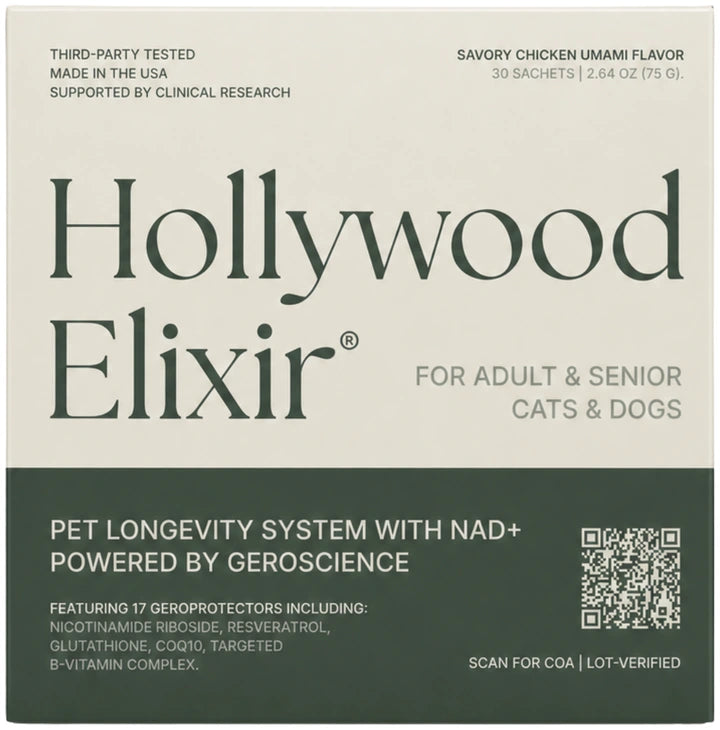
Hollywood Elixir is our daily supplement for adult and senior cats, made to the LPL-01 standard with every active ingredient at a visible amount. It never replaces your veterinarian — it sits alongside the routine on this page.
Starting at $50/month · cancel anytime
Shop Hollywood ElixirWhen to Call the Vet
Split urgent signs from trends that deserve a scheduled veterinary conversation.
Go urgently
- Open-mouth breathing, hard breathing, blue or gray gums, collapse, seizure, sudden blindness, or sudden hind-limb pain.
- Traumatic fall, deep wound, heat distress, inability to rise, severe weakness, or repeated vomiting with weakness.
- Repeated litter-box trips with little or no urine, straining with distress, blood with pain, or painful abdomen.
Schedule promptly
- Night-vision hesitation, bumping, missed landings, lower routes, anxiety after furniture changes, or sudden clumsiness.
- Pale gums, weakness, poor stamina, fast recovery failure, coughs, wheezing, weight loss, appetite change, or lethargy.
- Door fixation, escape attempts, destructive frustration, overgrooming, hiding, aggression, or handling intolerance.
- Bad breath, drooling, dropped food, thirst, larger urine clumps, constipation, diarrhea, accidents, or muscle loss.
- Bring generation records, legal notes, genetic test results, videos, litter logs, weight history, and enrichment notes.
The 90-Day Support Routine
Ninety days of small, repeatable habits make subtle changes visible — and give any new routine a fair test.
- Week one: gather generation paperwork, local law notes, microchip details, breeder tests, weight, appetite, dental breath, litter pattern, sleep spots, and normal jump routes.
- Week one: inspect doors, windows, screens, balconies, catio panels, vertical routes, water hazards, leash gear, and safe retreat areas.
- Weekly: check night navigation, play recovery, stress behavior, teeth, appetite, litter, body condition, and whether enrichment still lowers frustration.
- Monthly: repeat weight, muscle, jump clips, litter notes, dental observations, legal paperwork checks if travel is planned, and injury-risk review.
- Day 90: review trends with your veterinarian and adjust diagnostics, dental care, calories, enrichment, pain support, senior screening, or handling plans.
Tools for Tracking Comfort and Aging
Use these when a life-stage, body-condition, or quality-of-life question needs more structure.
Cat Age Calculator
Use age context when a hybrid-generation cat still moves intensely but changes recovery, vision, or stress behavior.
ToolCat Quality of Life Scale
Use when pain, anxiety, injury, dental disease, vision, or treatment burden changes daily comfort.
ToolCat Biological Age Calculator
Frame healthy-aging conversations around function, environment, and lawful veterinary access.
Frequently Asked Questions
Short answers to the questions owners ask most.
What is a realistic Savannah lifespan?
Savannah lifespan planning can use 12-20 years, with individual care shaped by F1-F4 generation, legal status, secure housing, enrichment, PRA history, pyruvate kinase deficiency records, dental care, body condition, and senior diagnostics.
Are Savannah Cats long-lived cats?
They may be planned into the teens, but the honest answer depends heavily on generation, lawful ownership, environment, genetics, injury prevention, and veterinary access.
When should Savannah senior care start?
Use 10+ as the senior marker and start baselines around 7 for vision, stamina, teeth, litter, stress behavior, jumps, and body condition.
Which Savannah health problems matter most?
PRA, pyruvate kinase deficiency history, dental disease, injury risk, stress behavior, urinary signs, kidney changes, weight drift, and pain are the practical watchpoints.
Which Savannah aging signs should owners watch?
Watch lower jumps, missed night landings, pacing, escape attempts, coughs, poor recovery, bad breath, thirst, larger urine clumps, weight loss, or handling intolerance.
Why does Savannah evidence feel thin?
Savannah figures are breed-profile ranges and registry summaries, not F1-F4 life tables. This page states that limitation plainly.
What should I track at home for a Savannah?
Track generation paperwork, legality, escape risk, vertical routes, play recovery, night vision, weight, appetite, breath, teeth, thirst, urine clumps, stool, and stress.
What changes are urgent in a Savannah?
Breathing distress, collapse, sudden blindness, traumatic injury, heat distress, severe weakness, repeated vomiting with weakness, or straining with little urine is urgent.
How often should an older Savannah see the vet?
Older Savannah cats often benefit from twice-yearly senior visits, adjusted to temperament, legal travel issues, dental findings, kidney markers, injury history, and stress.
What should I ask a breeder or rescue about a Savannah?
Ask about F1-F4 generation, registration, law, PRA testing, pyruvate kinase deficiency testing, lifespan, early deaths, behavior, injuries, and older relatives.
How should I adjust the home for an older Savannah?
Use secure doors and screens, high stable routes, puzzles, measured meals, predictable handling, easy litter access, and enrichment that reduces frustration.
Are F1 Savannah cats the same as F4 Savannah cats?
No. F1, F2, F3, and F4 labels describe distance from serval ancestry, and they can affect size, behavior, legality, housing needs, and owner expectations.
Is Savannah ownership legal everywhere?
No. Laws vary by country, state, city, landlord, and sometimes generation. Confirm rules before acquiring or moving with a Savannah.
How should I use the Savannah lifespan range?
Use 12-20 years as a scheduling range for checkups and home records, not as a promise. Pair the birthday with this cat's ordinary F1-F4 generation, legal status, secure housing, enrichment, PRA history, pyruvate kinase deficiency records, dental care, body condition, and senior diagnostics. When breed-specific lifespan evidence is thin, trend records are more useful than a single remembered age or an optimistic breed story.
What belongs in a Savannah baseline file?
Start with the basics that can be compared later: weight, appetite, litter output, mouth comfort, movement, grooming, and favorite routines. Add the breed-specific concerns from this guide, plus any breeder, rescue, genetic, or veterinary records. A simple file makes subtle changes easier to explain during an exam.
How do I keep Savannah evidence honest?
Separate three things: the published or profile lifespan range, general cat aging evidence, and what this individual cat is showing now. Do not turn a relative's long life or a registry description into a guarantee. Use the range to ask better questions and to start screening before decline becomes dramatic.
What should I compare month to month for a Savannah?
Compare the same few signals each month rather than changing the checklist constantly. Weight trend, rib feel, appetite, thirst, urine clumps, stool, breath, chewing, jumps, grooming reach, and social routine usually reveal more than a one-day impression. Breed-specific signs should be added without crowding out those basics.
How can home notes support a Savannah vet visit?
Bring dated notes, not vague memory. A short timeline of weight, meals, litter changes, coughing or vomiting, mobility videos, coat or skin observations, and behavior shifts lets the veterinarian decide what needs diagnostics. The goal is not to self-diagnose; it is to make the clinical picture clearer.
What should stay individualized for a Savannah?
Age, ancestry, body condition, previous illness, temperament, indoor setup, dental history, and access to veterinary care can all change the plan. Two cats with the same breed name may need different monitoring. Treat breed guidance as a starting map, then let this cat's function decide the route.
How should senior comfort be judged for a Savannah?
Judge comfort through function, not just appetite or affection. Ask whether the cat can eat, drink, breathe, move, eliminate, rest, groom, interact, and accept necessary care without repeated distress. If treatment burden rises, a quality-of-life tool and a direct veterinary conversation are more useful than waiting for a crisis.
When should a Savannah plan be updated?
Update the plan after any diagnosis, dental procedure, diet change, major move, new medication, weight trend, pain episode, urinary sign, breathing change, or behavior shift. The lifespan range stays the same, but the monitoring schedule should change when this cat's risks, routines, or treatment burden change.
Is Hollywood Elixir something my Savannah needs?
No supplement is a need. Hollywood Elixir is La Petite Labs' daily supplement for adult and senior cats, not a treatment for PRA, pyruvate kinase deficiency, injury, stress behavior, dental disease, kidney disease, urinary disease, pain, or anything else on this page.
A note from La Petite Labs
Hollywood Elixir is La Petite Labs' daily supplement for adult and senior cats. It is not a treatment for anything on this page, and it never replaces your veterinarian.

Why Pampered belongs in a Savannah 90-day plan
Pampered is La Petite Labs' complete daily system, with a recommended 90-day starting window. For a Savannah household, it can sit beside this page's gathering generation paperwork, local law notes, microchip details, breeder tests, weight, appetite, dental breath, litter pattern, sleep spots, and repeating weight, muscle, jump clips, litter notes, dental observations, legal paperwork checks if travel is planned, and injury-risk, keeping hybrid generation, law and access, vision, and blood health in the day-90 conversation.
Explore the Pampered™ System →