Pomsky lifespan and senior care
How Long Do Pomskies Live?
12–15Years, typical
Pomsky planning uses 12-15 years: small Pomeranian-side dogs often 13-15, larger Husky-side dogs 12-14, with size stronger than F1/F2 labels.
- Start watching at
- From 6-7 years
- Senior age
- Around 9-11 years
- Typical lifespan
- 12-15 years
No reliable Pomsky-only lifespan dataset exists; use Pomeranian and Siberian Husky evidence plus adult size. Small Pomskies commonly plan around 13-15 years, larger Pomskies around 12-14 years, and F1/F1b/F2 labels are not separate lifespan guarantees.
Quick Answers for Pet Parents
Direct answers to the questions people ask when they are trying to plan care.
How long do Pomskies live?
Pomskies are best planned around 12 to 15 years, then individualized by size, records, body condition, and current health.
What is Pomsky life expectancy?
Pomsky life expectancy is a planning range rather than a prediction. The dog actual build, parent history, and diagnoses matter.
When is a Pomsky considered senior?
Around 9-11 years is the practical senior-planning window; earlier monitoring makes sense when risk factors are already visible.
What health problems should Pomsky owners watch?
Track adult size, dental disease, retained teeth, patellas, tracheal or cough signs, Husky-side eyes, coat and heat margin, activity recovery, and anxiety.
What most affects Pomsky healthspan?
Track weight, teeth, breath, knee skips, stairs, eyes, coat, skin, heat recovery, activity, sleep, anxiety, appetite, thirst, and mood.
How should I personalize this Pomsky plan?
Start with adult size, body condition, parent or shelter records, current diagnoses, and what the dog does every day. Then make size, dental, patellas, and recovery after activity the first comparison points instead of treating age as the whole answer.
What records matter most for a Pomsky?
Keep dated notes on weight, appetite, thirst, stool, sleep, movement, grooming tolerance, mouth comfort, medications, lumps, cough, and any episode that made the household hesitate. A clear timeline often matters more than a perfect memory of one dramatic day.
What does a good senior routine look like for Pomskies?
A good routine is simple enough to repeat: check the mouth and coat, watch stairs and rising, keep the dog lean, record new symptoms, adjust exercise to recovery, and bring short videos or photos to the next veterinary visit.
How long do small Pomskies live?
Small Pomskies that stay closer to Pomeranian size are commonly planned around 13 to 15 years, then adjusted for teeth, patellas, cough signs, and safety.
How long do larger Pomskies live?
Larger Pomskies with more Husky body are commonly planned around 12 to 14 years, with eyes, coat, heat, activity recovery, and body condition changing the plan.
Do F1, F1b, or F2 Pomskies live different lifespans?
F1, F1b, and F2 Pomskies do not have proven separate lifespan ranges. Use the same 12 to 15 year parent-and-size planning band, then narrow it by adult weight.
Lifespan at a Glance
The short answer with the context a careful pet parent needs.
| Typical lifespan | Plan around 12 to 15 years, then adjust for this dog size, records, and daily function. |
|---|---|
| Evidence caveat | Pomsky evidence should be framed through parent breeds and adult size because the cross can vary dramatically in body, coat, and drive. |
| Senior planning | Around 9-11 years; start earlier when pain, chronic disease, unknown history, or size makes the timeline tighter. |
| Earlier watchpoint | From 6-7 years, begin dated notes for tiny-to-small variance, pomeranian-side mouth care, little-dog knees under big-dog energy, husky eye inheritance, double coat and heat margin, drive, anxiety, and recovery. |
| Main comfort risks | Track adult size, dental disease, retained teeth, patellas, tracheal or cough signs, Husky-side eyes, coat and heat margin, activity recovery, and anxiety. |
| Owner lever | Adult-size honesty keeps Pomsky care from being too tiny or too Husky for the dog in front of you. |
| Do not normalize | Hard breathing, collapse, pale gums, seizure, acute eye pain, sudden blindness, heat distress, severe pain, or inability to rise should not wait. |
| Pomsky size spread | A Pomsky can age like a tiny companion in one home and a compact northern dog in another. Recheck the plan after the adult coat, adult weight, dental pattern, heat tolerance, and activity needs are clear. |
| Care vocabulary | Pomsky health problems, hybrid, and size variance belong in one practical care conversation, not in separate buckets. They help the household connect the lifespan range with size, dental, patellas, eyes, coat, the dog actual body, and the first veterinary baseline. |
| Daily reality | Pomskies need a plan that can survive ordinary life: missed records, changing weight, different exercise weeks, grooming surprises, and a family that may notice comfort before a chart does. |
| Baseline habit | The most useful baseline is boring and repeatable: the same hands, the same scale if possible, the same notes on size, dental, patellas, eyes, and the same threshold for calling the veterinarian. |
| Decision margin | When the household is unsure, treat a change as information rather than drama. A short video, a dated note, and a calm comparison to the normal Pomsky routine can separate one strange day from a trend that needs care. |

You can’t add sand to the glass. You can change what happens while it falls.
12-15 years is the range. What fills those years — lean condition, easy movement, steady digestion, good sleep — is built one ordinary day at a time.
Start the daily system → Starting at $63/month
A Pomsky can be tiny enough to make dental care urgent and Husky enough to make heat, coat, eyes, and escape-minded activity part of the daily plan. That range of bodies is the point.
The practical answer: many Pomskies are planned around 12 to 15 years. Small Pomskies that stay closer to Pomeranian size are commonly planned around 13 to 15 years, while larger Pomskies with more Husky body are often planned around 12 to 14 years. F1, F1b, and F2 labels change parent balance and size expectations, not a proven separate lifespan range.
There is no honest Pomsky-only lifespan table. Build the plan from Pomeranian teeth, patellas, tracheal cough, and coat; Siberian Husky eyes, activity, heat management, and double-coat care; then let the adult dog tell you which side is louder.
If You Only Have Five Minutes
- Pomskies are Pomeranian and Siberian Husky crosses, and adult size can vary more than buyers expect.
- Use 12 to 15 years as a planning range, then refine by body size and parent records.
- Small-side Pomskies need dental, patella, tracheal-cough, and safe-handling attention.
- Husky-side Pomskies need eye records, heat management, coat care, and activity outlets.
- Do not let cute size or blue eyes distract from teeth, knees, eyes, and heat recovery.
- Collapse, hard breathing, acute eye pain, sudden blindness, seizure, severe pain, or sudden weakness is urgent.
Why Lifespan Numbers for Pomskies Don't Agree
Pomsky lifespan numbers vary because the cross itself varies. One dog may mature near toy size, another closer to a small Husky, and their risks are not interchangeable.
The dog lifespan methodology explains why parent evidence and size-band planning are more honest than a fixed crossbreed promise.
The practical question is which parent pattern appears in this dog: tiny mouth and kneecaps, northern coat and eyes, high activity, or a blend that needs all of the above.
What Shapes a Pomsky's Healthspan
Pomsky healthspan is shaped by adult size, dental crowding, patellas, tracheal or cough clues, Husky-side eye disease, coat and heat management, activity recovery, weight, and safe home routines.
Tiny-to-small variance
Adult size should be measured, not assumed. It changes dental risk, injury risk, calorie needs, senior timing, exercise dosing, and which parent problems rise first.
Pomeranian-side mouth care
Bad breath, retained teeth, chewing changes, or red gums can become the main comfort issue. A small Pomsky should not wait until appetite changes to see a dentist.
Little-dog knees under big-dog energy
A Pomsky may jump like a Husky in a Pomeranian-sized body. Skipped steps, stair refusal, yelps, or one-leg hopping deserve attention.
Husky eye inheritance
Cloudiness, redness, squinting, glaucoma signs, cataract concerns, or night hesitation should be recorded. Bright eyes are not the same as healthy eyes.
Double coat and heat margin
A dense coat can hide skin problems and make summer harder. Heavy panting, lagging, or seeking cool floors should shorten activity before the dog pushes through.
Drive, anxiety, and recovery
Some Pomskies inherit a busy brain. Restlessness, escape attempts, noise sensitivity, or post-exercise soreness should be managed as health and behavior together.
What Aging Looks Like in a Pomsky
Pomsky aging may look like dental odor, a knee skip, less tolerance for heat, a coat that mats faster, eye cloudiness, more startle at night, or a dog whose energy becomes restlessness instead of play.
Because the cross can vary so much, compare only to this Pomsky baseline. The body you have matters more than the photograph that sold the puppy.
- What adult size did this dog actually become?
- Are breath, gums, chewing, and retained tooth history stable?
- Are there knee skips, stair hesitation, or landing problems?
- Are eyes comfortable in bright light, dim rooms, and night walks?
- Are coat, heat recovery, sleep, activity tolerance, and anxiety changing?
A Pomsky senior plan should be custom-sized. The same label can mean different bodies, and different bodies age differently.
When to Call a Veterinarian
Use urgent care for hard breathing, collapse, pale or blue-gray gums, seizure, acute eye pain, sudden blindness, severe pain, heat distress, or sudden inability to rise.
Book promptly for bad breath, loose teeth, skipped gait, eye redness, cloudiness, cough, heat intolerance, skin issues under coat, weight change, anxiety shifts, or reduced recovery after activity.
How Pomskies Compare With Similar Breeds
Compared with Maltipoos, Pomskies add double-coat, heat, eye, and activity variance from the Husky parent. Compared with Miniature Poodles, the Pomsky plan is less about a fixed size and more about what body the cross produced.
The Pomeranian lifespan and Siberian Husky lifespan pages explain why one Pomsky may need toy-dog planning while another needs northern-breed management.
Questions for Your Breeder, Rescue, or Veterinarian
For a breeder or rescue:
- What were the parent sizes, and what adult weight is realistic?
- Were Pomeranian dental, patella, tracheal, heart, eye, and coat histories discussed?
- Were Siberian Husky eye, hip, skin, and family lifespan records shared?
- What coat type, exercise needs, heat tolerance, and temperament did relatives show?
For your veterinarian:
- Does this Pomsky need a toy-dog dental plan or a larger small-dog plan?
- Is the skipped gait patella-related, injury-related, or conditioning-related?
- Do eye findings need pressure checks, ophthalmology, or routine monitoring?
- How should heat rules and coat care change with age?
- Are anxiety, restlessness, or escape behavior affecting sleep and recovery?
Bring the baseline; update the plan.
Sources
- American Kennel Club. Pomeranian breed information. https://www.akc.org/dog-breeds/pomeranian/
- American Kennel Club. Siberian Husky breed information. https://www.akc.org/dog-breeds/siberian-husky/
- McMillan KM, Bielby J, Williams CL, Upjohn MM, Casey RA, Christley RM. Longevity of companion dog breeds: those at risk from early death. Scientific Reports. https://www.nature.com/articles/s41598-023-50458-w
- Creevy KE, Grady J, Little SE, Moore GE, Strickler BG, Thompson S, Webb JA. 2019 AAHA Canine Life Stage Guidelines. https://www.aaha.org/wp-content/uploads/globalassets/02-guidelines/canine-life-stage-2019/2019-aaha-canine-life-stage-guidelines-final.pdf
- Orthopedic Foundation for Animals. CHIC Program breed health testing recommendations. https://ofa.org/chic-programs/browse-by-breed/
- VCA Animal Hospitals. Dental Disease in Dogs. https://vcahospitals.com/know-your-pet/dental-disease-in-dogs
- VCA Animal Hospitals. Luxating Patella or Kneecap in Dogs. https://vcahospitals.com/know-your-pet/luxating-patella-or-kneecap-in-dogs
- VCA Animal Hospitals. Glaucoma in Dogs. https://vcahospitals.com/know-your-pet/glaucoma-in-dogs
Healthspan by Life Stage
Know what to track before senior age, not only after decline appears.
Build the first file
Collect parent, rescue, veterinary, size, vaccine, dental, movement, and early illness records before memory fills the gaps.
Keep normal measurable
Protect body condition, dental care, coat or skin care, safe exercise, and a calm record of what normal movement looks like.
Start the comparison habit
Monthly notes should cover weight, mouth, skin, ears, gait, stamina, thirst, sleep, appetite, and favorite routines.
Pair home trends with exams
Discuss exam frequency, bloodwork, dental timing, pain scoring, body condition, and home access changes.
Score comfort through function
Judge breathing, pain, sleep, appetite, toileting, movement, anxiety, and interest in familiar routines together.
Make the file usable
Update the record whenever size, weight, medications, gait, skin or coat, dental comfort, breathing, appetite, or sleep changes. For this dog, size and dental should be tracked before they become a crisis.
Make normal easy to share
Write down feeding, bathroom habits, favorite walks, stairs, car entry, grooming limits, cough or vomiting patterns, and the signs that mean urgent care. That handoff keeps Pomsky care consistent when someone else is watching the dog.
Breed Health Map
The main breed-specific topics that can shape lifespan, comfort, and quality of life.
Tiny-to-small variance
Adult weight and frame should guide dental plans, patella monitoring, calories, exercise, and safe handling. In the next check, connect this issue with limping, slower rising, stair hesitation, car-entry trouble, or soreness after activity. and the week-one baseline rather than guessing from one odd day. Also note timing, activity, appetite, sleep, medications, grooming or handling changes, and whether the same sign appears more than once.
Pomeranian-side mouth care
Dental care should track breath, retained teeth, gums, chewing, face handling, and anesthesia planning. In the next check, connect this issue with bad breath, one-sided chewing, red gums, dropped food, or face sensitivity. and the week-one baseline rather than guessing from one odd day. Also note timing, activity, appetite, sleep, medications, grooming or handling changes, and whether the same sign appears more than once.
Little-dog knees under big-dog energy
Knee notes should include skipping, stairs, jumping, slick floors, nail length, body condition, and pain after play. In the next check, connect this issue with ear odor, head shaking, paw licking, skin redness, matting, or grooming resistance. and the week-one baseline rather than guessing from one odd day. Also note timing, activity, appetite, sleep, medications, grooming or handling changes, and whether the same sign appears more than once.
Husky eye inheritance
Eye records should include parent screening, cloudiness, redness, squinting, pressure concerns, and dim-light confidence. In the next check, connect this issue with cough, lower stamina, fainting, unusual panting, vomiting, appetite change, or weakness. and the week-one baseline rather than guessing from one odd day. Also note timing, activity, appetite, sleep, medications, grooming or handling changes, and whether the same sign appears more than once.
Double coat and heat margin
Coat and heat checks should cover shedding, mats, skin, ticks, panting, recovery time, and humidity. In the next check, connect this issue with weight drift, new lumps, thirst change, urinary accidents, sleep disruption, hiding, or mood change. and the week-one baseline rather than guessing from one odd day. Also note timing, activity, appetite, sleep, medications, grooming or handling changes, and whether the same sign appears more than once.
Drive, anxiety, and recovery
Activity notes should include exercise type, recovery, sleep, anxiety, escape attempts, and whether stimulation is helping or exhausting the dog. In the next check, connect this issue with a mismatch between limping, slower rising, stair hesitation, car-entry trouble, or soreness after activity and the dog's usual recovery pattern. and the week-one baseline rather than guessing from one odd day. Also note timing, activity, appetite, sleep, medications, grooming or handling changes, and whether the same sign appears more than once.

One serving a day, built for aging dogs
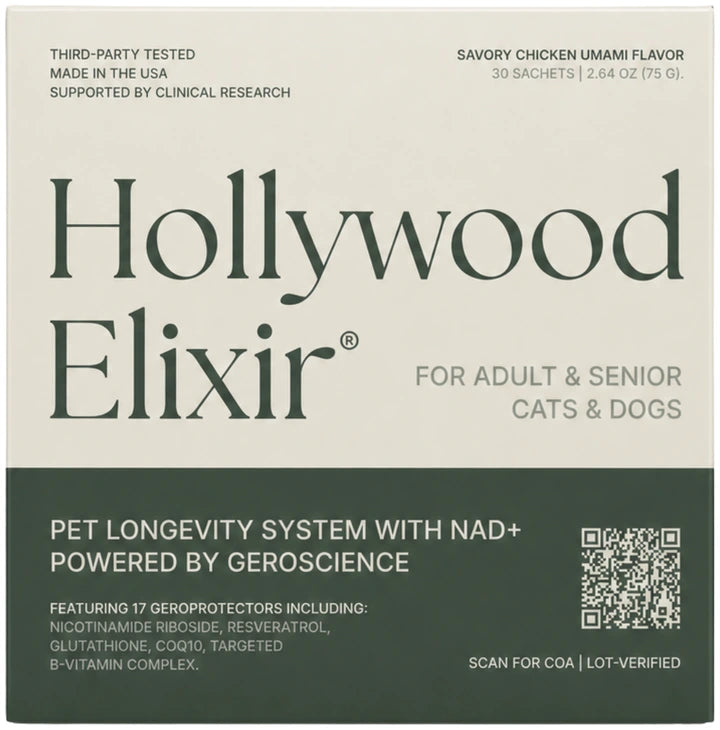
Hollywood Elixir is our daily supplement for adult and senior dogs, made to the LPL-01 standard with every active ingredient at a visible amount. It never replaces your veterinarian — it sits alongside the routine on this page.
Starting at $63/month · cancel anytime
Shop Hollywood ElixirWhen to Call the Vet
Split urgent signs from trends that deserve a scheduled veterinary conversation.
Go urgently
- Collapse, labored breathing, pale or blue-gray gums, seizure, severe pain, sudden inability to rise, or rapid decline.
- Swollen abdomen, repeated unproductive retching, severe restlessness, weakness with vomiting, or suspected bloat.
- Heat distress, uncontrolled bleeding, suspected fracture, sudden paralysis, or a dog who cannot settle.
Schedule promptly
- Limping, slower rising, stair hesitation, car-entry trouble, or soreness after activity.
- Bad breath, one-sided chewing, red gums, dropped food, or face sensitivity.
- Ear odor, head shaking, paw licking, skin redness, matting, or grooming resistance.
- Cough, lower stamina, fainting, unusual panting, vomiting, appetite change, or weakness.
- Weight drift, new lumps, thirst change, urinary accidents, sleep disruption, hiding, or mood change.
- A mismatch between limping, slower rising, stair hesitation, car-entry trouble, or soreness after activity and the dog's usual recovery pattern.
- A new cluster of size, dental, and patellas changes in the same month.
- A caregiver saying the dog is just older when appetite, sleep, breathing, gait, or interest has changed at the same time.
The 90-Day Support Routine
Ninety days of small, repeatable habits make subtle changes visible — and give any new routine a fair test.
- Week one: record weight, body condition, teeth, ears, skin or coat, gait, stairs, car entry, stamina, sleep, appetite, thirst, lumps, medications, and the Pomsky history you actually have.
- Week one: choose the home checks that match this dog rather than copying a generic checklist.
- Weekly: repeat the same hands-on scan for mouth, ears, skin, movement, nails, appetite, and exercise recovery.
- Monthly: refresh body condition, photos, gait videos, lump map, thirst, sleep, stamina, and any diagnosis-specific notes.
- Day 90: review the pattern with your veterinarian and adjust calories, pain care, dental timing, grooming, diagnostics, or exercise.
- Every two weeks: compare the newest notes with the first baseline and mark whether size, dental, patellas, or eyes is becoming easier, stable, or harder.
- Before the next visit: bring the trend, not just the worry. Include weight, videos, photos, medication timing, diet changes, grooming observations, exercise recovery, and the exact day the household first noticed a difference.
Tools for Tracking Comfort and Aging
Use these when a life-stage, body-condition, or quality-of-life question needs more structure.
Dog Quality of Life Scale
Use when comfort changes are subtle and the household needs a steadier score.
ToolDog Biological Age Calculator
Translate age into a life-stage conversation before the dog looks old.
ToolDog Body Condition Calculator
Ground weight decisions in body condition instead of guessing from the scale alone.
Frequently Asked Questions
Short answers to the questions owners ask most.
What is a realistic Pomsky lifespan?
Use 12 to 15 years as a planning range, then adjust for body size, known diagnoses, veterinary care, accidents, and the watchpoints listed for this dog.
Can a Pomsky live longer than that?
Some do, but the useful goal is not chasing an exceptional birthday. The better target is comfortable movement, appetite, sleep, breathing, and family engagement for the years this dog has.
Is 9-11 years old for a Pomsky?
9-11 years is a practical senior-planning window. It should trigger better records and checkups, not automatic assumptions that every new change is normal.
Which Pomsky health issues need early notes?
Track adult size, dental disease, retained teeth, patellas, tracheal or cough signs, Husky-side eyes, coat and heat margin, activity recovery, and anxiety.
What should I track at home for an older Pomsky?
Track weight, teeth, breath, knee skips, stairs, eyes, coat, skin, heat recovery, activity, sleep, anxiety, appetite, thirst, and mood.
Which changes should not wait for a routine visit?
Hard breathing, collapse, pale gums, seizure, acute eye pain, sudden blindness, heat distress, severe pain, or inability to rise should not wait.
How often should an older Pomsky see the veterinarian?
Twice yearly is a good default once senior planning begins. Dogs with pain, heart findings, endocrine disease, dental disease, eye trouble, or rapid change may need a shorter interval.
What should I bring to a senior visit?
Bring dates, weight history, diet and treat details, medication and supplement lists, short videos, clear photos, and a simple timeline of what changed first.
Can home tracking replace veterinary care?
No. Home records make visits more useful, but they cannot diagnose pain, heart disease, endocrine disease, dental disease, eye disease, collapse, or sudden decline.
How do I judge quality of life?
Look at breathing, pain, sleep, appetite, drinking, toileting, movement, anxiety, and interest in familiar routines together. One good signal should not cancel several bad ones.
What does the 90-day routine do?
It creates a week-one baseline, repeats the same checks long enough to reveal a pattern, and gives your veterinarian something concrete to adjust at the day-90 review.
Which record changes the Pomsky plan fastest?
A dated trend usually changes the plan faster than a vague impression. Weight, gait video, cough timing, appetite, thirst, sleep, stool, dental comfort, lumps, and recovery notes help the veterinarian decide what deserves attention first.
Should I wait until my Pomsky seems old?
No. Senior planning is most useful when the dog still has good routines. Early notes make it easier to spot pain, dental disease, breathing changes, endocrine clues, heart findings, eye trouble, or mobility loss before the pattern becomes normal.
How do I keep the plan fair when evidence is thin?
Say what is known, say what is guessed, and update the plan as the dog shows you more. Thin evidence should lead to better baselines and calmer follow-up, not false certainty or a one-number promise.
What should the family agree on before a problem day?
Agree on urgent signs, the nearest emergency hospital, who can transport the dog, where medications and records live, and which daily changes deserve a prompt appointment. That agreement matters most when size or dental changes arrive at an inconvenient time.
A note from La Petite Labs
Hollywood Elixir is La Petite Labs' daily supplement for adult and senior dogs. It is not a treatment for anything on this page, and it never replaces your veterinarian.

Why Pampered belongs in a Pomsky 90-day plan
Pampered is La Petite Labs' complete daily system, with a recommended 90-day starting window. Use it alongside the page's recording weight, body condition, teeth, ears, skin or coat, gait, stairs, car entry, stamina, sleep, appetite, thirst, lumps,; for Pomsky, the daily record should keep circling back to size, dental, patellas, and eyes before the fit check.
Explore the Pampered™ System →