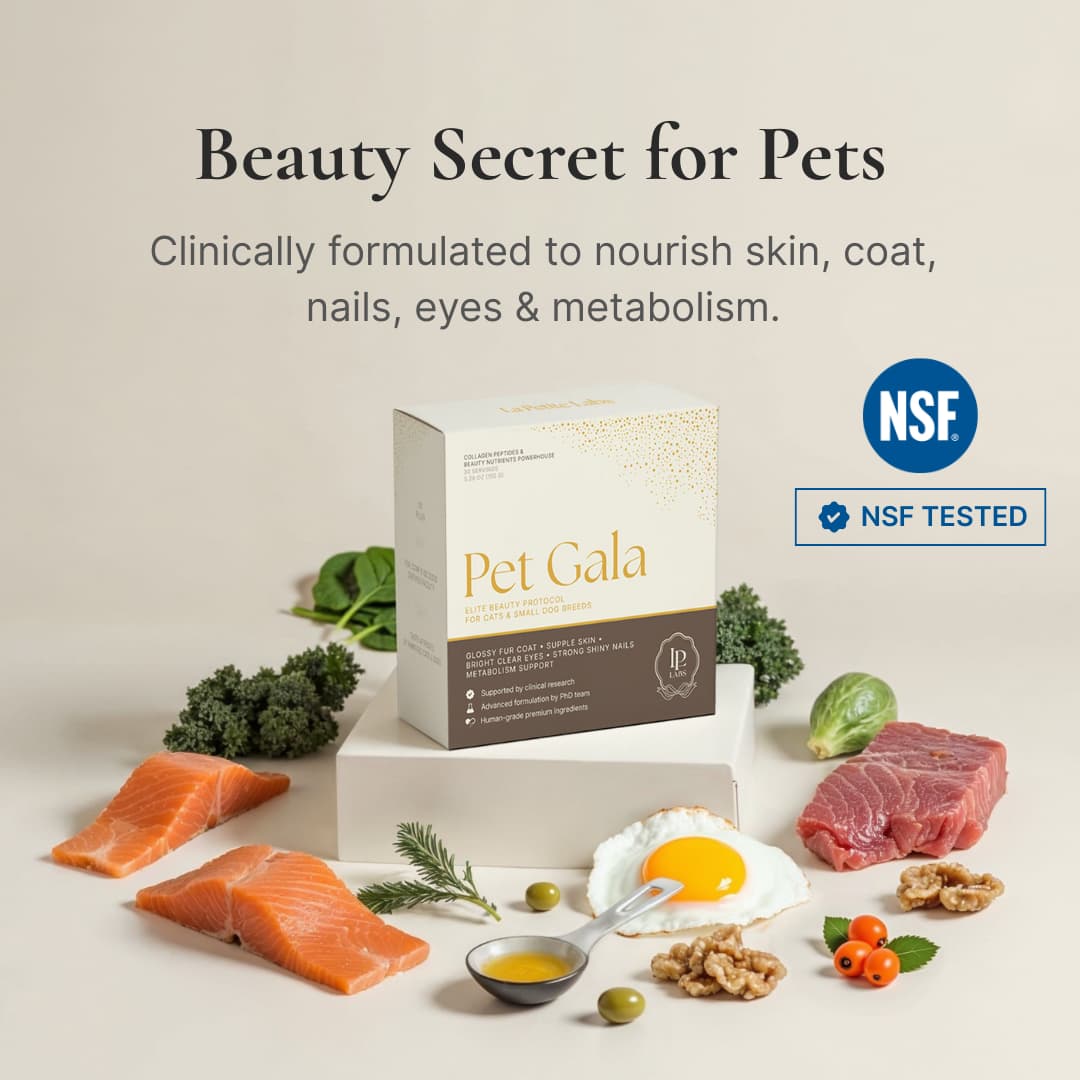


Pet Gala™
Daily supplement for cats & dogs that supports their beauty, inside and out.
Radiant comfort for happy, healthy pets.
- Restores softness and shine
- Soothes dry, itchy skin
- Reduces shedding
- Strengthens brittle, breaking nails
 NSF® 3rd Party Tested
 Vet-Formulated
 Clinically Backed


 Human-Grade Ingredients
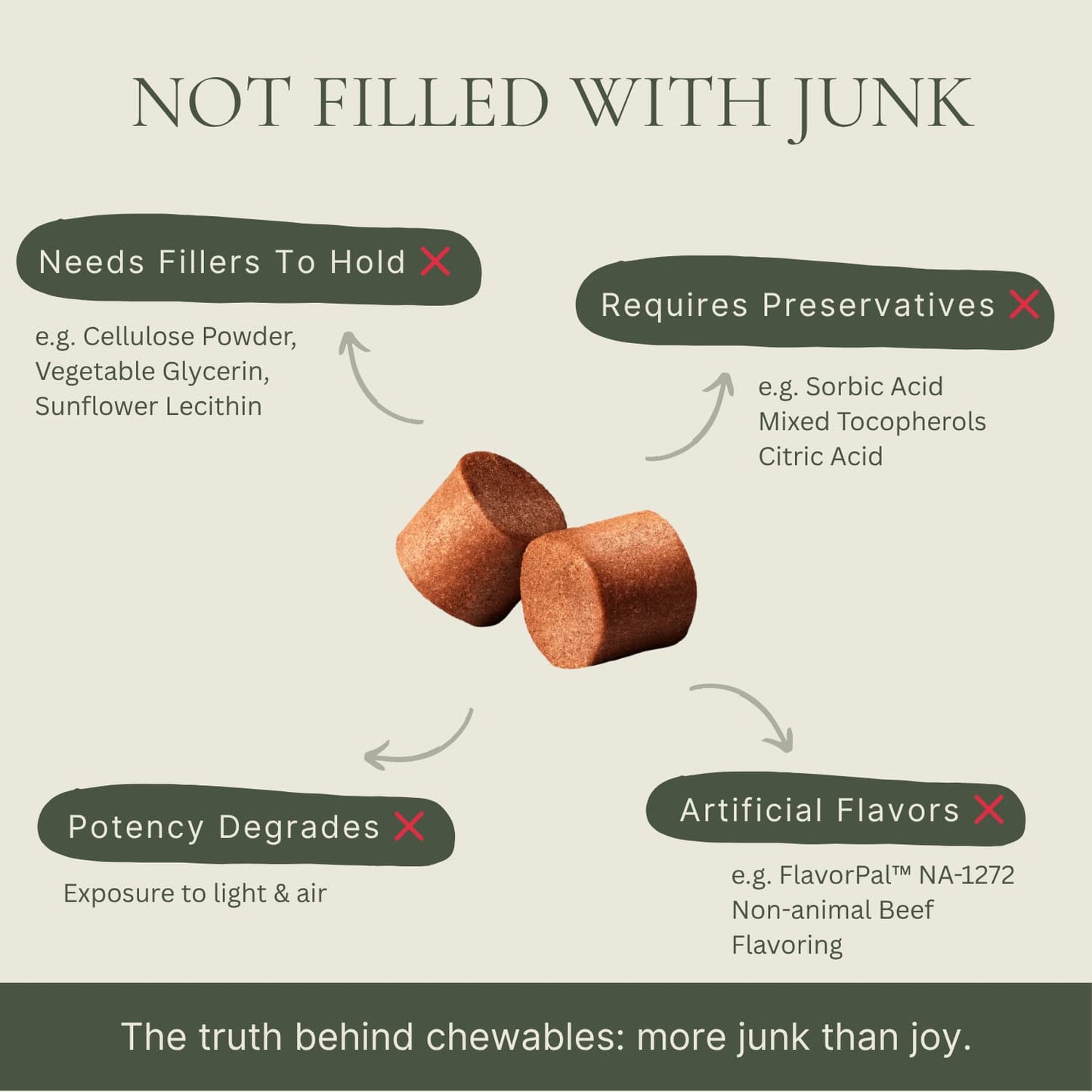
 Zero Fillers





Silica for Dogs: Potential Benefits for Joint, Bone, and Skin Health

Reviewed by Dr. Sarah Calvin, DVM
Small-animal veterinarian with special interests in internal medicine and pet nutrition.
Silica for Dogs: Safe Micro-Dose Support for Joints, Skin and Coat

A beauty-from-within routine with silica, collagen, MSM, zinc and biotin—designed as a low-dose, structural support layer.
Silica is a naturally occurring source of silicon that shows promising roles in bone, connective tissue and skin biology in human research. In dogs, the data are much more limited—but we do know that most healthy dogs can safely handle modest amounts of dietary silica, and that it is widely used in commercial pet food and supplements.
Pet Gala includes a micro-dose of silica (10 mg per daily stick) as part of its beauty stack, far below the levels allowed in complete feed and far below what many dogs already consume from their everyday diet. The aim is simple: a gentle, plausible structural helper that can be layered into a routine without overwhelming the system.

What We Know (and Don’t Yet Know) About Silica in Dogs
When you zoom out and look at the literature, a few themes emerge:
- Evidence in humans is stronger than in dogs. Human studies suggest silicon can support collagen synthesis, bone mineral density and connective tissue quality. In dogs and cats, research is sparse and more focused on how they absorb and excrete silica than on beauty or joint outcomes.
- Dogs and cats handle silica differently. Studies indicate that dogs can absorb and efficiently excrete soluble forms of silica in urine, whereas cats absorb less, which may act as a protective barrier against accumulation.
- Most healthy dogs tolerate moderate dietary silica well. Commercial pet foods naturally contain silicon from ingredients and processing. Even high levels in complete feeds are generally considered safe for healthy dogs.
- There are specific, important exceptions. Some dogs appear sensitive to silicon and may develop silica-containing bladder stones. Dogs with certain urinary or kidney issues should be evaluated more cautiously when it comes to additional silica intake.
Because of this, the fairest summary today is: silica is not a proven “must-have” beauty supplement in dogs, but low-dose inclusion is physiologically plausible, widely tolerated in healthy dogs and aligned with how the pet food industry already uses silicon dioxide.
Why Include a 10 mg Micro-Dose in Pet Gala?
If most complete diets already contain some silicon, you might wonder why Pet Gala adds more—and at such a small amount. There are a few reasons:
- Micro vs. background exposure. Everyday kibble and canned foods contain silicon in various forms and amounts, often at a much higher total intake than any beauty supplement. Pet Gala’s 10 mg per stick is a micro-dose compared to full diet exposure, chosen to support structure without meaningfully shifting total silica load.
- Synergy with beauty nutrients. Silica is included alongside collagen peptides, MSM, zinc and biotin—a group of nutrients that support keratin and collagen structures. The intention is plausible synergy: a small amount of silica in the same “micro-environment” as the nutrients that build and maintain hair, skin and nail tissues.
- Well under feed-additive limits. The FDA allows silicon dioxide in animal feed up to 2% of the complete feed by weight. Pet Gala’s 10 mg per serving is far below that ceiling and functions more like an accent in the formula than a core driver.
- Aligned with “low-dose, long-game” philosophy. Pet Gala is built to be a daily ritual. Micro-doses are chosen intentionally so that ingredients feel gentle on the system while still being directionally aligned with structural biology.
Potential Roles of Silica: What Translational Science Suggests
While we lack large, controlled beauty trials in dogs, human and laboratory data suggest several ways silica may support structural health:
- Collagen and connective tissue. Silicon has been linked to collagen synthesis and connective tissue support in human studies, suggesting a role in maintaining the scaffolding that underlies cartilage, skin and hair.
- Bone mineralization. Evidence from human and animal models indicates that dietary silicon can support bone formation and mineral density, especially when adequate calcium and vitamin D are present.
- Hair and nail quality. Human data point toward possible improvements in hair strength and nail brittleness with silicon supplementation, which is why it often appears in beauty formulas.
For dogs, we translate these findings cautiously. Pet Gala does not promise silica-driven transformations. Instead, it positions silica as a supportive co-factor within a stack of better-studied beauty nutrients where the risks at micro-dose are low and the potential structural upside is plausible.

How Silica Fits Into the Pet Gala Beauty Stack
Pet Gala is designed as a multi-ingredient, beauty-from-within system. Silica is one piece of that system, layered in with:
- Collagen peptides – provide amino acids that help maintain flexible yet resilient collagen matrices in skin and around follicles.
- MSM – a sulfur donor that supports strong keratin cross-links in hair and nails.
- Zinc – a mineral cofactor essential for normal skin turnover and keratin production.
- Biotin – supports enzymes involved in keratin formation.
- Omega fatty acids and skin-barrier allies – help maintain hydrated, comfortable skin around hair follicles and nail beds.
In that context, silica behaves like a supporting actress rather than the star: a low-dose element that participates in the structural storyline without driving it alone.

Safety, Exceptions and Dose Perspective
Safety is where silica research is clearest:
- Healthy dogs handle modest silica intakes well. Dogs can absorb soluble silica and efficiently excrete it in urine. Commercial pet diets already contain widely varying levels of silicon, and even the highest natural levels are generally considered safe for healthy animals.
- Pet Gala uses a very low amount. At 10 mg per daily stick, Pet Gala contributes a tiny fraction of the silicon many dogs receive from their base diet. It is far below the FDA’s 2% feed-additive limit for silicon dioxide and is formulated with a “least necessary dose” philosophy.
- Stone-formers and kidney patients are a special case. Some dogs are prone to silica-containing bladder stones, and very high silicon loads may contribute to kidney issues in vulnerable patients. For these dogs, extra caution is warranted.
In practice, that means:
- For most healthy dogs, Pet Gala’s silica level is conservative and consistent with everyday industry use.
- For dogs with a history of silica bladder stones or kidney disease, talk to your veterinarian before adding any silica-containing supplement.
How to Use Silica-Containing Beauty Supplements Sensibly
Diet and Daily Routine
- Start from a complete diet. Ensure your dog is on a balanced, complete diet that supports baseline skin, coat and joint health.
- Layer structural nutrients, don’t stack megadoses. Instead of chasing high levels of any single ingredient, focus on a balanced mix (collagen, MSM, zinc, biotin, low-dose silica).
- Serve with meals. Mixing Pet Gala into food supports tolerance and makes routines easy to repeat.
- Pair with grooming and environment. Gentle brushing, nail care and surface protection matter just as much as nutrition.

What You May Notice Over Time
Because silica is a supportive co-nutrient (not a pharmaceutical), changes are gradual and tied to new growth:
- Weeks 1–2: Routine settles; no dramatic shifts expected—this phase is about consistency and tolerance.
- Weeks 3–6: As new hairs and nail segments grow out, you may notice easier brushing, slightly smoother coat feel and fewer frayed nail tips—especially in dogs also receiving omega fats and good grooming.
- Weeks 7–12 and beyond: With continued use, structural nutrients (collagen, MSM, zinc, biotin and low-dose silica) can help maintain a steadier baseline of coat quality and nail resilience for many dogs.
Results vary based on genetics, overall diet, grooming and underlying health. Silica’s role is to quietly support the broader plan, not to override those other factors.
When to Talk to Your Veterinarian
- Your dog has a history of bladder stones (especially silica-containing stones) or kidney disease.
- You are considering multiple structural supplements and want help avoiding unnecessary overlap.
- You notice persistent changes in thirst, urination, behavior or comfort.
- You are using a therapeutic diet or prescription medications and want guidance on timing and compatibility.
In many cases, veterinarians are comfortable with low-dose silica as part of a beauty supplement for healthy dogs, especially when the formula is balanced and clearly labeled. Bringing the full ingredient list, including per-serving amounts, makes that discussion easier.
FAQs About Silica in Pet Gala
Is silica in Pet Gala safe for my dog?
If my dog’s food already contains silicon, why add more?
Can silica in supplements cause bladder stones?
Will silica alone fix brittle nails or dull coat?
Is silica an essential nutrient for dogs?
Can puppies use silica-containing beauty supplements?
Related Reading
- Skin Barrier Restoration for Dogs
- Collagen Synthesis for Dogs
- Mineral Cofactors for Dogs
- Peptides for Dogs

Veterinary review: This article was medically reviewed for accuracy by Dr. Sarah Calvin, DVM , small-animal veterinarian at Riverview Animal Clinic (Clarkston, WA).